

All 6 Disney-Produced Star Wars Movies, Ranked From Worst To Best
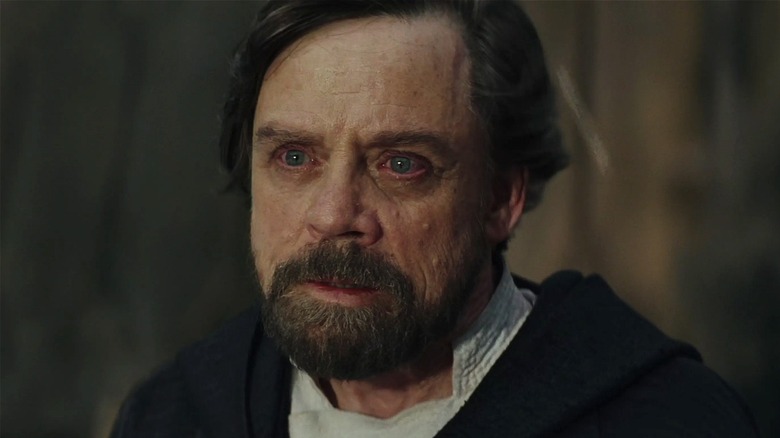
"Star Wars" has always inspired passionate and often divisive audience responses. Dating back to "The Empire Strikes Back" garnering some mixed feedback after its 1980 theatrical debut and those "Return of the Jedi" Ewoks quickly becoming a punchline, the franchise has often generated heated responses and criticisms. Once Disney purchased Lucasfilm in 2012 and began regularly producing new movies and TV shows, that tradition was bound to both continue and amplify in scope. Since that acquisition, the Mouse House has released six different "Star Wars" movies — the same amount of live-action "Star Wars" movies George Lucas originally released between 1977 and 2005.
There are some Disney "Star Wars" decisions that people believe damaged the franchise forever. The best way to explore the highs and lows of these modern "Star Wars" films, though, is by actually breaking down the individual motion pictures themselves. Ranking the six Disney-era "Star Wars" movies from worst to best provides clarity on the varying levels of quality across these titles. It also highlights elements like recurring creative impulses across this era of "Star Wars" media and the greatest strengths of certain movies that people can take for granted. Here are Disney's six "Star Wars" movies, ranked from worst to best.
6. Star Wars: Episode IX – The Rise of Skywalker
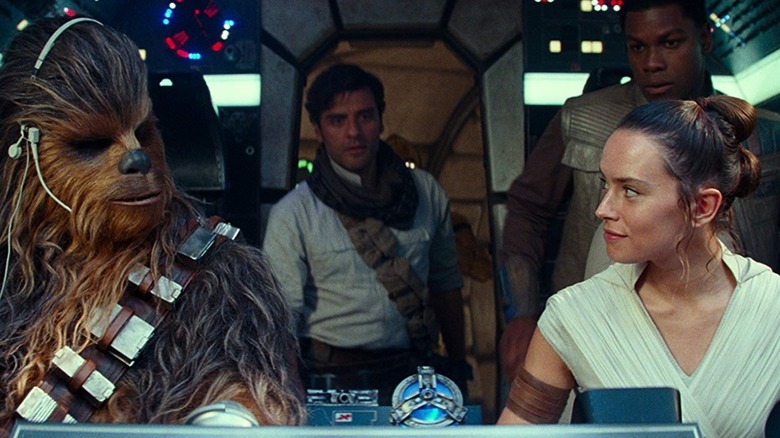
Director J.J. Abrams and co-screenwriter Chris Terrio's 2019 film "Star Wars: Episode IX – The Rise of Skywalker" was so disliked by fans that it actually made them nostalgic for the days of "I don't like sand, it's coarse, rough, and irritating, it gets everywhere." For years, this Anakin Skywalker line from "Star Wars: Episode II – Attack of the Clones," clunkily delivered by Hayden Christensen, summed up everything that was wrong with the prequel trilogy. In the wake of the final entry in the sequel trilogy, people have started to realize that there are actually some good moments in the "Star Wars" prequels. But what went wrong with "The Rise of Skywalker," exactly? Basically everything except for Adam Driver's performance and the John Williams-composed score.
Hinging the story around various weightless treasure hunts and Rey's lineage made the drama in "The Rise of Skywalker" totally inert. Palpatine abruptly returning as a bad guy made the new sequel trilogy characters service a ghost of "Star Wars" media past, and eschewing "The Last Jedi" character Rose Tico (Kelly Marie Tran) was inexcusable. The real reason Rose was barely in "The Rise of Skywalker" was down to CGI troubles — she was supposed to share scenes with Carrie Fisher's Leia Organa, who featured via unused footage and digital compositing after Fisher's death in 2016. The completed CG scenes with Rose lacked photorealism and were cut according to Chris Terrio. The creepy CG resurrection of Leia was easily one of the five worst CGI moments in the "Star Wars" sequel trilogy and contributed to how poorly "The Rise of Skywalker" was received.
5. Star Wars: The Mandalorian and Grogu
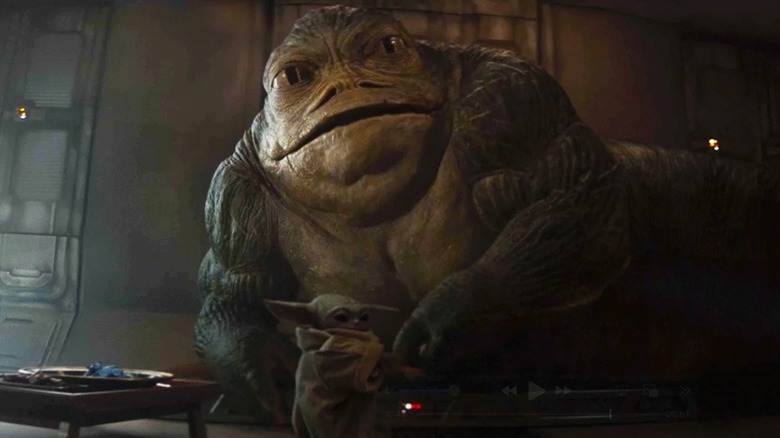
Among the many things wrong with 2026's "Star Wars: The Mandalorian and Grogu," which serves as a continuation of Pedro Pascal's Disney+ series "The Mandalorian," are the visuals. Director Jon Favreau and cinematographer David Klein imbue minimal energy or showmanship into proceedings. Much of the film occupies tableaus draped in drab colors or murky swamps. Characters just awkwardly shamble into frame or are suddenly in the middle of the screen when they're first introduced, with no grandiosity in their introductions. "Star Wars" movies have always had flaws like clumsy dialogue, but if they can't even deliver on visual awe, they're in real trouble. Unfortunately, that's the kind of lifeless aesthetic "The Mandalorian and Grogu" trapped moviegoers in.
This production was about as sleepily realized as Jeremy Allen White's rigid voice-over performance as the grown-up and super beefy Rotta the Hutt. The film limps along its predictable path with minimal urgency or specificity. Only the snowy prologue, some cute puppetry, and Ludwig Göransson's score entertain. Otherwise, "Star Wars: The Mandalorian and Grogu" is a shrug-worthy enterprise that fails to justify why it isn't a collection of Disney+ episodes. As a microcosm of this movie's dearth of imagination, Sigourney Weaver's Adelphi Rangers leader Ward spends most of her time sitting in a booth delivering exposition. She, and the visual possibilities of "Star Wars" cinema, go criminally wasted here.
4. Solo: A Star Wars Story
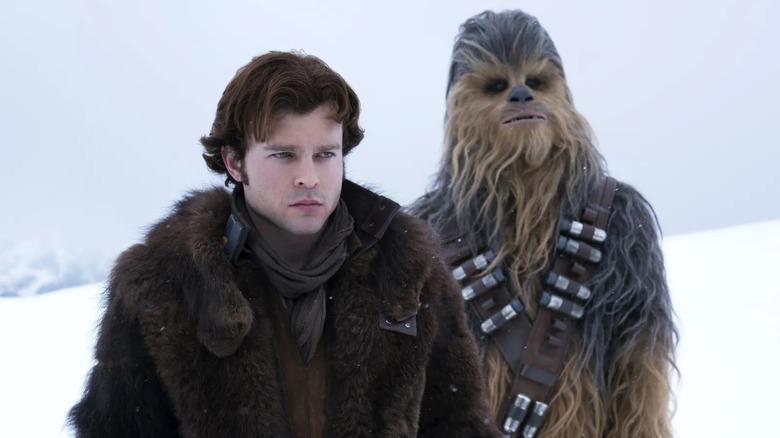
2018's "Solo: A Star Wars Story" has its share of enjoyable aspects. Handed the impossible task of succeeding Harrison Ford in the role of Han Solo, Alden Ehrenreich performs admirably in the part. Bradford Young's cinematography, meanwhile, lends a striking, shadowy aesthetic to the proceedings that help differentiate this entry from other Disney-era "Star Wars" adventures. There's also commendable supporting turns from the likes of Erin Kellyman and Donald Glover, while some spry action set pieces also occur. The problem, though, is that "Solo" sometimes feels like it's on autopilot. Director Ron Howard executes the script by Lawrence and Jonathan Kasdan with competency but little verve. "Solo" hits the expected beats, but doesn't imbue the familiar with bold distinctive flourishes.
After watching "Solo," which is set a decade before the original "Star Wars" film and serves as an origin story for Han Solo and Chewbacca, you can't help but come away feeling as though the film pulled its punches in several respects. Paul Bettany's alien crime lord Dryden Vos has one of the five worst "Star Wars" alien designs, and Emilia Clarke's Qi'ra is clearly meant to evoke a classic femme fatale archetype, but "Solo" never lets the character get too malicious or morally ambiguous. An idiotic sequel tease scene involving Qi'ra and Darth Maul solidifies the poor writing of this feature, the final nail in the coffin of a third act where the entire movie just fizzles out. Yes, there's some fun to be had in "Solo: A Star Wars Story," which mixes Western and heist tropes to decent effect, but it's weighed down by too many frustrating foibles.
3. Star Wars: Episode VII – The Force Awakens
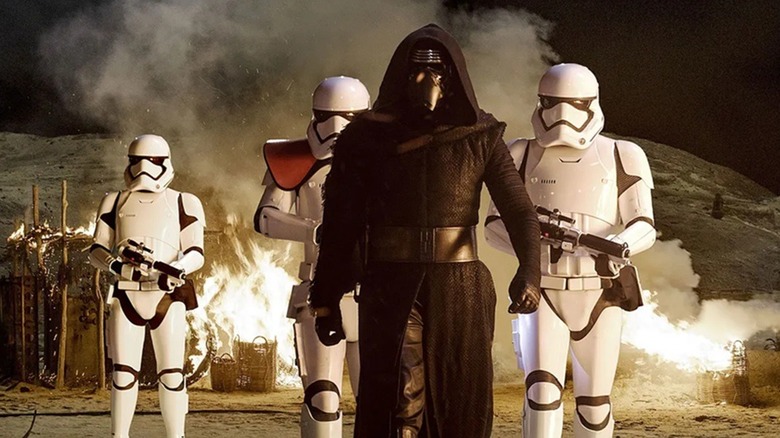
One of the biggest complaints about 2015's "Star Wars: Episode VII – The Force Awakens" is that its script is an obvious retread of the first "Star Wars" film. Granted, when people went to see "Star Wars" back in 1977 the movie they were treated to was actually a hodgepodge of classic Joseph Campbell archetypes and 20th century genre cinema, namely Akira Kurosawa's "The Hidden Fortress" and "Flash Gordon" serials. As such, "The Force Awakens" being so evocative of the franchise's first entry feels somewhat fitting. Unfortunately, the similarities do suck some of the excitement out of the proceedings, particularly in a third act that's just the original Battle of Yavin blown up in scope.
Some weird editing choices and a crammed finale that doesn't let Han Solo's demise breathe are other strange shortcomings in what's an otherwise handsomely made and rousing blockbuster. Disney knocked it out of the park choosing the four new leads for the sequel trilogy: Daisy Ridley, John Boyega, Oscar Isaac, and Adam Driver immediately radiate movie star energy. The glorious practical props and sets, meanwhile, feel far more similar to the original trilogy after "Star Wars: Episode III – Revenge of the Sith" relied too heavily on sterile digital imagery. It's not a perfect film, but J.J. Abrams' "The Force Awakens" was a solid start to Disney's reign.
2. Rogue One: A Star Wars Story
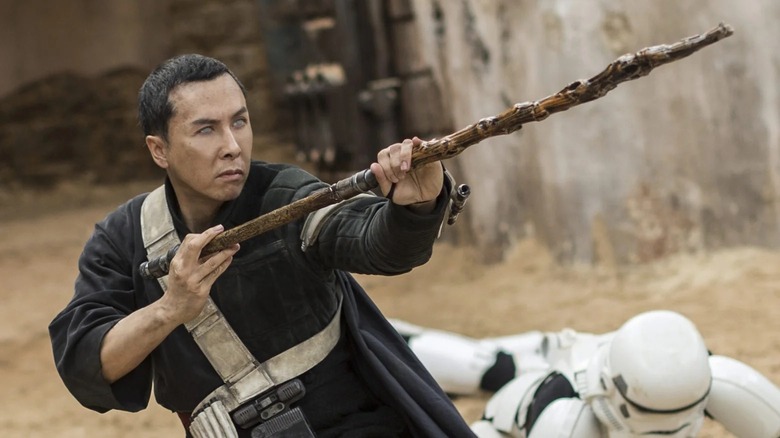
There's no denying that the first half of 2016's "Rogue One: A Star Wars Story," which takes place right before the events of the first "Star Wars" film and follows a band of rebels who steal the plans for the original Death Star, struggles to balance all the disparate characters and planets. Protagonist Jyn Erso (Felicity Jones) also suffers from a common "Star Wars" problem — sheepishness over letting leading ladies be as messy and complicated as necessary. The score is also underwhelming, though that's not surprising considering that composer Michael Giacchino only had around to month to complete it. Even in its messier elements, though, "Rogue One" still has visual flair to spare thanks to director Gareth Edwards and cinematographer Greig Fraser.
The sheer scope of the world of "Star Wars" has rarely felt as potent and intimidating as it does in "Rogue One." The movie also has an outstanding cast, with particularly scene-stealing supporting turns from Donnie Yen as the blind warrior Chirrut Îmwe, Ben Mendelsohn as Imperial director of weapons research Orson Krennic, and Alan Tudyk as the voice of reprogrammed enforcer droid K-2SO. Best of all, the feature's third act is outright masterful. Not only is the tropical backdrop a fantastic visual choice, but the emphasis on everyday people sacrificing themselves for little actions that add up to grand rebukes of fascism is tremendously moving. Get through the bumpier "Rogue One" elements and truly exceptional material lies in wait.
1. Star Wars: Episode VIII – The Last Jedi
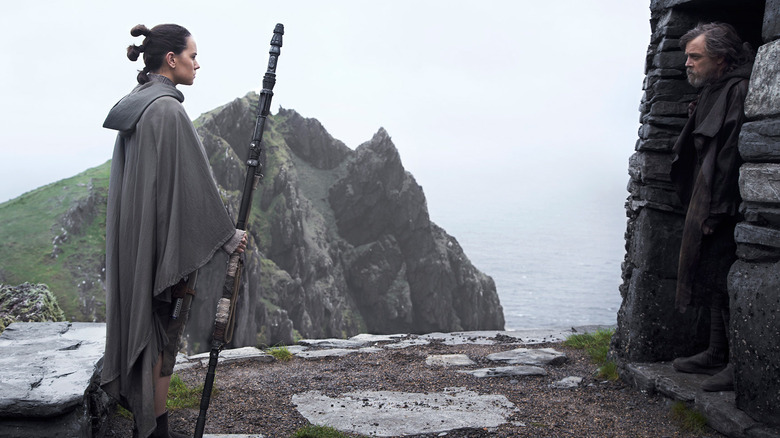
Writer-director Rian Johnson's outstanding career has come with several impressive accomplishments. He's responsible for the best "Breaking Bad" episode of all time in "Ozymandias," and "Knives Out" is arguably the best whodunit feature of the 21st century. However, 2017's "Star Wars: Episode VIII – The Last Jedi" is probably his crowning achievement – not only is it the pinnacle of Disney-era "Star Wars" movies, but it's actually considered by some fans to be the best "Star Wars" movie, period. But what makes it worthy of such a claim?
For starters, Johnson's visual sensibilities on "The Last Jedi" are outstanding. A finale juxtaposing bright red dust with white salt-covered rocks, for instance, is captivating just in its color scheme alone. The mythic qualities of images like Kylo Ren and Rey leaping in to fight Snoke's guards or Yoda and Luke watching a blazing fire together are undeniable, and scenes like Rey with her doppelgangers are iconic for a reason.
Crucially, the visuals uphold a moving story that turns these cosmic characters into nuanced, messy human beings. They're all recognizable, vulnerable people capable of both mistakes and wondrous feats. "The Last Jedi" is about heroes coming from anywhere, and it's ultimately Johnson's commitment to this theme that makes it a masterpiece. While the newcomers are all great, much of the credit goes to Mark Hamill. Disney Chairman and CEO Bob Iger called Hamill's performance as a jaded Luke Skywalker his best ever, and we agree wholeheartedly.