

Everything Wrong With Star Wars: The Mandalorian And Grogu
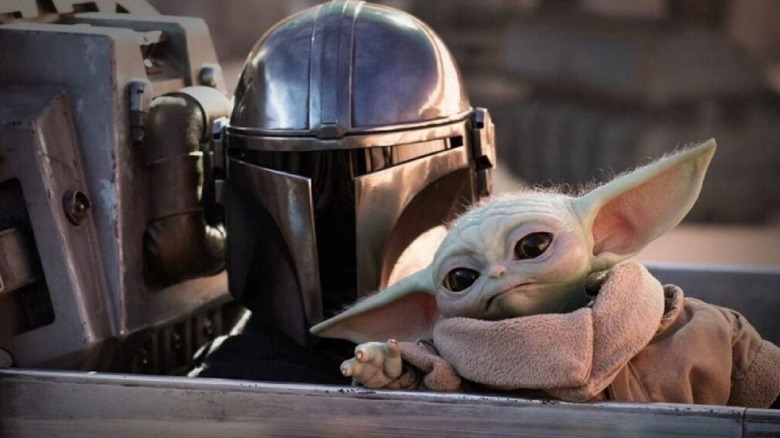
Friends, Bothans, country-droids, lend me your ears. It's time to discuss the first new Star Wars movie since "Star Wars: The Rise of Skywalker" premiered in 2019. "Star Wars: The Mandalorian and Grogu" finally materialized on the big screen after Lucasfilm came close to green-lighting various "Star Wars" movies that almost happened. Now, the Disney+ exploits of Din Djarin/The Mandalorian (Pedro Pascal) and Grogu continue on the big screen as the pair are recruited by the New Republic to retrieve Rotta the Hutt (Jeremy Allen White). Of course, no mission involving Mando ever goes simply, so things soon spiral into further turmoil and betrayal.
"The Mandalorian and Grogu" is far from the nadir of Star Wars media. It's also got its fair share of artistic achievements, including Ludwig Göransson's excellent score, tremendous work from the makeup and production design departments, as well as Pedro Pascal remaining solid in his work as one of the film's titular leads. However, director Jon Favreau can't quite steer the project into being as enthralling or substantive as it could be. Everything wrong with "The Mandalorian and Grogu" encapsulates a project that never outraces its TV roots or weaker creative impulses.
Breaking down these shortcomings reflects what went haywire with the grand return of Star Wars to the big screen. Even as the proceedings remain better than "The Rise of Skywalker" or "Attack of the Clones," these "Mandalorian and Grogu" flaws, like Grogu's cutest moments, still linger in one's mind.
The cinematography is lackluster
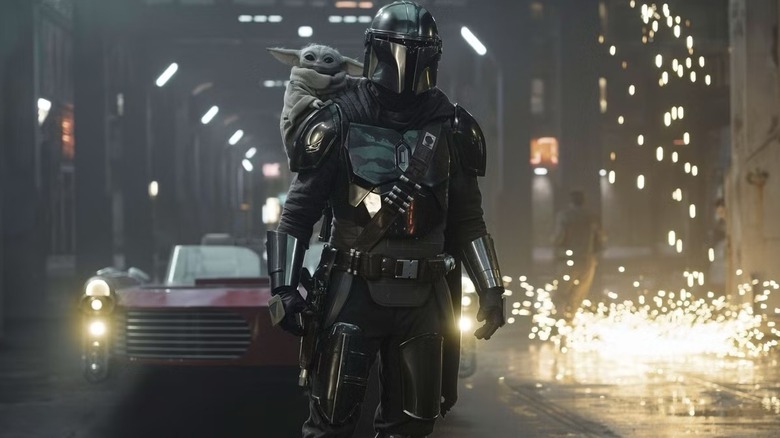
One would assume, when director Jon Favreau and company were figuring out how to translate "The Mandalorian" into theaters, a key facet would be making it look as visually resplendent as possible. What works well visually on a streaming show (even a pricey one) might not work perfectly for an IMAX-filmed project. Hiring an all-time great cinematographer like Robert Elswit, Claire Mathon, Jomo Fray, or Evgenia Alexandrova could have gone a long way toward making "The Mandalorian and Grogu" live up to the lavish imagery that has defined "Star Wars" movies. Alas, this production instead hired "Mandalorian" veteran David Klein.
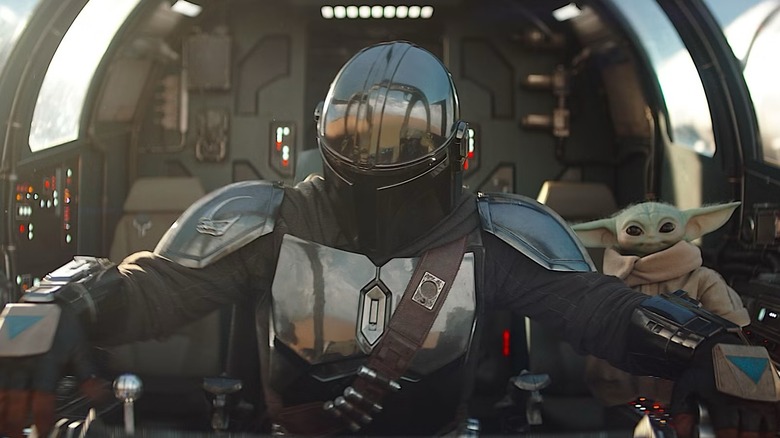
A veteran of Kevin Smith films who hasn't lensed a theatrical feature since 2012's "The Story of Luke," Klein turns in rudimentary visuals on "The Mandalorian and Grogu" that bizarrely often look like a step down from the TV show. Creative uses of shadow and lighting are kept to a frustrating minimum. The emphasis on soaring X-Wings or bounty hunter scuffles only reminds one of more strikingly shot Star Wars movies of yesteryear, including recent Disney-era productions like "Rogue One" and "The Last Jedi." The comparison just emphasizes the drawbacks in this movie's cinematography.
For "The Mandalorian and Grogu," Favreau's team opted to embrace visual continuity rather than what would work best for a theatrical movie. The result is a Star Wars film that doesn't really dazzle on the big screen, something once unthinkable for the franchise.
Jeremy Allen White's voice doesn't work
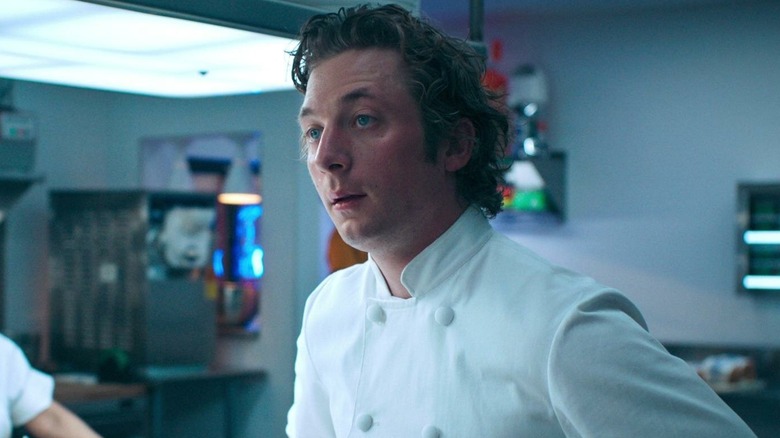
Jeremy Allen White is excellent as Carmy on "The Bear." His haunted facial expressions and line deliveries are unforgettable, especially since both are soaked in caked-in anguish suggesting how long Carmy's grappled with his fragmented psychology. Sequences like Carmy's single-take AA speech in the Season 1 finale exemplify what a gifted performer White is. Unfortunately, the aloof qualities that perfectly portray Carmy's difficulties connecting with others are a poor fit for his "The Mandalorian and Grogu" character, Rotta the Hutt.
Put simply, White's voice work in the film is atrocious. White's performance as Rotta sounds incredibly detached; he never seems immersed in the role and struggles to bring the Hutt to life believably. The tremendous stiffness in this performance is something White can't shake, and it's not helped by the decision to digitally alter his vocals to a lower pitch in post-production. With White's voice borderline unrecognizable, it's inexplicable why the "Mandalorian and Grogu" team didn't hire a talented voice actor like Kevin Michael Richardson (who voiced Jabba the Hutt, Rotta's papa, on "The Clone Wars") for the role instead.
Even if you're fully aware of the eight things you absolutely need to know about Rotta the Hutt's backstory and behind-the-scenes creation, nothing can prepare you for how underwhelming Jeremy Allen White is as this character.
The movie lacks a concrete villain
Star Wars has always featured some of the best movie villains. From Darth Vader to Kylo Ren to Darth Maul to Emperor Palpatine, there's no shortage of unforgettable adversaries scattered across this galaxy far, far away. "The Mandalorian" TV series featured its titular character going up some enjoyable baddies too, including the always welcome Giancarlo Esposito as an imposing foe. Unfortunately, "The Mandalorian and Grogu" falls flat in this department. The movie fails to really deliver a proper enemy who can provide suitable tension for the entire movie.
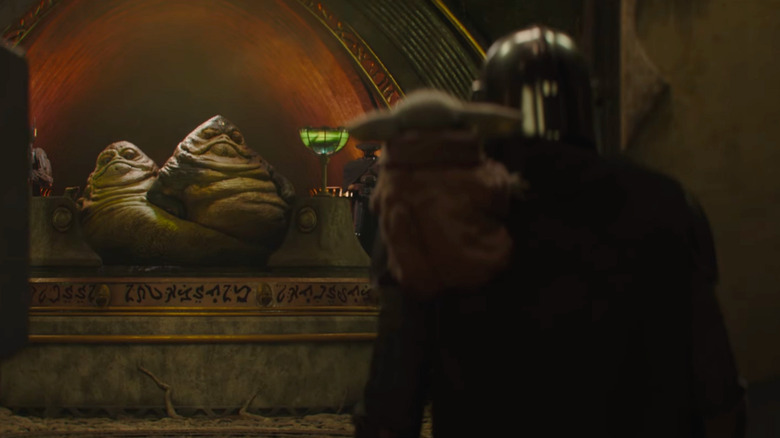
The jagged and episodic nature of the script means that the proceedings constantly swap around new antagonists for the two leads to contend with. Crime boss Janu Coin (Jonny Coyne) is a major foe for the first act, while bounty hunter Embo is introduced midway through as a recurring rival. The twin Hutts are the closest the movie comes to constant villains, yet even they don't really work in this capacity. Since they just sit around in a throne room for the entire runtime, they're not very memorable and their character designs are too derivative of Jabba.
Without a constant villain to wrap the entire story around, "The Mandalorian and Grogu" struggles to have thrilling stakes and fails in an area that Star Wars movies usually soar in. Even the dismal "Attack of the Clones" gave the world Count Dooku, after all.
There are too many CG characters
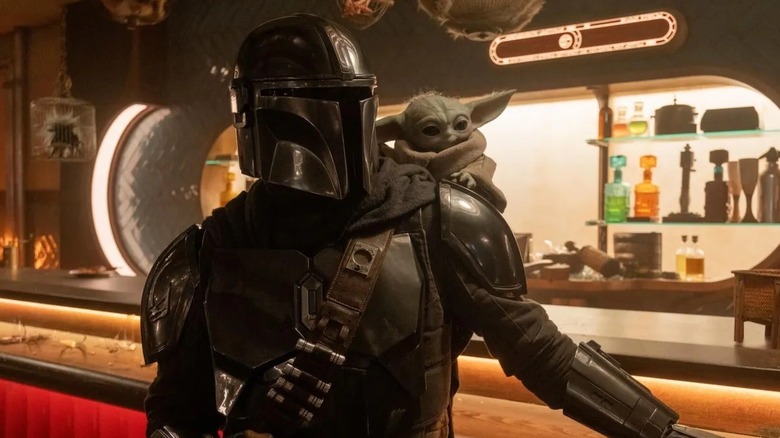
The most notable way in which "The Mandalorian and Grogu" tries to show that it's a bigger production than its Disney+ counterpart isn't through necessarily a wider scope or heavier themes. Instead, Jon Favreau uses a larger budget to deliver way more CG characters than a typical "Mandalorian" episode would feature. "The Mandalorian and Grogu" is crammed full of CG cast members, from the various Hutts to the droids that guard them to even bounty hunter Embo and his wolf companion. Thank goodness some stop-motion robots show up in the finale to break up the pervasive digital creations.
It's true that Grogu and the Anzellan characters remain puppets, and they're quite well realized on screen. However, they're exceptions, not the rule in "The Mandalorian and Grogu." Unfortunately, much of the movie revolves around Mando and his young companion fighting gigantic CG beasties or interacting with digital allies like Zeb (Steven Blum). Around every corner of this story is a new all-digital creation that Pedro Pascal must act against. This eventually gets tiresome, with the whole film feeling artificial as a result.
The effective tangibility of Grogu and the Anzellans only emphasizes how the various CG characters are often weightless and not especially engrossing. Decades after the Prequel Trilogy and its digital inhabitants like the Kaminoans hit theaters, the Star Wars saga is once again weighed down by an over-emphasis on CG figures. The more things change, the more they frustratingly stay the same.
The storytelling approach is jagged
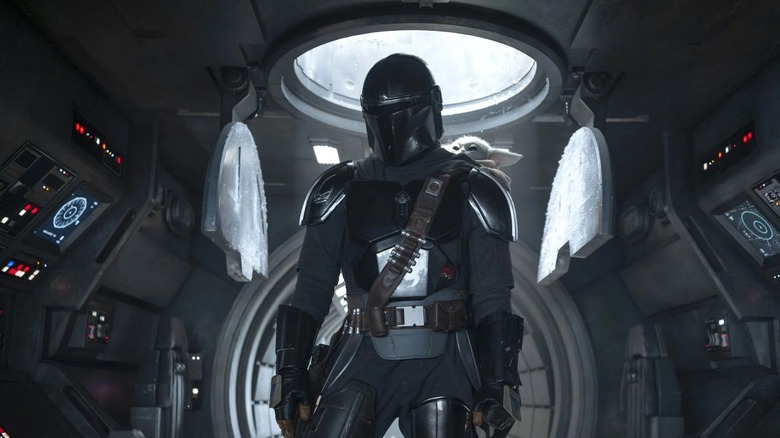
Some of the worst movies based on TV shows struggled because they could never escape feeling like a bloated installment of their source material. Unfortunately, "Star Wars: The Mandalorian and Grogu" recalls the likes of "Tarzan and Jane" or the four "Futurama" direct-to-video movies in feeling like various TV episodes combined to make one new motion picture. It's easy to pinpoint where the assorted installments would begin and end, particularly during an extended stretch of "The Mandalorian and Grogu" that focuses on just the latter character tending to a wounded Mando and could have easily been a standalone episode.
The constant jumps between villains or missions keep giving off the impression that "The Mandalorian and Grogu" is simulating the experience of binge-watching three or four episodes of the show. As a result, it's hard to get fully invested in the proceedings, given how often it distractingly lurches from one narrative focus to another. This frustrating shortcoming could have been easy to avoid if this project had been penned exclusively by people with feature film experience rather than TV veterans like Dave Filoni or Noah Kloor. A more unique plot structure might have also solved this problem.
Unfortunately, those creative routes weren't taken. As a result, "The Mandalorian and Grogu" does have its share of fun sequences, but they don't consolidate properly into a whole. It's instead a jaggedly assembled enterprise that keeps reminding viewers of its TV origins in a very perplexing fashion.
The hand-to-hand fight scenes feature poor camerawork
Action sequences have never been director Jon Favreau's specialty. He's got a great eye for low-key hangout comedy, which put him on the map with works like "Made" and "Elf" while also informing his famously intimate approach on titles like "Iron Man." But helming sprawling fight scenes isn't something he specializes in. Past movies like "Cowboys and Aliens" unfortunately illustrated this reality all too well, and the problem comes up again in "The Mandalorian and Grogu." While directors Deborah Chow and Bryce Dallas Howard showed assured hands when Mando went head-to-head with villains on the "Mandalorian" show, Favreau's execution of similar situations proves underwhelming.
Specifically, anytime there's a hand-to-hand fight scene between the various characters, Favreau opts for shaky camerawork and disorienting editing. Zeb pouncing on various Stormtroopers in a hallway, for instance, should be a fun bit of mayhem. It's executed, though, with dim lighting and poor camerawork that makes it hard to track the action. Mando duking it out with various CG monsters in a colosseum, meanwhile, suffers from similarly poor visual impulses. Even a climactic Embo/Mando duel that has steadier camerawork still lacks distinctiveness in its fight choreography.
The larger-scale action set pieces in "The Mandalorian and Grogu" that rely on spaceships and buildings exploding look decent enough. Anytime Favreau zeroes in on just humanoid creatures fighting each other, though, that's when things get murky and uninvolving.
Too much time is spent in a dingy swamp
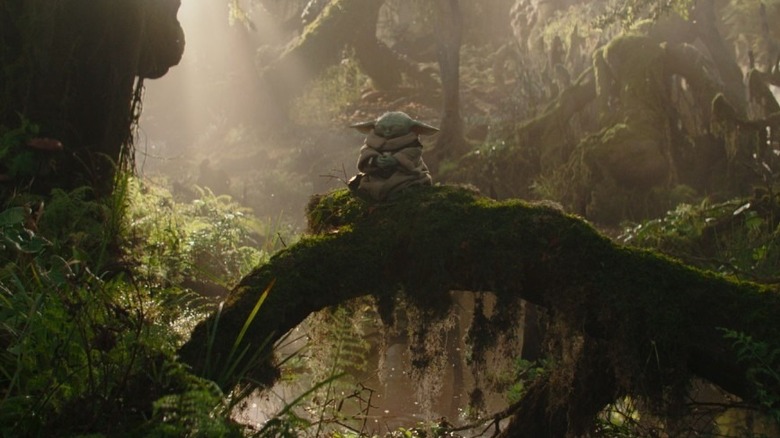
After making its debut in "Star Wars: The Clone Wars," the planet Nal Hutta, home to the Hutt species, finally materializes in live-action with "The Mandalorian and Grogu." Fittingly, given how gross so many of these Hutt creatures are, Nal Hutta is depicted as a grimy place full of dangerous aquatic beasts and endless swamps. It's also covered in a sickening green hue meant to signal to viewers that this locale is incredibly untrustworthy. Credit where credit is due, it certainly looks different enough from most other planets seen in the Star Wars movies or TV shows. Nobody will mistake it for Mustafar or Niamos anytime soon.
However, a little Nal Hutta goes a long way. Whereas other Star Wars movies bounced from one planet to another (and even set their finales in new locations like Crait or Cloud City), "The Mandalorian and Grogu" spends the majority of its second half on Nal Hutta. This makes several sequences hard to discern from one another, since they feature so little variety in backgrounds. The assorted Nal Hutta backdrops are also just not very compelling to stare at for long stretches of time.
Imagine if "Return of the Jedi" never left Jabba's palace and kept the whole movie in that one location. Save for some pretty shots of Grogu navigating this realm alone, Nal Hutta's excessive "The Mandalorian and Grogu" presence largely hurts the movie.
There are more ham-fisted callbacks
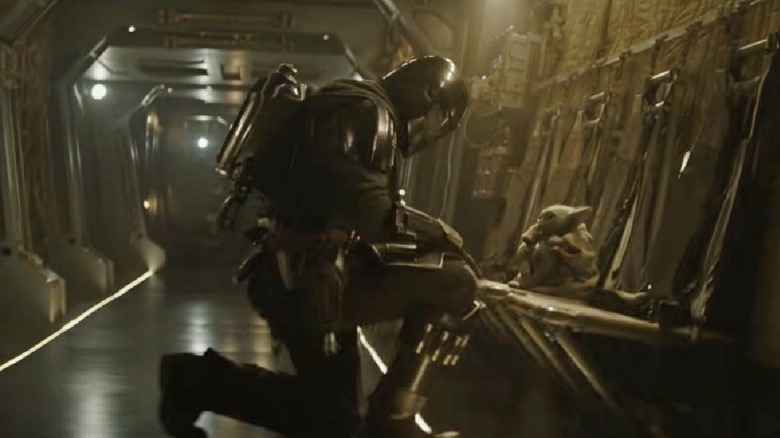
The script by Jon Favreau, Dave Filoni, and Noah Kloor deserves kudos for refusing to indulge too much in callbacks or "surprise" cameos from famous Star Wars names. "The Mandalorian and Grogu" does not grind its plot to a halt so Ahsoka Tano or Poe Dameron can show up for some audience applause. Much of the "Mandalorian" TV show supporting cast, meanwhile, has been jettisoned to ensure this project can work as a standalone adventure, making it a much more accessible feature film adaptation of a Disney+ TV show than, say, "Captain America: Brave New World." However, that doesn't mean this movie is totally devoid of clumsy nods to older Star Wars media.
The callbacks that do exist are extremely distracting in their middling execution. One notable example is when Mando greets Grogu by barreling through his various Mandalorian creeds. Audiences may get to hear "this is the way" through IMAX speakers, but cramming all these familiar catchphrases into just seconds of screentime is incredibly awkward. Then there's the early set piece where the aliens from the "A New Hope" chessboard come out as towering real-life enemies — even mimicking their movements from the game R2-D2 and Chewbacca played decades ago, right down to one alien holding another monster in the air and then tossing it away.
While "The Mandalorian and Grogu" is more restrained in its callbacks than "The Book of Boba Fett," its nods to yesteryear's Star Wars entries are still groan-worthy.
Rotta's character design is off
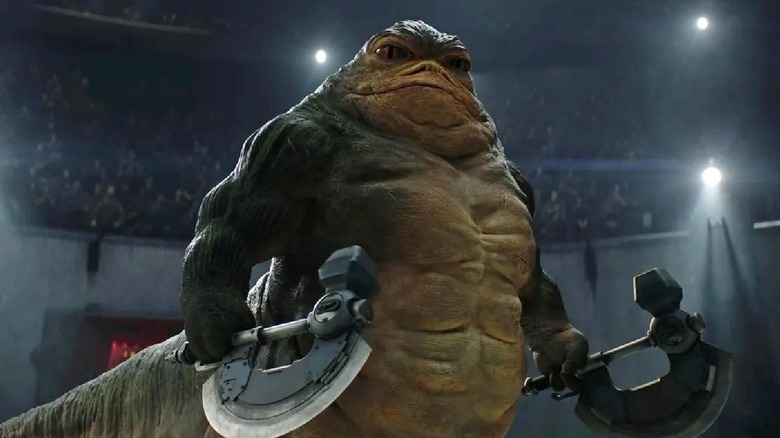
Something went really awry in designing the adult version of Rotta the Hutt. The notion of making this character the first super-muscular Hutt was always going to be a strange proposition. Plus Rotta is also way more mobile than a typical Hutt as he constantly scrambles across the screen, lurches into vehicles, or otherwise moves his gigantic frame. Rotta isn't like his father in personality, but the character designers and animators were clearly told to make sure he still evoked Jabba in stature and facial features. Combining that quality with Rotta being so nimble makes for a weird Uncanny Valley effect — he always looks off being so physically dexterous.
If "The Mandalorian and Grogu" wanted to fully commit to making a Hutt that had never been depicted before, they had to go full cartoony, like Zirro the Hutt's various "Clone Wars" appearances. That purple-skinned beastie evoked Jabba, but his heightened character design (rooted in the stylized "Clone Wars" aesthetic) made it a bit more believable whenever he was suddenly squirming around. In contrast, even the more subdued details about Rotta's design don't work, like any close-up shots of his face when he's talking. Hearing a monologue about how "I'm not like my father" emerge from what is essentially Jabba's face never stops looking unintentionally hysterical.
Rotta is a classic example of a Star Wars creation struggling to commit fully to either something new or paying homage to the past. In the process, his character design ends up being a misfire.
Where is everybody?
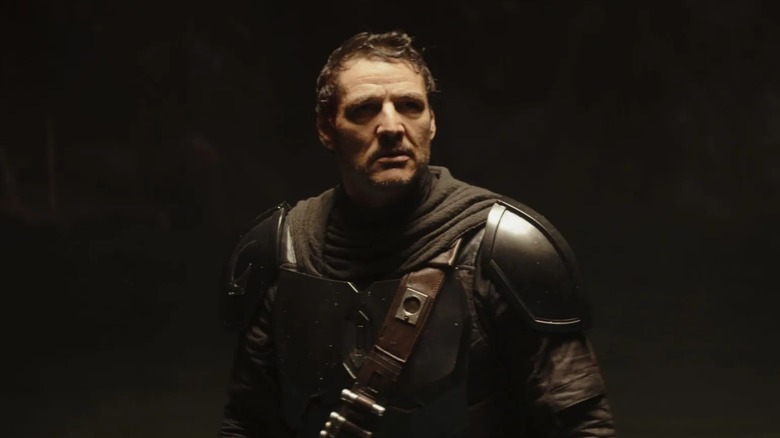
One of the worst things about "The Book of Boba Fett" and other recent Disney+ Star Wars shows was their emphasis on sudden cameos from pre-existing characters. Having Luke Skywalker show up to save the day in "The Mandalorian" or suddenly throwing in Cad Bane on "Boba Fett" disrupted these projects from working on their own artistic terms. "The Mandalorian and Grogu" largely abandons such appearances and, as mentioned earlier, ignores much of the "Mandalorian" supporting cast, presumably as a way of getting around real-world factors like key supporting player Carl Weathers having passed away between the show's third season and this movie's release.
These qualities do make "The Mandalorian and Grogu" accessible to the general public. However, the film's screenwriting trio now encounter the opposite problem: "The Mandalorian and Grogu" feels too empty. Instead of emphasizing new and exciting characters, there's just a bunch of CG droids and beasties littering the production. Compare this to the excellent "The Last Jedi," which gave audiences exciting, unprecedented creations like Porgs, turtle nuns, Benicio del Toro's DJ, and purple-haired Laura Dern in a single movie.
In trying to rectify one problem of its streaming precursors, "The Mandalorian and Grogu" plops its leads into a story that's weirdly hollow. Star Wars is supposed to take place in a vast galaxy, but the sparse supporting cast here undercuts that reality.
The movie doesn't give Sigourney Weaver anything substantive to do
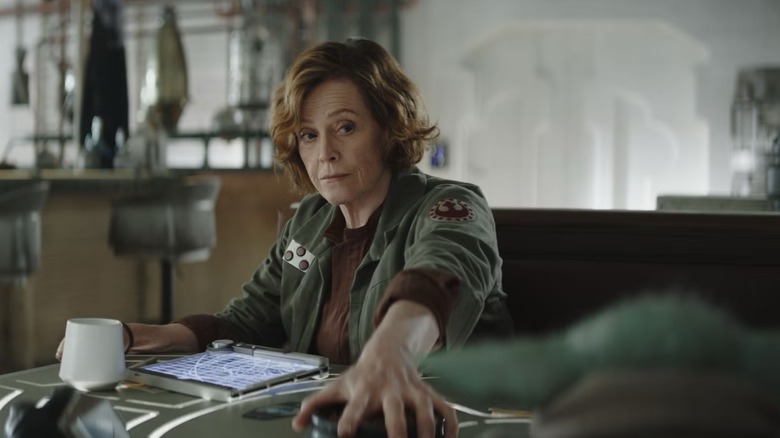
"The Mandalorian" famously used a bunch of iconic '80s genre movie performers in memorable guest turns, like Christopher Lloyd, Michael Biehn, Clancy Brown, and many others. Likewise, "The Mandalorian and Grogu" deploys Sigourney Weaver as New Republic leader Ward. Every Sigourney Weaver movie, from "Alien" to "Avatar," features at least one iconic moment from this seminal performer, but anyone hoping for similar greatness from Weaver in "The Mandalorian and Grogu" will leave the theater understandably frustrated.
Weaver doesn't have much of anything to do in "The Mandalorian and Grogu" beyond delivering exposition to Mando. Even in the finale, where she shows up piloting an X-Wing, she's mostly around to relay to viewers how intense things are getting in the fighting on Nal Hutta. There's no distinctive personality to her character despite Weaver showing throughout her storied career that she can play many different kinds of people. She doesn't even get a memorable outfit to wear and is instead stuck with just a green jacket featuring hastily sewn-on New Republic symbols.
It should be a crime to waste Sigourney Weaver like this, especially in her very first appearance in the Star Wars franchise. After all, between the "Alien" and "Avatar" movies, Weaver is sci-fi royalty. Alas, this legend is relegated to a wooden role that offers her nothing to do.