

5 Worst Star Wars Alien Designs, Ranked
Otherworldly aliens are as important to the "Star Wars" saga as a rousing score or elaborate outer space fights between cool spaceships. From the very first entry in this narrative, "Star Wars" has constantly delivered nifty-looking creatures that capture the imagination. You can see anything or anyone in one of these movies or TV shows, which makes it so exciting to explore new stories or planets in the franchise. Some of the greatest "Star Wars" alien designs are also among the very best in all of pop culture. This saga has set the bar high for quality otherworldly organisms, though that doesn't mean every single story in this universe has delivered amazing-looking aliens.
On the contrary, some of the "Star Wars" aliens just didn't come out right at all in terms of character designs. The five worst "Star Wars" alien designs (ranked below from least worst to the most appalling) reflect what happens when something goes seriously wrong in designing outer space creatures in this saga. Some of these alien designs don't work because of external factors like budgetary or technological limitations. Others were capsized by a lack of imagination or a dearth of color.
Whatever led to these "Star Wars" alien designs missing the mark, these five aliens are the opposite of this galaxy far, far away's best cosmic critter. You need rain to appreciate the sunshine, and you also have to absorb these five terrible "Star Wars" alien designs to properly savor the saga's best creatures.
5. Gormaanda's species
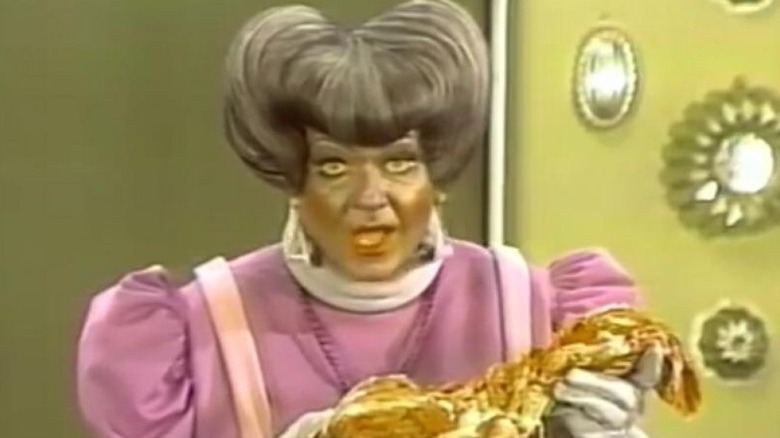
"The Star Wars Holiday Special" doesn't have a great reception — and for good reason. This inexplicable pop culture artifact is full of "Star Wars" sights and sounds nobody ever expected (or wanted) to see in this franchise. The most disturbing moments in "The Star Wars Holiday Special" are borderline surreal, and one such moment has to be the appearance of Gormaanda (Harvey Korman). At one point in this enterprise, Chewbacca's wife heads into the kitchen and begins watching a cosmic cooking show hosted by the four-armed Gormaanda. Is this entity a robot? An organic lifeform? A nightmare hallucinogenic organism from one of these Wookiees ingesting too many death sticks? It's tough to say.
What's clearer, though, is that the design of Gormaanda's species (her species never got a proper name) leaves much to be desired. The makeup used for Korman's face, for one thing, evokes blackface, which is utterly repulsive. Meanwhile, her outfit, an obvious pastiche of classical 1950s housewife attire, lacks imagination. Replicating a recognizable Earthbound costume with only the tiniest touches suggesting something "alien" (like the round cuffs of her gloves) is a wasted opportunity.
Meanwhile, the immense budgetary limitations of a broadcast network holiday special means that this alien's four arms are realized with far less skill than, say, "Andor's" Dr. Quadpaw. Gormaanda's species suffers from a lack of both imagination and craftsmanship in terms of design. It's not surprising this "Holiday Special" element hasn't reappeared in live-action "Star Wars" materials.
4. Toydarian
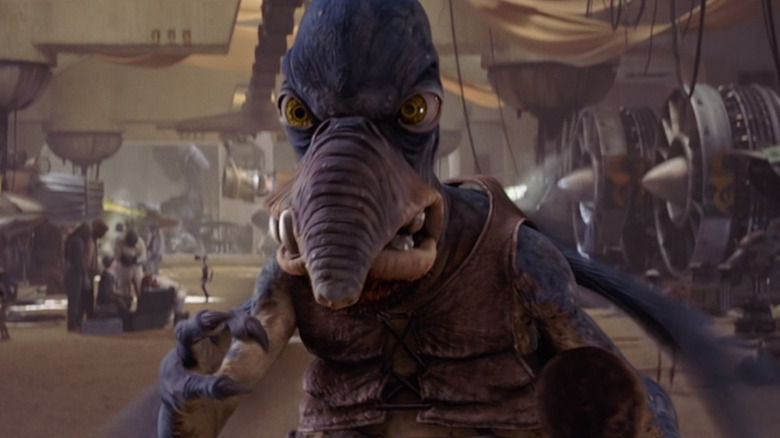
Let's get a key element out of the way regarding the Toydarian "Star Wars" species, which "Phantom Menace" character Watto belongs to. The design of Watto, who originally owned Anakin Skywalker as a slave, and physical features of both this character and all Toydarians, have been routinely criticized as perpetuating antisemitic stereotypes. Such critiques began floating around right when "The Phantom Menace" hit theaters and have plagued the character since. However, the problems with Toydarians in terms of design go far beyond the controversy Watto endured for his appearance.
The design of these critters never quite looked right, especially in their "Clone Wars" incarnation with characters like King Katuunko. Details like Katuunko's protruding fangs or the poorly executed amalgamation of different animal body parts (a hummingbird's wings with the feet of a blue-footed booby) never quite looked right on screen. Giving Toydarians these immense trunks that come over their mouths and making them chatty aliens who speak English also makes the lower-half of their faces too busy-looking. Rather than appearing interestingly detailed, the Toydarian faces always looked distractingly cluttered.
Perhaps these visual problems with the Toydarians is why the Galaxy's Edge theme park kept its Toydarian shopkeeper Toydarian Zabaka confined to just silhouette form. It's true that many have perceived deeper problems with Watto and his species. However, that brouhaha is just the tip of the iceberg when it comes to Toydarian-based design shortcomings.
3. Muun
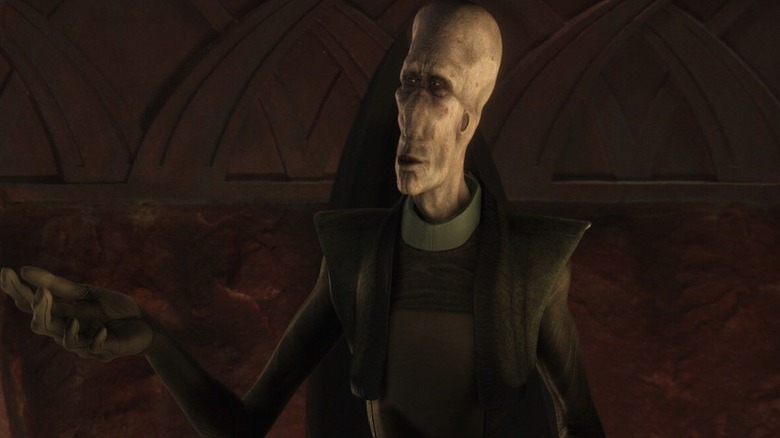
Undoubtedly, there are diehard fans of Prequel Trilogy baddie San Hill out there immediately gnashing their teeth seeing Hill's species, the Muun, on here. Perhaps they're even wondering why Hill's people didn't crack the list of the five best "Star Wars" alien designs. Quietly big fanbase or not, though, there's no getting around how the Muun don't look right. Part of that is the restrictions of CG circa 2002, when San Hill and the Muun species first appeared via "Attack of the Clones." Digital animation was capable of many things at the dawn of the 21st century, but human-like skin wasn't one of them. This meant the humanoid San Hill looked hopelessly plastic.
The off-putting textures and appearance of San Hill are only part of why the Muun are a calamity of extraterrestrial character design. There's also the fact that they're uninspired in so many other visual facets. Their big, bulbous heads, for instance, are the only thing keeping them from being just human beings. Then there's their drab, gray skin. Other Prequel Trilogy aliens like Darth Maul were bathed in bright colors that immediately caught one's attention; on the other hand, San Hill and the Muun looked so grim and uninteresting.
While other "Star Wars" aliens sent people's imagination into overdrive after their brief appearances, the limp and dull visual impulses behind the Muun made characters like San Hill instantly forgettable. All apologies to this villain's devotees, but the Muun alien design needed some heavy overhauling.
2. Dug
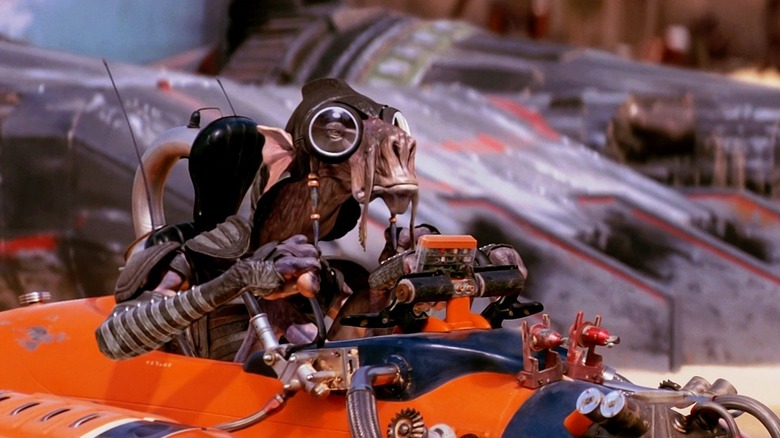
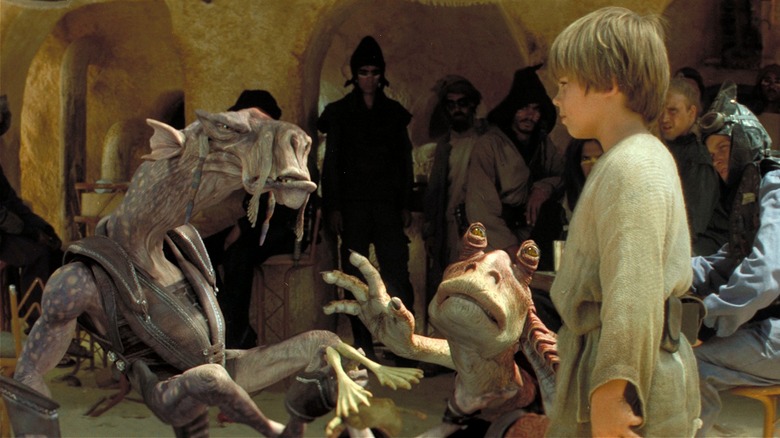
Much like San Hill in "Attack of the Clones," Sebulba was another wholly digital Prequel Trilogy character hampered by the limitations of CGI at the time. This scaly, semi-aquatic looking (especially with those flippers where his ears should be) beastie always looked like he'd been molded out of slippery clay. Given the smoothness of computer animation, that quality didn't give Sebulba the endearing aura of actual stop-motion animated characters made out of real clay. Instead, it just made Sebulba's skin look like it was constantly melting. This was one of many design problems that plagued Sebulba, a member of the Dug species, in his screentime.
Sebulba and all Dugs use their legs for hands, with those appendages populated by pointy digits that look deeply unpleasant. Meanwhile, the walking of the various Dugs, including one CG Dug added into the 2011 version of "Return of the Jedi," always appears off. The weight of these creatures doesn't correlate to their bouncy body movements when they're just prancing around. Also like San Hill, Sebulba and the other Dugs (including ones seen in the "Clone Wars" show) materialize with such dusty color schemes. These creatures can apparently only show up as white or gray, which makes them extra tedious to look at.
None of the other Dugs that "Star Wars" has presented to audiences have rectified the initial visual problems that plagued Sebulba. No advancements in CG technology could save an alien species so intrinsically doomed to failure.
1. Dryden Vos' species
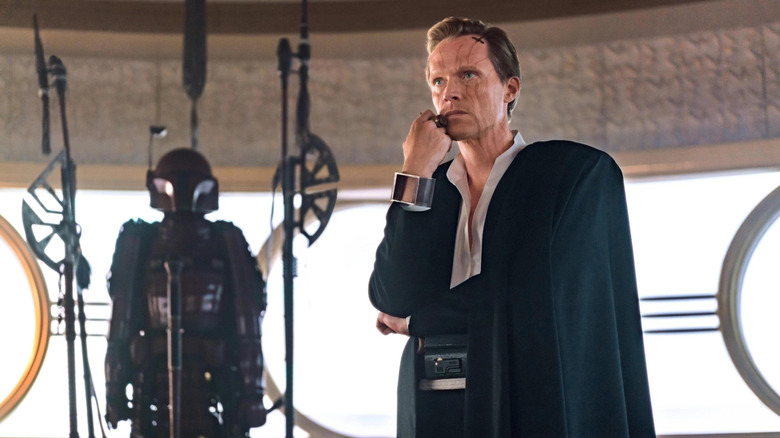
Believe it or not, "Solo: A Star Wars Story" baddie Dryden Vos (Paul Bettany) is not a human being. One of the small details people missed in "Solo" is that he's actually an alien belonging to Dryden Vos' species. While Bettany did intimidating work in the role, it can't be stressed enough how lazy Vos is as an alien design. He's just a human being with red veins scattered across his body. From afar, you'd never guess this guy was an alien. Director Ron Howard and company didn't even give Vos some other subtle and fun details to accentuate the guy's non-human nature (like peculiar eyes). He's just a slightly off-kilter human being.
Adding insult to injury, audiences almost saw a better rendition of Dryden Vos' species embracing those alien roots. Among the "Solo" scenes you didn't see were pre-reshoot sequences where Michael K. Williams played Vos. Apparently, in this iteration of the film, the character had a more "mountain lion-like" appearance and was realized through motion capture. However, the character's design was overhauled into something distinctly human (and less complicated to realize in post-production) during reshoots.
Knowing a superior version of Dryden Vos almost made it to the silver screen just rubs salt into the wound regarding the visual shortcomings of Dryden Vos' species. One of the laziest creations in all of "Star Wars," the design abandons all the cool possibilities of "Star Wars" aliens.