

5 Fantasy Movies That Received A Perfect Rating From Roger Ebert
When he passed away in 2013, Roger Ebert was memorialized by Barack Obama in one simple sentence, saying that "Roger was the movies." Few critics have ever matched his ability to write glowing reviews worthy of the films themselves, condensing film theory and appreciation for the finer technical details into dispatches that spoke equally to cinephiles and casual viewers alike. Even if you didn't like a certain movie he considered one of his favorites, it was easy to get swept up in his infectious enthusiasm.
In this feature, we're diving into five fantasy movies that got a perfect rating from Ebert across his career. There are plenty of great titles to choose from, so in narrowing down to five, we avoided the classics everybody loved right out of the gate (no "Harry Potter" or "Lord of the Rings" here) to a few where time proved him right. Some were films shrugged off by many upon initial release, and others are among the final movies he gave four stars within the genre prior to his passing, which serve as a closing reminder to what he believed represented the very best of fantasy cinema.
My Neighbor Totoro
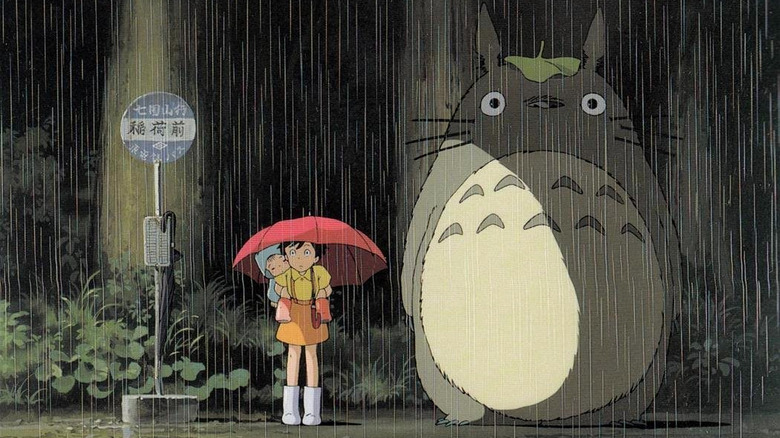
Roger Ebert was one of the Studio Ghibli's biggest champions before "Spirited Away" brought the Japanese animation studio firmly into the Western mainstream, going to bat for Hayao Miyazaki's "My Neighbor Totoro" upon its 1993 U.S. release. On "At the Movies," his co-host Gene Siskel wrote the movie off as "boring," claiming that its unique perspective from two young sisters wasn't novel in a world with Disney's "The Little Mermaid" and "Beauty and the Beast" — something Ebert disagreed with.
Here was a fantasy film alive with the possibilities of childhood, where otherworldly creatures were part of every day life, and magic was hiding around any corner. But it's not in a world without darkness; Miyazaki is skilled at weaving traditional folklore into aspects of family life that American animation was scared to touch at the time, crafting a more lived-in family drama.
When revisiting "Totoro" for his Great Movies column in 2001, Ebert called it, " ... a children's film made for the world we should live in, rather than the one we occupy. A film with no villains. No fight scenes. No evil adults. No fighting between the two kids. No scary monsters. No darkness before the dawn. A world that is benign. A world where if you meet a strange towering creature in the forest, you curl up on its tummy and have a nap." It is one of the loveliest movies ever made, and remains one of Studio Ghibli's best movies.
Babe: Pig in the City
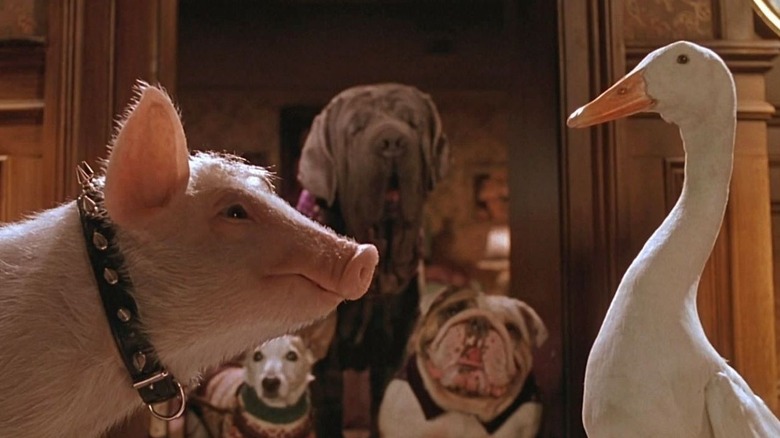
Roger Ebert had a reputation for being an early champion of cult classics that were initially written off by others; take "The Fall," now regarded as one of the best fantasy movies of the 21st century, which he was one of the few defenders of. In 1998, as other critics were divided on "Babe: Pig in the City," he was one of the few who declared it better than the best picture-nominated original.
Set in the dystopian city of Metropolis — where the Sydney Opera House and the Empire State Building can be viewed from the skyline — "Pig in the City" follows the plucky sheep-pig (E.G. Daily) falling into a life of crime with a family of chimps after getting separated from his owner and stuck at an animal motel.
George Miller took over directorial duties, and the result is something as strange and nightmarish to kids as a trip to the Wasteland. As well as declaring it more "magical" than the original, Ebert was won over by the way Miller didn't abide by family movie conventions. He wrote, "It is in no way just a 'children's movie,' but one that extends the imagination of everyone who sees it ... I liked 'Babe' for all the usual reasons, but I like 'Babe: Pig in the City' more, and not for any of the usual reasons, because here is a movie utterly bereft of usual reasons."
Pan's Labyrinth
In June 2006, Roger Ebert was admitted to the hospital following surgery complications, catching up on the movies he missed during the later months. When he finally made his best of 2006 list in late 2007, he was adamant about one thing: "Nothing I am likely to see, however, is likely to change my conviction that the year's best film was 'Pan's Labyrinth.'"
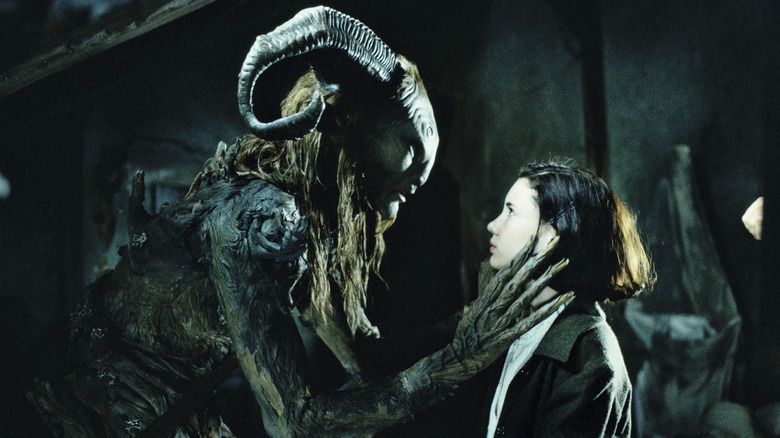
Guillermo Del Toro's dark fairytale set during the Spanish Civil War is rightfully considered his very best. This is a coming-of-age story equal parts fantastical and bleak, set in the dying days of Franco's Spain, where the mystical creatures prove nowhere near as terrifying to young heroine Ofelia (Ivana Baquero) as her new stepfather, the fascist military captain Vidal (Sergi López).
With several of the best fantasy set pieces ever, beautiful creature designs, and haunting performances, "Pan's Labyrinth" was an instant classic, receiving a 22-minute standing ovation at its Cannes premiere (still the longest ever recorded). Ebert was specifically won over by its genre contrasts, writing, "'Pan's Labyrinth' is one of the greatest of all fantasy films, even though it is anchored so firmly in the reality of war. On first viewing, it is challenging to comprehend a movie that on the one hand provides fauns and fairies, and on the other hand creates an inhuman sadist in the uniform of Franco's fascists ... they both impose sets of rules that can get an 11-year-old killed."
Hugo
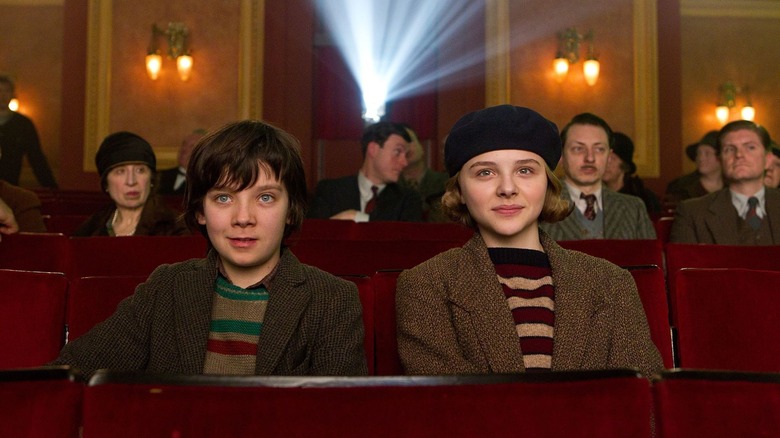
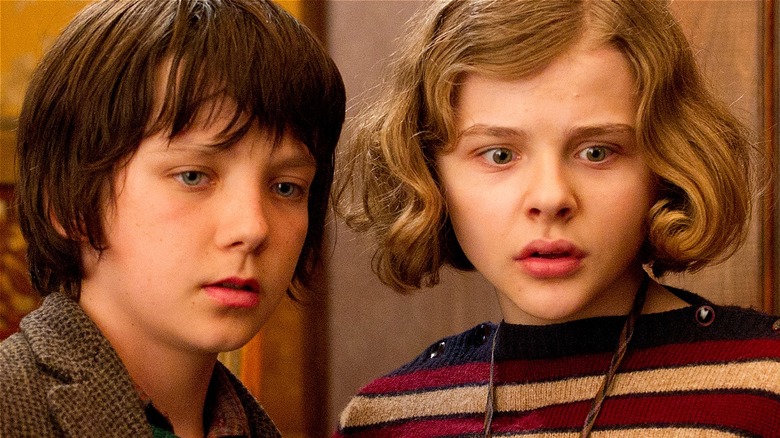
Before his death, the final new fantasy film Roger Ebert reviewed — not counting a brief capsule review of the Spanish silent film pastiche "Blancanieves" — was Martin Scorsese's now largely forgotten children's fantasy, adapted from Brian Selznick's 2007 YA novel "The Invention of Hugo Cabret." Here, Asa Butterfield stars as the titular orphan who secretly lives in the station's walls, eventually befriending Isabelle (Chloë Grace Moretz), whose godfather Georges (Ben Kingsley) hires him to work at his toy shop in the station. Over time, Hugo learns that this is pioneering director Georges Méliès, who doesn't want to be reminded of his past as he believes his work has been destroyed.
What unfolds is equal parts Dickensian adventure and cinema love letter, with Scorsese using the children's fantasy as both a trojan horse to express the importance of film preservation, and an excuse to recapture the magic of early silent shorts. In his 2011 review, Ebert wrote, "'Hugo' is unlike any other film Martin Scorsese has ever made, and yet possibly the closest to his heart: a big-budget, family epic in 3-D, and in some ways, a mirror of his own life. We feel a great artist has been given command of the tools and resources he needs to make a movie about — movies. That he also makes it a fable that will be fascinating for (some, not all) children is a measure of what feeling went into it."
The Spirit of the Beehive
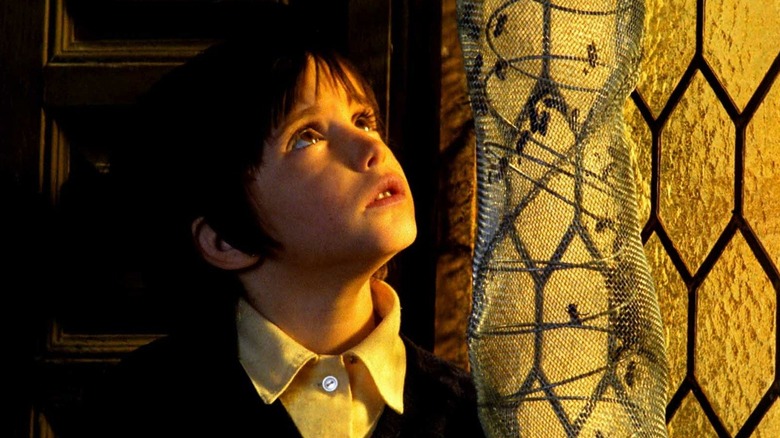
The final fantasy film given a perfect four-star rating by Roger Ebert in his lifetime was this enchanting Spanish classic from director Victor Erice, and one of the final movies inducted into his Great Movies collection.
Set following the Spanish Civil War, the film follows six-year-old Ana (Ana Torrent), whose life is changed after seeing 1931's "Frankenstein" in the town hall, fixating on the scene where the monster accidentally kills a little girl. She is led to believe the monster lives in a nearby farm and keeps returning hoping to see it, only to find a wounded Republican soldier hiding there. She takes care of the man, in what proves to be a formative experience that blurs fiction and reality; she's told everything in movies is fake by her older sister, but how is that true when she also said she'd seen a spirit with the same breath?
Declaring it "one of the most beautiful" films he'd ever seen, Ebert said the movie is best appreciated by non-Spanish viewers less as a coded political allegory for life under fascist rule, and more about the magic of childhood itself. He wrote that, "['The Spirit of the Beehive'] is considered a coded message about Franco's fascist regime, but it's not for me to connect the dots. I relate to it more strongly as a poetic work about the imagination of children, and how it can lead them into mischief and sometimes rescue them from its consequences."