

5 Forgotten Post-Apocalyptic Movies That Still Hold Up Today
Many of the best disaster movies of all time are apocalyptic, convincing audiences to turn up in droves to watch films that try to guess which calamity might spell the end of humanity. In "Mad Max: Fury Road," a bit of graffiti in the background of a scene offers up one of the movie's most compelling questions: "Who killed the world?"
It's a question humanity has pondered ever since we became aware that the world might end someday, that this grand experiment we call "society" may eventually crumble. What will bring about our doom? Should we fear a deadly virus, as seen in "I Am Legend"? Will it be the climate crisis, as in "Snowpiercer"? Nuclear war, like in the "Fallout" franchise? A giant asteroid, like the one that killed the dinosaurs? Pick your swan song.
For every "Mad Max: Fury Road" and "I Am Legend," however, there are plenty of post-apocalyptic movies that didn't quite stick around long enough to redefine pop culture's understanding of the end of the world. The movies on the list below didn't last the way the ones mentioned above did, but that doesn't mean they're not worth watching. In fact, the five movies on this list still hold up today ... as long as you're willing to meet the movies where they are, and willing to suspend your disbelief to go along with these visions of life after the end of everything.
The Aftermath (1982)
We're starting with a difficult one. "The Aftermath" has held up in the sense that it was never great, but it hasn't exactly gotten worse. We can admit that the screenplay is kind of a mess, the characters are thinly-drawn caricatures, and the director also wrote and starred in the movie, which gives you an indication of what we're working with here.
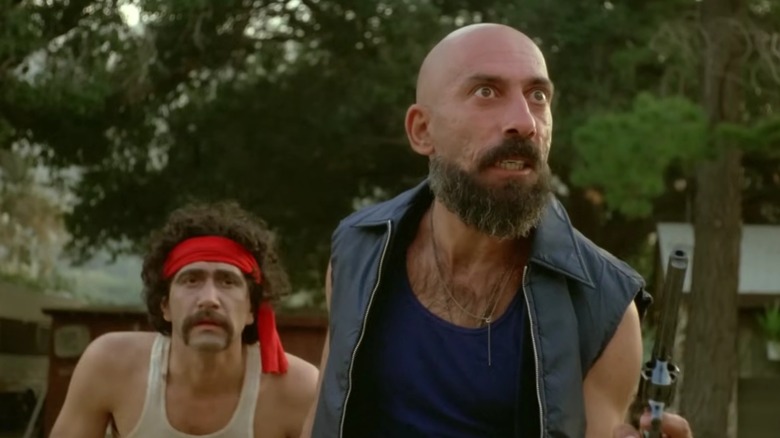
Instead of vanishing forever, however, this over-the-top, bloody, post-apocalyptic grindhouse thriller has picked up somewhat of a cult following in the decades since its release. The plot seems like something out of one of those episodes of "The Twilight Zone" that predicted the future: a team of astronauts return to Earth, only to find that society has been obliterated by nuclear war in their absence. As Newman (writer/director Steve Barkett) tries to make his way across a decimated Los Angeles — rendered in delightful matte paintings — he runs afoul of a biker gang full of evil men.
The head biker is played by a young Sid Haig, the horror legend who would go on to play Captain Spaulding in Rob Zombie's films, including "House of 1000 Corpses" and "The Devil's Rejects." Haig is great, injecting a wild-eyed, manic energy into the film. Add in burning-people fire stunts, more exploding blood-packs than your local Spirit Halloween can sell in bulk, and copious amounts of gratuitous violence, and "The Aftermath" is a wild ride well worth taking.
Threads (1984)
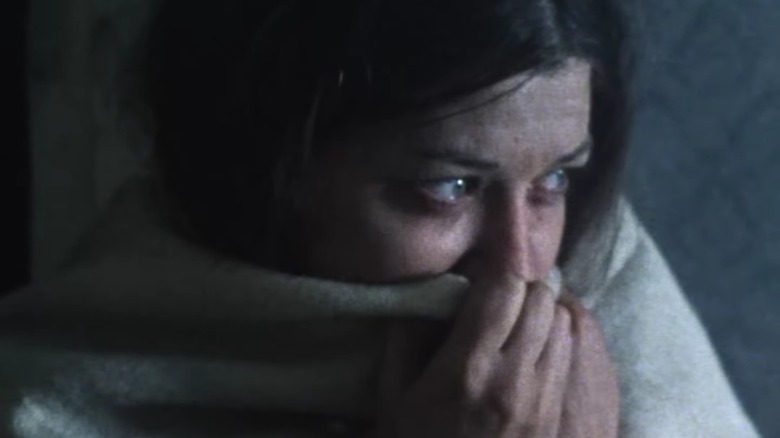
If you're in the United Kingdom, you might be surprised to see "Threads" on a list of forgotten films. The movie rocked England when it premiered on the BBC back in 1984, but it didn't particularly impact America the way it did across the pond. The year before, we'd had our own pop-culture sensation called "The Day After" – another television film that attempted to depict the real-life consequences of nuclear war — but that film pales in comparison to the harrowing brutality of the British movie about the same subject.
"Threads" is one of the most upsetting films you're likely to ever watch. When it was made, the world had been in the grips of the Cold War for decades, living each day with the knowledge that two nuclear superpowers were at odds and might, at any moment, blow up the world. "Threads" imagines a nuclear strike on Sheffield; while the first act of the film builds up scenes of everyday life as people learn that the world is on the brink, once the bomb hits, the film becomes a howling maelstrom of devastation.
The nuclear strike in "Threads" deserves to be remembered as one of the scariest scenes in cinema history, but often goes missed on such lists. Director Mick Jackson makes use of bright white light, strategic silences, and the roaring sound of a raging wind that turns the city to mulch. There are quick cuts to shocking, savage imagery of people burning, bodies withering, skin peeling, dogs dying, babies bleeding ... and then humanity is left to pick through the rubble.
Carriers (2009)
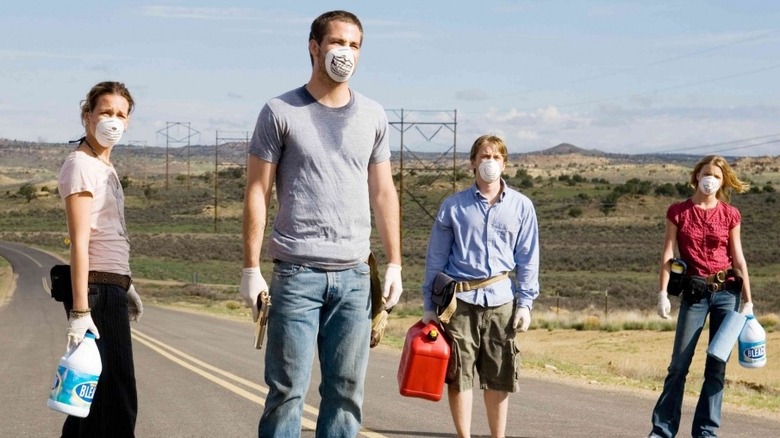
While "Carriers" was a strong enough watch in 2009 — the film has a respectable 62% Fresh rating on Rotten Tomatoes, which is not bad for the time — the Chris Pine-led thriller has only gotten scarier with age. In 2009, the idea of driving across a virus-ravaged wasteland in surgical masks might have seemed difficult to understand. After 2020, the movie feels all too familiar. There's a reason why — as COVID-19 hit — "Carriers" began to show up on lists of movies like "Contagion" to watch next.
While some post-apocalyptic films try to go big, showing the damage society has inflicted upon the entire world, "Carriers" keeps it small. When it starts, there are four main characters traveling together across a desert highway. In addition to Pine, the central cast includes the always-excellent Piper Perabo, Lou Taylor Pucci, and Emily VanCamp. After a tense confrontation with a desperate man (played by Christopher Meloni), the group picks up a stranded girl played by a young Kiernan Shipka. That's when their careful plan for protection from the virus falls apart ... or will it be the paranoia that gets them?
This is one of those 2000s horror movies where everyone is grimy and sweaty the entire time, and that atmosphere makes "Carriers" a muscular, brutal watch. You can see the despair quite literally dripping from everyone's faces, and as they face the imminent destruction of what little they have left, you'll find yourself extremely glad our own real-world pandemic didn't go this direction.
The Rover (2014)
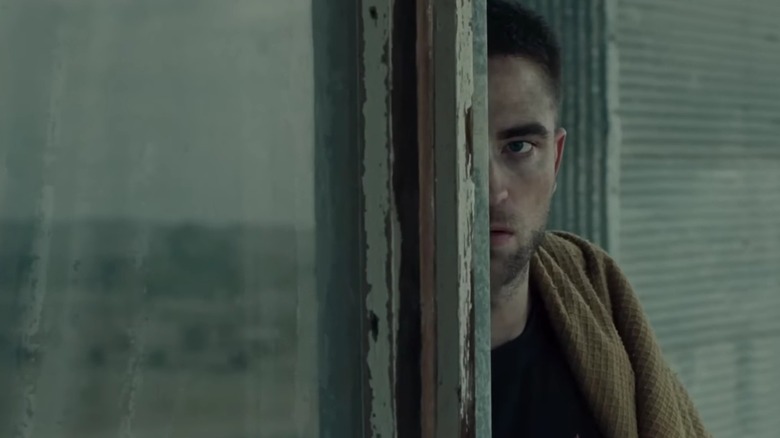
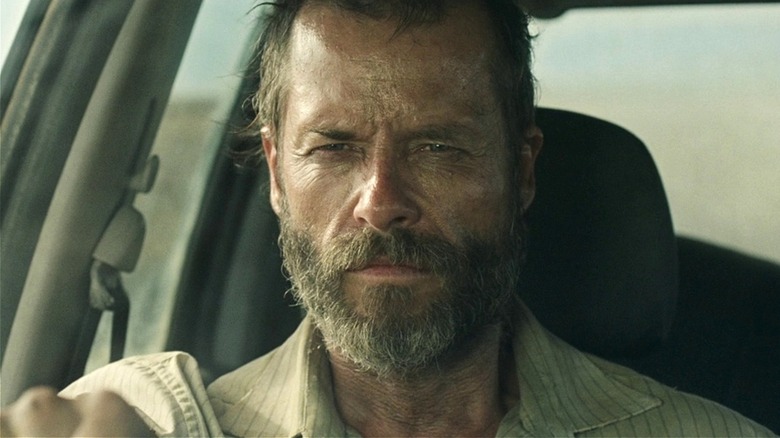
Like the "Mad Max" movies, "The Rover" comes from the land down under. There must be something about the sun-baked Australian Outback that's particularly suited to stories about a future world where everyone is desperate for water after society is ripped apart at the seams. It's unclear exactly who killed the world in "The Rover," but it's obvious that society just ... doesn't work anymore. The global economy has collapsed, leaving Australia on its own. This is a lawless land, a place ruled by guns and anger.
Writer/director David Michôd's 2014 film stars Guy Pearce and Robert Pattinson as two unlikely allies, two men who fall in with one another after a violent incident. Each man is exceedingly suspicious of the other, but sometimes post-apocalyptic circumstances require you to place your trust in someone. As the wary allies pick their way across the Outback, they learn to help each other out.
"The Rover" has aged very well. At the time, audiences weren't used to seeing Pattinson like this; "The Twilight Saga: Breaking Dawn — Part 2" had only come out two years earlier, and the future star of "The Lighthouse" hadn't yet reinvented himself as an arthouse darling. Now, it's much easier to watch Pattinson's performance for what it is: a fascinating, wounded, eminently-watchable indicator of the kind of actor he would become. In 2014, audiences might've laughed at the scene where a lonely Pattinson sings along to a stray radio signal broadcasting Keri Hilson's "Pretty Girl Rock." Now — as we, too, find ourselves nostalgic for the relative ease of life in the early 2010s — it's haunting.
The End (2024)
Director Joshua Oppenheimer is no stranger to making movies where people sift through the wreckage of an apocalyptic event. His documentary "The Act of Killing" invites people to restage their memories of the mass slaughter of Indonesian political dissidents in the 1960s, using different genres to get people to investigate their own complicity in an event that scarred the psyche of the country.
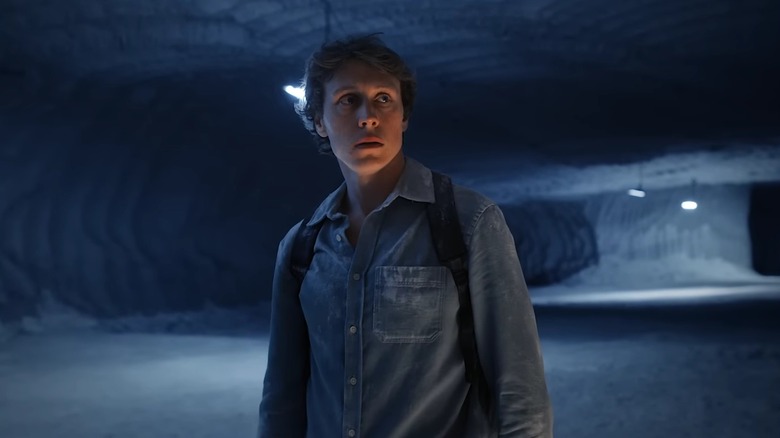
His 2024 musical "The End" is his first dramatic film, but it too takes a scalpel to people responsible for horrific atrocities. In this case, it's an unnamed couple played by Michael Shannon and Tilda Swinton. They live in a vast underground bunker with their son (George MacKay), maintaining their mansion with a handful of staff who have become like family since the world up above died. As the strange, eerie, gorgeously-shot musical unfurls, it becomes clear that this family could afford a bunker because they financially benefited from a climate catastrophe that seems to have finally reached the point of no return.
This is a movie about art, about whether we should let ourselves off the hook if we attempt to find redemption through emotional expression. The movie failed to make much of an impact upon release — have we mentioned that it's very strange? — but even two years on, its questions only feel more relevant. If you're willing to take a chance on an unconventional post-apocalyptic film like nothing you've ever seen, then you need to watch this one right now.