

5 Period Dramas Way Better Than Bridgerton
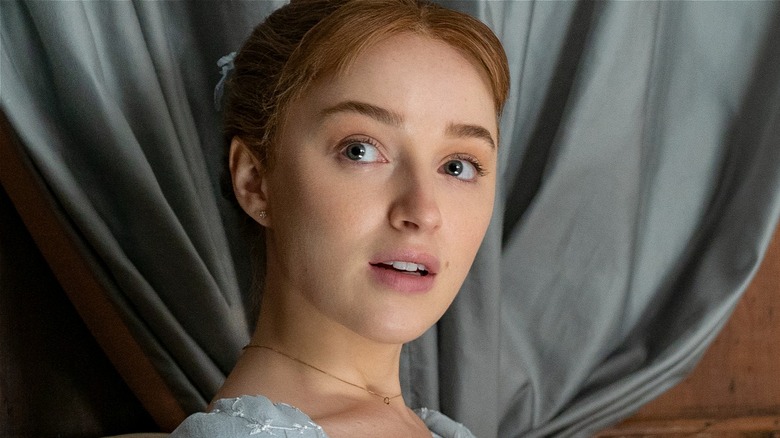
There are plenty of things to like about Netflix's hit series "Bridgerton." For one thing, the show is based on a series of popular, historical romance novels by Julia Quinn. For another, it's not afraid to lean into anachronisms — the classical instrumental versions of contemporary pop hits that pervade every season are practically a series trademark at this point. "Bridgerton" also benefits from the fact that it is a streaming show, and therefore not beholden to any rules around how explicitly sexual it can get. Adult romance fans are hungry for passionate adaptations that bring their favorite book ships to life.
The thing about "Bridgerton," though, is that it's not all that great. From the Francesca controversy to the variable chemistry between the romantic leads of each season, "Bridgerton" often fails to provide a satisfying adaptation of a very popular book series. Actors like Jonathan Bailey and Nicola Coughlin have shined on the series, but only in spite of a mediocre script and poorly-paced plotting. There's a flustered sense about the series, as if every decision is made by kicking an inconvenient can down the road in order to solve a more urgent storytelling problem.
Luckily for viewers who are desperate for elegant costumes and harrowing solutions to problems that would otherwise be solved by cellphones in contemporary romances, there are a lot of great period TV shows out there. They aren't all based on books, so they don't necessarily have the kind of built-in fanbase that a show like "Bridgerton" can count on, but the series on this list offer some of the best romance to be found onscreen today. What's more, they offer many other layers of textual substance and dramatic value, and are well worth checking out for any fan of letter-writing and corsetry.
Harlots
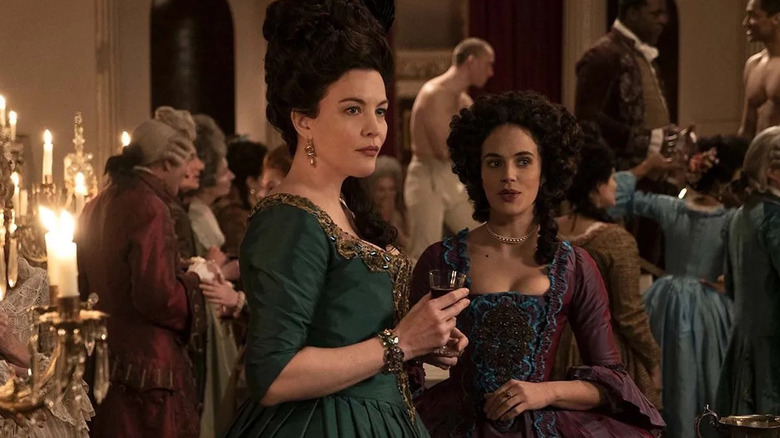
Unfortunately for its fans, "Harlots" was cancelled by Hulu after its third season. Fortunately for anyone looking for a hidden gem period piece, those first three seasons are still worth watching on their own. "Harlots" is an edgy drama that centers on the world of sex work in 18th-century London (only a handful of decades prior to the time period depicted in "Bridgerton"). While it may sound dicey, the series actually offers an incredibly nuanced portrayal of its characters. Many of the so-called "harlots" in the show are actually able to exercise a unique kind of agency that would otherwise be unattainable for women at the time.
There are plenty of downsides to the brothel life, to be sure, but nothing about this show is rote, two-dimensional, or seeming to hand down a moral verdict. Margaret Wells (Samantha Morton) is an intelligent, independent brothel owner who genuinely cares for the women who work for her, and yet she also doesn't hesitate to initiate her own daughters into the family business. Charlotte (Jessica Brown Findlay), Margaret's older daughter, is bold, beautiful, and desired— and yet still beholden to the petty insecurities of her financial keeper. As the series goes on, new characters and interesting historical lenses are introduced, and there is plenty of legitimate romance throughout.
House of Guinness
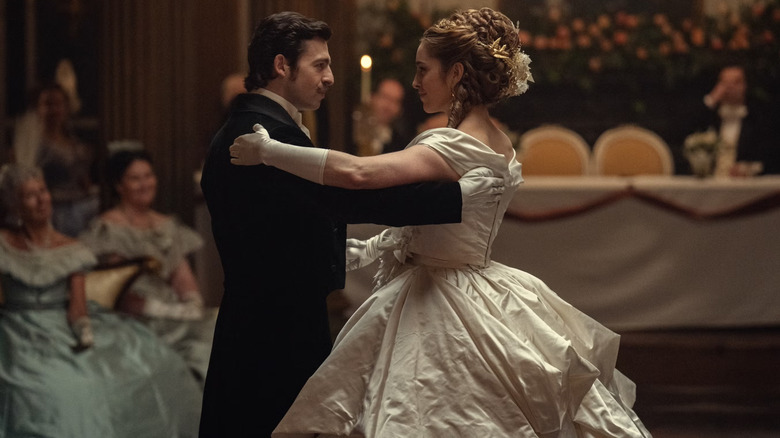
Funnily enough, "Bridgerton" is not Netflix's only dramatic period series. "House of Guinness," which has only aired one season so far (though it has been renewed for a second), is about the Irish-British Guinness family and their brewing empire. Similarly to "Peaky Blinders," the show follows a set of siblings who must navigate constant threats, challenges, and entanglements in order to retain their wealth and status, especially as a family without aristocratic heritage. Edward (Louis Partridge), Arthur (Anthony Boyle), Anne (Emily Fairn), and Ben (Fionn O'Shea) each have a distinct personality, complete with fatal flaws and opportunities for growth, and the series doesn't back away from that complexity.
Unlike "Bridgerton," "House of Guinness" is about many more things besides interpersonal relationships. The series — set in 19th-century Ireland — offers an interesting vision of the country's political landscape at the time. As the Guinness family becomes more wealthy and socially prominent, they must still contend with the criminal element of Dublin that has worked in congress with their business for so long, as well as the Fenians and their fight for independence from Britain. The many overlapping factions and steadily rising stakes also provide an atmosphere ripe for dramatic romance.
Victoria
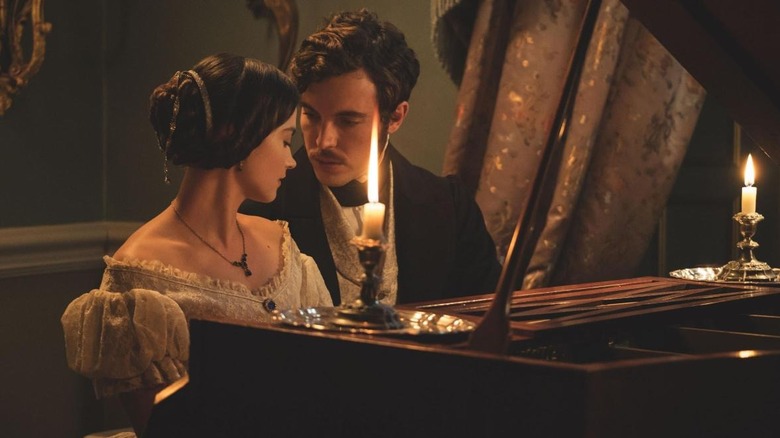
Now that British historical drama "Victoria" is available to stream on Netflix, fans of romance and period dramas can enjoy one of the better historical screen adaptations to come out of the United Kingdom in the past couple decades. While there are people depicted in "Bridgerton" who did exist, like Queen Charlotte (Golda Rosheuvel), the series is almost completely removed from its own historical context. "Victoria," on the other hand, is about one of the most formative monarchs in the history of the British Empire, and frequently addresses key historical moments that coincided with her reign, like the abolitionist movement and the invention of the postage stamp. It's a genuinely interesting series for people who are curious about the past, but that doesn't mean it's short on romance.
Queen Victoria (Jenna Coleman) and Prince Albert (Tom Hughes) had one of the world's most famous real-life love stories, and it's a delicious treat to watch that story unfold with the benefit of gorgeous costumes, artful scene composition, and sensual actors. Coleman and Hughes have a necessary magnetism as couple and as individual performers, and they don't disappoint as the centerpiece of the show. That said, the side romance between Victoria's new dressing maid, Nancy Skerrett (Nell Hudson) and Buckingham Palace's impressive head chef, Mr. Francatelli (Ferdinand Kingsley) is a surprisingly poignant subplot, as is the romance between a married court lady and Albert's older brother, Prince Ernest (David Oakes).
Outlander
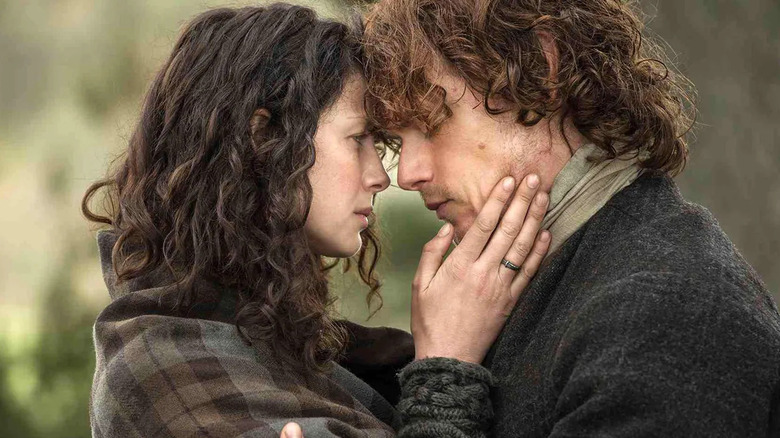
The odds are good that anyone who's familiar with "Bridgerton" is already aware of "Outlander." "Outlander" was one of the first major adaptations of a literary romance series to find success on television, and it's likely that "Bridgerton" wouldn't have been made at all had "Outlander" not paved the way. "Outlander," which aired its eighth and final season in Spring 2026, is just as good by the end as it was in the beginning. The series follows an English woman named Claire Randall (Caitríona Balfe) as she is inexplicably transported from the year 1945 to 1743 while on holiday in Scotland. While stuck in the past, she meets Jamie Fraser (Sam Heughan)— a strong, noble, gentle Scot with beautiful curls.
As many people would, Claire falls quickly in love with Jamie, and Jamie is just as much a sucker for Claire's steely, demure beauty and unflinching spirit. If life were kind, Claire and Jamie's love story would have ended there. But life is not kind, and as such, they experience some of the most harrowing, genuinely despairing circumstances of adversity and separation ever faced by a fictional couple. "Outlander" is a genuinely epic love story — there's never been anything quite like it, a story that manages to straddle the lines between sci-fi and fantasy, tragedy and drama. Every season of "Outlander" can be streamed, so hopefully more folks will have a chance to enjoy it.
Dickinson
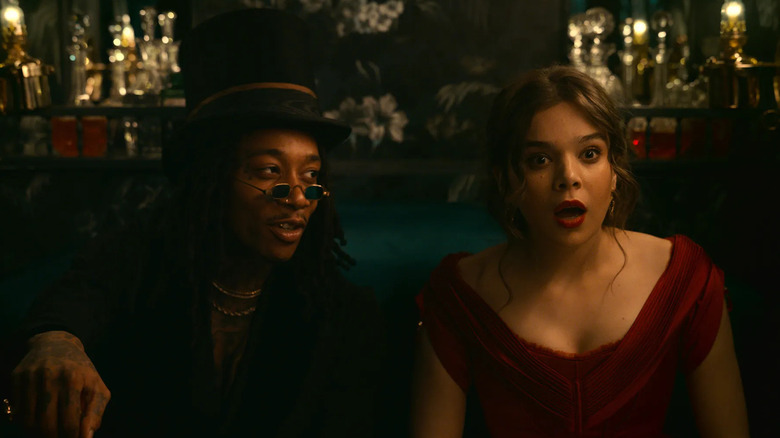
The most unique element of "Bridgerton" is definitely its unabashed anachronisms, such as the aforementioned classical covers of pop songs as well as the modernized social consciousness of its society and constant glitz of its fashion. They're anachronisms, but they make the show more fun to watch, and give more opportunity for artistic license to fly free. "Dickinson" is another show that indulges in splashes of modernity. The series offers an interpretation of Emily Dickinson's young adulthood in 19th-century Amherst, Massachusetts. One recurring motif shows Emily chatting with Death, who appears in the guise of Wiz Khalifa; another has each episode paying homage to one specific Emily Dickinson poem. It is reminiscent of Sofia Coppola's "Marie Antoinette" in the sense that both depictions of real-life figures employ transcendent style to convey their character's identity.
Hailee Steinfeld does a precise job of balancing Dickinson's notorious interiority and her character's attachment to people close to her. Ella Hunt shines as Sue, capturing a sort of gentle gravity that pulls in the kind of people who can usually barely help from falling into the sky. Together, Emily and Sue have one of the most compelling romances ever told on television. Add in the fact that Sue gets engaged to Emily's brother, Austin (Adrian Blake Enscoe), and the show is cooking with gas before the end of Episode 1. "Dickinson" is worth watching just for the weird history jokes and lush visuals, but those things are just a cherry on top of a story that is uniquely emotionally compelling.