

5 Worst Alien Designs In Star Trek, Ranked
Gather a group of science fiction fans together in order to discuss their favorite alien designs, and there's a very good chance that some of them will bring up some of the most famous Star Trek aliens. The subtle and iconic design of the Vulcans and the ever-evolving visage of the Klingons have come to define the franchise when designing alien races. That sense of capable design is very much still there, too. Look at Saru (Doug Jones) from "Star Trek: Discovery," and tell us that the franchise isn't able to stand at the absolute forefront of this particular aspect of visual storytelling — at least, when it feels like it.
The thing is, they can't all be winners, can they? Over the decades, there have been so many aliens in Star Trek shows and movies that the occasional design goes forgotten by the wayside by default. Meanwhile, some of the aliens we cover here tried to be genuinely impressive and inventive, while others seem like they were thrown together at the last possible minute. All of them, however, radiate distilled awkwardness in their own ways. Let's take a look at five of the worst alien designs in the entire Star Trek franchise.
5. The Denobulans
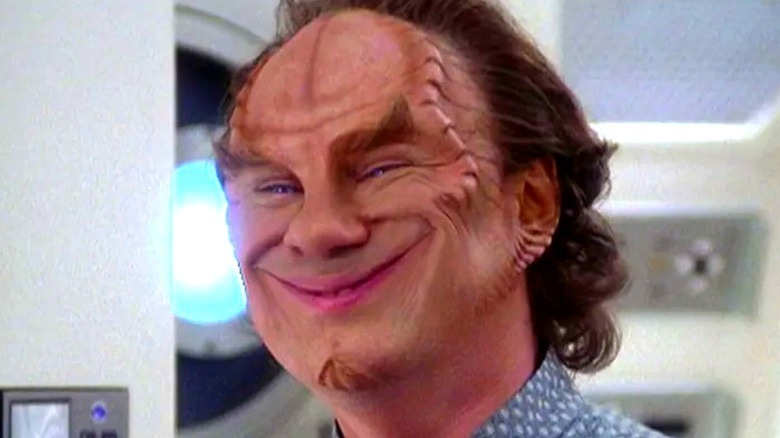
The Denobulans are a prime example of the unfortunate Star Trek tendency to default to weird forehead and eyebrow stuff whenever it has to come up with a new alien race. However, that's not the real problem here. What makes the Denobulans so badly designed is the way the franchise keeps giving them ridiculous new traits and abilities.
There is precedent for doing this well, of course. The introduction of the Vulcan mating cycle — pon farr — in "Amok Time," one of the best Spock (Leonard Nimoy) episodes on "Star Trek: The Original Series," became a major sci-fi moment. Unfortunately, Dr. Phlox (John Billingsley) of "Star Trek: Enterprise" is cut from a different cloth. Over time, the countless ludicrous Denobulan traits he demonstrates make this alien race seem less like a well-defined collection of cultural, physical, and mental attributes, and more of a mixed bag of whatever wacky ideas the writers happen to come up with on any given week.
Yes, it's okay for the Denobulan sleep cycle to differ from humans, and Phlox's endless curiosity and unconventional attitudes can be charming traits while removed from the grander context. However, at some point, the disturbingly wide smile, the random ability to blow up his head to giant proportions, and the striped toenails stopped being endearing and become a bad running joke.
4. The Kazon
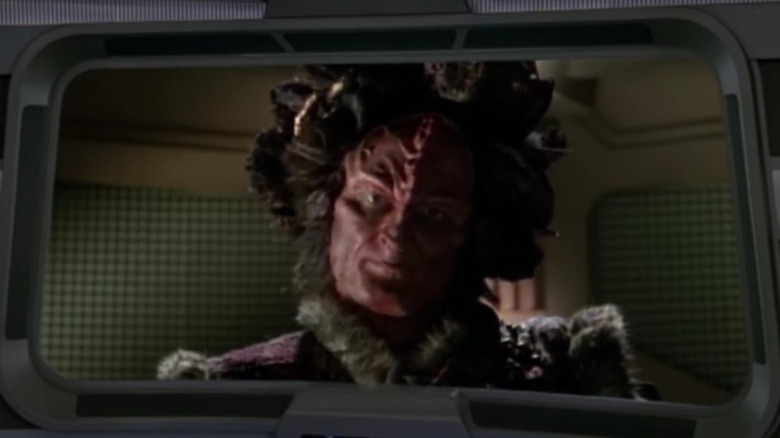
Look, it's a big galaxy. No one expects or wants the protagonists to face off with the same two or three aliens species every week, especially when the show is part of a franchise that specifically focuses on exploring the unknown, as Star Trek is. It's also understandable that the franchise can't reinvent the wheel for every single episode, and it sometimes opts to recycle certain aspects of what's worked before. However, there's a difference between being inspired with past designs, and just copy-pasting one of your most iconic alien faces, adding a huge wig, and maybe layering on a few more racial stereotypes.
This, in effect, is what "Star Trek: Voyager" landed on with the Kazon. Despite some differences, these Delta Quadrant aliens are basically Klingons with the serial numbers filed off, and tropey conceptions of '90s Los Angeles street gangs taped on. Their defining personality traits are honor and a warlike attitude. Their key physical one: A truly impressive head of hair that gives them an electrocuted look. That is far less ominous than the show probably intended — and with the real life inspiration in mind, a genuinely cringey choice.
While they are a recurring "Voyager" presence, the Kazon have understandably failed to become a household name. The franchise fully knows what it did with their design, too, and hasn't been above poking fun at its own expense. In the "Star Trek: Lower Decks" Season 2 episode "We'll Always Have Tom Paris," Brad Boimler (Jack Quaid) becomes so messy and frumpy that, when he encounters "Voyager" character Tom Paris (Robert Duncan McNeill), the latter immediately mistakes him for a Kazon.
3. The Dosi
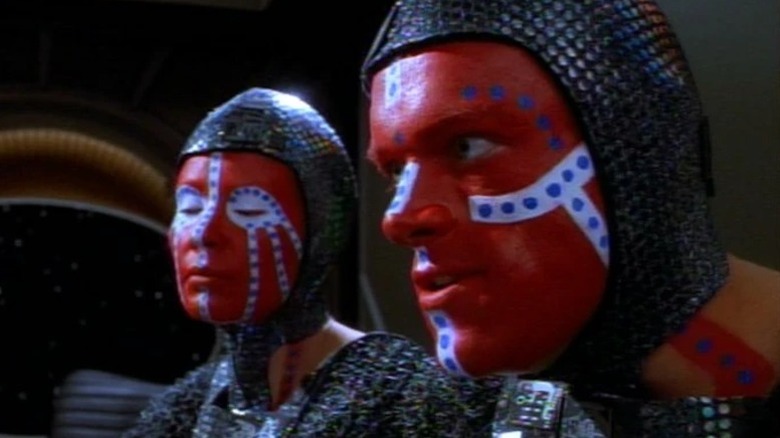
"Star Trek" has plenty of genuinely disturbing alien races, but the Dosi most definitely don't rank among them. For a race based on aggressive bartering, these "Star Trek: Deep Space Nine" aliens very much lack an intimidation factor. Instead, their design seems like something out of the budget-constrained "The Original Series" era: Pseudo-chainmail clothing and bright red grease paint, with white and blue dot patterns painted over their features. The overall effect is that the Dosi come across as theater kids in a particularly experimental play, instead of some type of reptiloid race like they're officially meant to be.
The strange, almost throwback design of the Dosi is doubly weird because they're the first Gamma Quadrant aliens the "Deep Space Nine" protagonists encounter (Constable Odo doesn't count in this context, sit down). The show would go on to whip out some genuinely impressive designs from this distant region, such as the Jem'Hadar and the Tosk, but there's only one chance to make a first impression — and this was what "Star Trek: Deep Space Nine" went with, for some reason.
2. The Iotians
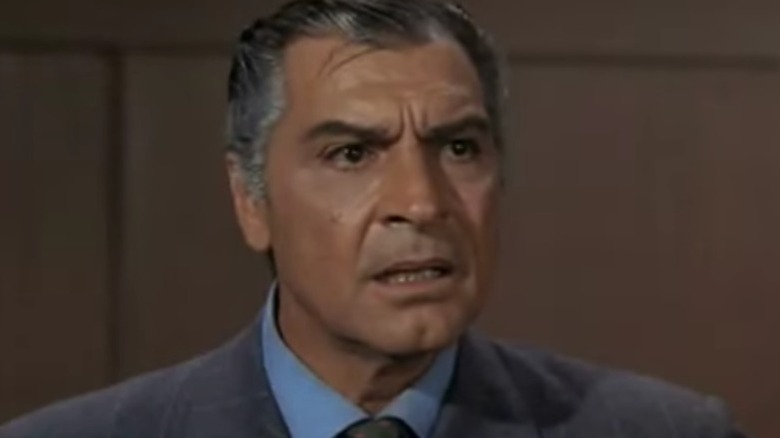
Quentin Tarantino's favorite "Star Trek: The Original Series" episode is "A Piece of the Action," but let's face it, the alien design in the episode is so lazy that it's actually not alien, nor a design at all. The Iotians are simply prohibition-era gangsters, with clothing appropriate for that day and age, despite the fact that they are supposed to be aliens on a faraway planet.
There is an explanation of sorts for the outlandish — or rather, very un-outlandish — design of this particularly underwhelming Mafia-themed alien race. The Iotians are a copycat species, and after being exposed to a book about the mobs of 1920s Chicago, they came to shape the visual and practical elements of their culture entirely around this bit of human history. While this isn't a terrible explanation for why they look this particular way, it doesn't stop them from coming across like someone in the production team snuck into a container full of leftover costumes from "The Untouchables" and ran off with what they could.
Of course, when it comes to alien races with historical Earth themes, we can't forget the Ekosians, who modeled themselves after World War II-era Nazis. However, they didn't actually land on this design by their own in-story decisions. Instead, it was forced upon them by a human called John Gill (David Brian), which is enough to technically disqualify them from this list. Still, ew.
1. The Gorn
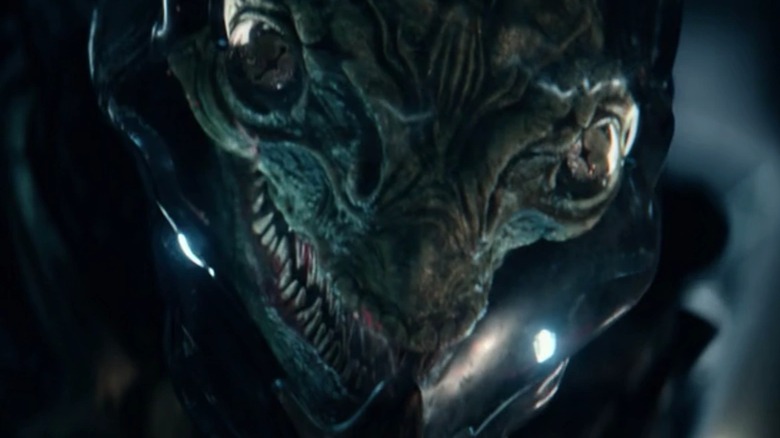
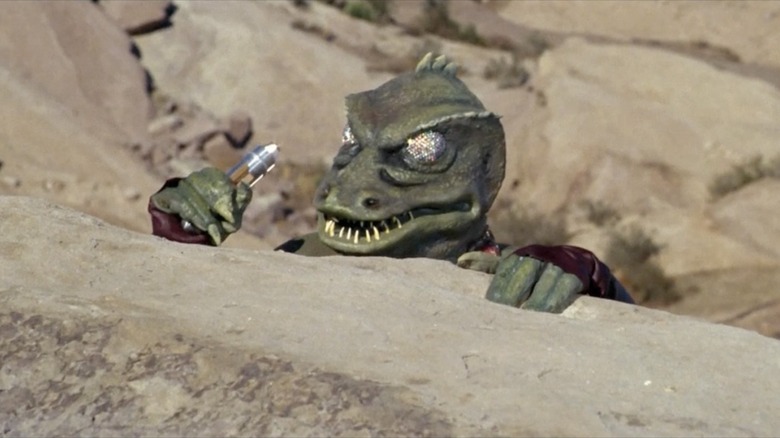
Star Trek has failed the Gorn more than once. In all fairness, this legendarily awkward and rubber-suited lizard race, which debuted on "Star Trek: The Original Series," at least tried. So many alien races from the era rely on little more than wigs, costumes, and a slight exaggeration of their features that it's worth a bonus point or two to see that at least some attempt went into creating the Gorn.
Let's face it, though: The Gorn design looks absolutely terrible. The original Gorn captain (Bobby Clark, Gary Combs, and William Blackburn) is Star Trek's most rubbery-looking rubber monster that has ever rubber monstered, in the style of old-school Toho Studios and "Doctor Who" cheapo costumes, and his legendarily clumsy battle with Captain Kirk (William Shatner) continues to live in memory and infamy. Mostly the infamy.
The Gorn eventually received an extremely heavy redesign which, unfortunately, failed to do the trick. The latter-day Gorn are CGI creatures that look ominous enough, but now they're incredibly generic. Worse still, they come across like monsters that belong in a completely different franchise. At the end of the day, the new look doesn't do the race any more favors than the old one. This doubled insult is more than enough to land the Gorn the number one spot on the list of worst alien designs in Star Trek history.