

5 Real Ranching Details Yellowstone Got Right
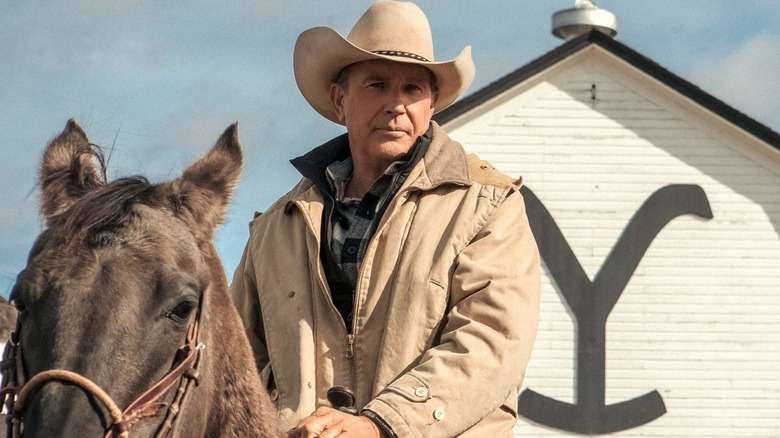
From the moment "Yellowstone" premiered, the show was hit with a lot of criticism, with Entertainment Weekly calling it "soapy trash that badly wants to be taken seriously." However, the Taylor Sheridan series defied the odds with a strong, devoted audience on streaming. It quickly became the standard for modern, neo-Western television, known for its sweeping visuals, visceral performances, and violent outbursts. But while there are plenty of things that "Yellowstone" gets wrong about Montana, this contemporary horse opera does actually get some things right about ranching, and that's largely down to the creator. "I grew up in Texas, and ranching has always been a part of who I am," Taylor Sheridan once told Platinum Performance. "The cowboy code was instilled in me early on, and it's still what I lean on in every part of my life."
Sheridan grew up on a ranch in Cranfills Gap, approximately 100 miles southwest of Fort Worth, and he is as much a modern cattleman as he is a filmmaker. In addition to his Bosque Ranch brand (the name of both his production company and a genuine working ranch), he also owns the historic 6666 (Four Sixes) Ranch, which was often featured on "Yellowstone." Sheridan notoriously puts his cast members through a rigorous "cowboy camp" to learn the tricks and trade of Western living. He even employed real cowboys for "Yellowstone" to show the fake ones how it's done. So, while "Yellowstone" is a fictional melodrama, there are some details about ranch life that it gets right.
The battle for land
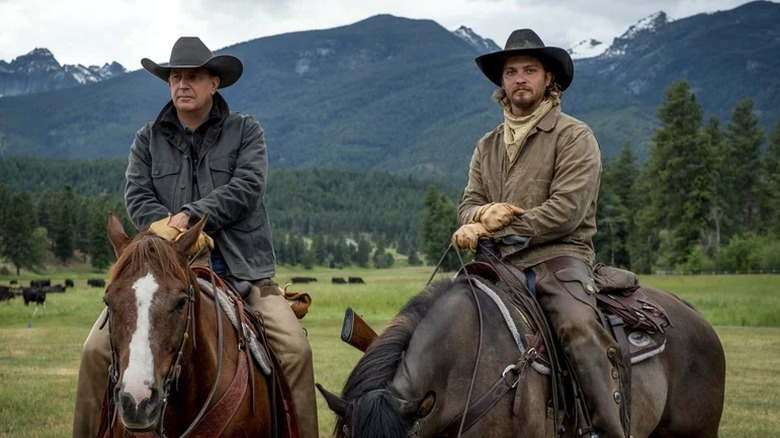
The most recurring plot element throughout the entire Yellowstone universe is the battle for the land itself. "Yellowstone" often sees land developers and corporate collectives trying to take what the Duttons have claimed to be their own. Of course, there is no working ranch in Montana that's the size of Rhode Island (and the real-life working ranch that doubles as the Dutton homestead doesn't even come close), but the battle between ranchers and those trying to take their land is as authentic as it gets. "That is something that a lot of rural areas are facing, with more people due to the growing population," third-generation Idaho rancher Jessie Jarvis told Variety. "COVID has also played a part in people wanting to get out of the city."
Indeed, as out-of-state billionaires and remote-working newcomers buy up all the land and inflate the local economy, many local populations in Montana, Idaho, Wyoming, Texas, and other Western states find themselves priced out — ironically, the popularity of "Yellowstone" has only made this phenomenon (dubbed "The Yellowstone Effect") worse. This all puts added strain on ranchers worried that local lands will be quickly developed or renovated, closing in their cattle. There's a reason that "cows not condos" is a popular saying in Montana — that's due to the land battles that often occur, battles especially prevalent in the world of ranching.
Cowboy clothes
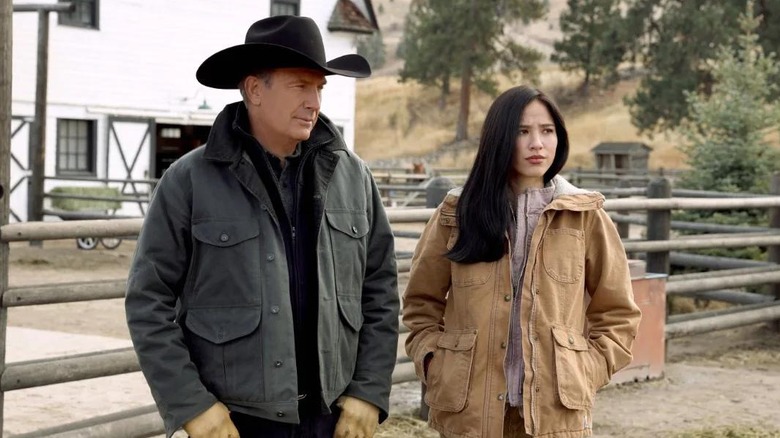
The cowboys in "Yellowstone" each have distinct looks that reflect the general Western aesthetic and the spirit of the American West, but how do they compare to actual real-life cowboy wear? Perhaps unsurprisingly, it holds up quite well. "A lot of the clothes they wear are brands from the Western industry," rancher Jessie Jarvis confirmed (per Variety). From popular brands like Carhartt (which also makes an appearance in Sheridan's "Wind River") to Kimes Ranch, American Hat, Kerry Kelly, and Greeley Hat Works, the apparel in Taylor Sheridan's series is as authentic as it gets.
Some would argue that Rip Wheeler's signature look, with his black Filson jacket, Greeley cowboy hat, and Oliver Peoples Clifton sunglasses, is the most accurate, though that would probably depend on the size and location of the ranching operation. Otherwise, the mixture of cowboy hats and mesh ball caps with plaid flannels and jean jackets worn by most of the Yellowstone hands is ripped straight from any working ranch or rodeo event you'll find in the mountain west. Series costume designer Ruth E. Carter purposely combined several eras of Western wear to come up with the Duttons' signature looks.
Of course, other brands have been associated with both "Yellowstone" and the cowboy lifestyle as well. Levi's denim and Schafer Outfitter jackets and vests have both appeared on the program, and Wrangler even collaborated with Sheridan's "Y" brand for an exclusive line of Dutton-flavored apparel. In general, branded apparel is quite common on working ranches, even if branding the cowboys themselves is not.
Family in-fighting
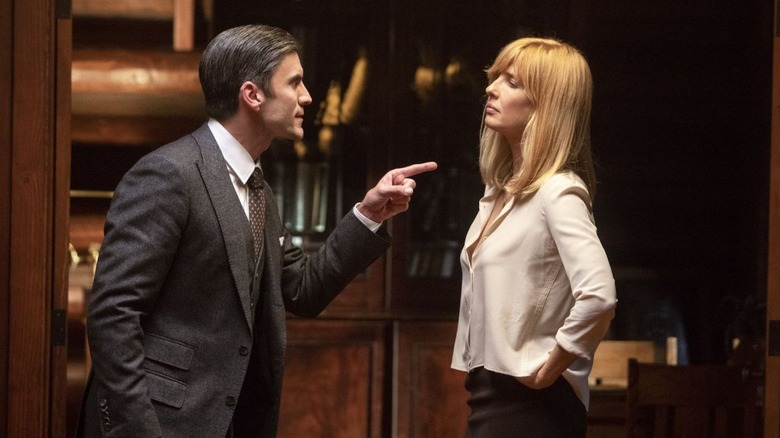
"Yellowstone" is a modern-day soap opera made for folks who want something a little more prestigious than "Days of Our Lives." We can admit that, right? The melodrama is so often over-the-top that it's hard to believe that anyone really lives or acts this way. Kelly Reilly's Beth Dutton, in particular, is a spitfire who can't sit through a single family dinner without flying off the handle, and Jamie (Wes Bentley) is an opportunist who will take any chance he gets to scurry away from his father's shadow. Interestingly, some of these familial conflicts may not be too far off from some ranches.
"They do at least have that part right in 'Yellowstone,' with all the infighting among the family," explained fifth-generation Montana rancher Matt Pierson to Men's Health. "We see plenty of that, which I think comes from the job being so stressful all the time." Whether it's Beth and Jamie hating on each other or John Dutton's (Kevin Costner) constant lording of power over his children, there's something about "family business" that can quickly get out of hand. "Yellowstone" may be a bit dramatic at times, but that doesn't mean these sorts of conflicts don't occur.
That said, plenty of ranch families stick together despite the many personal and professional challenges that come with the work. Ranching families have been known to unite against issues of government overreach, natural disasters, and land disputes, not to mention the end goal of preserving the cowboy way of life itself. Perhaps this is why Taylor Sheridan introduced an alternative take on a small-town Montana cowboy in the form of Cade Harris (Kevin Zegers) and his family on "The Madison," almost as an apology for making the Duttons so depraved.
Ranchers in government
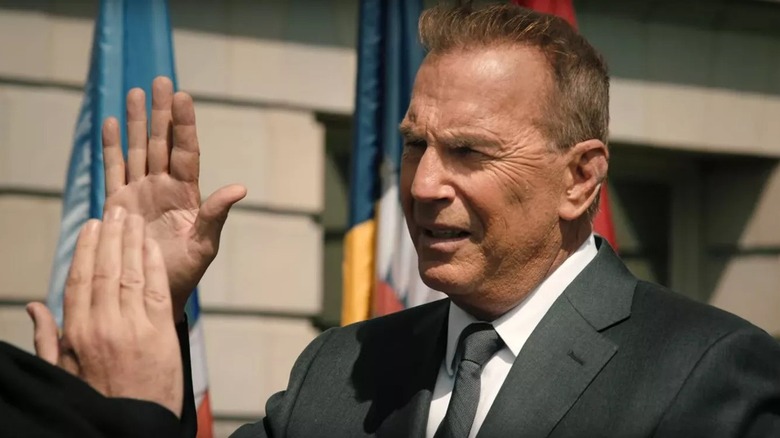
Kevin Costner's John Dutton becoming the Governor of Montana is not as far-fetched as it sounds. From a narrative perspective, it makes sense that John believes the only way to save the ranch from absorption by Market Equities is to block the airport and resort with a political order. In the show, his entire platform revolves around preserving the cowboy way of life, and there's something admirable about that (despite the Duttons being the actual worst). As it turns out, there are several real-life cowboys-turned-governors in the Western United States. Idaho governor Brad Little comes from a long line of ranchers extending back to the 1800s. "I was raised a cowboy basically," he told Idaho News 6.
Of course, he's not the only one. Current Wyoming governor Mark Gordon was raised on his family's ranch, as were former South Dakota governor Kristi Noem and former Texas governor Dolph Briscoe, to name but a few. As far as Montana is concerned, former governors Brian Schweitzer and Judy Martz were likewise raised on family cattle operations. Although more recent Treasure State governors have not had a historical association with the cowboy lifestyle, there is certainly precedent for this, and that's not even including ranchers that exist in other levels of local and federal government. It may seem far-fetched in "Yellowstone," but this is actually one more thing the show gets right about ranchers.
Dealing with predators
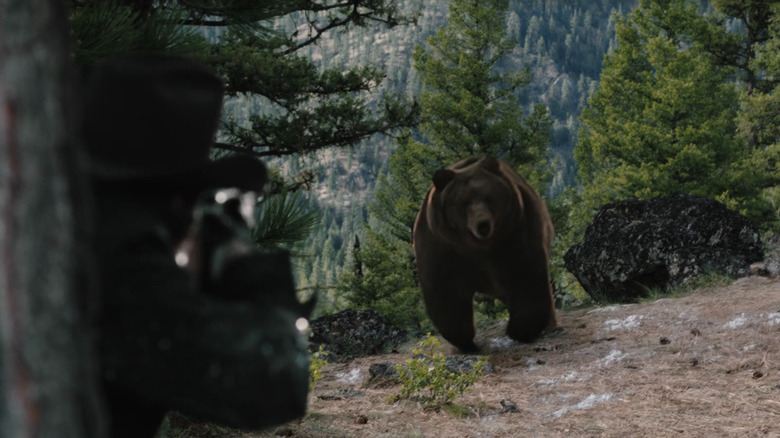
While the cowboy lifestyle certainly has its perks, from the stylish outfits and daily horseback rides to the scenic views and wide-open spaces, there are some inherent dangers that come with ranching. No, we're not talking about land developers and trespassers here, but rather the wildlife dangers that threaten the cattle in question. On "Yellowstone," members of the titular ranch deal with everything from grizzly bears to packs of protected wolves, and though that may seem a bit outlandish to those watching from the big cities, for those in the modern American West, it's a reality. "That's not really Hollywood-ized, that's what we really have to deal with," explained Montana rancher Trinity Vandenacre on his YouTube channel.
Wolves have historically been a major problem for Western ranchers, who often lose livestock to the animals. And it's not wolves only, but different species of bear and mountain lion, as well. These predators can cause serious harm to a ranch's ability to survive, resulting in conflict between modern cowboys and different wildlife or environmental advocate groups. While "Yellowstone" doesn't harp on too much about the non-human predators in the world of ranching, it makes plain the difficulties that bears and wolves bring. In fact, in Season 5, Taylor Sheridan introduced a plotline about the killing of protected wolves, only to leave it high and dry when John Dutton was killed off. However, for real-world ranchers and cowboys, such a reality cannot be dealt with off-screen.