

5 Most Disappointing Movies Of 2026 (So Far)
As the 10 best movies of 2026 (so far) can attest, 2026 has been a sublime year for cinema. Best of all, that quality has come from superb non-sequel storytelling told on varying levels of scale. The gargantuan "Project Hail Mary," for instance, blew everyone away at the box office after generating tremendous word-of-mouth. "Obsession," "Is God Is," and "The Sheep Detectives" were mainstream wide releases imbued with both remarkable artistry and fascinatingly intricate tones. On the indie side of things, "Blue Heron," "All That's Left of You," "Forbidden Fruits," and "Nirvana The Band The Show The Movie" were just some of the instant classics littering 2026's first six months.
This doesn't even consider titles that haven't debuted in general theatrical release yet but did debut at Sundance or Cannes (among other film festivals) during the first half of 2026, such as the outstanding "If I Go, Will They Miss Me." Even with these unforgettable achievements, though, 2026 couldn't solely deliver cinematic bangers. There were inevitably going to be misfires as well as crushing disappointments. The five most disappointing movies of 2026 (so far) aren't necessarily the five worst films from the year's first six months.
However, all five of these big-screen releases left staggering potential on the table. They could've and should've been so much more, albeit for wildly different reasons that vary based on the films in question. Even while savoring 2026's exceptional cinematic track record so far, let's not forget these five massive artistic disappointments.
Supergirl
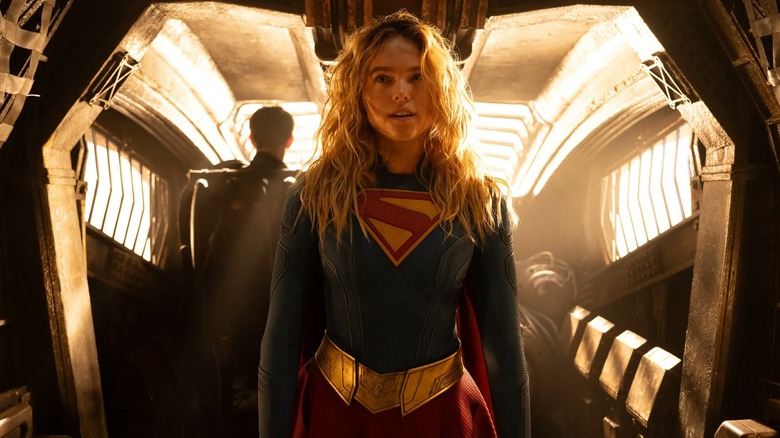
After "Supergirl" bombed at the box office, countless pieces have been penned about what this feature's failure means for superhero movies going forward. Rather than gazing solely out at the horizon of comic book fare, though, it's important to keep one's feet planted in the present. That means grappling with the frustrating and severe artistic shortcomings that plagued the second DC Universe motion picture. Despite Milly Alcock giving the titular lead role her all, "Supergirl" was a profoundly disappointing experience, including in its visuals.
If there's any area where a sci-fi summertime movie should excel, it's in dazzling audiences with sumptuous imagery. Instead, director Craig Gillespie overwhelms moviegoers with drably colored and dimly lit tableaus. Even the "grand" finale involves men in black leather in grey tanks duking it out with Kara Zor-El/Supergirl (Alcock) against a brown backdrop. That's not the only visual-based problem here, alas. Gillespie's awkward realization of the various fight scenes (which includes cutting the camera away from the punching entirely) also deprives "Supergirl" of the chance to deliver on just surface-level pleasures. Meanwhile, clumsily executed non-linear storytelling keeps upending any traces of tension. Repeatedly pausing for flashbacks and dry conversations isn't a recipe for propulsive cinema.
Even the generic and woefully miscalculated soundtrack reinforced how something went fundamentally wrong with "Supergirl" from the get-go. Alcock's delightful "Superman" cameo suggested Supergirl's solo movie could be a burst of anarchic fun. Rather than channeling a "devil-may-care" attitude, though, "Supergirl" was a slog.
The Bride!
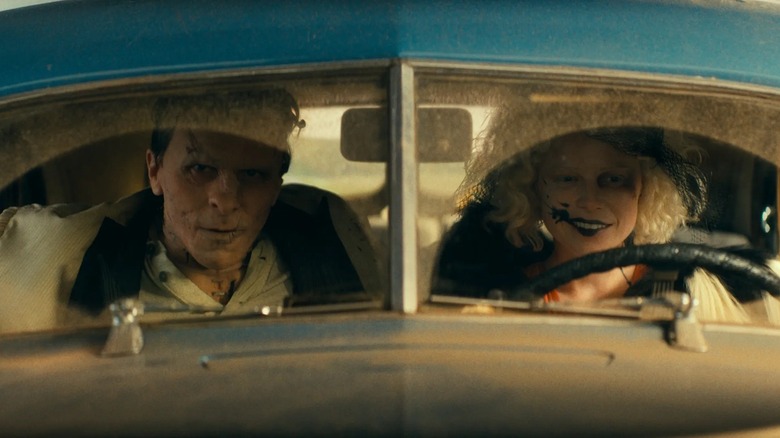
"The Bride!" delivered the very best movie trailer of 2025. This piece of marketing exuded exciting anarchic energy and suggested the writer/director Maggie Gyllenhaal was about to reimagine "Bride of Frankenstein" as a subversive cinematic Molotov cocktail. Despite the best efforts of lead performers Jessie Buckley and Christian Bale, though, "The Bride!" was a perplexing misfire that kept second-guessing its most outrageous instincts. For starters, the film's desire to evoke the works of cinema provocateurs like Boots Riley, Vera Drew, and Lizzie Borden was hampered by its unwillingness to dig into specific political material or highlight marginalized faces (namely, non-white and/or queer characters).
Rather than digging into thorny material that could alienate some audience members, "The Bride!" bafflingly dedicated much of its screentime to "nice" cops and exceedingly conventional storytelling impulses. It's a movie centered on the titular Bride sparking a "revolution" for women that refuses to dig into the specifics of either that revolution or the trials women face in America. The weirdly cramped framing plaguing "The Bride!" amplifies the inescapable reality that this project left so much potential on the table. Even just moving the camera out for more specific blocking would do wonders for the proceedings.
Only Buckley's delightfully unhinged portrayal of her character romping in a fountain or shattering fine China really gives "The Bride!" any enjoyable unpredictability. Otherwise, Gyllenhaal keeps steering "The Bride!" into generic and unchallenging territory despite her punk rock ambitions. At least we'll always have that glorious trailer.
How to Make a Killing
In 1993, Roger Ebert lamented how poor the "Beverly Hillbillies" movie from director Penelope Spheeris was, given how much he liked her prior film, "Wayne's World." "When directors make a wonderful movie," Ebert explained, "you look forward to their next one with a special anticipation, thinking maybe they've got the secret. If it turns out they don't, you feel almost betrayed." Modern moviegoers experienced that same phenomenon with writer/director John Patton Ford in 2026. After his strong 2022 film "Emily the Criminal," it sure looked like Ford was shaping up to be a special filmmaker.
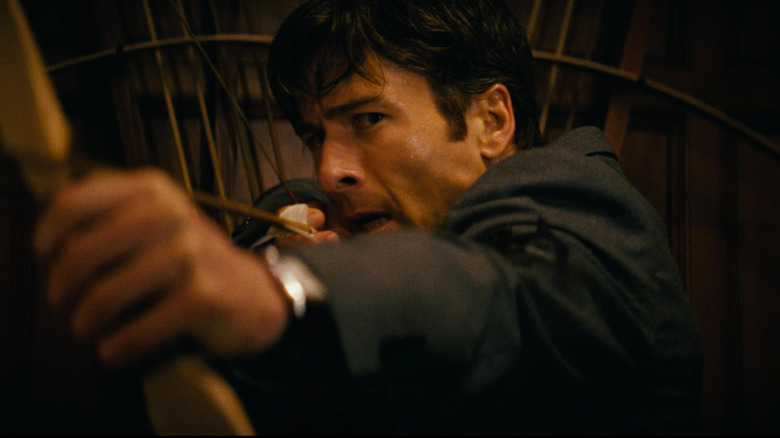
Unfortunately, his second film, "How to Make a Killing," was a middling misfire. For starters, this remake of 1949's "Kind Hearts and Coronets" strangely adhered too closely to the original film, which deprived "Killing" of any sense of surprise. Meanwhile, leading man Glen Powell has garnered praise in films ranging from "Spy Kids 3" to "Twisters," but he's distinctly miscast here. His acting style doesn't click in this feature's style of dark comedy. Worst of all, Ford's script lacks teeth. A film about a guy slaughtering his rich relatives should have some potency and danger to it. Instead, "How to Make a Killing" avoids making its plot too thorny or transgressive.
The suffocating tension Ford wove so deftly into "Emily the Criminal" is totally absent in the flat "How to Make a Killing." Like Ebert witnessing "The Beverly Hillbillies," immense disappointment awaits those seeking out "Killing."
Michael
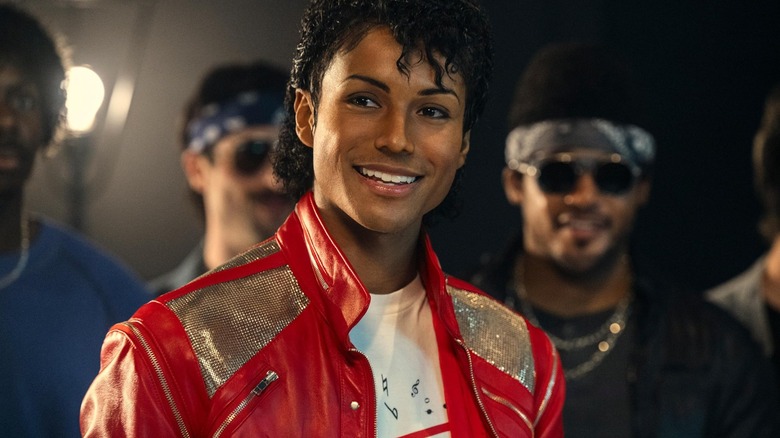
The most brutal reviews for "Bohemian Rhapsody" crystallize why that 2018 Freddie Mercury biopic was such a creative boondoggle. Given how badly that movie from producer Graham King went, it's hard to say expectations were high for a Michael Jackson biopic, "Michael," from the "Rhapsody" creative team. Even so, it was shocking how flat and lifeless "Michael" was. A formulaic exploration of Jackson's first 30-ish years of existence, there's absolutely no verve or showmanship in "Michael." Whereas other musician biopics, like "Rocketman" and "Better Man," embrace stylized visuals to reflect the unorthodox lives of major artists, "Michael" lazily opts for no pizzazz.
Anyone watching this movie expecting familiar tunes like "Thriller" or "Bad" to feel fresh again will walk away devastatingly disappointed. Given how shoddily realized the music-driven set pieces are, it's no surprise that director Antoine Fuqua executes conversation-heavy sequences with similar lethargy. John Logan's screenplay, meanwhile, never offers any in-depth insight into Michael Jackson's mind. The titular lead of "Michael" is a cardboard cut-out or a Funko Pop! representation of Jackson. With such a thinly-sketched person anchoring this feature, "Michael" inevitably inspires yawns rather than cheers.
Not even the great Colman Domingo (smothered beneath layers of atrocious prosthetics) can salvage something this tedious. It'd be one thing if "Michael" were a compellingly bad movie. Being such a boring and pulse-free affair, though, is its own kind of cinematic crime. Somehow, even after "Bohemian Rhapsody" sent expectations for "Michael" plummeting, the final product was still a monotonous disappointment.
Mortal Kombat II
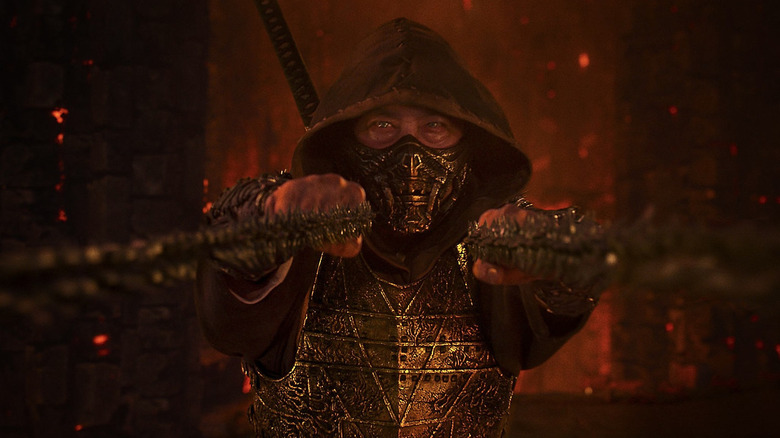
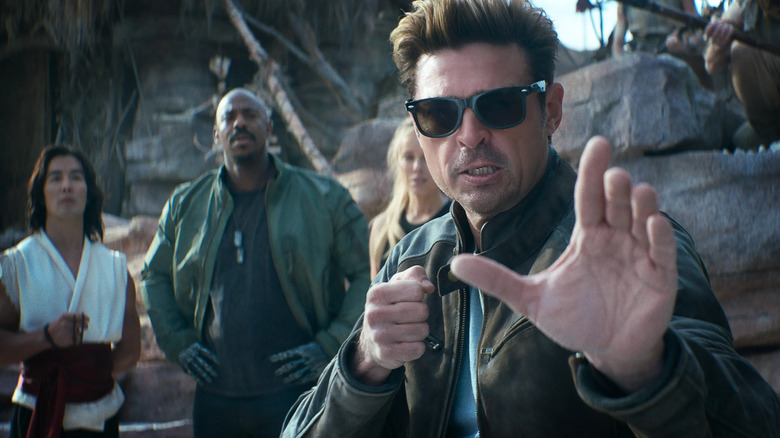
After 2021's dreadful "Mortal Kombat," which failed to even get its lead characters to the titular competition, it sure seemed like there was nowhere to go but up for "Mortal Kombat II." Unfortunately, the original film's director, Simon McQuoid, was still in charge of this sequel. That meant "Mortal Kombat II," even with a larger cast and a storyline involving the Mortal Kombat tournament, suffered from many of the flaws of its predecessor. That was especially true visually, as McQuoid and company maintained the shoddy editing and drab color palette of the first film. All these fantastical realms are realized with blocking and cuts that register as downright amateurish.
Worst of all, the fight choreography was still anemic and lacking personality. In a summer where "The Furious" was playing in multiplexes everywhere, the limp skirmishes populating "Mortal Kombat II" were absolutely inexcusable. When characters weren't punching or throwing jabs, they were trading stale pop culture references or tin-eared dialogue courtesy of Jeremy Slater's inert script. Save for Josh Lawson's admittedly amusing and abrasive Kano, "Mortal Kombat II" is packed with characters that are totally uninvolved. Not even Karl Urban can make this version of Johnny Cage worth either investing in or cheering on.
An excessively convoluted narrative structure also muddies the waters of a film that should be so simple to pull off well. Alas, while "Twilight of the Warriors: Walled In" flourished, delivering great modern action cinema, "Mortal Kombat II" largely regurgitated the shortcomings of its predecessor.