

10 Best TV Spin-Offs Ever Made, Ranked
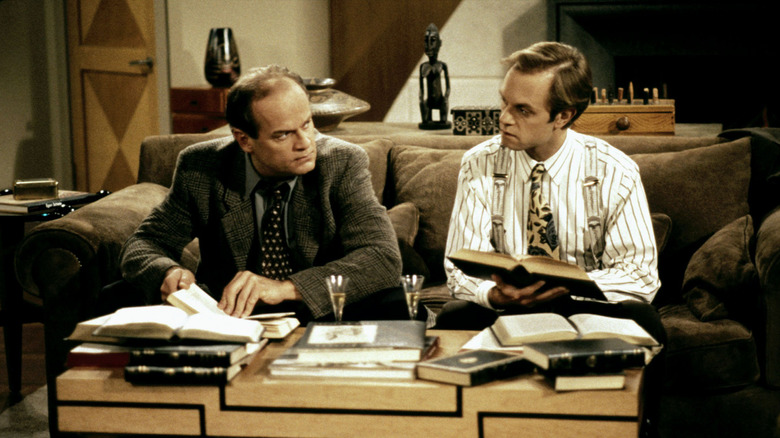
If there's one thing TV executives like doing, it's replicating success, which is why spin-offs have been so popular. It's understandable why they are so prevalent; after all, if audiences love a show, it's reasonable to assume they'll give a similar one a look — especially if they have a character, brand name, or premise that's similar enough. Yet the best spin-offs are able to exist on their own, separately from their predecessors, distinguishing themselves as great TV shows in their own right.
Here are the 10 best TV spin-offs ever made, ranked. In assembling this list, we looked at shows that were more than just spin-offs of popular television programs. Ultimately, we wanted to showcase those that have cemented their greatness on their own, separate from the ones that led to their creation. In some rare cases, the spin-offs exceeded the originals in terms of popularity and creativity, while others prove to be worthy successors to those very good shows.
The shows ranked here range from comedy to drama to animation, representing the best of the best when it comes to TV spin-offs. Many of these picks are placed on lists of the greatest TV shows of all time, often right alongside the one that inspired it. Each of these titles are just as rewatchable and bingeable as TV gets, and are paired well with the show that came before it. So if you haven't watched some of these, prepare yourself for hours upon hours of good TV.
10. Law & Order: Special Victims Unit
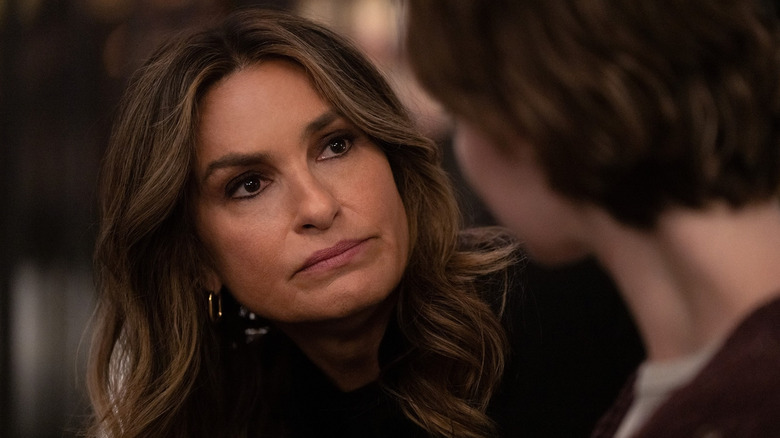
With 27 seasons and counting (and another on the way), it's safe to say "Law & Order: Special Victims Unit" has taken on a life all its own. The first spin-off of "Law & Order," "SVU" narrows its focus to sex crimes, delving into the most depraved and salacious felonies that network television can depict. And, like its predecessor, the show has survived multiple cast changes by remaining true to what makes it popular.
In the first 12 seasons, "SVU" centered on NYC detectives Elliot Stabler (Christopher Meloni) and Olivia Benson (Mariska Hargitay). While Stabler is a hardened veteran who tries to keep the horrors of his job out of his home life, Benson is often confronted with her own past as a victim of childhood sexual abuse. Working with their fellow detectives John Munch (Richard Belzer) and Fin Tutuola (Ice-T), Stabler and Benson hunt down the worst of the worst — who, in true "Law & Order" fashion, are portrayed by a revolving door of guest stars.
Many of the best episodes of "Law & Order: SVU" come from the early seasons, when the dynamic between Stabler and Benson added dramatic stakes to the crimes they investigate. Meloni departed after Season 12, while Hargitay's performance as Benson is the longest-running in primetime TV history. As long as audiences keep tuning in, the sky's the limit for how much longer Benson will keep solving crimes.
9. Young Sheldon
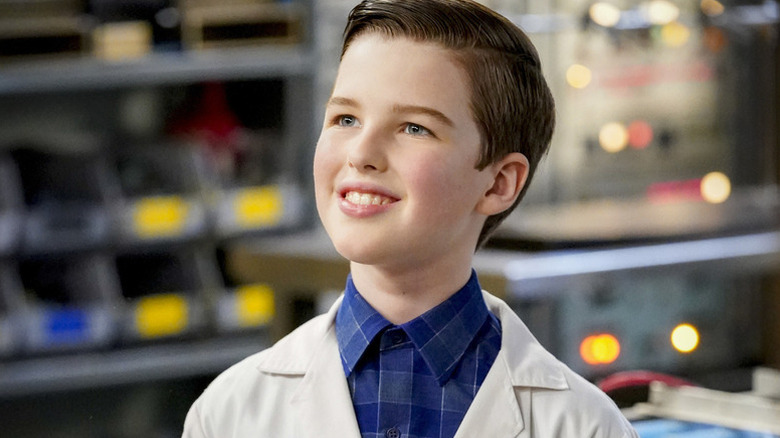
Chuck Lorre has built a television empire off the back of one of his best TV shows, "The Big Bang Theory." Before wrapping up the 12-season mega-hit about socially maladroit physicist Sheldon Cooper (Jim Parsons), Lorre and Steven Molaro launched the prequel series "Young Sheldon," which ran for seven years.
Set in Texas in the late '80s through the early '90s, the series charts the origins of child prodigy Sheldon Cooper (Iain Armitage), whose preternatural knowledge of science and mathematics lands him in high school before his 10th birthday. The Cooper family might often be at odds with their little Einstein, but they accept him all the same.
Unlike the classically multi-cam "Big Bang Theory," "Young Sheldon" takes a single-camera approach that puts it in line with something like "The Wonder Years." After wrapping up in 2024, "Young Sheldon" spawned its own spin-off, "Georgie & Mandy's First Marriage." There's also another "Big Bang" series, "Stuart Fails to Save the Universe," premiering in 2026. Yet there's no competing with "Young Sheldon," a surprisingly sweet and sincere coming-of-age story about the world's most awkward little genius.
8. Good Times
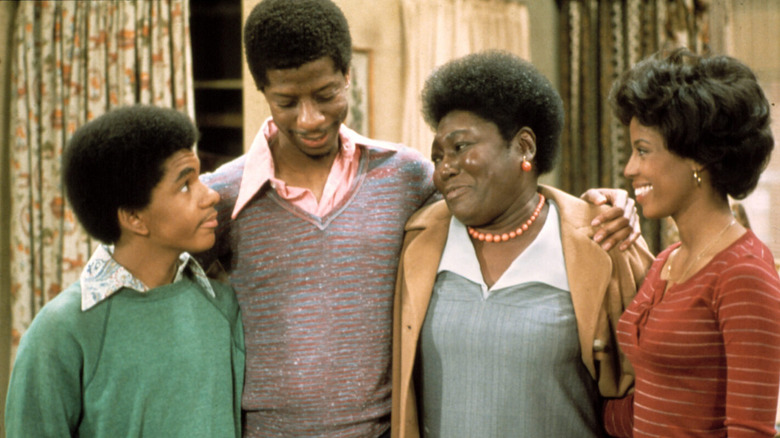
Spin-offs are so popular that there have been spin-offs of spin-offs, like "Good Times." An offshoot of the show "Maude," which is a spin-off of "All in the Family," "Good Times" was centered on Florida Evans (Esther Rolle), who worked as Maude's (Bea Arthur) housekeeper. Mega-producer Norman Lear, who created "All in the Family" and "Maude," helped develop the show with Eric Monte and Mike Evans (who played Lionel on another "All in the Family" spin-off, "The Jeffersons").
"Good Times" depicted a Black working-class family living in Chicago's Cabrini-Green housing projects. Florida's husband, James (John Amos), works multiple jobs to create a better life for his kids: aspiring artist and self-proclaimed ladies man J.J. (Jimmie Walker), straight-A student Thelma (Bern Nadette Stanis), and pint-sized political activist Michael (Ralph Carter). The Evans family is also often visited by their neighbor, wise-cracking divorcée Willona Woods (Ja'Net DuBois).
Tacking issues of racism, poverty, and gang violence head-on, "Good Times" combatted negative stereotypes of African American families, depicting a two-parent household who encouraged their children to rise above the strictures society has placed on them. That message became lost, as both Rolle and Amos were written off due to behind-the-scenes conflicts over the portrayal of Walker's character, thus turning the show into a depiction of the kind of broken home cliché it sought to challenge. Yet, in its prime, the show was groundbreaking for representation.
7. Maude
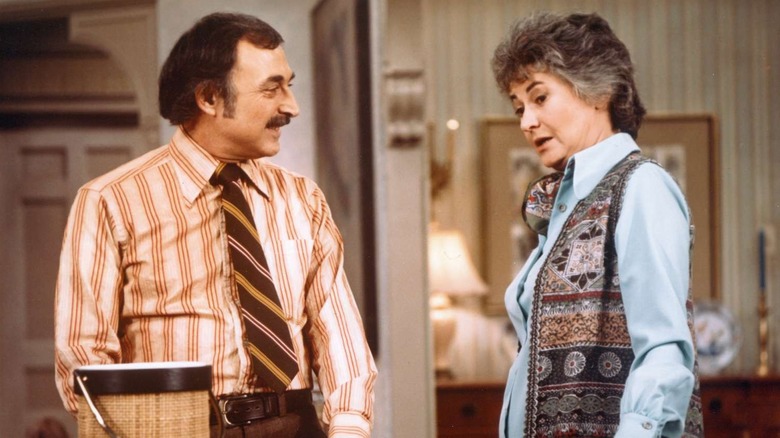
Few television producers were as prolific as Norman Lear, and many of his '70s shows laid the groundwork for prestige TV. Lear built his empire off of "All in the Family" and its spin-offs, the first of which was "Maude." Introduced in the second season, Edith Bunker's (Jean Stapleton) feminist cousin Maude Findlay (Bea Arthur) clashes with conservative Archie (Carroll O'Connor) during a visit. Sparks flew in that episode, making it clear Maude was exciting enough to support her own sitcom.
Maude is outspoken about her liberal beliefs, so much so that she's often in conflict with everyone around her. Her fourth husband, Walter (Bill Macy), is a laid-back counterpoint to her firebrand personality; and her daughter, Carol (Adrienne Barbeau), is just as passionate as her mother. Maude is often at odds with her next door neighbor, Republican doctor Arthur Harmon (Conrad Bain), who married her best friend, Vivian (Rue McClanahan). She also goes through a series of housekeepers, including Florida Evans (Esther Rolle), who got her own spin-off with "Good Times."
Like all Lear TV shows, "Maude" dealt with hot button issues like alcoholism, women's liberation, and abortion, with the two-part episode "Maude's Dilemma" tackling that controversial topic in a pre-Roe v. Wade world. In a world in which that landmark Supreme Court decision has been overturned, "Maude" is just as relevant as ever. Even more remarkably, it's just as funny and poignant.
6. The Andy Griffith Show
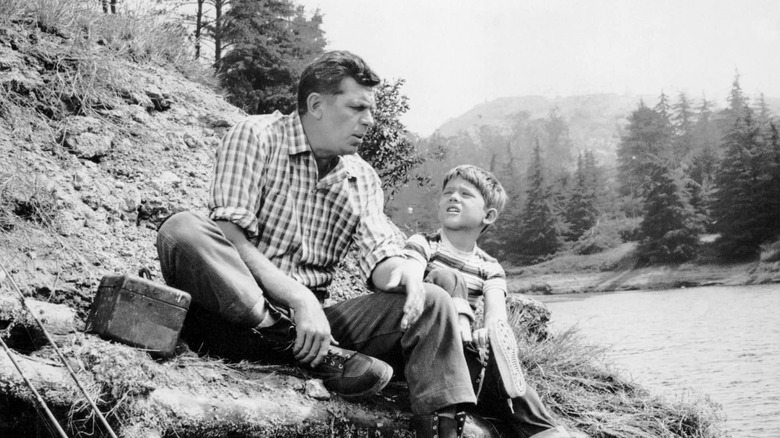
Considering how many spin-offs came from "The Andy Griffith Show," you might be surprised to learn the show was itself a spin-off. The character of Sheriff Andy Taylor (Andy Griffith) made his first appearance "The Danny Thomas Show," arresting Thomas' Danny Williams for running a stop sign in Mayberry. Creator Sheldon Leonard turned that backdoor pilot into one of the most beloved sitcoms of all time.
The widowed sheriff of a small North Carolina town, Andy is raising his young son, Opie (Ron Howard), on his own before his Aunt Bee (Frances Bavier) arrives. Andy is a sturdy counterpart to his bumbling yet well-meaning deputy, Barney Fife (Don Knotts). But aside from letting Otis the drunk (Hal Smith) sleep one off in his cell, there isn't much policing Andy has to do in Mayberry, which is populated by such good Southern folk as Floyd the barber (Howard McNear), service station employee Gomer Pyle (Jim Nabors), and Andy's sweetheart, schoolteacher Helen Crump (Aneta Corsaut).
There are few things as comforting as the opening credits of "The Andy Griffith Show," which displays Andy and Opie walking to the local fishing hole as Griffith whistles on the soundtrack. Airing at a time of tremendous upheaval, it offered the sanctuary of a simpler, gentler era. Yet unlike other Southern-set shows of the '60s, "Andy Griffith" never looked down upon its small town heroes, portraying them with warmth, dignity, and grace.
5. The Jeffersons
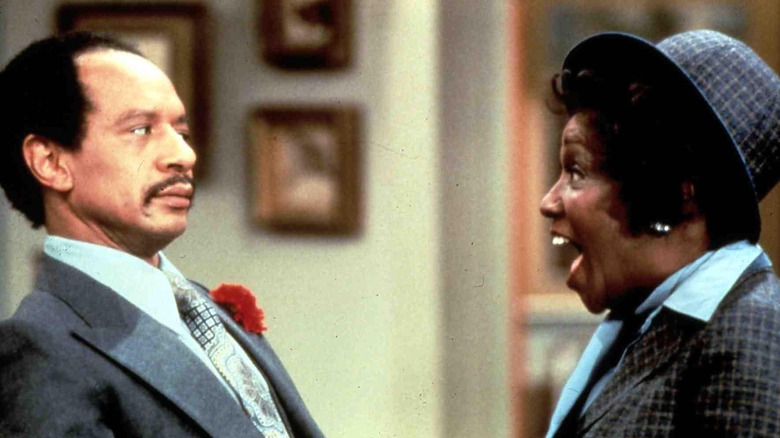
Of the many spin-offs that came from Norman Lear's "All in the Family," "The Jeffersons" remains the most beloved. George (Sherman Hemsley) and Louise Jefferson (Isabel Sanford) were first introduced as next-door neighbors to bigoted Archie Bunker (Carroll O'Connor) and his wife, Edith (Jean Stapleton). George was a great sparring partner for Archie, considering he harbored his own prejudices. After five seasons, the Jeffersons moved on up to their own long-running sitcom.
After striking it rich with a dry cleaning business, George and Louise move into a Manhattan high-rise with their son, Lionel (Mike Evans, Damon Evans). Loud-mouth George constantly spars with his housekeeper Florence (Marla Gibbs) and his neighbors Tom (Franklin Cover) and Helen Willis (Roxie Roker), an interracial couple whose daughter (Berlinda Tolbert) dates Lionel. Louise, meanwhile, quarrels with George's stuck-up mother, Olivia (Zara Cully), while George literally walks all over his eccentric neighbor, Harry Bentley (Paul Benedict).
Lear never shied away from hot topic issues, and early seasons of "The Jeffersons" mined laughs tackling racism and classism within the African American community. As the show went on, it developed into a more traditional sitcom, shying away from controversial issues like alcoholism and gun control. In its prime, however, the show was just as bracing and insightful as "All in the Family," and equally as funny.
4. Star Trek: The Next Generation
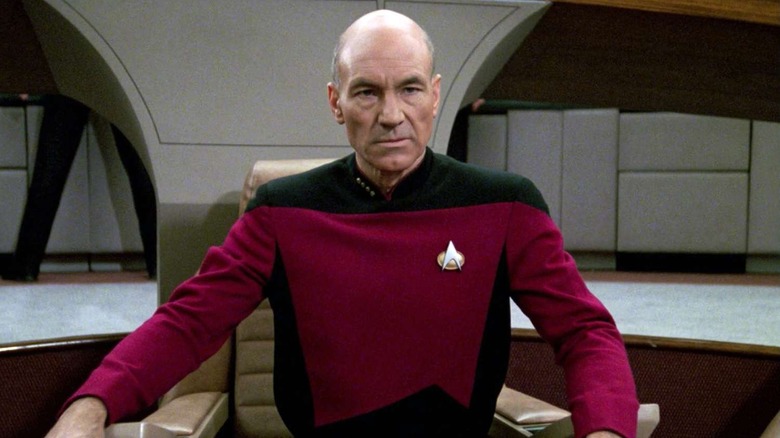
The original "Star Trek" was one of the most important TV shows of all time, examining contemporary issues of American life through the Trojan Horse of sci-fi soap opera. Although it lasted only three seasons, its legacy grew throughout the years as creator Gene Roddenberry expanded the "Star Trek" franchise into movies and spin-offs. The first live-action TV spin-off, "Star Trek: The Next Generation" proved so successful that it created its own derivatives, deepening the lore and continuing the mission of presenting a blueprint for a better future.
Set 100 years after Captain Kirk's (William Shatner) original mission, "The Next Generation" centers on the crew of the USS Enterprise, led by Captain Jean-Luc Picard (Patrick Stewart). Like its predecessor, the ship is populated by an especially diverse crew, spanning races, species, and humanoids. As they travel across the galaxy, the crew seeks "to boldly go where no one has gone before."
It's that sense of exploration, combined with the idea that we can all get along despite our differences, that makes "Star Trek" such a durable franchise. Although they might have their issues with the Klingons, the USS Enterprise is a model for how people from different walks of life can come together in pursuit of a more perfect union. That message is more necessary now than ever.
3. Better Call Saul
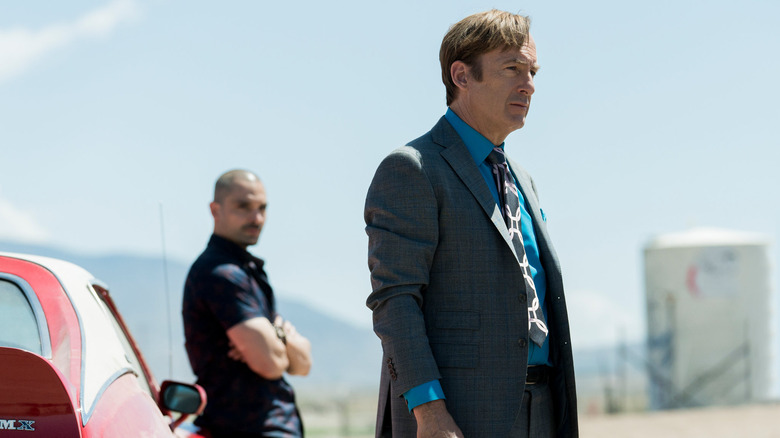
Few modern TV shows are more acclaimed than "Breaking Bad," which is widely considered one of the best TV shows of all time. So, a few eyebrows were raised when a prequel spin-off centered on criminal (in both senses of the word) lawyer Saul Goodman (Bob Odenkirk) was announced shortly after it wrapped up. What was initially conceived as a half-hour comedy morphed into an hour-long drama that had just as much tragedy as its predecessor.
Taking place prior to the events of "Breaking Bad," the show charts the transformation of aspiring attorney Jimmy McGill into conman Saul Goodman. Jimmy's descent into the criminal underworld has devastating effects all around him, from his brother (Michael McKean) and his girlfriend (Rhea Seehorn) to his somewhat partner-in-crime Mike (Jonathan Banks). Yet, just like with Walter White (Bryan Cranston), redemption is possible for Jimmy.
Like the best spin-offs, "Better Call Saul" succeeds from how it distinguishes itself from its predecessor. The show escaped "Breaking Bad's" shadow not just by taking a unique tonal and visual approach, but by finding something deeper within the character of Saul Goodman than was thought possible. It's a credit to both the writing and Odenkirk's nuanced performance.
2. Frasier
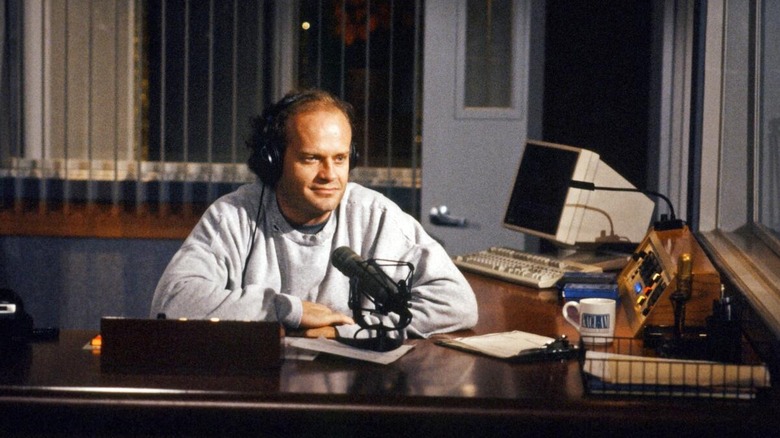
When audiences were first introduced to Dr. Frasier Crane (Kelsey Grammer), it was as a love interest for Diane Chambers (Shelley Long) on Season 3 of "Cheers." The pompous, erudite psychiatrist was conceived as a foil for Sam Malone (Ted Danson), yet he quickly grew into a regular, frequenting the Boston bar and falling in love with fellow psychiatrist Dr. Lilith Sternin (Bebe Neuwirth). When "Cheers" left the airwaves in 1993, the spin-off "Frasier" premiered later that same year, kicking off an incredible 11-season run.
Transplanting the action from Boston to Seattle, "Frasier" found Dr. Crane starting life anew after his divorce from Lilith, working as a radio therapist with his wisecracking producer Roz (Peri Gilpin). His quest for solitude is disrupted by the arrival of his father, Martin (John Mahoney), a retired cop who requires live-in care after getting shot in the hip. Coming along with the elder Crane is his dog, Eddie, and his caregiver, Daphne Moon (Jane Leeves), who bewitches Frasier's snobbish younger brother, Niles (David Hyde Pierce).
The brilliance of "Frasier" was how it distinguished itself from "Cheers." Whereas its predecessor was a workplace comedy, "Frasier" was a drawing room farce, built around witty wordplay, comedic misunderstandings, and the contrasts between high and low status. The show won five consecutive Emmys for best comedy series and was revived in 2023.
1. The Simpsons
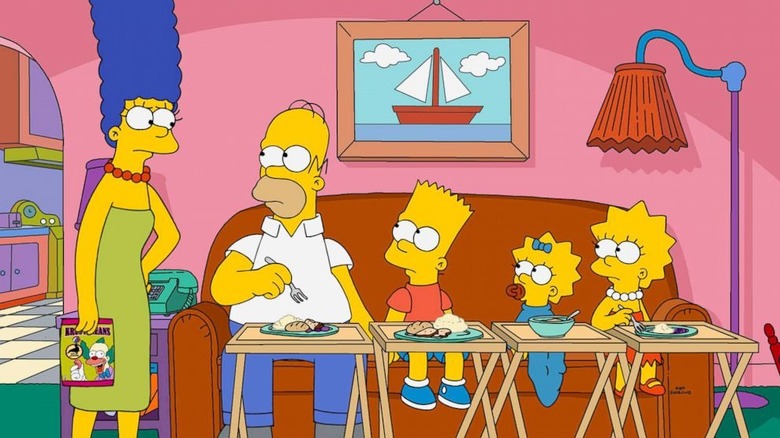
With 37 seasons and counting, it's safe to say that "The Simpsons" is the most successful TV spin-off of all time, so much so that most people forget it was a spin-off at all. Matt Groening's animated sitcom about an anything-but-average American family had its roots on "The Tracey Ullman Show," airing as a bumper before and after commercial breaks.
As the segments grew, TV veteran James L. Brooks saw its potential. With the still nascent Fox network looking for programming, Groening, Brooks, and creative consultant Sam Simon turned "The Simpsons" into a half-hour series, and shaped it into the greatest American satire of the 20th century.
There's hardly a person alive who isn't familiar with the Simpsons family: dimwitted father Homer (Dan Castellaneta), kind-hearted mother Marge (Julie Kavner), rebellious son Bart (Nancy Cartwright), intelligent daughter Lisa (Yeardley Smith), and baby Maggie. Yet that only scratches the surface of the wide array of supporting characters dreamed up by Groening and his team of writers, any one of whom could headline their own spin-off. So sharp and insightful is its satire that there are many times "The Simpsons" has freakishly predicted the future, yet it has never lost sight of its core: a dysfunctional yet loving family, gathering on the couch in front of the TV. In that way, "The Simpsons" is a reflection of us all.