

5 Best Post-Apocalyptic TV Shows Nobody Talks About Anymore
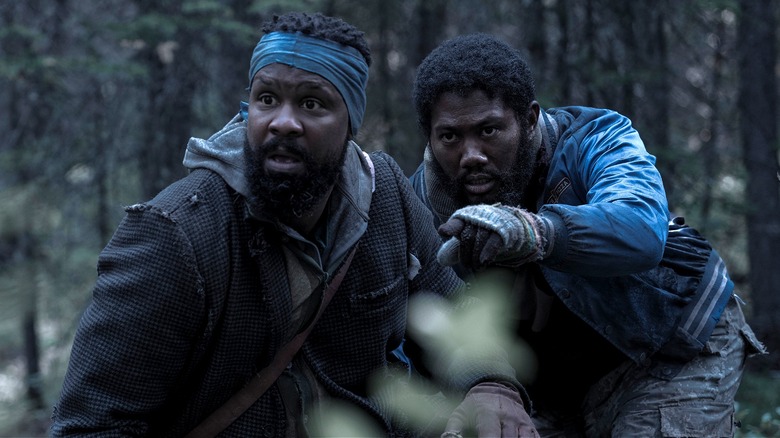
There is something about post-apocalyptic storytelling that speaks quite profoundly to human drama. When mankind is stripped to its bare essentials and robbed of all worldly comforts, the results speak for themselves as humanity wrestles with its greatest vices, darkest desires, and most basic survival needs. Be it novels like "The Road," movies like "Mad Max," or television shows like "The Walking Dead," the genre knows how to raise the stakes and keep us on our toes.
As you prepare for the most likely doomsday scenario, there's no better time to revisit some multi-season programs that may just give you an edge on the conflict to come. From zombie apocalypses to nuclear-level threats to highly stylized martial arts-inspired adventures, we've got a little bit of everything for you with this list of some of the best forgotten post-apocalyptic dramas. Don't expect to see "The Last of Us," "Falling Skies," "Fallout," or "The 100" on this list — these are the deeper cuts.
We've got everything here from network television to streaming programs, standalone shows, and prequels. With a wide variety of different post-apocalyptic horrors to choose from, there's no time like the present to dive right in. Even better, most of these shows are quick two-season binges.
Jericho
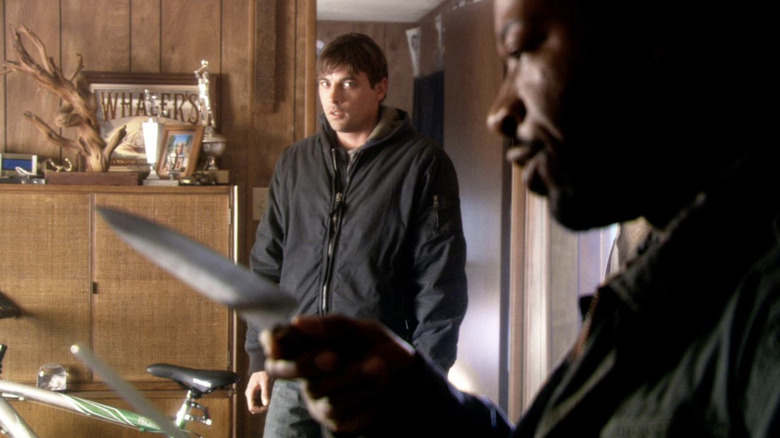
Of all the forgotten post-apocalyptic shows out there, "Jericho" is undoubtedly the one we wish continued the most. Created by the combined efforts of Stephen Chbosky, Josh Schaer, and Jonathan E. Steinberg, this two-season CBS drama begins as the old American regime falls and a new post-nuclear world takes its place. After 23 U.S. cities are suddenly decimated, the people of the titular small Kansas town band together to survive — though they're not the only ones out there. Blending intimate character arcs with a fascinating post-America world, "Jericho" had a boatload of potential.
The show primarily followed prodigal son Jake Green (Skeet Ulrich), who returns home just in time for the world to end. Alongside him is former CIA operative Robert Hawkins (Lennie James), a mysterious family man with more government secrets at his disposal than anyone ought to know. Together, they help rally the people of Jericho as they wage war against not only the angry neighboring town of New Bern, but the Allied States of America (ASA) that have risen up in the chaos.
Sadly, "Jericho" was canceled not once but twice. After the first-season cliffhanger, CBS pulled the plug before fans were able to save the show, prompting the network to cobble together a shortened seven-episode second season to wrap it up. In the aftermath, two limited comic book runs have continued the story, though they never quite compared to the original program.
Revolution
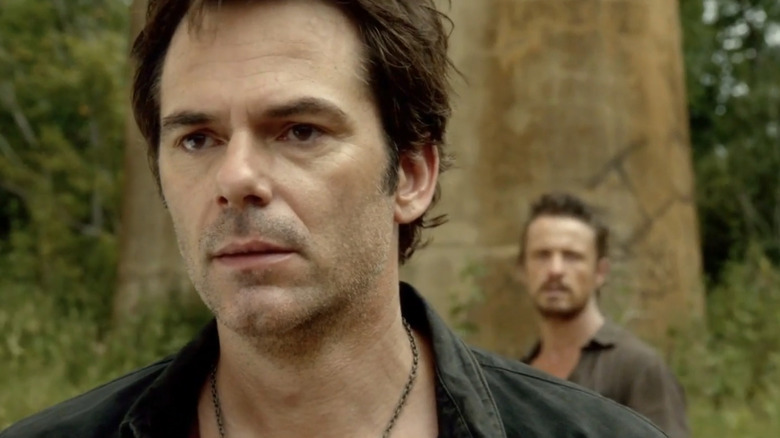
After Eric Kripke left "Supernatural" but before "The Boys," he teamed up with J.J. Abrams and Jon Favreau to helm this 2010s TV flop that is certainly worth watching. "Revolution" picks up 15 years after a worldwide "Blackout," where all electrical power is turned off for good — at least at first. The U.S. has since split into several different "republics," with the Matheson family at the front and center of the continual conflict. Kripke was onto something with this one; it's just a shame that it didn't last longer — and that audiences tuned out too quickly.
After her brother is kidnapped by the Monroe Militia, Charlie Matheson (Tracy Spiridakos) travels across the country to find her derelict uncle, Miles (Billy Burke), to help her rescue him. Of course, like any high-concept series, "Revolution" grew and changed over the course of its run. What initially began as a "quest" series soon turned into a serialized apocalyptic drama that dealt with, well, revolutions across a once-united land. For two seasons, we explored this unique post-apocalyptic landscape before the network shuttered the operation.
"Revolution" eventually revealed that an artificial intelligence was behind the "Blackout," and that the Matheson family was (naturally) at the center of its creation. With so many mysteries left unsolved by the time NBC canceled the show, writers David Reed and Ryan Parrott partnered with DC Comics for a four-part comic book series finale titled "Endgame," which was released over the span of several weeks on the official "Revolution" Facebook page.
Into the Badlands
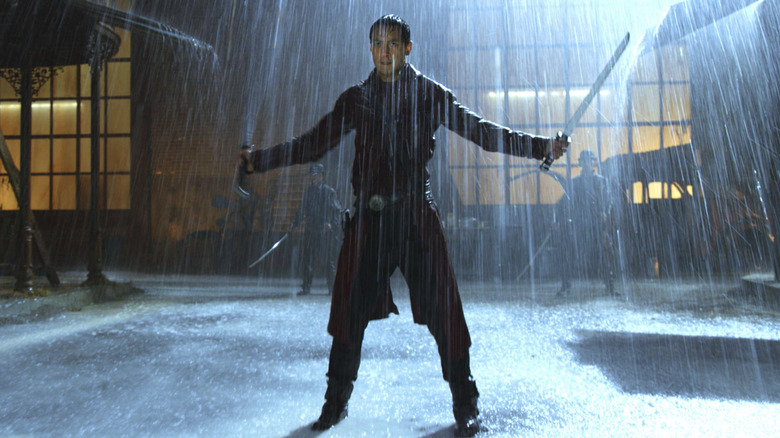
After leaving "Smallville" and failing to reboot "Charlie's Angels" on television, Alfred Gough and Miles Millar turned to AMC for their own post-apocalyptic-flavored martial arts series "Into the Badlands." Like all the shows on this list, this three-season drama is set in what was once the United States, only several hundred years from now. What started with Sunny's (Daniel Wu) quest to help a young boy with powerful magic abilities turns into something far more nuanced and complex over three years.
Make no mistake, while "Into the Badlands" offers a compelling take on a post-apocalyptic U.S. that's far different from what we're used to, the show is best known for its high-octane and heavily stylized action sequences. Indeed, the show boasted two production units during its run, one dedicated to the "drama" and the other to the "action," to keep this ship moving swiftly. As a result, "Into the Badlands" is easily the most visually stunning show on this list — and that alone warrants a watch.
As Sunny travels across the Badlands and new threats continue to pop up as rival barons fight for control over the land, "Into the Badlands" pulls no punches (literally) in its approach to honoring both traditional samurai films and Hong Kong-style action flicks. Funny enough, the series ran concurrently with "The Walking Dead," turning AMC into the place for post-apocalyptic entertainment in the mid-2010s.
Black Summer
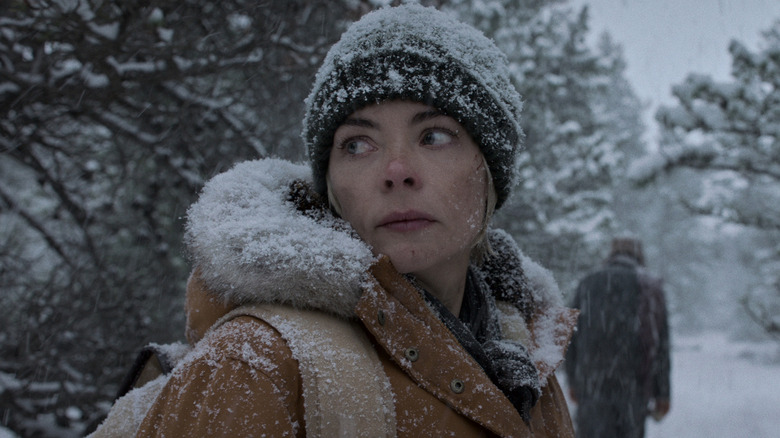
Included on our list of best zombie shows of all time, "Black Summer" is actually a prequel to "Z Nation," but it doesn't require you to continue with the program. While Syfy's five-season zombie dramedy had a more lighthearted tone by comparison, "Black Summer" — created by Karl Schaefer and John Hyams — was a gruesome, two-season drama that chronicled the horrific early days of the ZN1 outbreak. Picking up six weeks after zombies began to take over the nation, the series followed Rose (Jaime King) as she fought tooth and nail to find her missing daughter.
Far more intense and thematic than its predecessor, "Black Summer" proved that the zombie genre still had some real life in it after "The Walking Dead." As Rose, Spears (Justin Chu Cary), and their small group of survivors battle hordes of undead nightmares, the series honors the subgenre's tried-and-true tactic of ensuring that no character you love is safe. For "Z Nation" watchers, the title alone gives that away.
Whether you consider the series to be an allegory for modern-day America or just a killer zombie drama that refuses to take no for an answer, "Black Summer" is likely not the first show that comes to mind when you think about the apocalypse. Nevertheless, if you're in search of something a bit more ruthless, this Netflix series may be your best bet. Just maybe don't watch it after dark.
Jeremiah
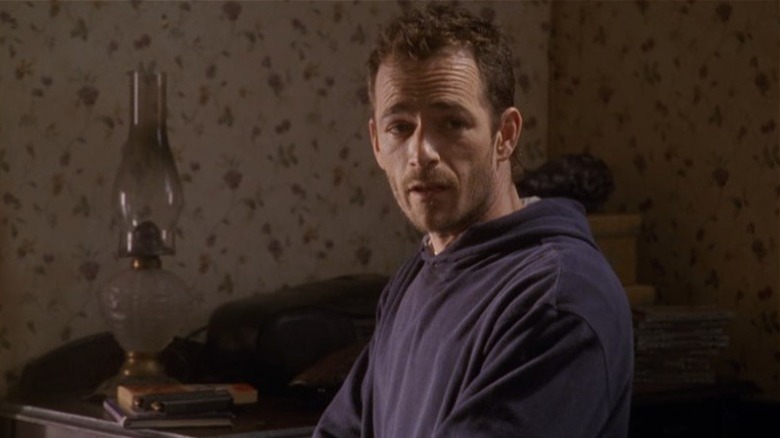
Based quite loosely on a Hermann Huppen comic series of the same name, "Jeremiah" was completely updated and re-imagined by creator J. Michael Straczynski for Showtime in the early 2000s. The series followed the eponymous wanderer (played by Luke Perry) as he and fast-talking ally Kurdy Malloy (Malcolm-Jamal Warner) deal with the fallout of the mysterious "Big Death," which wiped out just about everyone over the age of 13 nearly 15 years prior. Now an adult, Jeremiah seeks to uncover the secrets of his father, ultimately leading him to Thunder Mountain.
"Jeremiah" was chock-full of mystery and intense human drama as the title hero struggles to do the right thing in a world that would just as quickly chew him up and spit him out. The series was unlike anything on television at the time, helping propel the post-apocalyptic genre into the forefront in a post-9/11 world. Perry shines as the title hero, and as the series progresses, Sean Astin even joins the fight as the quirky Mister Smith. The two-season series ran for only 35 episodes, but unlike some of the other programs here, it offers viewers a real narrative conclusion.
Although often forgotten by modern viewers, "Jeremiah" helped pave the way for the type of post-apocalyptic survival dramas we're used to today. It was a nuanced and carefully crafted series that pushed the boundaries of television (and viewer discretion) to the limit. That said, parents be warned: Despite the TV-14 rating you'll find online, "Jeremiah" ran on Showtime, which makes it very TV-MA.