

10 Most Controversial Marvel Stories Of All Time, Ranked
For as much as Marvel Comics has a reputation for keeping things kid-friendly — an assumption spurred on by the Marvel Cinematic Universe mostly sticking to that credo, with only a few R-rated movies to date — the company isn't afraid to get dark, violent, and edgy on the page. While it's typically the expected characters who take things into that sort of territory, Marvel going mature doesn't only happen in Deadpool and Punisher comics. Almost every Marvel character or series has trod controversial territory, particularly when sales need a boost. And these are some of the most infamous examples of that.
To be clear, we aren't specifically talking about things that have aged poorly here, though all of these certainly did. We are talking about Marvel storylines that were controversial even upon release, with the backlash coming quickly after the books hit shelves. There didn't need to be any passage of time for fans to realize just how misguided the creative decisions were in the creation of these stories. And to that point, this also isn't a list about exposing Marvel's worst secrets in terms of what went on behind the scenes, or other such creative or business-related shenanigans, though some of that drama did play a part in why a few of these storylines went awry. These are the 10 most controversial Marvel comic storylines — so far.
10. Secret Empire
While various retcons have tried to assert Hydra as an ancient organization that goes back thousands of years, its connection to Nazis when the group first debuted was its primary function, in a creative sense. It was the perfect organization to serve as a collective nemesis for Captain America — a patriotic, antifascist hero whose first solo comic just so happened to be released in 1941, and who was created by two Jewish men, Joe Simon and Jack Kirby.
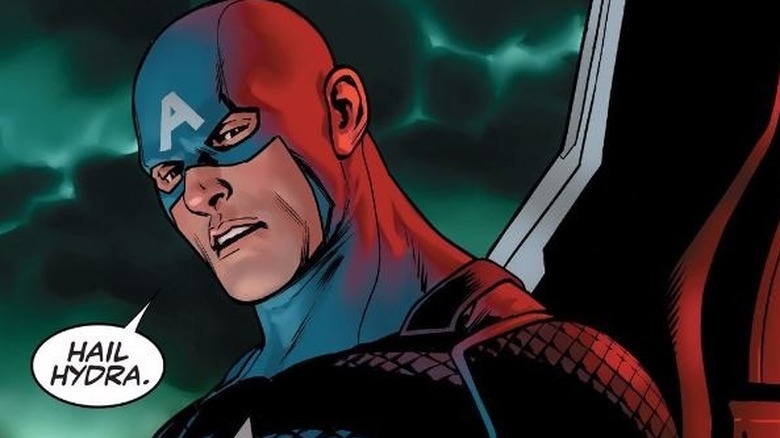
While Captain America — as Steve Rogers — had questionable moments over the years, he always remained a symbol for the ideologically perfected, inclusive, and empathetic concept of American patriotism. So for writer Nick Spencer's big 2017 "Secret Empire" event to kick off with Rogers as Captain America saying "Hail Hydra," people were understandably upset.
It went beyond the usual eye-rolling over a shocking twist for the sake of a shocking twist. For Steve Rogers to be aligned with Hydra felt like a betrayal on multiple levels. The fact that Magneto, a character with an even more personal vendetta against the Nazis, was briefly suggested to also be a Hydra convert by misguided variant covers only made matters worse.
In the end, Steve's history was being manipulated by a sentient Cosmic Cube, so he was never really a Hydra baddie at heart. The moment also later resulted in one of the best Captain America Easter eggs in the MCU. But even with everything working out in the end, there was no erasing how upset people initially were, and how poorly thought out the whole episode was.
9. The Crossing
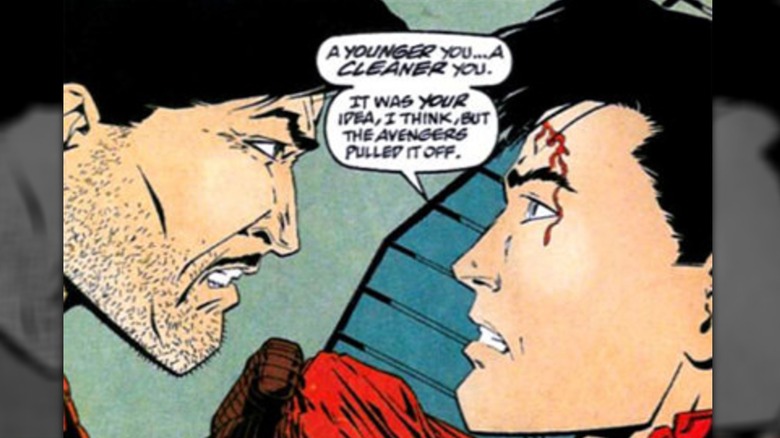
Speaking of feeling betrayed by undoing everything that makes a character great, we have the 1995 Iron Man arc, "The Crossing," written by Terry Kavanagh. This time, Tony Stark is the hero that Marvel felt the need to rework into becoming a traitor on the behalf of one of his foes — in this case, Kang the Conqueror. But, once again, it was revealed to have been the result of Tony being under mind control. Except when it wasn't ... or when it was? That part seemed to change from issue to issue, one of many inconsistencies that made an already contentious storyline that much worse.
In addition to the Avengers finding out Tony was actually a bad guy, "The Crossing" was also widely hated because of how it was decided the Avengers should deal with the betrayal. The fix was to travel back in time and grab an alternate universe version of a young Tony Stark. A teenager, to be exact. And thus, "Teen Tony" was brought into the fray. The fact that all you still have to do is mention Teen Tony to a longtime Marvel fan, and they not only immediately know what you are talking about but get angry all over again, says all you need to know about how well the character went over.
"The Crossing" would be relegated to being one of those stories that was so poorly received that Marvel quickly retconned it out of existence, and it has never been mentioned or referenced since. We'd be surprised if Marvel let a Deadpool movie include a Teen Tony cameo, even it was just to mock him.
8. Onslaught
We will be getting to the "Heroes Reborn" event itself. But some of the stories that led up to it — the aforementioned "The Crossing" being one of them — are so bad that they need to be examined separately. Another of these is "Onslaught," written by Scott Lobdell and Mark Waid, which might be the worst of the stories to pave the way for "Heroes Reborn." Specifically because it felt like a forced way to kill off major heroes in order to manifest a "need" to do a massive reboot in the first place. The whole thing reeked of a mandate from corporate to wipe the slate for a huge, potentially moneymaking reset, rather than a story that felt creatively organic.
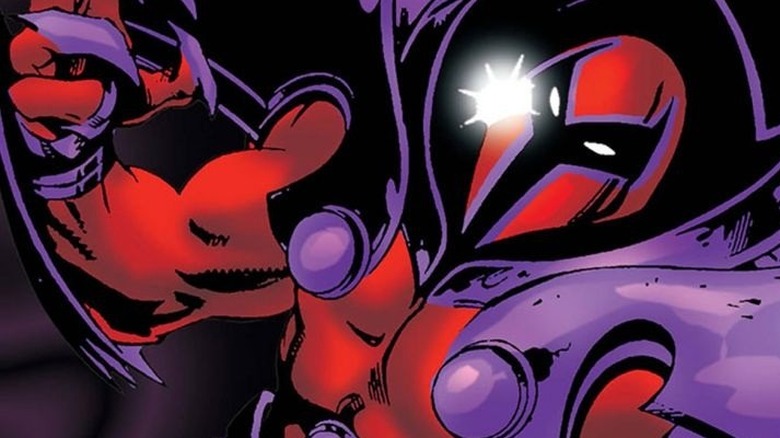
To sum up, Professor X and Magneto got into a huge fight and it resulted in a merging of their subconsciouses, out of which a dark being called Onslaught was born. Onslaught was virtually a god, and decided that both humans and mutants needed to be wiped out. Of course, it took the sacrifice of a number of the universe's most powerful heroes to bring him down. How convenient.
"Onslaught" was a panned storyline for multiple reasons, not the least of which was the whole forced death and reboot thing. Onslaught himself wasn't a particularly interesting creation, and he suffered from more than a bit of '90s edginess. It was also yet another story where a beloved hero — in this case, Professor X — was revealed to be a surprise villain. Why Marvel went back to that particular well so many times, even though it was met with consistent backlash, is anyone's guess.
7. Sins Past
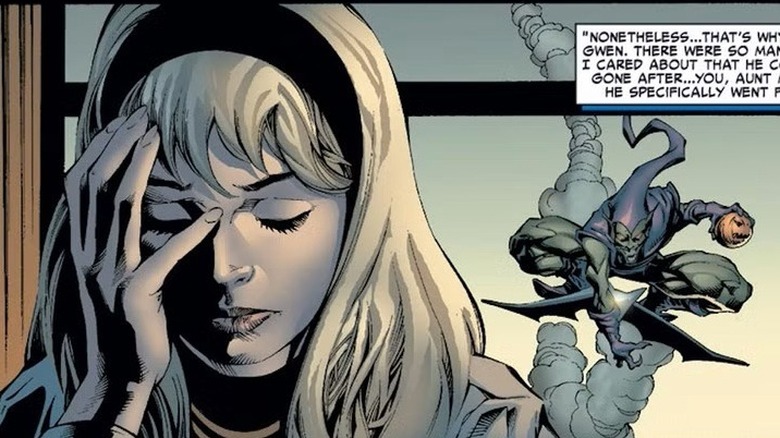
Not only one of the best Spider-Man stories but also one of the most important, 1973's "The Night Gwen Stacy Died" helped to usher in a more mature era for both Spidey and comics in general. The Green Goblin throws her off a bridge and, in attempting to save her, Peter Parker ends up accidentally snapping her neck and killing her. It was a real end-of-innocence type of moment for Peter, with his relationship with and loss of Gwen becoming foundational for him as both a person and a superhero.
And then Marvel decided to cheapen it with J. Michael Straczynski's "Sins Past" in 2004. It is discovered that, before she died, she had a secret affair with Norman Osborn. The first thing that angered fans about the story was the fact that Gwen was only around 20 years old at the time of the affair, with Norman at least twice her age. It was, once again, a complete betrayal of everything that had been established about her as a character, as well as her relationship with Peter. Remarkably, that wasn't even the half of it.
The affair also resulted in secret twins, who were now trying to kill Peter because they believed him to be their father who abandoned them. Oh, and MJ knew about the affair and the twins all along and opted to not tell Peter — another betrayal by another character that doesn't make any sense. Lastly, "The Night Gwen Stacy Died" comes into play as Norman was actually trying to kill Gwen before she could spill the beans about their relationship and his children. Cue another subsequent (if belated by years) retconning by Marvel, where writer Nick Spencer portrays the whole mess as basically a forced hallucination. No great loss.
6. Ultimatum
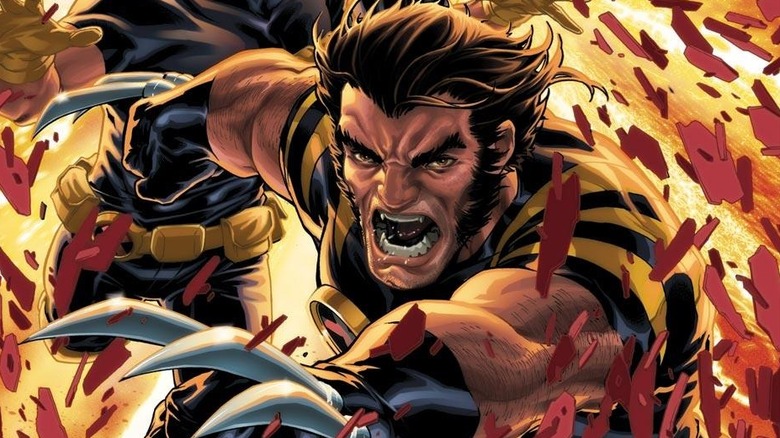
The whole of the Ultimate universe contained several examples of mature Marvel stories that got a little too explicit – including that infamous romantic relationship between siblings Quicksilver and Scarlet Witch – but it all came to a head with writer Jeph Loeb's 2009 event "Ultimatum." The climactic event of the Ultimate universe up to that point, it saw some of the bloodiest, grossest, and most outright shocking content ever seen in a Marvel story. And none of it was in service of anything creatively justified; jolting readers purely for the sake of drumming up publicity and sales.
You name it and it was probably in "Ultimatum." There was even cannibalism going on, and not the kind that involves zombies. The number of completely out of nowhere, horrific deaths of major characters was bad enough, but several huge characters died off panel and it was treated like a complete nothingburger event. The fact that the catalyst for all this senseless violence was Magneto wanting to commit wholesale genocide just because his children died didn't seem to fit his character and reduced him to an over-exaggerated villain cliche — of which better Magneto stories were generally very keen not to do.
Worst of all, "Ultimatum" ruined pretty much all the goodwill the Ultimate universe had garnered up to that point. The rebooted universe had been well-received; indicative of Marvel still finding ways to refresh its characters in new and interesting ways well into the 21st century.
5. Heroes Reborn (1996)
In fairness, it's difficult to keep consistent comic stories going for multiple decades without some sort of reset. One of the most successful attempts to do this — at least, commercially — was DC's "New 52" relaunch in 2011. It was initially such a hit that DC was outselling Marvel for a time, which isn't an unusual occurrence now but was a huge deal at the time. Creatively, it wasn't a universally beloved event, but it did produce some well-liked changes that stuck around for a long time. And it also produced some that were not: Wolverine's worst era, by far, is here, as he's shunted aside and turned into a grunting, bone-clawed critter.
The same can't be said for Marvel's "Heroes Reborn" in 1996 — not to be confused with the 2021 story of the same name — which was the company's attempt at its own brand-wide reset across multiple titles, arcs, writers, and artists. Much of the reason for why it didn't work has already been discussed elsewhere in this feature, with it all feeling a little too forced and done just for the sake of a sales spike. And all of those problems came to a boiling point with this storyline.
Obviously Marvel needs to sell comics — it is a business, after all. But it should never come across like that's the main driving force behind a story. The fact that several beloved books were killed in order to make room for "Heroes Reborn" put an even worse taste in the collective mouths of fans.
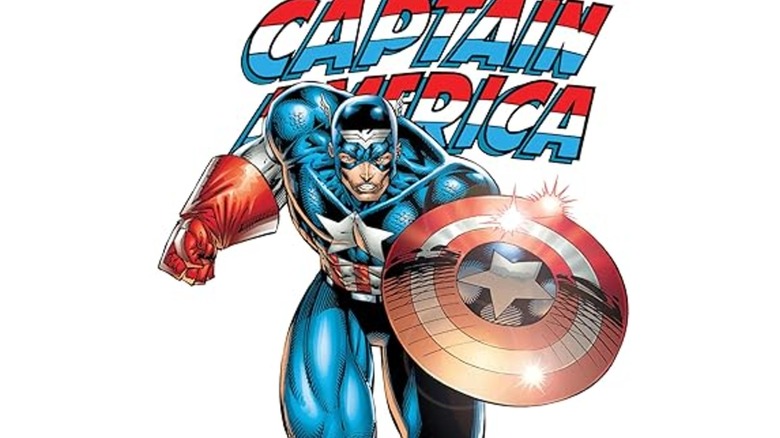
Worse, it's one of the most infamous eras of the careers of both Jim Lee and Rob Liefeld. It was all so badly done — not just Liefeld's infamous feet, but the world-infamous pic of Cap's hideous chest — and poorly received that it only took a year for writer Peter David and his "Heroes Return" to undo "Heroes Reborn" and put everything more or less back the way it was.
4. Trouble

No, we didn't accidentally use the wrong image for this one. The 2003 Marvel miniseries "Trouble" used untouched photographs of regular people for the cover art. It gets worse: When Marvel was trying to entice more girls to read comics in the early aughts, it figured the way to do that was to revive the concept of romance comics, which had largely fallen out of favor since their most recent heyday in the '70s.
But instead of doing it in a rational way involving existing characters and already established lore (much less having a woman's input considered in favor of desperately edgy writer Mark Millar), "Trouble" instead features generic versions of Aunt May, Uncle Ben, and Peter Parker's parents as precocious '70s teens. On paper, they just happen to have familiar names leading to shocking soap opera twists. In practice, nobody was fooled and the whole thing was soundly rejected by fans.
"Trouble" is one of Marvel's biggest forgotten failures, for obvious reasons. Even beyond the baffling retcons, people were uncomfortable with the Lolita vibes of the cover photos, with the story coming across like some cheesy Lifetime movie about teen pregnancy.
3. Avengers #200
So far, none of these stories are older than 30 years or so. There is a clear trend of Marvel taking big — some would say, desperate — swings in order to keep people reading at a time when the medium was no longer enjoying the same level of success it previously had. But not all of Marvel's most controversial stories were born out of an attempt to get new generations reading comics; some of them were released at a time when Marvel was doing great and didn't need a shocking story to draw people in.
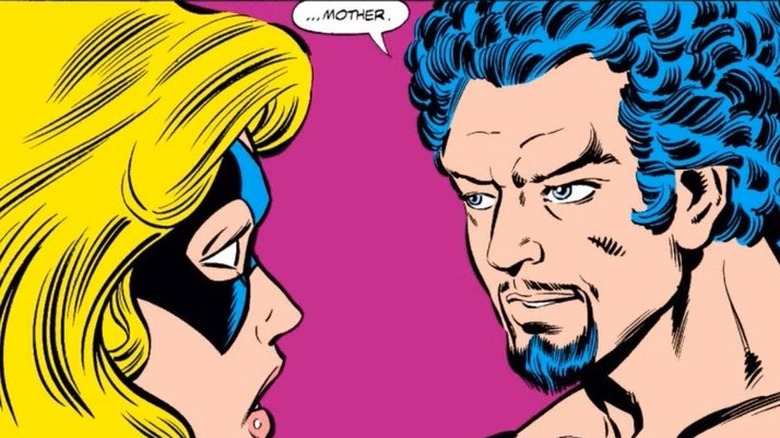
In 1980, during a prosperous era for Marvel, a story was released that wouldn't have made it passed the brainstorm stage these days. It's definitely an example of a dark Marvel storyline too disturbing for the MCU. In "Avengers" #200, written by Jim Shooter, Carol Danvers (today's Captain Marvel) is impregnated without her consent. The comic never uses terms like "rape" or "sexual assault," but those descriptors definitively apply here.
It's not that a comic is incapable of handling such a story, or that comics should never attempt to tread difficult territory. The problem is that the man who impregnated her is also the child she was forced to carry, and his adult form remains her lover at the end — all accepted by Danvers' Avengers friends. What was anyone involved in this story thinking? Shooter, who was editor-in-chief at Marvel when the comic was released, later dedicated an entire blog post to apologizing for allowing the story to happen under his watch, and Chris Claremont gave Danvers her well-deserved chance to rip into the Avengers for these events much later in "Avengers Annual" #10.
2. The Clone Saga
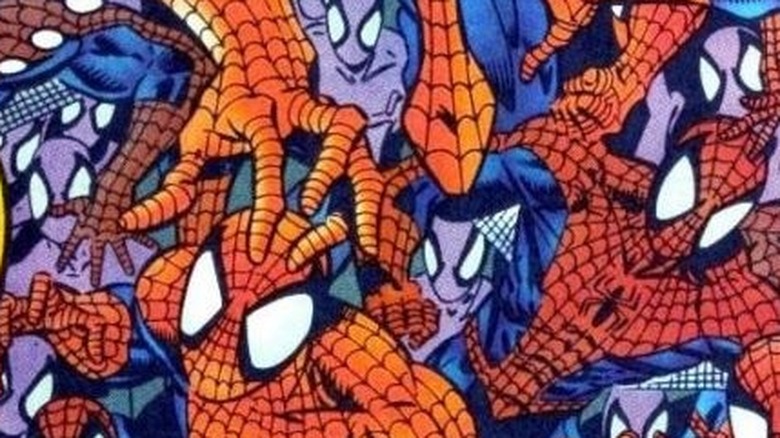
A casual observer might be baffled to find this story not only on this list, but ranked so highly. After all, this messy stew provides the starting point for some of the later clones and alternate universe versions of Spider-Man that's also made for some of the best Spidey stories. Sure, 1994's rambling "The Clone Saga" started off well enough. It seemed like it was going to take Spider-Man in some very interesting directions. Until it didn't.
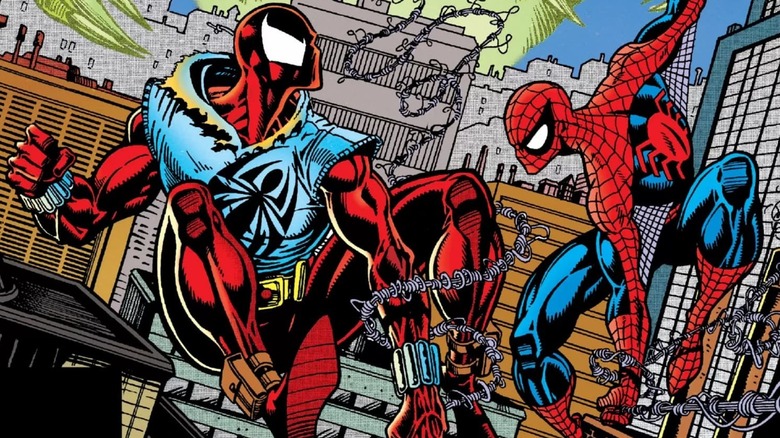
The biggest problem is that "The Clone Saga" was supposed to be a fairly small story, and it would've worked well at that size. But it soon stretched into a multiple-years-long event that grew more ridiculous and convoluted as time went on and it passed through multiple hands, with plot holes and other inconsistencies growing worse as the story dragged on. On its most basic level, the story is about a man named Ben Reilly who is revealed to be a clone of Peter Parker, created by the Jackal as a way to torment Peter. Ben becomes a new version of Spider-Man, which was a pretty divisive time for the fandom. Ben was liked when he held his own identity as the Scarlet Spider, but as a core Spidey? It caused drama.
Eventually, things spiral from there. The rules constantly change, decisions are made and later undone, and fans were just happy when it finally ended in 1996.
1. One More Day
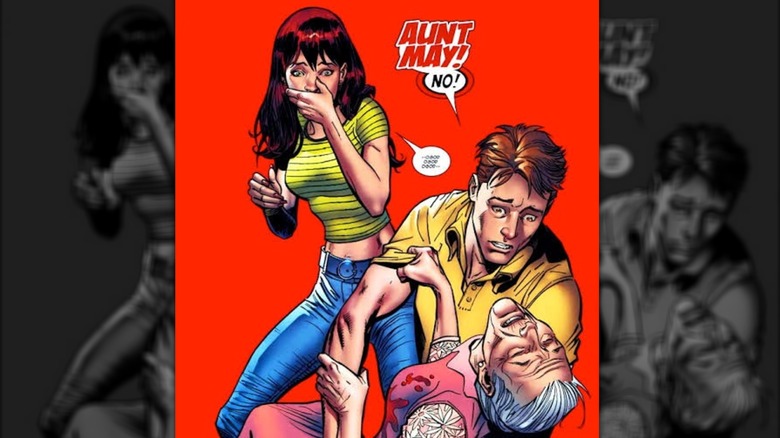
The relationship between Peter Parker and Mary Jane Watson is one of the most iconic in comic book history. A strong case can be made that it's one of the best-realized and most interesting portrayals of a relationship in all of pop culture. So what did Marvel demand for J. Michael Straczynski's 2006 story "One More Day"? Erase that entire relationship from having ever happened. And make it Peter's choice, to boot. It was not, it should be stressed, Straczynski's choice, but Marvel called the shots.
Aunt May is struck by a bullet meant for Peter, so he's racked with guilt once it's clear that she isn't going to survive. Desperate, he strikes a deal with Mephisto, who says he can save Aunt May. Rather than ask for Peter's soul as payment, as is typical in these deals, Mephisto instead says that Peter has to trade his entire life with MJ. Of course Peter wouldn't agree to that, to give up his famously-beloved marriage just so his elderly aunt can have a few more years, right? Aunt May certainly wouldn't want him to do that. Right?
Well that's exactly what he does. In a recent overview of Spider-Man fan opinions, it was voted as the worst thing Peter ever did. It would've been questionable had another character of similar age and in an equally loving marriage did it — but for Peter and MJ, specifically, it was as baffling to fans as it was rage-inducing. The backlash was so loud that even the mainstream press heard it, with articles covering the story appearing in outlets like USA Today, The Wall Street Journal, and the UK's Channel 4. Despite it all, the effects of "One More Day" continue to impact the relationship between Marvel's best couple.