

Every Steven Spielberg Sci-Fi Movie Ranked (Including Disclosure Day)
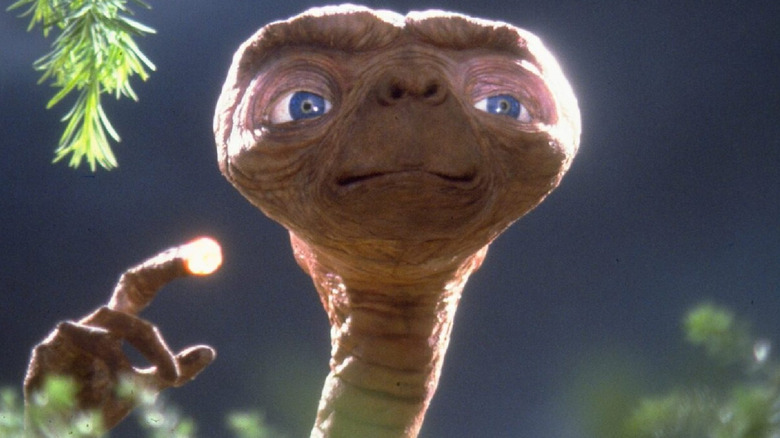
Director Steven Spielberg has left an indelible mark on cinema over the past five-plus decades. While his work encompasses some of the most influential historical dramas, fantasies, and action-adventure films ever made, it's undeniable that the genre he's had the greatest impact on is science fiction.
With the power of imagination being one of Spielberg's strong suits, it's allowed him, along with his usual band of collaborators, to craft countless landmark images of worlds beyond the here and now. The cinematic maestro peers beyond the veil of reality to reveal greater truths of existence among the stars, as well as leaps in technological advancement, and ultimately how his characters respond to them. Spielberg is sneaky in how he'll present an otherworldly premise that leans in one direction, only to then launch an emotional sneak attack that changes how you view the film.
With the release of 2026's "Disclosure Day" comes yet another helping of Spielberg sci-fi storytelling to add to his already stacked oeuvre. All 10 films on this list serve the genre in different ways, which helps make them feel unique in their own special ways. It speaks to this filmmaker's quality control that there's only one film that could be considered bad on this survey. So with that said, and based on our own experiences with his filmography, let's rank every sci-fi movie from Steven Spielberg.
10. Ready Player One
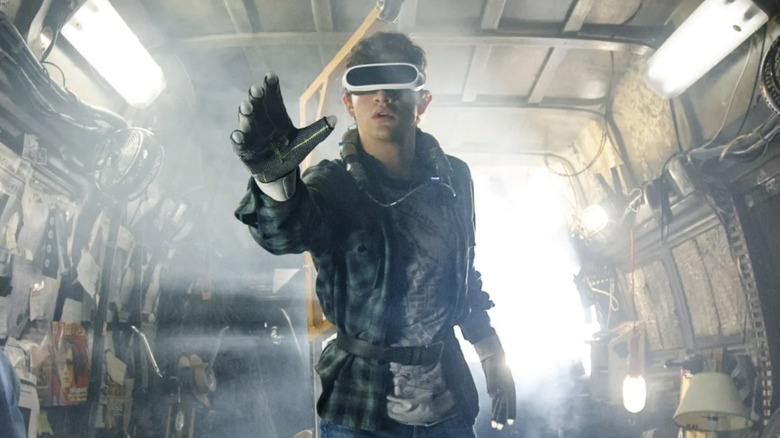
In "Ready Player One," the big screen adaptation of Ernest Cline's best-selling novel, the world is in such a dystopian state of affairs that everyone finds solace within the virtual reality realm known as the OASIS. The death of awkward tech billionaire James Halliday (Mark Rylance) comes with a series of challenges he's strewn throughout his digital creation that literally holds the keys to unlocking its future owner. The race start to heat up when teenage Gunter Wade Watts aka Parziva1 (Tye Sheridan) finds the first key, which draws a whole bunch of attention from Gunters like Art3mis (Olivia Cooke), as well as craven tech CEO Nolan Sorrento (Ben Mendelsohn).
"Willy Wonka" in a world with limitless possibilities sounds like a slam dunk, but "Ready Player One" (now streaming on HBO Max) has anything but pure imagination. Steven Spielberg seems like a natural fit for the material, given how much he's contributed to pop culture, and yet the potential of "Ready Player One" is trapped in an overbearing hodgepodge of references masquerading as social commentary. You can't really call them Easter eggs when they occupy every space of the frame.
The film has very little interest in interrogating how dystopia keeps people trapped in a stunted state of nostalgia, and there's something genuinely off-putting about a movie that utilizes the Iron Giant as a rock 'em, sock 'em fighting machine. The dichotomy between the real world and the OASIS is moot because they're both similar shades of the same mucky grays, with the latter being an eyesore to look at on account of all the soulless CG sludge filling the screen.
9. Disclosure Day
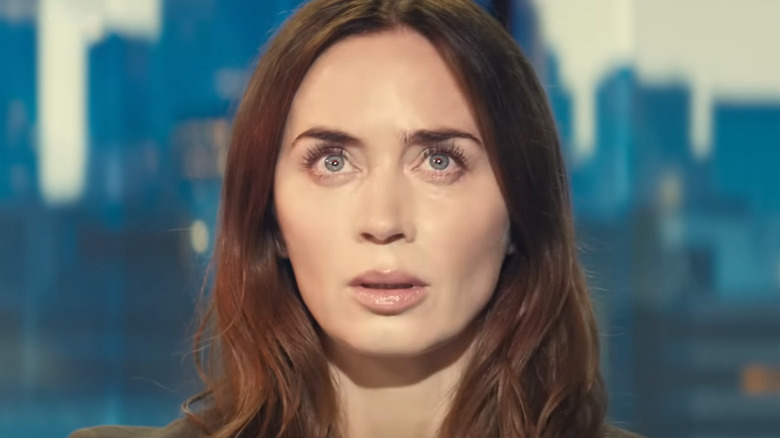
Steven Spielberg's latest foray into the world of extraterrestrial visitation seeks to reckon with the social ramifications of not being alone in the universe. Cybersecurity expert Daniel Kellner (Josh O'Connor) turns whistleblower after grappling with sensitive information regarding decades worth of secrets. At the same time, meteorologist Margaret Fairchild (Emily Blunt) suddenly starts speaking in multiple languages and peering into people's inner lives with no clue as to how she's doing it. The two share a common goal of global disclosure that pushes Wardex CEO Noah Scanlon (Colin Firth) to track them down before their paths cross.
In spite of its warm critical reception, "Disclosure Day" is a real mixed bag that feels at odds with itself. Spielberg's striking imagery, coupled with the theme of humanity's capacity for empathy, constantly clashes against a haphazardly constructed screenplay from David Koepp that doesn't do them a whole lot of justice. The concept of how different institutions would respond to the proof of alien life largely goes unexplored in favor of a frictionless conspiracy thriller that ironically kills the momentum. The truth is out there, but "Disclosure Day" is naively optimistic about its existence meaning much of anything in a post-truth landscape.
Blunt, however, is the film's heart, and she gives a fantastic performance as a woman tormented by being thrust into something larger than herself. She's complimented by another beautiful score from John Williams, who still knows how to musically tug on our heartstrings. You can admire Spielberg's ambitions of revisiting his filmography through a more seasoned perspective, even if the end result bites off more than it can chew.
8. Indiana Jones and the Kingdom of the Crystal Skull
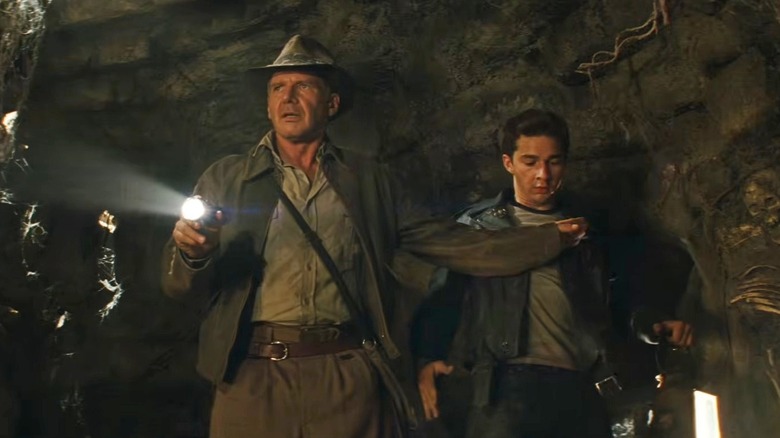
It was always going to be an uphill battle to follow the perfect finale that was "Indiana Jones and the Last Crusade," but that didn't stop Steven Spielberg and George Lucas from trying. The fourth installment in the series sees an aging Indy (Harrison Ford) embroiled in a plot devised by KGB Agent Irina Spalko (Cate Blanchett) to wield the mythical crystal skull for the benefit of the Soviet Union. But cinema's most beloved archeologist doesn't intend on making it easy for them, while also reconnecting with his son Mutt (Shia LaBeouf) and former love Marian Ravenwood (Karen Allen) on a globe-trotting quest to learn the secrets of the skull.
2008's "Indiana Jones and the Kingdom of the Crystal Skull" (available on Paramount+) received a lot of vitriol from fans for diminishing the series, when that honor really goes to 2023's lumbering "Indiana Jones and the Dial of Destiny." While there's plenty to criticize, like the dodgy CGI, its biggest crime is merely being an okay "Indiana Jones" movie.
It's a blast to watch Ford play the titular character like a tired old man who still has that spirit of adventure in him. The sci-fi angle, involving the skulls belonging to interdimensional beings that look like Roswell-era extraterrestrials, is a pretty fun twist to the formula. Indy always comes across a cosmic power that blows the universe wide open, so it's an inspired decision that takes the series in a different direction that plays on the alien craze of the 1950s.
7. The Lost World: Jurassic Park
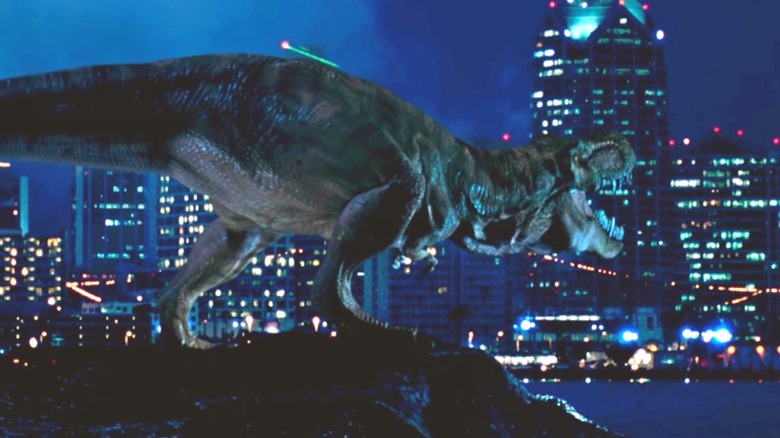
Set four years after the first film, 1997's "The Lost World: Jurassic Park" sees Dr. Ian Malcolm (Jeff Goldblum) reluctantly returning to the realm of dinosaurs after discovering that John Hammond (Richard Attenborough) has recruited his paleontologist girlfriend Dr. Sarah Harding (Julianne Moore) to observe the free range creatures. But upon arriving at Isla Sorna (otherwise known as Site B), Ian encounters a terrible plot by greedy InGen CEO Peter Ludlow (Arliss Howard) to transport the island's dino population to the United States for a more contained re-do of Hammond's vision. It goes about as well as you would expect.
While undoubtedly inferior to its beloved 1993 predecessor, "The Lost World" (which can be streamed on Peacock) is a good sequel that makes enough tweaks that it doesn't come across as a rehash. It's fun to put Goldblum in the driver's seat this time around, and he does a great job of expanding upon his character. Even secondary players like Pete Postlethwaite's Roland Tembo and Richard Schiff's Eddie Carr are given room to make an impression. Set pieces like the cliffside trailer attack and the raptors in the grass are exceptionally tense and memorable, as is the "King Kong"-inspired finale that sees a T-Rex rampaging through the streets of San Diego.
The biggest issue with "The Lost World" is that it follows the greatest dinosaur movie of all time, so anything that follows is bound to be seen as lesser in comparison. Yet, it remains the best "Jurassic Park" sequel because it takes the series into even darker territory that explicitly shows the horrors of capturing wild animals for capitalistic purposes.
6. Jurassic Park
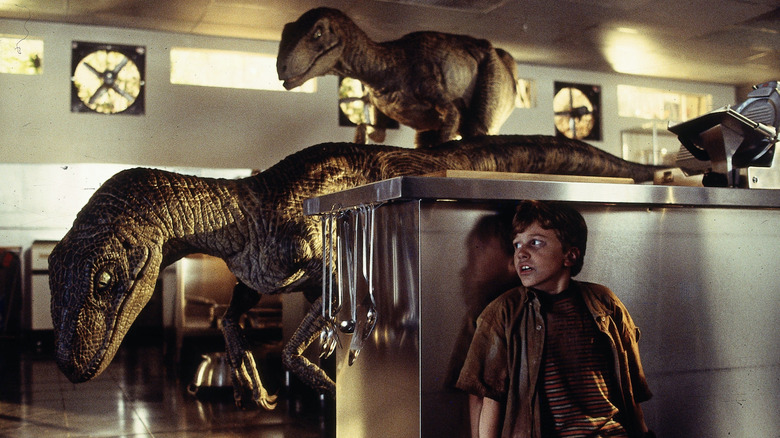
Based on the Michael Crichton novel, Steven Spielberg's 1993 adaptation of "Jurassic Park" single-handedly made dinosaurs an even bigger pop culture phenomenon than they already were. The fun begins when Dr. Alan Grant (Sam Neill), Dr. Ellie Sattler (Laura Dern), and Dr. Ian Malcolm are all invited to John Hammond's immersive theme park as a test to see if it's ready to open to the public. Upon their arrival, they're greeted by a miracle of scientific innovation: cloned, living dinosaurs in all their glory. Ethical concerns arise, but everything appears like it's in good shape — until corporate malfeasance brings the park to its knees in just a couple of hours, ensuring a battle for survival as all of the prehistoric creatures are let loose on Isla Nublar.
Now streaming on Peacock, "Jurassic Park" became one of the most rewatchable sci-fi movies ever made for a good reason. It boasts a stacked cast, an iconic John Williams score, and a tight screenplay from David Koepp. But above all else, it's one of the most impressive leaps in the advancement of visual effects in film history.
Stan Winston's animatronics, coupled with the strides made by the folks at ILM with computer-generated imagery, made it feel like you were witnessing the rebirth of humanity's predecessors. Over three decades later, they still look as jaw-droppingly real as ever. Their presence inspires the same kind of awe that Spielberg has built his career around, with the special effects serving the story rather than the other way around. The fact that "Jurassic Park" just misses our top five shows how prolific and extraordinary a filmmaker he is.
5. Minority Report
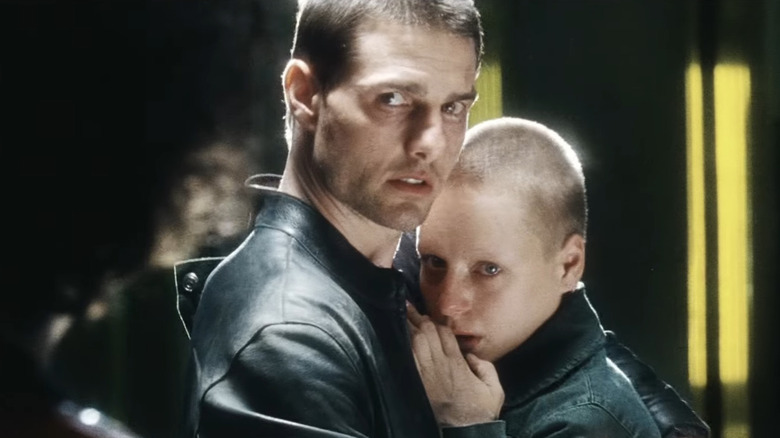
Of the many book-to-screen adaptations of Philip K. Dick's work, Steven Spielberg's "Minority Report" (now streaming on Paramount+) ranks among the best of them. It takes place in the not-too-distant future of 2054, where Washington D.C. has set up a special police division called precrime, built around preventing a crime before it's even happened. Its success is dependent on three clairvoyants (otherwise known as precogs) whose collective flashes of the future put the puzzle pieces together in order to make a timely arrest.
The system is thrown into disarray when precrime chief John Anderton (Tom Cruise) is greeted by a harrowing vision of a man he's supposedly destined to kill, in spite of not knowing who he is. From there, he becomes embroiled in a conspiracy that questions the program's legitimacy, as well as his place in its implementation.
In the almost quarter century since its 2002 release, "Minority Report" joins the ranks of sci-fi movies that got the future right with its timely commentary on the surveillance state and how high-ranking institutions will warp it to get the results they want. Cruise is excellent as a man on the run whose intellect narrowly gets him out of scrapes, despite his pursuers having all the state-of-the-art tech at their disposal to hunt him down. While the action sequences are undoubtedly thrilling, this film is at its best as a cyberpunk tech noir mystery that provides no easy answers.
4. War of the Worlds
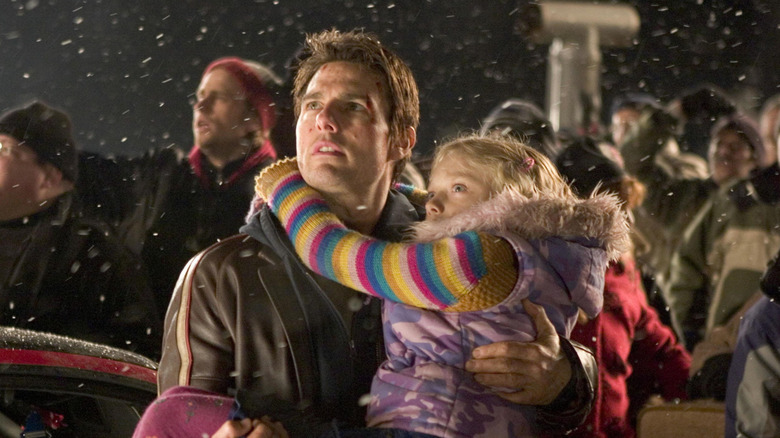
The 9/11 attacks on the Twin Towers left America, and by extension American cinema, in a strange place, with images of unthinkable violence fueled by anger, terror, and paranoia arriving at our doorsteps. This certainly extends to Steven Spielberg's 2005 adaptation of H.G. Wells' "War of the Worlds" (now streaming on Paramount+), which sees alien intruders launching a full-scale invasion of the planet through their towering war machine tripods.
Instead of witnessing the sneak attack through a global lens, the film follows its escalation through the eyes of dockworker Ray Ferrier (Tom Cruise) as he attempts to protect his children Rachel (Dakota Fanning) and Robbie (Justin Chatwin) from the awe-inspiring scope of destruction. Depicting the conflict from a ground-level view is a genius move on Spielberg's part that does wonders in making you feel like you're experiencing the destruction from a human perspective.
Spielberg's longtime cinematographer Janusz Kaminski does some career-best work here by imbuing this monumental event through a hazy glow that has a purposefully disorienting effect. The aliens' reign of destruction is terrifying to watch as they either brutally disintegrate people or capture them as fertilizer for their new world. It's fascinating to see the seemingly indestructible Cruise giving an intimate performance here as a neglectful father desperate to step up for his children, who have all but lost their faith in him. "War of the Worlds" remains an excellent piece of sci-fi terror that emphasizes our actions in moments of crisis, and whether it's worth losing our humanity to stay alive.
3. E.T. the Extra-Terrestrial
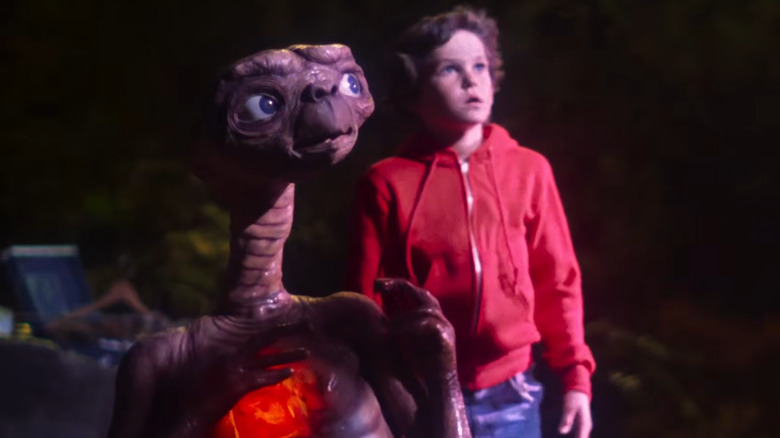
Think of how astounding it is that Steven Spielberg followed up one of the greatest action-adventure movies ever made ("Raiders of the Lost Ark") the following year with "E.T. the Extra-Terrestrial," which has since gone on to become one of the most influential sci-fi movies of all time.
On the surface, the 1982 film is about a 10-year-old boy named Elliott (Henry Thomas) who befriends a lovable alien, and helps him find his way home before governmental interference prevents his escape. But it's more compelling as a coming–of-age tale about a child of divorce who finds a renewed interest in life by ultimately becoming the father figure he wishes he had. This is accentuated by Thomas giving a spectacular performance that's well beyond his years. He brings a combination of childish wonder and aching emotional maturity to the role that still evokes a strong reaction.
The fact that Spielberg can make you feel so much love and empathy for this practical-effects creature is one of many reasons why "E.T." is one of his best movies. Many have attempted to recreate its various iconographies with varying levels of success, yet no one has been able to truly meet the master on his level. Let's also not forget composer John Williams providing one of the most affecting scores ever, let alone in his career. The rhythmic subtleties in the first half become otherworldly in the second, as it underscores one of the most emotionally impactful endings in film history.
2. Close Encounters of the Third Kind
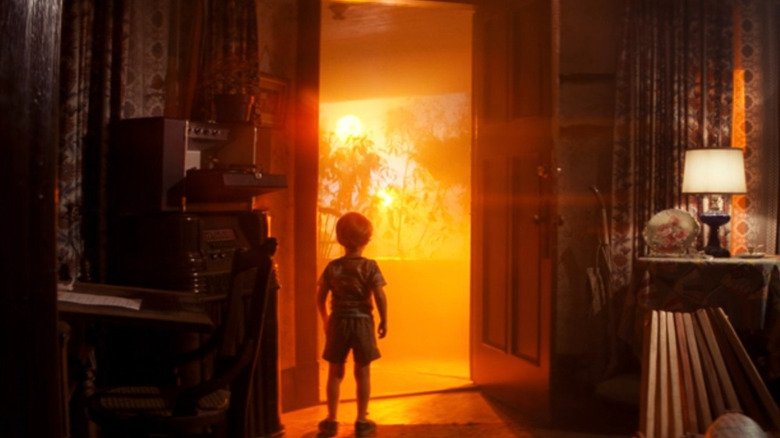
It's the dead of night, and an electric lineman named Roy Neary (Richard Dreyfuss) quietly sits in his truck, unaware that the burning lights of a UFO are about to change his life forever. His familial responsibilities fall by the wayside in favor of a mania that overtakes him in an effort to understand why he feels the way he does. It turns out that Roy's rendezvous with extraterrestrial life is one of many incidents taking place around the world, as further sightings set the stage for first contact with the mysterious beings.
Steven Spielberg's "Close Encounters of the Third Kind" (now streaming on the Criterion Channel) is a seminal piece of '70s sci-fi that presents first contact through the marriage of light, sound, and mystery. It still persists because you're never quite sure how to feel about life that comes to us from beyond the stars, yet it's incredibly overwhelming nonetheless.
The easiest answers Spielberg allows are emotional ones, and even those are complicated at their core. You really can't underestimate how majestic those last 30 minutes are, and Roy's neglectfulness is much more understandable through the film's dark fairy tale subtext. Spielberg has later said that he wouldn't have Roy leave his family in the wake of becoming a father himself, but then it wouldn't be the same movie. Art is an inherent expression of how we view the world at the time we made it, and as his subsequent work would show, Spielberg has always reckoned painfully with the fragility of the family unit.
1. A.I. Artifical Intelligrence
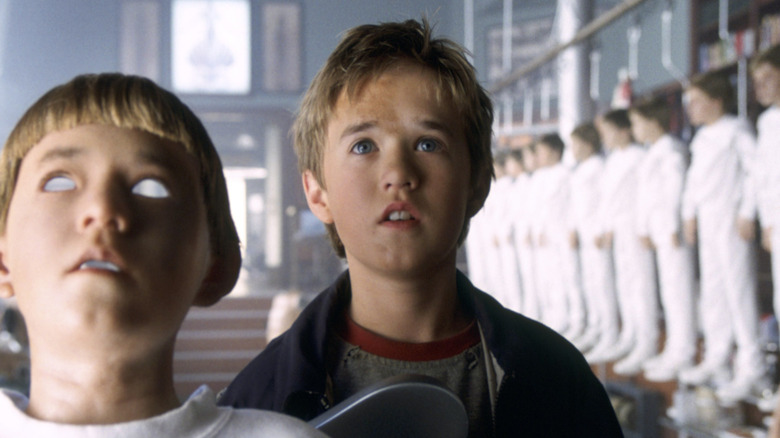
"A.I. Artificial Intelligence" (now streaming for free on Pluto TV) revolves around David (Haley Joel Osment), an intelligent android that physically resembles an 11-year-old child. He's initially implemented as a replacement for a family whose son is in a state of suspended animation. David is programmed with the ability to feel unconditional love even though he doesn't quite understand what it means. When the family decides to abandon him, David sets off on a centuries-spanning emotional odyssey that takes him to the edge of existence in the pursuit of becoming a real boy and securing his adoptive mother's affection.
The looming threat of artificial intelligence has become way too big to ignore as it seeps its way into our daily infrastructure, as well as our art. Everyone has immediate access to a leap in technological advancement with capabilities that we've barely scratched the surface in understanding. It's this, among many other aspects, that not only makes Steven Spielberg's "A.I." the best sci-fi film he's ever made, but one of the most prescient films of the 21st century.
His bleak, yet overwhelmingly moving sci-fi twist on "Pinocchio" was his way of honoring his friend Stanley Kubrick, with whom he had been developing the project for years. While "A.I." received its share of critical acclaim in 2001, it's only been reappraised over the past couple of years as a special outlier in Spielberg's filmography that reveals the spectrum of humanity's strengths and weaknesses over the span of 146 minutes.