

5 Best Basketball Movies Nobody Talks About Anymore
Few genres have proved more durable than the sports movie. The best sports movies of all time offer an adrenaline rush comparable to that of a live sports event, with the added rooting factor of having spent time with the players off the court. Yet, basketball is woefully underrepresented amongst movies when compared to baseball, football, boxing, wrestling, and race car driving. That's surprising, considering the intensity and dramatic stakes inherent to the sport.
Because of their rarity, a basketball movie feels unique, and hoops fans rejoice anytime a new one hits theaters. There are several great basketball-centric films that, despite being seemingly lost to time, are worthy of being placed alongside "Love and Basketball" and "Space Jam" as some of the best basketball movies of all time. Thanks to cable, home video, and streaming, many great titles are waiting to be rediscovered, especially if you need a fix once the playoffs are over.
The following overlooked basketball films span decades, from the 1970s to the 2000s, showing the sport's lasting impact throughout the years. Like the best sports movies, these titles are not simply concerned with who wins the big game, but rather what the victory means to the players and coaches both on and off the court, making them perfect viewing whether it's basketball season or not.
Drive, He Said
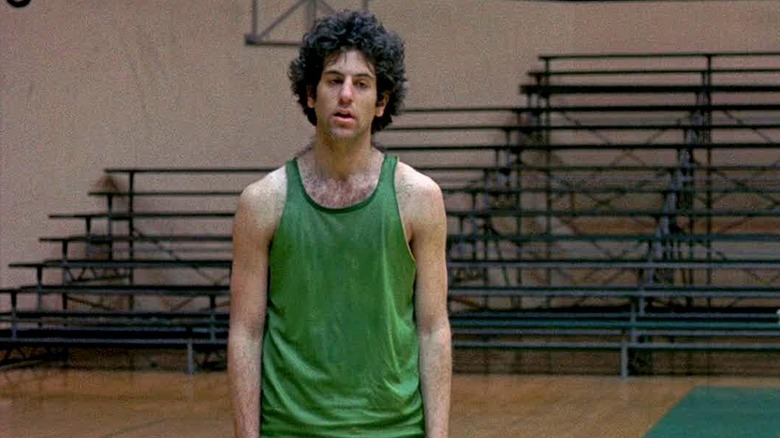
College basketball star Hector Bloom (William Tepper) has a lot going on: he's having an affair with Olive (Karen Black), who's married to one of his favorite professors (Robert Towne); his politically-active roommate, Gabriel (Michael Margotta), is seemingly going mad; and he has to worry about the Vietnam War draft. The only person who sees his full potential is Coach Bullion (Bruce Dern), who aims to harness that frustration and anxiety on the court.
Released in 1971, "Drive, He Said" was the directorial debut of Jack Nicholson, a lifelong Los Angeles Lakers fan. Because he doesn't appear in it, the film isn't often listed amongst Nicholson's best movies, and casual fans might be surprised to learn he ever directed a movie at all. Indeed, "Drive, He Said" is one of the lesser remembered titles released by BBS, the production company that helped usher in the New Hollywood era of the 1970s with "Easy Rider," "The Last Picture Show," and the Nicholson-headlined "Five Easy Pieces."
Nicholson's love of the game shines through in every moment of "Drive, He Said," which has more on its mind than just basketball. The film came out at the height of the anti-war, pro-drug, free love era, and captures as much of what was going on at that time as possible. Although disorganized at times, the film is never uninteresting, especially anytime it's on the basketball court.
Inside Moves
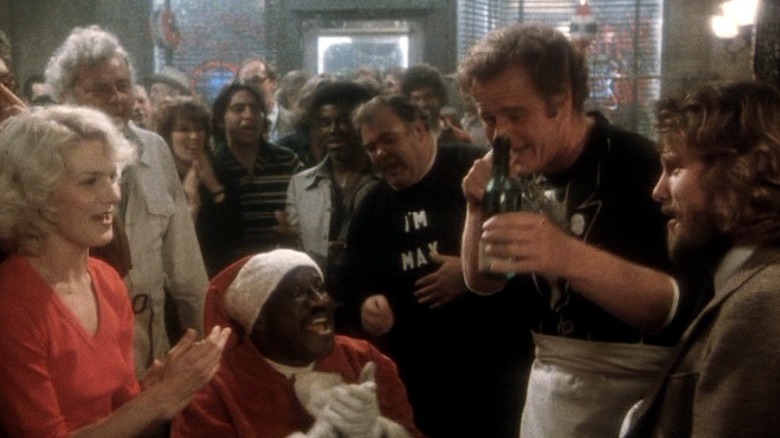
After an act of self-harm leaves him partially paralyzed, Roary (John Savage) finds himself living in a halfway house in Oakland, California. Drowning his sorrows, Roary begins frequenting a local dive bar with a number of other disabled patrons. He becomes best friends with the bartender, Jerry Maxwell (David Morse), and falls in love with Louise (Diana Scarwid), a waitress who gets hired after the bar owner suffers a heart attack.
After gaining attention from the Golden State Warriors, Jerry secures enough money to get surgery on his bad leg, and becomes a star basketball player. With his fame on the rise, Jerry abandons all of his old friends, and betrays Roary by romantically pursuing Louise. Roary confronts his old friend, and encourages him not to leave them all behind.
"Inside Moves" was a change of pace for director Richard Donner, who took on the project after getting replaced on "Superman II." The intimate 1980 drama couldn't feel further away from "Superman," but nevertheless shares the same sense of optimism, ending on a note that echoes "It's a Wonderful Life" in its depiction of community overcoming personal obstacles. The film earned Scarwid an Oscar nomination for best supporting actress (a year before winning the Razzie for worst supporting actress as Joan Crawford's adult daughter in "Mommie Dearest").
That Championship Season
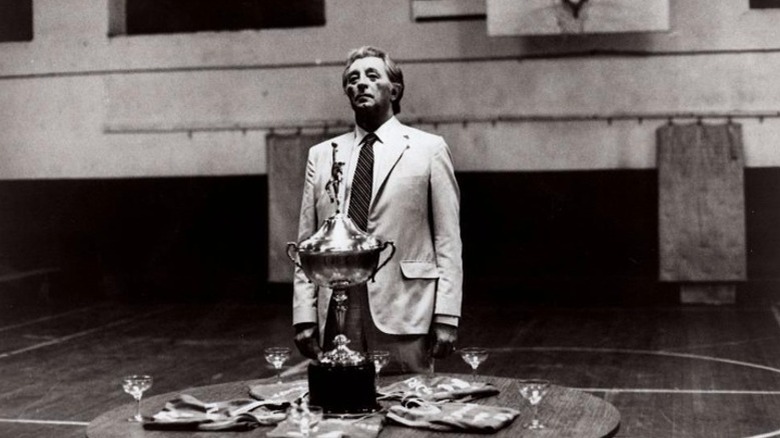
25 years after winning the 1957 Pennsylvania state championship, the Fillmore High School basketball team reunites to relive their glory days. Yet their present lives are anything but, as both the coach and players are each experiencing their own issues.
James Daley (Stacy Keach) is stretched thin both professionally and personally as a high school principal, while his brother, Tom (Martin Sheen), has developed a serious drinking problem. George Sitkowski (Bruce Dern) is engaged in a fierce re-election mayoral campaign, while Phil Romano (Paul Sorvino) has become a successful yet corrupt businessman. Their secretly terminally ill coach, Daniel B. Delaney (Robert Mitchum), still treats them as if they're players having a bad game. As the evening goes on, the absence of the star player becomes increasingly glaring, and the coach's old prejudices rear their ugly head.
"That Championship Season" was adapted from Jason Miller's Tony and Pulitzer Prize-winning play of the same name. Miller, best remembered for his Oscar-nominated role as Father Damian Karras in the still-disturbing '70s classic "The Exorcist," also directed this movie adaptation, which stays faithful to the source material. While stagey at times, it's a pleasure watching this group of actors, especially Dern, whose performance won him the best actor prize at the Berlin Film Festival. Sorvino later directed and starred in a 1999 made-for-TV version featuring Vincent D'Onofrio, Gary Sinise, Tony Shalhoub, and Terry Kinney.
Blue Chips
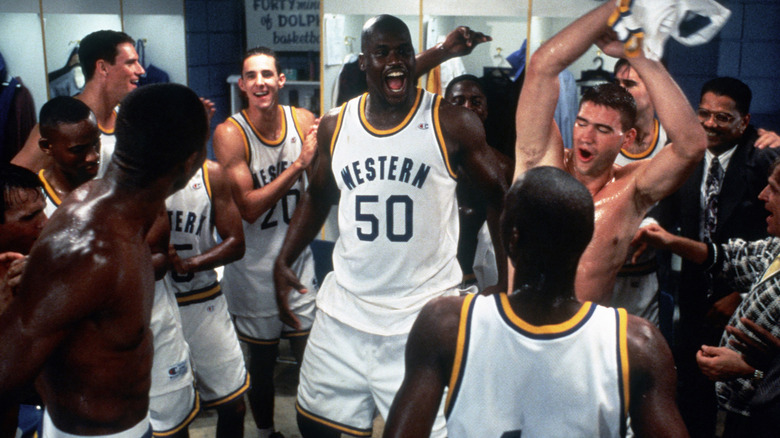
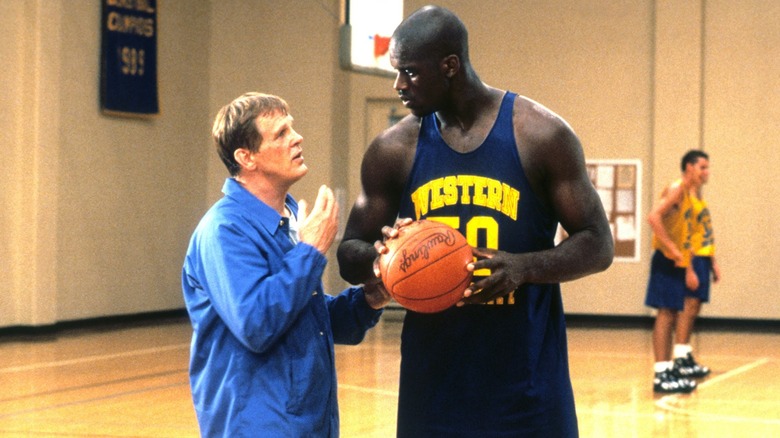
Pete Bell (Nick Nolte), head basketball coach for LA's Western University Dolphins, is under pressure to recruit top players for the upcoming season. However, his trio of new prospects — Neon Boudeaux (Shaquille O'Neal), Butch McRae (Penny Hardaway), and Ricky Roe (Matt Nover) – don't come cheap, and Pete risks his career by offering them illegal financial incentives in exchange for joining his team.
With the help of the school's booster, "Happy" Kuykendahl (J. T. Walsh), Pete successfully bribes the players. But inquisitive sports writer Ed Axelby (Ed O'Neill) keeps poking his nose into the story. With increasingly extravagant demands from the players, the dirty dealings of the booster, and tensions with his ex-wife (Mary McDonnell) weighing on him, Pete barely has time to focus on winning the season and saving his career from scandal.
"Blue Chips" is an odd entry in William Friedkin's filmography, considering he's best known for hit gritty dramas "The French Connection" and "The Exorcist," as well as the must-see '70s box office bomb "Sorcerer." Yet the themes of moral ambiguity, the tolls of obsession, and the inevitability of fate are in keeping with Friedkin's work. As a basketball movie, it benefits from the presence of real life players like O'Neal and Hardaway, as well as noted figures like Bob Knight and Rick Pitino, who add authenticity and flavor to the story.
Finding Forrester
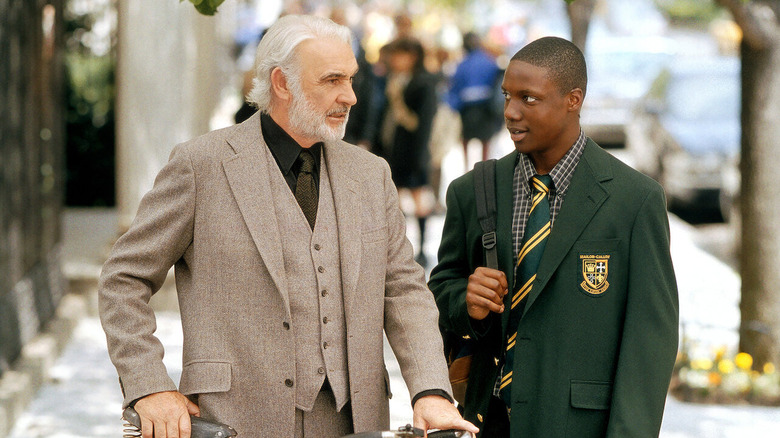
16-year-old Bronx teenager Jamal Wallace (Rob Brown) is offered a basketball scholarship at a prestigious Manhattan private school. His talent for writing catches the eye of his reclusive neighbor, William Forrester (Sean Connery), who won a Pulitzer Prize for his novel "Avalon Landing" and never published another book. Forrester agrees to help Jamal with his writing, on the condition he not dig any deeper into his past life.
An unlikely friendship forms, and the older man even starts letting his protege edit some of his own work, so long as he not let the pages leave his apartment. But one of Jamal's professors, Robert Crawford (F. Murray Abraham), suspects the student of plagiarism, causing a scandal that forces Forrester out of hiding. With his mentor's help, Jamal chooses a path towards success both on and off the basketball court.
Directed by Gus Van Sant, "Finding Forrester" played like a spiritual cousin to his inspirational hit "Good Will Hunting." Although the 2000 release never matched the 1997 Oscar-winner's success, it has its own unique charm. If nothing else, it gifted us Connery, in one of his best movies, uttering "You the man now, dawg!," in his thick Scottish brogue. Chicago Sun-Times critic Richard Roper even included it on his list of the 100 best films of the 2000s, which is high praise indeed.