

5 Darkest Stephen King Stories, Ranked
We may receive a commission on purchases made from links.
Though Stephen King's books are infused with more humanity and optimism than he often gets credit for, no Constant Reader would call his stories lighthearted. He's considered one of the masters of horror, responsible for some of the most famous scary stories of the century, including everything from "The Shining" and "Carrie" to "Cujo" and "It." Some of his work is more fantastical, while some is based in deeply human impulses toward evil; but with very few exceptions, King's work exists on a spectrum from "dark" to "very dark."
King has faced tragedies in his own life, and he's gotten very good at mining his own experiences for his work. That being said, the stories on the list below are the darkest ones King has ever written, so we hope they're not based on personal tales. These books grapple with some of his most troublesome material, executing some of his familiar themes and obsessions better than anywhere else in his output. Some are shorter novels, while others are sprawling tomes. Some have been adapted for other forms of media, while others have been rather overlooked in his catalogue.
King is famously prolific, meaning there are plenty of books and stories that could have made the list; but the books below are the ones that linger, the ones that stick with you long after you turn the final page. If you're looking to dive right into the deep end, experiencing the creepiest and most disturbing stories that King's universe has to offer, you'll want to start here.
5. Lisey's Story
Stephen King has written about domestic abuse many times. Troubled families recur throughout his work, and rotten familial relationships provide antagonists like the claustrophobic, alcoholic father figure in "The Shining" and the desperately religious, overbearing mother in "Carrie." In "Lisey's Story," however, King grappled with the effects of trauma like never before, weaving an intricate tale of a woman's attempt to understand her own story.
The titular Lisey is Lisey Landon, recent widow of a successful writer named Scott. Her husband was celebrated in his lifetime and people are interested in the role Lisey might have played in his success. But in the aftermath of his death, she instead re-examines their relationship in detail, following his stories down a rabbit hole of fantastical scenarios that echo her own memories. This is a complex book, one that features nested flashbacks designed to maximize the emotional impact of similar experiences ricocheting back toward the present.
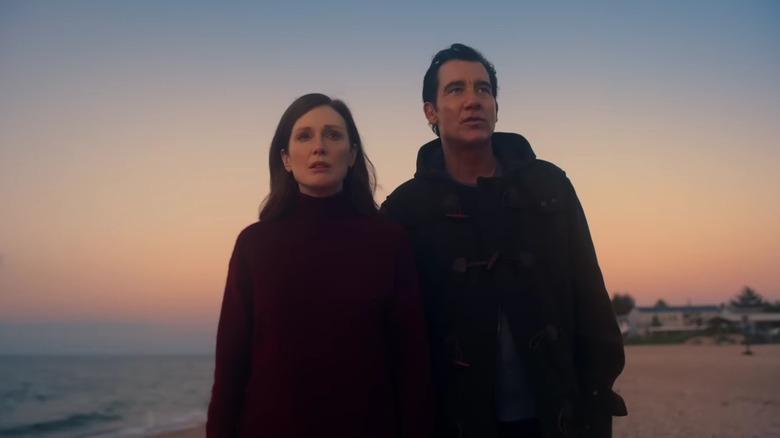
In 2020, Apple TV+ released a television adaptation of the book. Julianne Moore played Lisey and Clive Owen starred as Scott, and the show was as complicated and upsetting as it was touching. In the hands of director Pablo Larraín — the man behind moving, woman-forward biopics like "Jackie" and "Spencer" – "Lisey's Story" took its rightful place as one of the darkest tales in King's oeuvre. You can find Looper's interview with "Lisey's Story" star Joan Allen here.
4. Roadwork
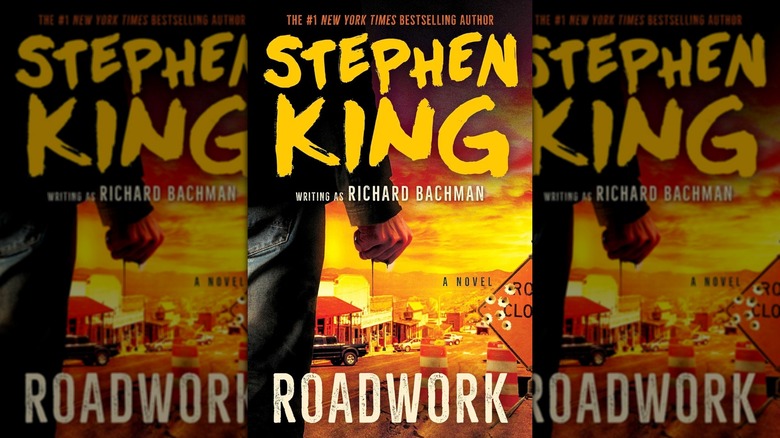
In the early days of his career, Stephen King was so prolific that his editors feared audiences wouldn't accept his fast output. He released several of his early books under the pen name Richard Bachman, including well-known stories like "The Long Walk" and "The Running Man," both of which got film adaptations in 2025.
One of the Bachman books was called "Rage," and it's about a school shooting. If you own a paperback copy, it might be one of the most valuable items in your home. That one's dark, but in many ways, the unfortunate decades since the book's release have made the story more commonplace. "Roadwork," on the other hand, is a dark descent into madness, tracking a helpless family man whose life comes apart when the city announces that they plan to build a highway extension right through his property.
No one has adapted "Roadwork" into a film yet, and it's clear why that would be a difficult undertaking. The book is so firmly set in Bart Dawes' perspective that it would be difficult to convey on film, so insidiously about his unraveling that you hardly notice the lengths he's willing to go to save his home. This is a book about a man up against an unimaginable bureaucracy that doesn't care about the little people, about how helpless you can feel when all the forces of society conspire to brush you aside.
3. Apt Pupil
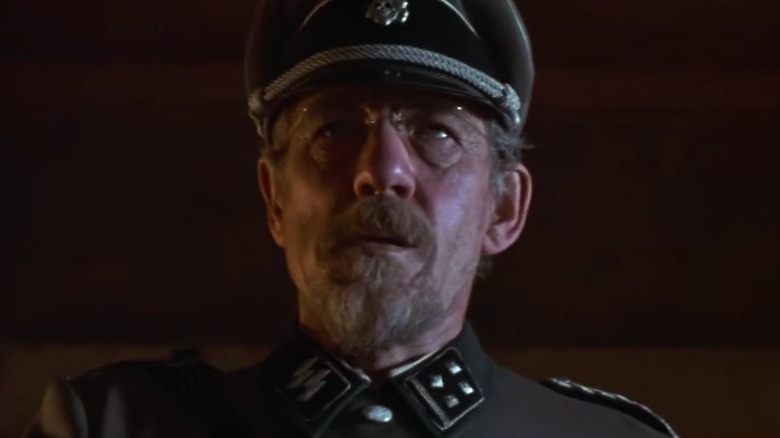
"Apt Pupil" is a novella published in "Different Seasons," which is an essential Stephen King book that everyone should read at least once. The novella — which is subtitled "Summer of Corruption" in accordance with the theme of the collection – follows a teenager named Todd as he befriends the eccentric older man who lives next door. At first, Arthur Denker seems like a nice guy, and the two strike up an easy relationship.
Eventually, Todd learns that Arthur is actually Kurt Dussander, a Nazi who fled Germany after the war and settled in suburban America. The novella tracks Todd's unhealthy obsession with his neighbor's past life, initially fascinated in a sadistic way and, eventually, falling under Dussander's sway. The novella builds to some shocking acts of violence, all the more upsetting because of how ordinary they seem once Todd has had his mind twisted by the Nazi next door.
This is one of the most disturbing relationships in the King canon, especially because of all the psychosexual subtext lurking underneath the main thrust of the story. When disgraced director Bryan Singer directed a film version in 1998, the story became even darker; he was accused of having filmed teenage extras while they were nude during a shower scene, and one actor later told The Atlantic that Singer had groped him on set.
2. Revival
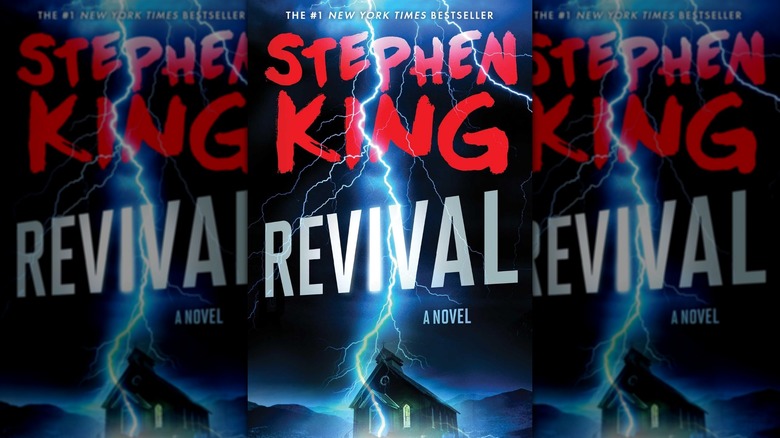
Stephen King's output hasn't slowed in the past few decades, but his newer novels haven't necessarily picked up the cultural cachet of his earlier tomes. In 2014, he released "Revival," which many Constant Readers now point to as one of the best books in this later period of his career. It's a breezy read, told in a first-person perspective that zips right along — which is perhaps why the climax of the book feels like someone dropping an anvil on your head.
"Revival" tells the story of a young man named Jamie who meets revival preacher Charles Jacobs in his youth. Jacobs has a fascination with electricity; he believes that he can channel it and use it toward God's will, healing the sick through powerful jolts of lightning. As Jamie and Jacobs' paths continue to intersect across Jamie's lifetime, Jacobs' own arc seems to grow darker and darker, until the whole thing culminates in some of the most frightening, Lovecraftian imagery of King's entire bibliography.
This book belongs on a list of King stories that are almost impossible to adapt, because that imagery might not have the same effect on screen as it does on the page. As written, the words worm their way into your subconscious, suggesting a whole different layer of reality than we're used to considering. As the characters in the book learn, that knowledge might just drive you to madness.
1. Pet Sematary

Stephen King's work has given us no shortage of creepy children, including some of the scariest kids in horror history. From the twins in "The Shining" to the "Children of the Corn," King has always understood that adults are deeply unsettled by kids who behave like no children ever should. They are sometimes the heroes of his stories, including in books like "It," but they're just as often the victims of whatever force terrorizes his characters.
In "Pet Sematary," King offered up both his creepiest kid and his darkest story. The book is about a man named Louis who moves his family to a new home, where they discover a pet cemetery deep in the woods behind the house. (The title comes from the childish misspelling he spots on a homemade sign out in the forest.) After the family cat Church is killed by a vehicle speeding past their home, he buries him in the strange cemetery... and then, Church comes back.
You might already see where this is going, but there's no way to anticipate just how dark the journey is to get there. After he learns how the cemetery works, Louis' young son Gage is killed in a traffic accident — and it's not hard to guess what Louis considers doing next. This is a book all about the howling grief of losing a child, making it an occasionally grueling exploration of desperation and regret. Louis has an important lesson to learn, after all, which is unforgettably delivered in the Mary Lambert film adaptation of the book: "Sometimes dead is better."