

5 Binge-Worthy '90s TV Shows You Won't Be Able To Stop Watching
It's safe to say the 1990s were the last golden age of network television. By the decade's end, cable giant HBO struck a fatal blow to the broadcast networks with "The Sopranos," which was unencumbered by content restrictions of intimacy, violence, and language. Throughout the 2000s, cable became the home of prestige TV; and by the 2010s, the dawn of streaming all but destroyed network TV as a place for creative expression. However, you can log onto any streaming service and you'll find a ton of '90s shows available to watch at any given time. That's because the best TV shows of the 1990s are endlessly rewatchable, which is why you'll often find them playing in syndication on the very networks that made broadcast TV go the way of the dinosaur.
Here are five binge-worthy '90s TV shows you won't be able to stop watching. These shows run the gamut from single-camera dramas to multi-camera sitcoms, encompassing science fiction, horror, and romantic comedy. These shows have stood the test of time, and have influenced generations of TV showrunners. In fact, it's safe to say that all five of these programs have inspired what can now be considered prestige TV, even though they premiered at a time when such a concept seemed laughable. Yet, in their own way, each of these shows proved that TV could be just as artistically fulfilling as cinema, even if it was made for the small screen. So put down your remote, because once you start watching these shows, you won't be able to stop.
Buffy the Vampire Slayer
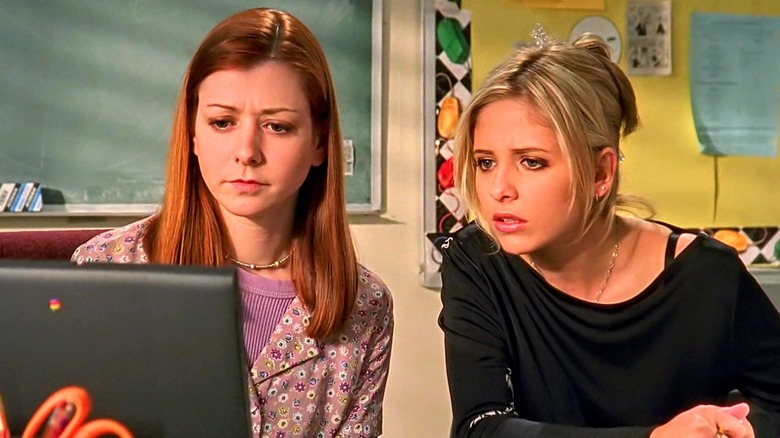
Who would've thought that a fairly forgotten teen movie would've served as the basis for one of the biggest TV hits of the '90s? Written by Joss Whedon, the 1992 movie version of "Buffy" was a horror comedy about a valley girl cheerleader (Kristy Swanson) destined to spend her life hunting vampires. A critical and box office dud, the movie seemed to die a quick death before Whedon resurrected it for TV. Once again focusing on teenage vampire slayer Buffy Summers (Sarah Michelle Gellar), the show took a decidedly more serious approach while still retaining the rapid-fire dialogue, sly humor, and pop culture references that Whedon is famous for. In this way, Whedon managed to make the "Buffy" he originally intended, as opposed to the one that hit theaters in 1992.
Airing for seven seasons from 1997 to 2003, "Buffy the Vampire Slayer" created a lore and mythology that has inspired academic studies, spin-offs, and comic books. Taking the guise of a network TV teen drama, the show managed to explore the aches and pains of adolescence while still delivering on all of the chills and thrills of the horror genre. There was something for everyone in "Buffy": scares, romance, and humor. The show enjoyed the freedom to try new things, with episodes that ranged from silent movie homages to full-blown musicals, without ever losing its core ideas. "Buffy's" legacy has continued to grow throughout the years, with attempted revivals hoping to bring it back from the dead once again.
Friends
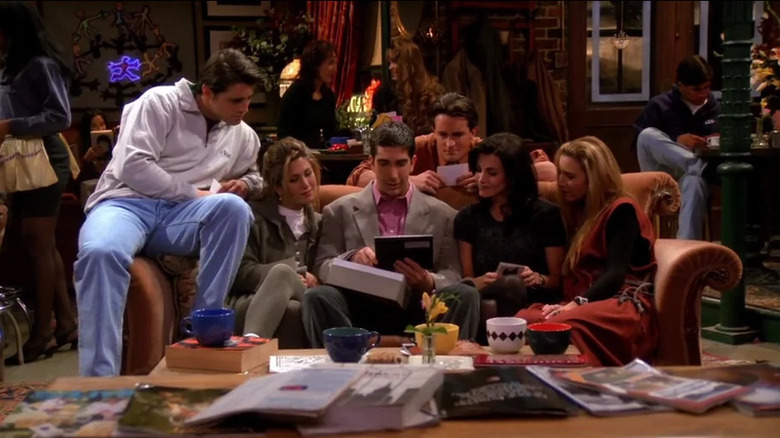
When most people talk about the best comedy TV shows of all time, there's one that's usually named amongst their favorites: "Friends." Like "Cheers," "The Golden Girls," or "The Office," it's premised on the notion that audiences want nothing more than to spend time with their pals week after week. Set in New York City, the show was centered on the personal and professional lives of two sets of young yuppies who live across the hall from each other: fashion enthusiast Rachel Green (Jennifer Aniston), chef Monica Geller (Courtney Cox), and kooky masseuse Phoebe Buffay (Lisa Kudrow) in one apartment; and struggling actor Joey Tribbiani (Matt LeBlanc), cynical stats analyst Chandler Bing (Matthew Perry), and paleontologist Ross Geller (David Schwimmer) in the other. Like the best TV shows, "Friends" proved that simplicity can often lead to brilliance.
Created by David Crane and Martha Kauffman, the show was about that time in all of our lives when our friends are our family. In watching Ross, Rachel, Monica, Chandler, Joey, and Phoebe celebrate holidays together, help each other through professional pitfalls, and heal each others' broken hearts, we realized there was nothing we couldn't do alongside the people who love us. As the theme song reminded us over the course of 10 seasons, "I'll be there for you ('Cause you're there for me too)." And we'll still be there for the show, which won six Emmys and is continuously enjoyed in reruns and on streaming.
Seinfeld
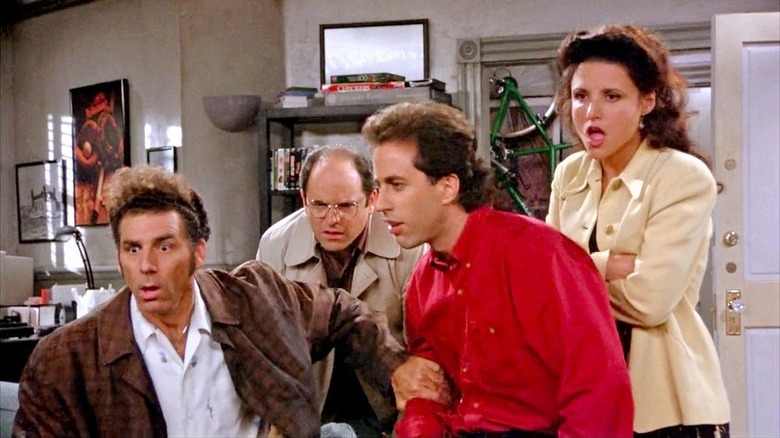
When TV Guide (via CBS News) published its ranking of the 50 Greatest TV Shows of All Time in 2002, "Seinfeld" topped the list, which included such television classics as "I Love Lucy," "All in the Family," and "The Sopranos" (which supplanted it in the updated ranking of the 60 best in 2013). Although it had just left the airwaves a mere four years earlier in 1998, "Seinfeld's" lasting impact was already evident. The brainchild of Jerry Seinfeld and Larry David (who later brought his famously misanthropic sense of humor to "Curb Your Enthusiasm"), it was famously conceived as "a show about nothing," following Jerry's daily life as a New York standup comic. But with each passing season, the show about nothing became a show about everything.
Joined by his constantly scheming best friend George Costanza (Jason Alexander), sardonic ex-girlfriend Elaine Benes (Julia Louis-Dreyfus), and eccentric neighbor Cosmo Kramer (Michael Richards), Jerry made major adventures out of life's minor inconveniences. Unlike the near-pathologically likable characters on other TV comedies, this cast was petty, conniving, and envious, constantly lying and cheating every poor soul that came into their orbit. But, in doing so, they became a voice for the trivial grievances that befall us all. One of the funniest sitcoms in TV history, "Seinfeld" created more catchphrases than you can count, more memorable supporting characters than you can name, and more big laughs than any other television show of the decade. The show won 10 Emmys throughout its run, and continues to delight viewers in streaming and syndication.
Twin Peaks
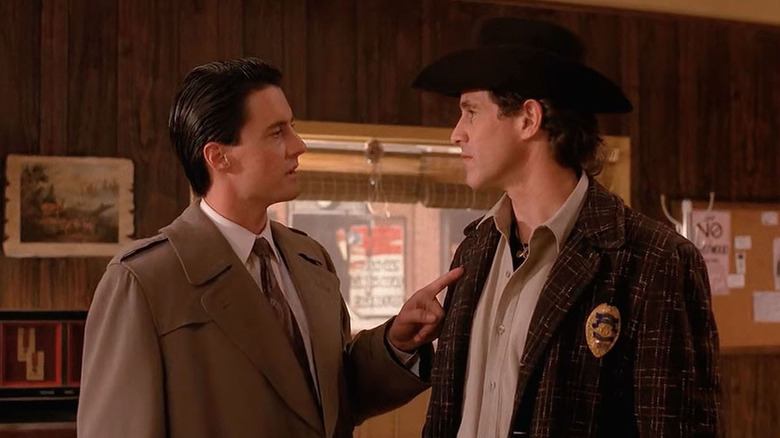
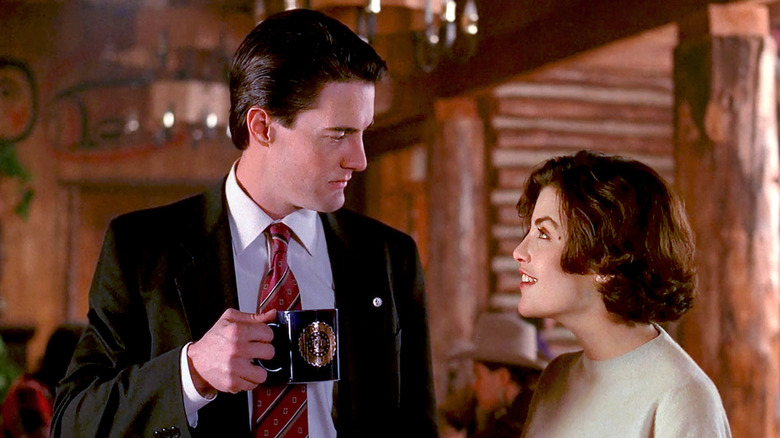
When "Twin Peaks" hit the airwaves in 1990, it had an impact comparable to aliens landing on Earth. Created by David Lynch and Mark Frost, it opened with an unsettling image of startling beauty: the dead body of prom queen Laura Palmer (Sheryl Lee), wrapped in plastic and washed up on the shore of a sleepy logging town in the Pacific Northwest. As news breaks of Laura's death, FBI Agent Dale Cooper (Kyle MacLachlan) rides into town, speaking into his tape recorder to the unseen "Diane." Despite the grimness of his visit, Cooper falls in love with Twin Peaks, populated by lovable oddballs and home to the best cherry pie and coffee you can find. Yet there's also a sinister undercurrent lurking in the woods, one that seems to have been born by an ancient evil that permeates to this day.
One of the best TV shows David Lynch ever made, the initial run of "Twin Peaks" burned brightly and briefly. Audiences tuned in week after week as the clues to Laura's death became increasingly bizarre and oblique, to the point where one wondered if the mystery would ever be solved. When it finally was, the answer killed the goose that laid the golden egg, and the series ended shortly thereafter on a cliffhanger. But Lynch never fully left the world of "Twin Peaks," releasing the divisive prequel film "Twin Peaks: Fire Walk with Me" before triumphing with "Twin Peaks: The Return."
The X-Files
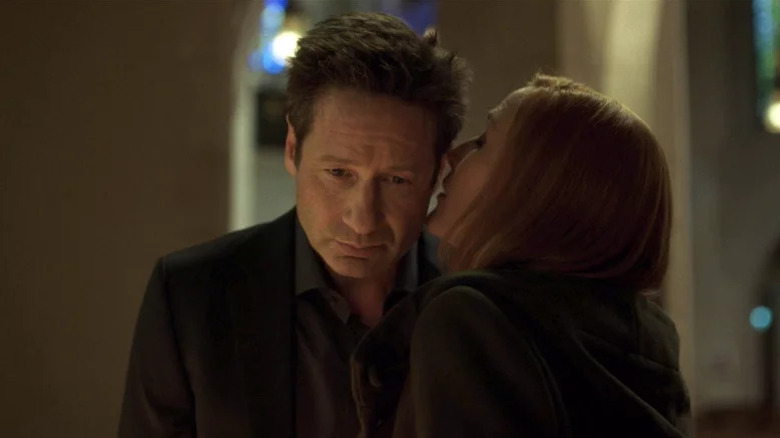
"The truth is out there." These words summed up the everlasting appeal of "The X-Files," a show whose best episodes continue to confound and intrigue viewers to this day. Created by Chris Carter, it's premised upon something that most of us have always believed but have never been able to prove: There's more to life than what's right in front of our eyes. The show revolves around FBI Agents Fox Mulder (David Duchovny) and Dana Scully (Gillian Anderson), who investigate the paranormal phenomena that our government desperately tries to hide. Convinced that aliens, ghosts, and monsters walk among us, Mulder and Scully dive into the unsolved mysteries that most people would label conspiracy theories, fantasies, or outright delusions. Yet week after week, the duo is confronted with the unknowable.
The brilliance of "The X-Files," which initially aired for nine seasons between 1993 and 2002, was that it contained within it the debate between science and faith that animates discussions of paranormal activity. While Mulder is a true believer in the supernatural, Scully is an ardent skeptic. He's a skilled criminal profiler and conspiracy theorist, while she's a trained medical doctor; and with each episode, their opposing views are challenged or proven, leaving open the question of what is real and what is not. A spiritual successor to "The Twilight Zone," "The X-Files" was a pop culture phenomenon, winning 16 Emmys and inspiring some of the best cult classic sci-fi TV shows of all time.