

Stephen King's 10 Best Movies Of All Time Need To Be On Your Watchlist
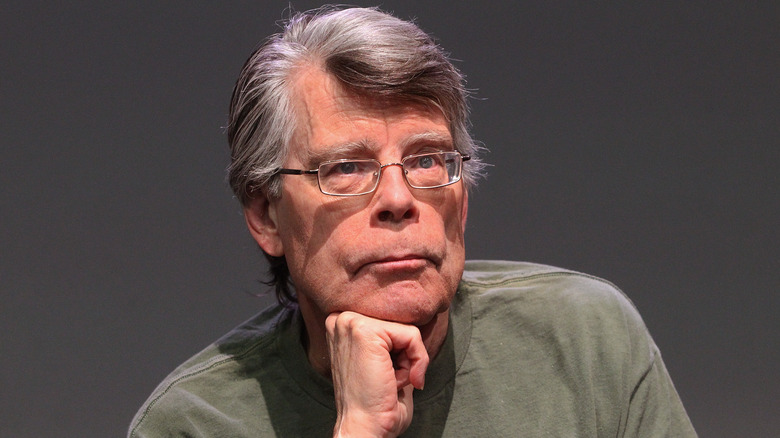
Inspiration doesn't happen in a vacuum. Even Stephen King, the writer responsible for hundreds of tales woven through short stories, novellas, novels, films, mini-series, and TV shows, has his favorite sources of inspiration. The author, who first began keeping a movie log back in 1994, has never been shy about sharing his own favorite films for the world to enjoy. And much like the wider body of his own work, that list goes far beyond horror.
Writing for Entertainment Weekly in 2007, King discussed his relationship with cinema. The King of Horror recalled the emotional weight of watching Bambi's mother die, wishing he was William Holden in "Picnic," and realizing the power of good drama and stripped down of gimmicks as he first took in "The Hustler." "['The Hustler'] was the one that made me understand that good acting could change lives, and great acting might be able to change the world," the author said.
While a more complete list of King's top movie picks would include adaptations of his own works like "Stand by Me," "The Green Mile," "The Shawshank Redemption," and "Misery," the writer shared his 10 favorite movies (in no particular order) on X in 2025. If you love good cinema as much as King does, be sure to add these picks to your watchlist.
Sorcerer
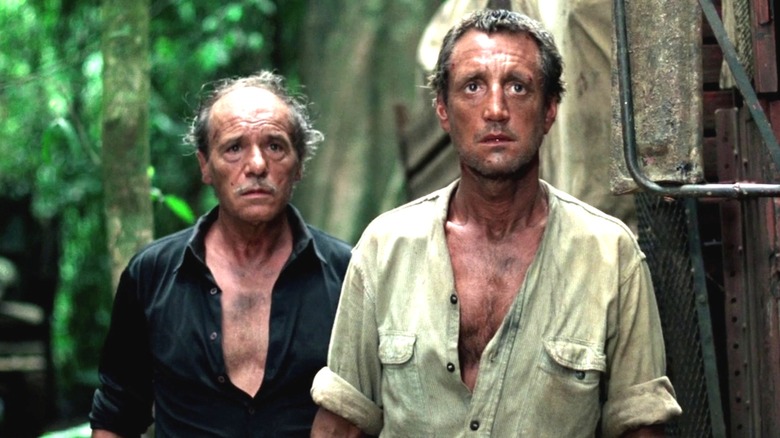
"Sorcerer" might sound like the name of a fantasy film, but it's actually the 1977 remake of a 1953 French film "The Wages of Fear." It's a tense cinematic adaptation of a Georges Arnaud novel about truckers charged with transporting nitroglycerin, a chemical so volatile that any sudden movement could wipe them all out. The film stars Roy Scheider, Bruno Cremer, and Francisco Rabal as fugitives living under assumed names in South America, where they take a job transporting nitroglycerin needed to help stop a fire.
Getting the chemical (and themselves) to their destination some 218 miles away in one piece means driving with the utmost care, given how easily even a minor jostle could cause an explosion. En route, their white-knuckled journey forces the men to confront a violent thunderstorm, armed guerillas, rocky terrain, and a frightening bridge. Produced and directed by William Friedkin, the New Hollywood director responsible for "The Exorcist" and "The French Connection," the action-adventure film presents an edge-of-your-seat adaptation of the original tale. With the film's "Sword of Damocles" plot, it's easy to see the influence on Stephen King's work. In a 2002 Movie Hole interview, Friedkin reflected on the film's theme of how little control anyone has over his or her own fate. "It's something that has haunted me since I was intelligent enough to contemplate something like it," the director mused.
Writing in his 1981 analysis of the horror genre in pop culture titled "Danse Macabre," King called "Sorcerer" a "bad movie" he nonetheless enjoyed. Citing the film's Panavision-70 "close-ups [...] of sweaty people working hard and laboring machines; truck engines and huge wheels spinning in soupy mud and frayed fanbelts," King concluded, "I thought 'Sorcerer' was marvelous fun."
The Godfather Part II
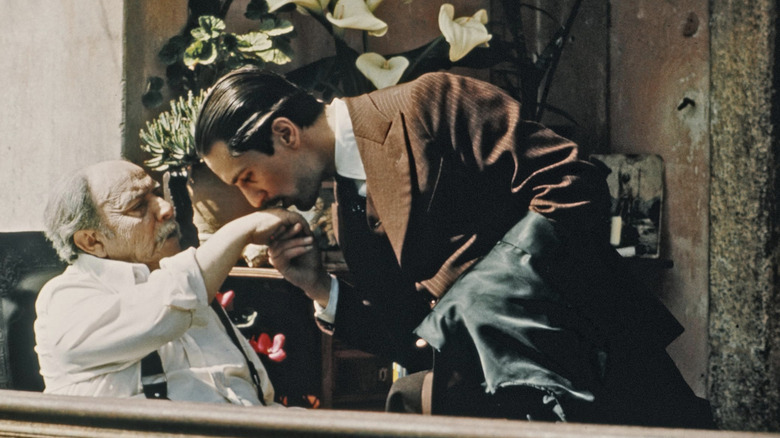
"The Godfather Part II" isn't your typical sequel. With its runtime of over 200 minutes, the beautifully cinematic 1974 crime epic was the first sequel to win an Academy Award for Best Picture and still holds up as one of the best films ever made today. The second part of the the Francis Ford Coppola trilogy based on Mario Puzo's novel "The Godfather," "Part II" serves both as prequel and sequel to the first film in the series, taking audiences through the Corleone family's rise to power in the United States as one of the Italian mafia's major crime families. At the same time, the story follows the ascension of Michael Corleone (Al Pacino) from reluctant prodigal son to the ruthless mafia don at the head of the Corleone family.
As an author known for his vibrant and dynamic characters, it's not hard to see why Stephen King loves this epic prequel-sequel. In a cinematic world full of one-dimensional mobsters and crime bosses, "Part II" transformed the genre through its complex, dynamic characterizations of villainous criminals and almost Shakespearean portrayal of the American dream, inverted.
Although the author doesn't expand on his love for "Part II," his reaction to the film is a far cry from King's scathing 2007 review of the franchise's final entry. Writing in his Entertainment Weekly column, King called "The Godfather Part III" "opulent, incoherent, and boring," "a movie that doesn't matter," and "the work of a talented man who has either used all his talent up or is saving what's left for another day." Ouch.
The Getaway
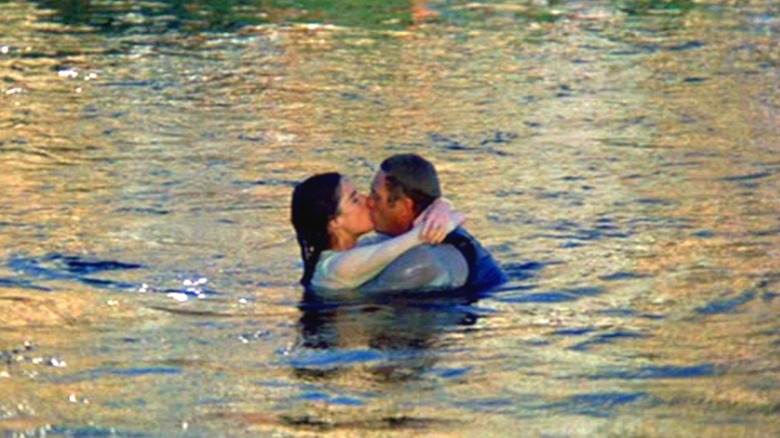
Another great 1970s action thriller based on a novel, "The Getaway" is a 1972 film about a Texas convict (Steve McQueen) recruited by a corrupt parole board member into participating in an armed robbery that, predictably, goes wrong — forcing him to go on the lam. The film also stars Ali MacGraw as Carol McCoy, the wife of its felonious protagonist, Doc. It was directed by Sam Peckinpah and written by Walter Hill, both filmmakers who are mostly known for their revisionist Westerns amid the 1970s Western revival.
Based on a much darker novel that feels more like a Tarantino story, the gritty, hard-boiled film was ahead of its time with its antiheroic protagonist, a violent offender running on pure criminal instinct and devotion to his wife. Like many of Stephen King's other favorite films, it's the dynamic characters and chemistry that make "The Getaway" such an engaging watch. Speaking with Turner Classic Movies in 2021, MacGraw, who said it was terrifying to work with an actor as big as McQueen, reflected, "I think our chemistry is why [the film] works." MacGraw also praised "the fabulous, fabulous cast of Sam Peckinpah's constant, extraordinary character actors in every single part."
King cites the film and the novel as inspirations for his 2021 novel "Billy Summers," which deals with a former sniper-turned-hitman on the verge of retirement. Speaking with Esquire, the author recalled reading author Jim Thompson's "hard-boiled noir" books in his younger years and wanting to write something along those same lines. Referencing the film, King mused about rooting for the bad guy with a good heart. "We all like to take our imaginations for a little walk and pretend for a while that we're on the dark side of the law," he said.
Groundhog Day
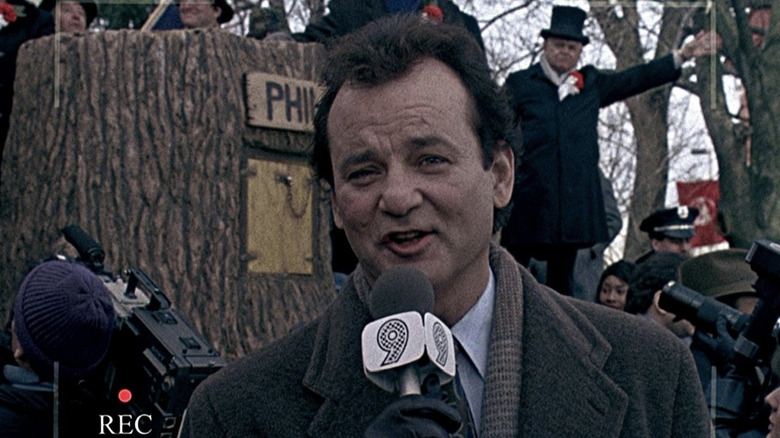
One of the most iconic and genre-defining movies to explore the time loop trope, "Groundhog Day" is a 1993 Harold Ramis comedy that follows its protagonist, meteorologist Phil Connors (Bill Murray), over and over again through the same day when his Groundhog Day coverage of Punxsutawney Phil traps him in a time loop. A romantic fantasy about a grumpy guy who needs to get his heart right, "Groundhog Day" has become almost a template for the way modern time loop stories play out.
Phil, along with his producer Rita (Andie MacDowell) and cameraman Larry (Chris Elliott), reluctantly travel to western Pennsylvania to cover weather for the titular event — an assignment which, he feels, is beneath him. Awakening on February 2 in a local hotel called the Cherry Street Inn, Phil arrives in town square to give his unenthusiastic and incorrect weather prediction — only to find himself snowed in thanks to a blizzard he should have seen coming. When he wakes up the next day, and the next day, and the next day to the same song, realizing it's still the same day, Phil begins to try everything he can to escape his ironic fate.
The film's central trio are adorable to watch, and Bill Murray is at his comedic best in this movie. Like every good time loop story to follow, "Groundhog Day" follows its protagonist through his stages of grief as he searches for solutions, gives up entirely, and ultimately accepts his fate to become a better version of himself. While Stephen King doesn't share additional insight into what he loves about this film, "Groundhog Day" is notably the only comedy film on his list, and it's easy to see why he appreciates its paranormal central plot.
Casablanca
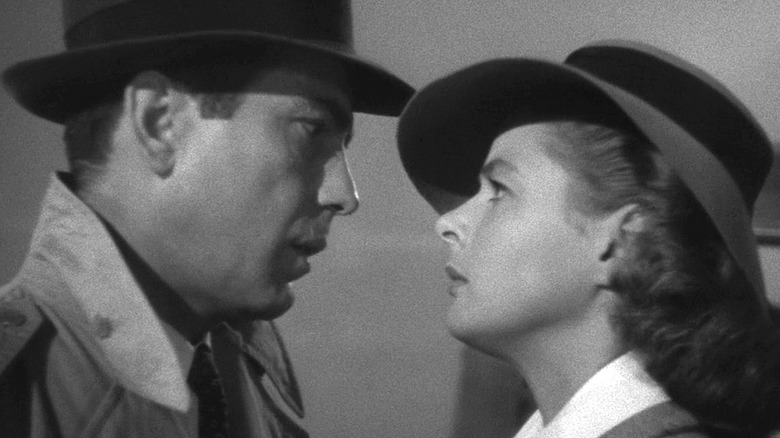
Considered by many to be one of the greatest films ever made, "Casablanca" is an emotional love story set (and filmed) during World War II's early years. The film, one of Humphrey Bogart's best movies, features Bogart as Rick Blaine, a U.S. expat living in 1941 Casablanca, Morocco under the Vichy French government — the German collaborationist regime that occupied France throughout most of World War II. There, he runs his night club, Rick's Café Américain, a gritty little joint that sees all types of customers — which is reason enough for Rick to remain apolitical.
But much as the United States would eventually learn, it's hard to stay apolitical with the Third Reich around. When Ilsa (Ingrid Bergman), the old girlfriend who broke his heart, comes into his club while on the run with her husband, Rick finds himself standing before his own line in the sand. Arguably one of the most romantic films of all time, "Casablanca" is a beautiful and tragic love story set at the dawn of one of humanity's darkest hours. The film won three Academy Awards for directing, writing, and Best Motion Picture at the 1944 Oscars.
It's only fitting that the film makes an appearance in Mike Flanagan's 2019 adaptation of "Doctor Sleep," Stephen King's sequel to "The Shining," particularly given Flanagan's appreciation for the classic Hollywood romance. It's the second film on the list that the two horror icons share on their personal lists of faves, an honor that "Jaws" shares.
The Treasure of the Sierra Madre
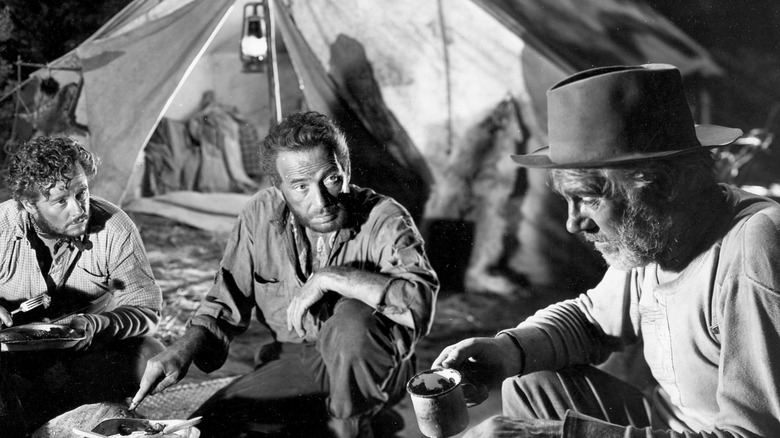
Another great Humphrey Bogart film, the 1948 Western adventure "The Treasure of the Sierra Madre" follows a trio of drifters who travel west to prospect amid the great American Gold Rush. Without proselytizing, the film holds a lens up to greed and the nature of real treasure versus fool's gold. Full of adventure, thrills, and solid acting, "The Treasure of the Sierra Madre" is a critically acclaimed Western with a 100% Tomatometer and a 93% audience score on Rotten Tomatoes.
After a labor contractor who hires them to construct oil derricks skips town without paying, Fred C. Dobbs (Bogart) and Bob Curtin (Tim Holt) find themselves especially down on their luck in Tampico, Mexico. But after meeting an old guy named Howard (Walter Huston) who inspires them to quite literally go for the gold, the men head out for the Sierra Madre mountains, where they find gold, make friends with the locals, and face off with some nasty local bandits.
It's easy to see the aesthetic and thematic influences of Westerns like "Sierra Madre" on Stephen King's work, particularly in "The Dark Tower" series entry "The Gunslinger" and his 2015 Mr. Mercedes crime novel "Finders Keepers," which explores the innately corrosive nature of treasure-seeking. A longtime fan of Westerns, the author compared his own obsession with writing the macabre to Louis L'amour's passion for writing the American West in his forward to "Night Shift." "His story might be about water rights in a dry season, my story would more likely be about some dreadful, hulking thing rising out of the still waters to carry off sheep[,] horses[, and] people," King said. "He writes Westerns; I write fearsomes. We're both a little bit nuts."
Jaws
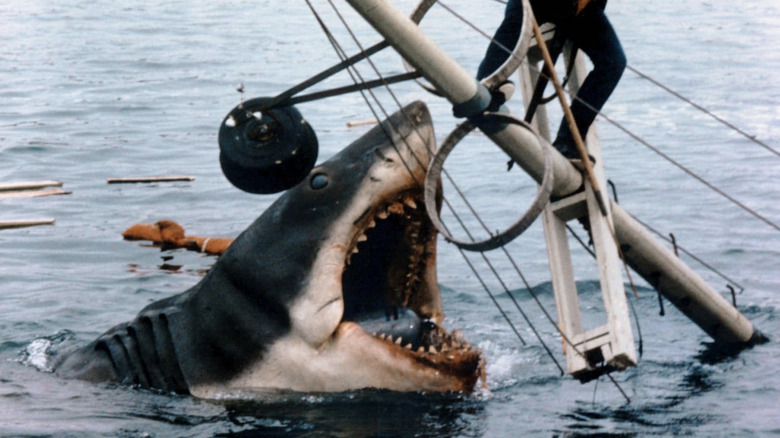
It's hard to overstate the cultural significance of "Jaws," the action thriller that would go on to become one of the most genre-defining monster movies of all time. Directed by Steven Spielberg, "Jaws" first aired in 1975 and made a huge impact in cinemas, terrifying movie-goers and serving as the beginning of the epic summer blockbuster era that would permanently change the way studios market their films.
Set in New England's fictional beach community Amity Island, the film imagines its waters suddenly under siege by a massive 25-foot great white shark with an apparent thirst for human blood. "Jaws" stars Richard Dreyfuss as marine biologist Matt Hooper, who teams up with police chief Martin Brody (Roy Scheider) and shark hunter Quint (Robert Shaw) to take down the beast. The terrifying minimalist theme by composer John Williams is still one of the most recognizable movie themes in existence. The film won three Oscars at the 1976 Academy Awards, racking up wins for best sound, best score, and best film editing. It also owes many thanks to its mechanical shark, Bruce.
While discussing elitism among film critics in a 2014 Rolling Stone interview, Stephen King cited "Jaws" as an example of film that is accessible to everyone. "Let's face it, you can take [an ...] illiterate [person] to 'Jaws' and he can understand what's going on," the author opined. In an X post written prior to King's short-lived hiatus from the platform, the author declared his favorite movie quote of all time to be from this film (via The Daily Jaws). "After deep consideration, 'You're gonna need a bigger boat' is still the best line in movie history," King wrote.
Mean Streets
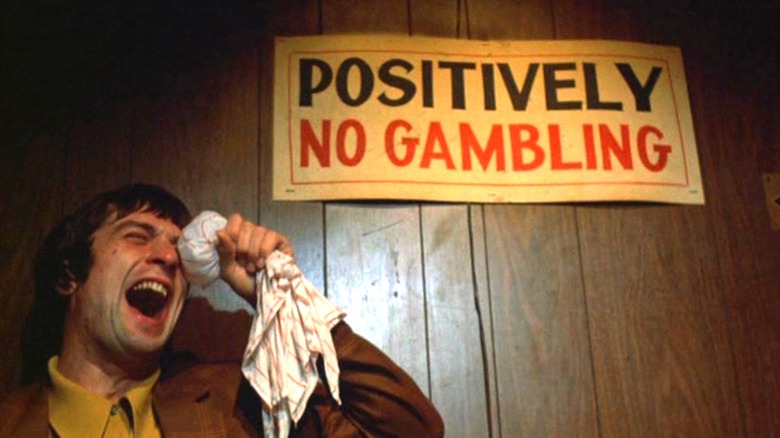
If you love organized crime films like "Goodfellas" and "Casino" but you've never seen "Mean Streets," it needs to be at the top of your watchlist. Filmed before the director would go on to create such memorable films as "Raging Bull" and "Taxi Driver," this 1973 Martin Scorsese drama starring Harvey Keitel and Robert De Niro centers around young men connected to the Italian mafia working out of Little Italy, New York.
Keitel stars as Charlie Cappa, a young man whose familial mob connections and complicated situationship come into direct conflict with his serious Catholic guilt. Out of a combination of that guilt and a sense of responsibility, Charlie tries his best to look out for his loser buddy Johnny Boy (De Niro) — a commitment that doesn't go well for him. Setting the course for future Scorsese films to explore organized crime, "Mean Streets" presents a tragic story that will feel familiar to fans of the director's later films like "The Departed" and "Gangs of New York." The critically acclaimed film still ranks high right alongside the director's other more notable works.
Stephen King, who has been very open about his loathing of Scorsese's "Raging Bull," loves one "Mean Streets" quote so much that he referenced it in his 1986 "It" interlude: "You don't f*** around with the infinite."
Close Encounters of the Third Kind
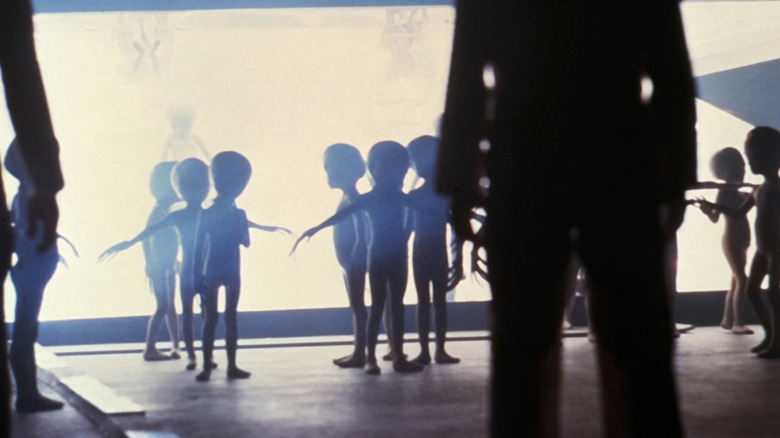
Steven Spielberg first got the inspiration to make "Close Encounters of the Third Kind," his epic 1977 UFO saga, while watching a meteor shower with his dad as a kid. As Spielberg told Entertainment Weekly in 2018, "I just remember looking at the sky, because of the influence of my father, and saying, 'If I ever get a chance to make a science fiction movie, I want those guys to come in peace.'" Stephen King would share a similar sentiment with his own son. Waxing nostalgically to Literary Hub, King's son Joe Hill recalled watching "Close Encounters" one summer ad nauseam after his dad picked up a copy, along with "Duel" and "Jaws." "When I wandered into my bedroom, I half expected my toys to spring to antic, supernatural life, powered by the energy radiating from passing UFOs," Hill recollected.
Ambitious and hopeful, it's not hard to see why "Close Encounters" is one of the top sci-fi movies everyone should see — and, not to mention, one of King's favorite films. Contrasting the film with "The Thing" in "Danse Macabre," King views "Close Encounters" as a more optimistic, post-Vietnam film, a product of a less hawkish zeitgeist where, perhaps, not all Others are enemies.
Unlike the vast majority of science fiction stories about UFO experiences, the focus of Spielberg's drama is a message of hope and optimism. When the world is suddenly beset by a bombardment of strange and paranormal phenomena, blue collar protagonist Roy Neary (Richard Dreyfuss) joins countless others from around the world to heed the call of something much bigger than themselves. But instead of a tale about fear and darkness or government conspiracies, it's a story about possibility and taking a leap with one's heart.
Double Indemnity
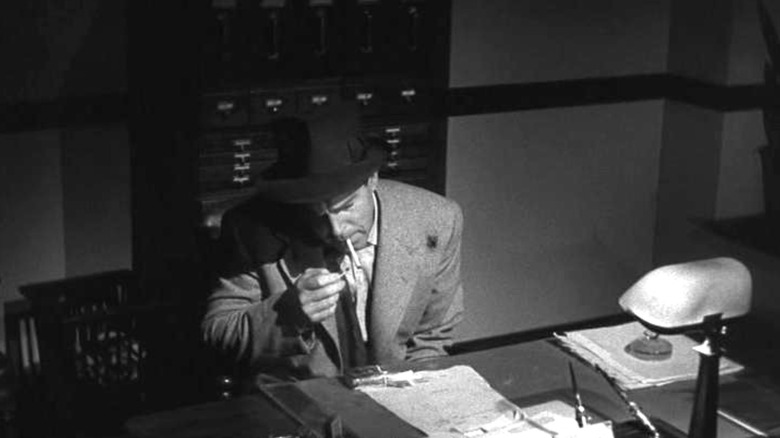
"Double Indemnity" is a 1944 film noir that deals with a subject familiar to fans of "Dateline:" life insurance fraud. The film stars Fred MacMurray, an actor best known to younger generations for his roles in Disney films like "The Shaggy Dog" and "The Absent-Minded Professor." But unlike the family-friendly shenanigans MacMurray gets up to in Mouseland, the actor is up to no good in "Double Indemnity" as skeezy insurance guy Walter Neff.
After making the acquaintance of the equally no good Phyllis Dietrichson (Barbara Stanwyck), Walter is lured by Phyllis into a plot to kill her husband and take advantage of the super rare, ultra high payout "double indemnity" clause by staging a train accident. Told retrospectively from Walter's dictaphone confession, the film is full of twists and turns, all told through a beautifully constructed crime noir.
Stephen King has often discussed the influence of pulpy detective novels and film noir on his writing. In a 1980 Heavy Metal interview, King discussed his interest, referencing "the hard-boiled writers of the ['30s], the sort of writers who produced film noir in the ['40s] — Cain and Dashiell Hammett and people like that." "Double Indemnity" is a prime example of the style. A tale of capitalism, crime, and hubris, the film ranks right up there with "The Maltese Falcon" as a classic example of the genre and was chosen to be preserved by the Library of Congress for its cultural importance in 1992.