

10 Sci-Fi Movies Everyone Needs To Watch At Least Once
Science fiction has been one of the most prolific genres of film, dating back to 1902's "A Trip to the Moon." Over time, the genre developed to encompass various sub-genres dealing with everything from robotics and time travel to space exploration and dinosaur cloning. Some of the largest film franchises of all time are sci-fi films, including the entire Marvel Cinematic Universe, "Star Wars," and many other popular series.
Because the genre is so widespread, it also includes some of the greatest films ever made. While there are plenty of franchises to choose from, for this list, we've identified one-offs or rare examples from smaller franchises as the sci-fi movies everyone needs to watch at least once. These are the films that define the genre, as they introduced key elements that influenced filmmakers who followed with their own sci-fi interpretations.
Each of these science fiction films is excellent, and each stands on its own merit. They're the sci-fi movies everyone needs to see because they are fundamentally demonstrative of what the genre can entail, and each one makes brilliant use of available special effects technology to tell an amazing story that everyone must experience at least once.
The Time Machine
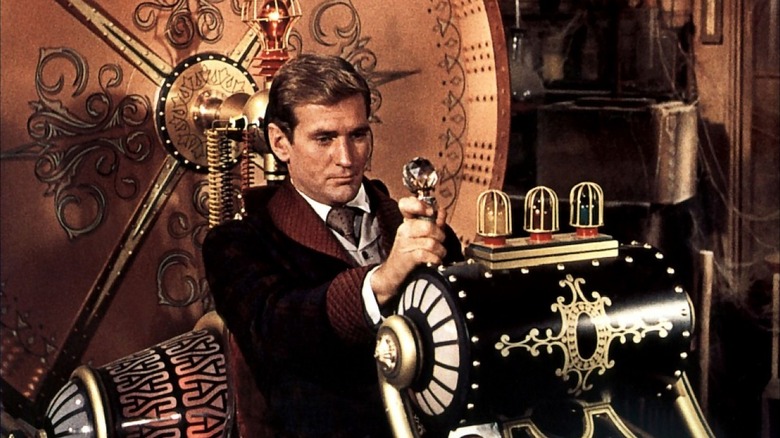
Author H.G. Wells was a pioneer of science fiction, having written some of the greatest stories of the 19th century, including "War of the Worlds," "The Invisible Man," and "The Time Machine." Director George Pal and screenwriter David Duncan used Wells' 1895 novella as the basis for 1960's "The Time Machine," which expands on the original work in several ways, while maintaining the tone and overall premise. The film is dated, but still looks extraordinary, thanks to its Academy Award-winning special effects.
The movie follows an inventor, George (Rod Taylor), who builds a time machine to explore the future. He travels forward in time, experiencing World War I and then World War II. He then finds himself in the midst of nuclear annihilation before an accident sees him thrust to the year 802,701, where he finds an entirely new world. The passage of time is shown through time-lapse photography and miniatures, which are presented with meticulous craftsmanship. This is the film that established time travel in the sci-fi genre more than any other.
"The Time Machine" is a classic science fiction movie, and while there are many great ones, including "The Day the Earth Stood Still" and others, the 1960 interpretation of Wells' novella is something everyone should see at least once. It's a thoughtful approach to numerous concepts, including war, evolution, unchecked technological advancement, and social class division. These are common elements in science fiction, and each aspect is seamlessly woven into the plot of "The Time Machine."
2001: A Space Odyssey
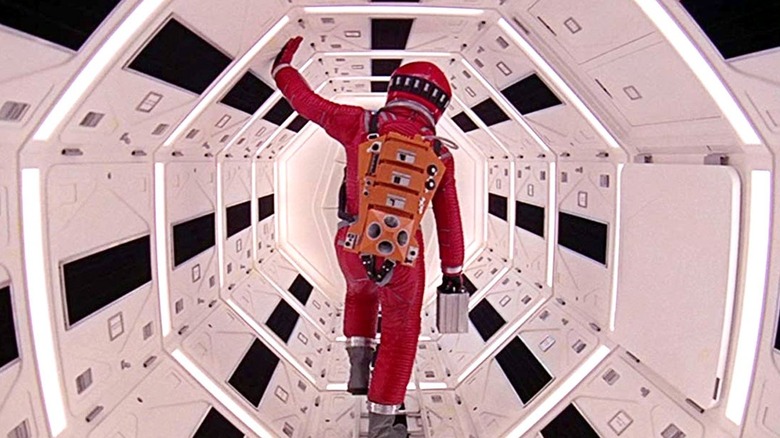
For most science fiction cinephiles, the one movie they'd likely recommend over any other is director Stanley Kubrick's 1968 epic masterpiece, "2001: A Space Odyssey." Kubrick worked with the novel's author, Arthur C. Clarke, on the screenplay and produced a film that has often been recognized as one of the most influential and greatest science fiction movies ever made. That's a lot of praise, and it's well-earned, as "2001" is a film like no other.
Kubrick's meticulous approach to filmmaking is visible in every frame, as the slowly-paced movie progresses through several eras of human evolution. The film's scientifically accurate depiction of spaceflight is one of the reasons for the conspiracy theory that Kubrick directed the "fake" Apollo Moon landings. It's that well done, and watching it more than 55 years after it premiered, it still looks amazing. Famed film critic Roger Ebert once called the classic sci-fi movie "a spiritual experience," which is understandable, as the film's themes aren't limited to sci-fi.
There's an overarching metaphysical search for the Almighty mixed into the film's focus on technology as both a tool and a means of destruction. Beyond that, the movie's ending transcends human consciousness, so calling it a "spiritual experience" is apt. "2001" completely reinvented the sci-fi genre through its brilliant visuals, outstanding music, and exceptional story. It opened doors to other directors looking to make their mark on the genre, influencing the careers of artists like Ridley Scott, Steven Spielberg, and George Lucas.
Planet of the Apes
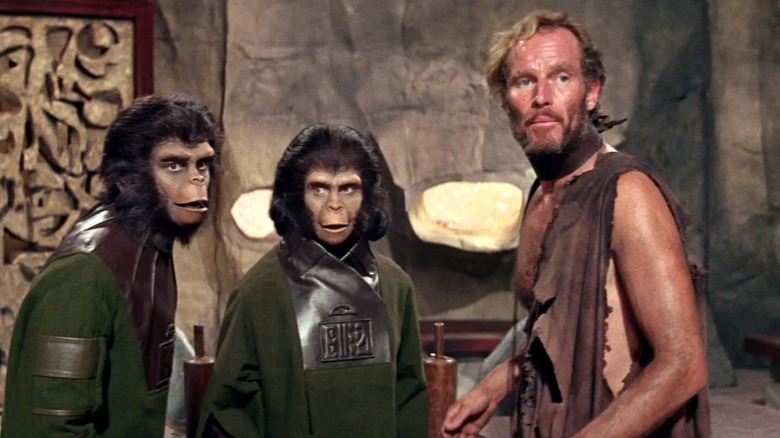
While huge franchises aren't the primary focus here, it's impossible to deny the impact and importance of the first adaptation of Pierre Boulle's 1963 novel, "Planet of the Apes." The film is a loose adaptation of the book, starring Charlton Heston as George Taylor, the last surviving astronaut who crash-lands on a planet ruled by apes, hence the title. What makes "Planet of the Apes" so fascinating and topical more than half a century after its premiere is its themes, which encompass social hierarchy, racial injustice, and complacency.
The film uses no CGI like later adaptations, and all of its apes were people with prosthetic makeup. This was done exceptionally well, giving the actors room to emote despite the excessive latex applied to their faces. For his efforts, John Chambers received an honorary Academy Award for outstanding makeup achievement, as there wasn't an award for the category until the 54th Academy Awards in 1982. "Planet of the Apes" features more science than fiction, though this isn't entirely apparent until the film's conclusion.
Without spoiling the over 60-year-old film, the ending reveals a strict adherence to time dilation via relativistic speeds, which explains the entire nature of the movie. It all comes together brilliantly in one of cinema's greatest final scenes that stands the test of time. The success of "Planet of the Apes" led to a multimedia franchise and several remakes. Regardless, the original is one of the best science fiction movies that everyone should watch.
Close Encounters of the Third Kind
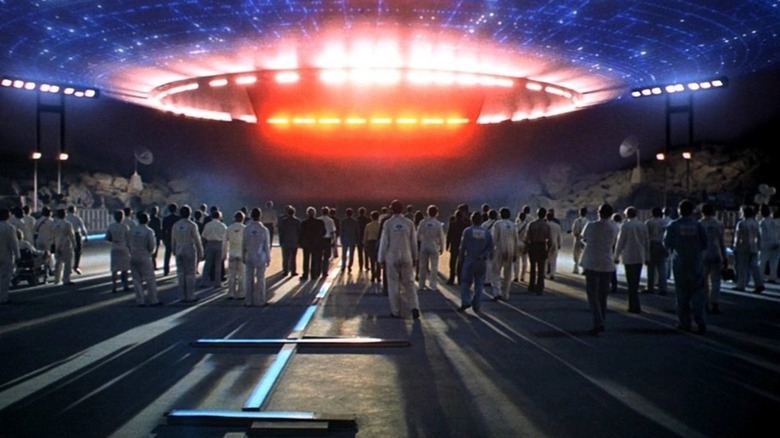
Director Steven Spielberg earned his only writing credit on one of the greatest science fiction movies of the 1970s, "Close Encounters of the Third Kind." Spielberg wanted to make the project for several years, going back to the early 1970s, and he poured everything he had into it. The film was released in 1977 and went on to become one of the highest-grossing films of the year, though it was overshadowed by another science fiction movie you might have heard of: "Star Wars."
Regardless, "Close Encounters" did exceptionally well in telling its story about a blue-collar man whose life changes via an alien encounter. The movie's pace is slow and methodical, building tension without elevating fear while establishing its base premise of wonderment in the unknown. As things progress and more people are pulled into the alien event, the pace picks up, delivering an amazing finale that features some impressive special effects and beautiful music by famed composer John Williams. It makes for one of Spielberg's greatest science fiction movies, which is saying something, as he's directed many.
In fact, Spielberg's experiences making "Close Encounters" led him to direct one of his best-known movies from the 1980s, "E.T. the Extra-Terrestrial." The focus of the film isn't a fear of the unknown, as it is with many alien movies. Instead, it's a sense of wonder, which influenced future filmmakers to embrace similar themes in their work, because not all aliens should be feared.
Blade Runner
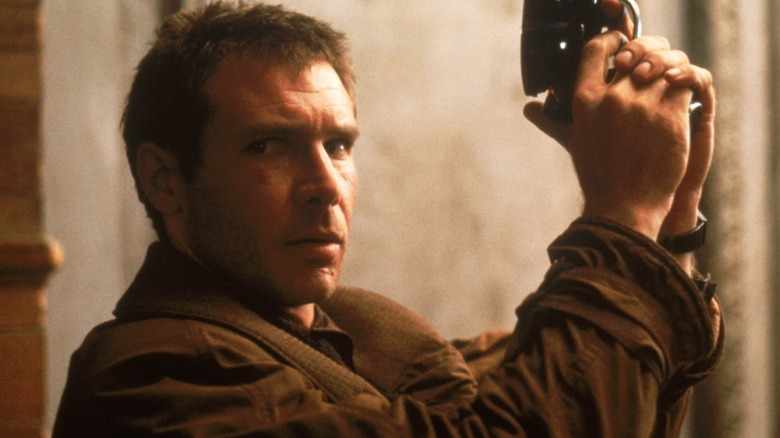
"Blade Runner" is an interesting film, as today, it's widely regarded as one of the greatest science fiction movies ever made. But when it was released, critics couldn't decide whether they loved it or hated it, while audiences stayed away, resulting in a lackluster box office performance. That's hard to imagine when watching it today because, despite being released in 1982, the special effects still hold up and look amazing.
The film's slow pace and complex themes might have turned people away in the beginning, but nowadays, "Blade Runner" is recognized for the work of art that it is. The film shows a dystopian society that's embraced technology as it falls victim to it, becoming one of the foundational works of the cyberpunk genre. This makes sense, as it's based on Phillip K. Dick's "Do Androids Dream of Electric Sheep?" and the author's embrace of technology in philosophical depictions of humanity is widespread throughout his work.
The film is interesting for another reason: There are eight distinct versions of "Blade Runner," thanks largely to studio executive-demanded changes. This has caused some confusion, but for new viewers looking to watch one of the best sci-fi movies of all time, the version to see is "The Final Cut," released in 2007. This is the only one that kept director Ridley Scott's vision and artistic control, so it's the one the director wanted people to see and is easily a sci-fi movie everyone should watch.
12 Monkeys

A common trope in sci-fi is the end of the world, but in "12 Monkeys," the focus is less on preventing the end than it is on fixing the mistakes of the past. To do so, the movie employs an incredibly unreliable and ill-explained time-travel mechanic, where convicted felons are sent back in time to investigate the origins of a virus that wiped out most of humanity, forcing the survivors to eke out their existence in tunnels deep within the earth.
The film is eccentric in its presentation, which isn't unusual given its director: Terry Gilliam of "Monty Python," "Brazil," and "Time Bandits" fame. The director's penchant for time travel and dystopian futures coalesced into "12 Monkeys," delivering a unique story that employed tried-and-true tropes of the genre in ways that hadn't been attempted previously. The result is one of the most experimental and inventive science fiction films of the 1990s, featuring exemplary performances by Bruce Willis, Madeleine Stowe, and Brad Pitt.
"12 Monkeys" is a science fiction movie that everyone should see at least once because of how different it is. It's based on a 1962 French short, "La Jetée," which is also worth watching, but differs significantly from the overall narrative of "12 Monkeys." The film's success resulted in the development of a four-season TV series on SyFy, which is a solid watch as well, though you should start with the 1995 movie before branching into other adaptations.
Independence Day
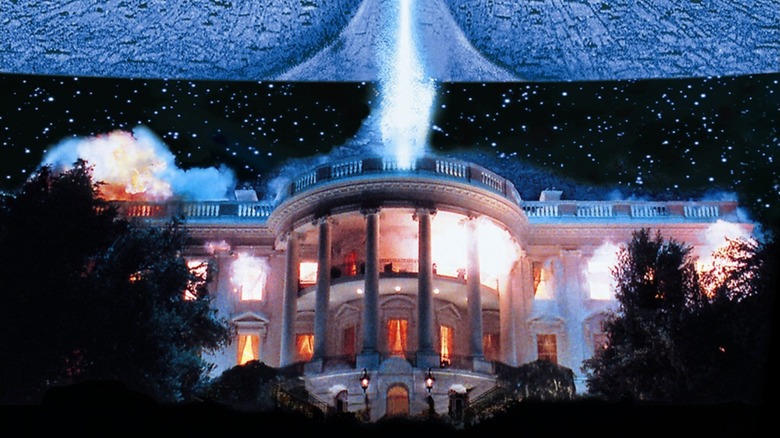
You can sift through the greatest sci-fi movies and find plenty of philosophical explorations of humanity ... or you could enjoy the occasional popcorn movie like "Independence Day." The 1996 disaster film is all about massive destruction and one-liners, but it's more than that, as it embraces several science fiction staples to deliver an entertaining story that sees humanity stand up to an alien threat that greatly outmatches anything Earth can throw at it.
One thing that differentiates "ID4" from other alien invasion movies is that there's no subterfuge. The aliens don't hide themselves as they do in most movies. Instead, they park above humanity's greatest monuments and buildings only to simultaneously destroy them in a large-scale attack. This second-act assault establishes the odds, which aren't good, but there's hope, and that's what drives the characters and overall narrative of the film towards its inevitable conclusion.
"ID4" became the highest-grossing film of 1996, and it revitalized the disaster and science fiction genres, adding to the success of "Jurassic Park" three years earlier. It may not be the best movie ever made, but it's a lot of fun and one of the most influential blockbusters of the 1990s. The film's success influenced a slew of subsequent sci-fi disaster movies, including 2004's "The Day After Tomorrow," 2005's "War of the Worlds," 2007's "Transformers," and 2013's "Pacific Rim." While "Independence Day" eventually had a sequel, it should never be watched by anyone at any time. Ever.
The Fifth Element
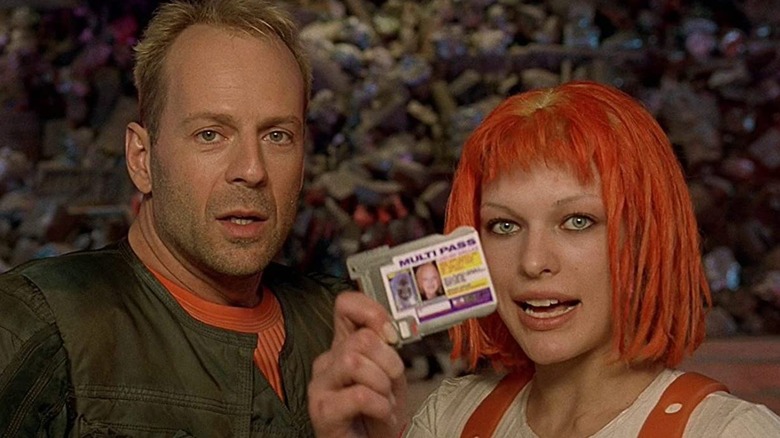
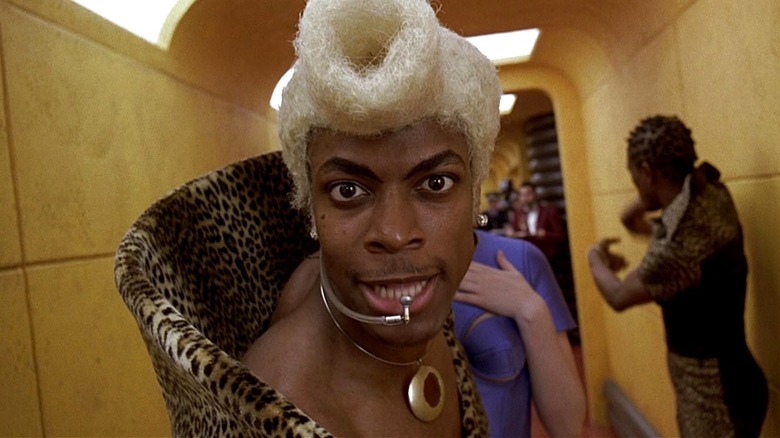
Writer-director Luc Besson created one of the most iconic science fiction films of the '90s with "The Fifth Element." The director tapped French comic artists Jean-Claude Mézières and Jean "Moebius" Giraud for the film's production design, and their influence is clear in every scene, every frame a painting. Their work gives "The Fifth Element" a unique look and feel that's unmatched throughout science fiction outside of rare examples like "Tron," "Time Masters," and a handful of others.
The film's story is unusual, as it thrusts a retired war hero, played by Bruce Willis, into an interstellar affair where he must save the world from ultimate evil using the titular weapon. The Fifth Element just so happens to be a beautiful woman (Milla Jovovich), and there's plenty of great action, witty dialogue, humor, and an over-the-top '90s villain played by Gary Oldman. There are tons of unique aliens that were brilliantly designed and executed by the makeup department.
Throughout the film, the heroes have almost no direct interaction with the bad guy, with only one fight taking place between Oldman and Jovovich's characters. "The Fifth Element" was divisive upon release, earning numerous accolades, including one Academy Award nomination for best effects and two Golden Raspberry noms. Despite the negative attention, "The Fifth Element" is a sci-fi cult classic that is beloved by many around the world. It was also a box office success, earning over $263 million on a budget of $95 million.
WALL-E
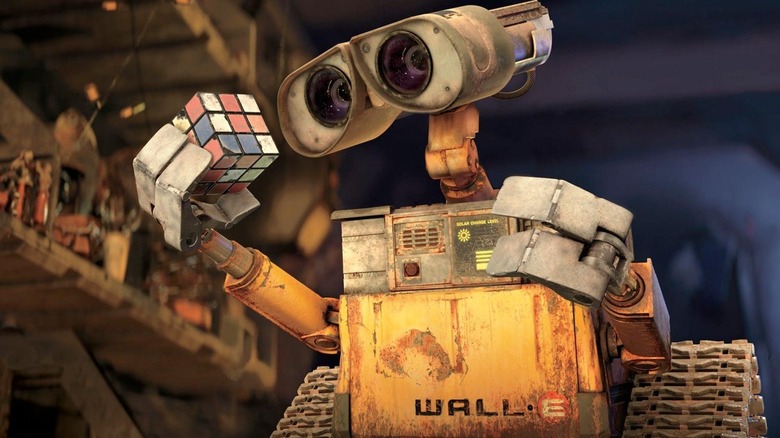
There are many wonderful animated science fiction movies that have entertained children and adults for decades. Some great examples include "The Iron Giant," "Gandahar," and "Spider-Man: Into the Spider-Verse." While you should see those as well, the animated film that each person should watch at least once for its contributions to science fiction is "WALL-E." The 2008 Pixar film is an absolute master class in storytelling, featuring a character who barely says anything throughout the entire film.
The best thing about WALL-E is that he doesn't need to speak because he emotes so well with his eyes. In fact, there's almost no direct dialogue in the film's entire first act, which is impressive for any movie. In terms of science fiction, "WALL-E" has everything from space travel and a dystopian future to an over-reliance on technology and the hubris of humanity leading to its downfall — all common tropes of the genre. At its center is a robot wanting nothing more than companionship.
"WALL-E" is one of the best robot movies of all time, but watching it, you almost forget that its main character isn't alive. There's so much emotion and depth to the character that his being a trash compactor is the least apparent aspect of WALL-E's characterization. The film is visually stunning, showing how animation can tell stories that live action, even with the benefit of CGI, cannot. It's a testament to the artistry of the craft and is arguably one of the best sci-fi films of the 21st century.
Project Hail Mary
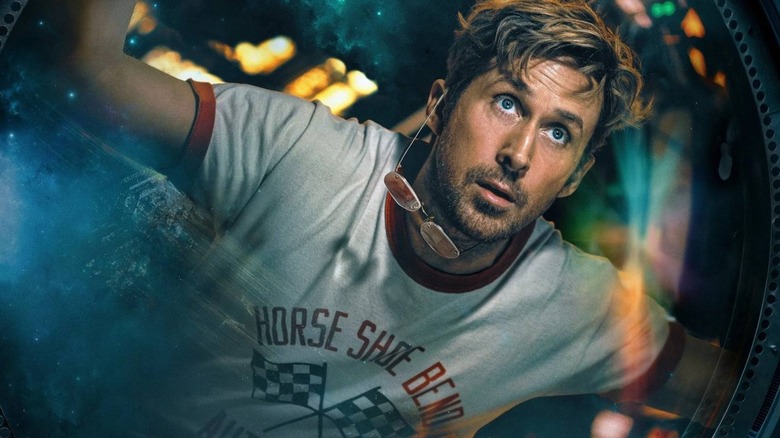
Writer Andy Weir has crafted some incredible stories that are well-rooted in science, including "The Martian" and "Project Hail Mary," both of which became hit movies. While "The Martian" is an excellent film, "Project Hail Mary" is a cinematic achievement that is well-deserving of every cinephile's attention, whether they're a fan of science fiction or not. What makes the movie so entertaining is how it embraces several areas of science while making them approachable to the masses.
This is thanks to how the film is structured, telling its story through the lens of flashbacks, explaining the backstory of Ryland Grace (Ryan Gosling) and how he wound up orbiting a star far from Earth. He's there to find a way to save the planet from microscopic lifeforms, and before long, he meets and befriends an alien sent to do the same. The science fiction film then becomes a buddy movie, where Grace and "Rocky" (James Ortiz) form a strong bond while working to solve their mutual dilemma.
As of writing, "Project Hail Mary" is still in theaters, and if you haven't seen it, do so in IMAX if at all possible. Visually, the film's grandiose scale is on par with the likes of "2001: A Space Odyssey" and other notable science fiction films, and it deserves the screen size and sound capabilities of IMAX theaters. While the book is excellent, as Reuben Baron wrote in his "Project Hail Mary" review for Looper, "the movie's better than the book."