

5 Best Serial Killer Movies Nobody Talks About Anymore
Cinema draws much of its power from letting us witness things we wouldn't otherwise see in real life. Thankfully, most of us will never encounter serial killers in our day-to-day lives, but we sure do love to watch them on screen. Many of the most disturbing true crime documentaries of all time are about serial killers, but we don't even need our cinematic murderers to be real to find them entertaining. It seems that audiences will happily watch fictional killers stalk their prey, too.
Of course, there are thorny ethical questions to be considered when turning crime into entertainment, and every project approaches that tension in different ways. That means there have been countless serial killer movies made, which also means that countless serial killer movies have been forgotten. Sure, we all still talk about David Fincher's "Zodiac" and Mary Harron's "American Psycho," but there are plenty of serial killer movies nobody talks about anymore.
The films on this list all offer something to the genre, and they all deserve to be remembered more than they have been. Some execute familiar tropes well, and others subvert them in interesting ways. Some lean into the violence and gore inherent in the genre, while others are character studies. There are intense character pieces, while some are ensemble pictures, portraying a time and place. They all have one thing in common: playing into our base fear that the stranger next to us may have sinister intentions.
The Honeymoon Killers
As the Hays Code fell toward the end of the 1960s, "Bonnie and Clyde" was one of the first, biggest hits to really lean into the violence now allowed on screen. The movie was shocking and grotesque, especially in its iconic final gun battle, which sees the bank robbers — played by Faye Dunaway and Warren Beatty — graphically shot in their car in an open field.
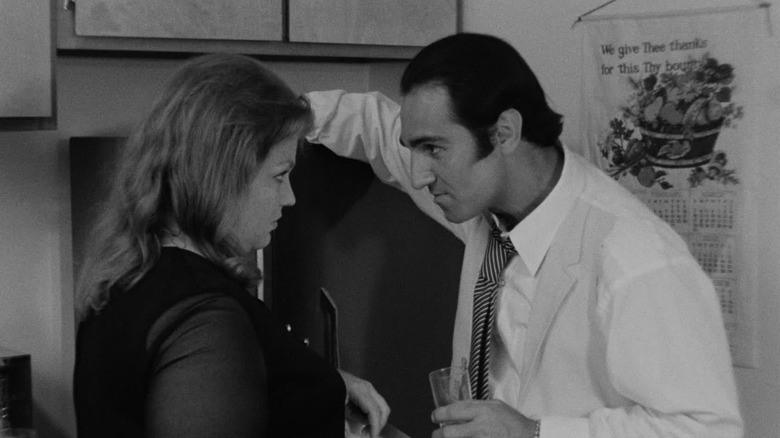
In 1970, Leonard Kastle directed "The Honeymoon Killers," which plays like a low-budget ripoff of "Bonnie and Clyde." Ray (Tony Lo Bianco) and Martha (Shirley Stoler) are a far cry from the glamorous outlaws on the run in the Arthur Penn film that had come out only a few years earlier. These are gritty, grimy, real-seeming people; the couple bickers and are downright-mean, and they just so happen to be on a cross-country killing spree. They find their victims in the classified ads of the newspaper, answering lonely hearts posts from people looking for companionship. What they get instead is killed.
In addition to Stoler and Lo Bianco's fearless performances, "The Honeymoon Killers" also features some gorgeous black-and-white photography shot cinéma vérité-style, sort of a precursor to the mockumentary format. "The Honeymoon Killers" was released by The Criterion Collection, a label that puts out plenty of movies that are way better than you remember. Aside from that, however, Ray and Martha haven't really entered the canon of cinema's greatest crazy killers. That deserves to change.
Frenzy
Alfred Hitchcock — one of the best directors of all time — made many movies about serial killers, including "Psycho," probably the most famous serial killer movie of all time. He was also behind "Shadow of a Doubt," a brilliant movie about a girl who suspects that her visiting uncle is a murderer, as well as a 1927 silent film about Jack the Ripper, "The Lodger: A Story of the London Fog."
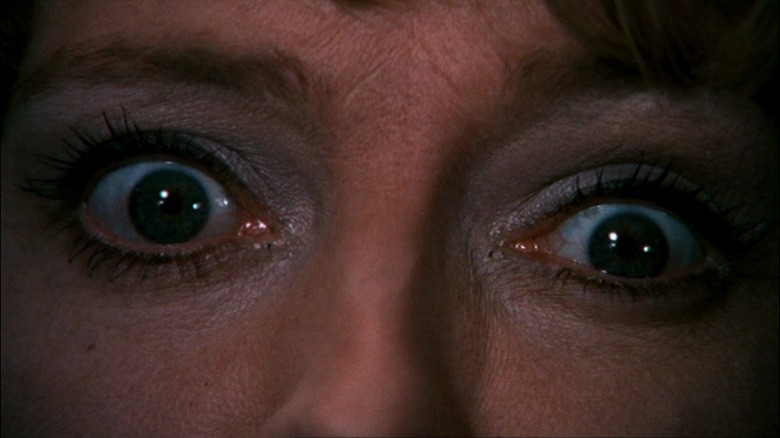
By 1972, Hitchcock had ridden the Hollywood rollercoaster for decades. His body of work moved from silent black-and-white films to ones filled with sound and color, showing that it wasn't necessarily the medium responsible for all those morbid shocks; it was the man. His penultimate film "Frenzy" — which some critics call his final masterpiece — isn't as well-remembered as his earlier serial killer films. It plays like a neo-noir, giallo-influenced update of "Psycho," no longer confined to a motel, able to actually show in gruesome detail the murders that could only be suggested in that infamous shower.
"Frenzy" is about a man known as the Necktie Killer (Barry Foster). Using the common item of clothing, the man murders his way across London, barely staying one step ahead of the detective (Richard Blaney) following close behind. It's an upsetting film, featuring some of the most intimately awful sequences of Hitchcock's career, but it's also as pulse-pounding and thrilling as anything else in his filmography.
Summer of Sam
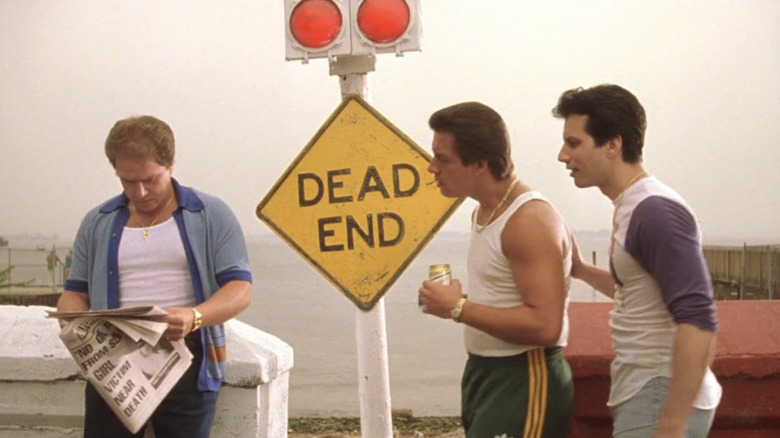
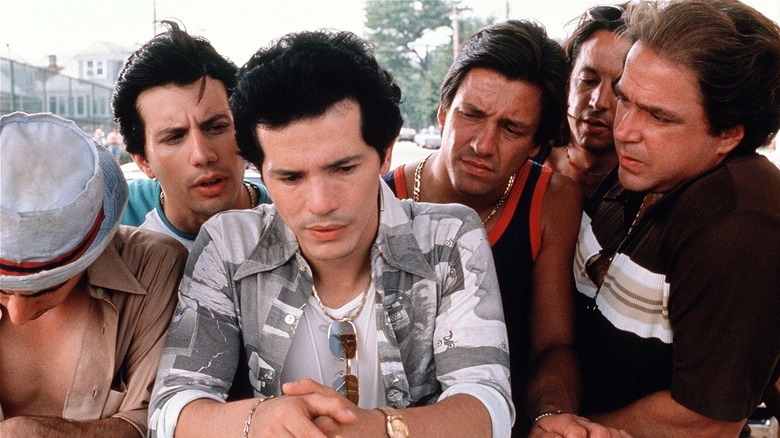
No one films New York City quite like Spike Lee. The famously prolific director has had an incredible output in his decades in the business, to the point where fans lovingly track Spike Lee movies we'll never get to see, because he has so many projects in the air at the same time. In addition to classics like "Do the Right Thing," "Crooklyn," "She's Gotta Have It," and many more, one of Lee's best depictions of NYC is his serial killer drama, "Summer of Sam."
There were plenty of serial killer movies in the 1990s, and "Summer of Sam" certainly owes a bit of debt to thrillers like "Silence of the Lambs" and "Se7en." Unlike those movies, however, the film is based on a true story. Lee chronicles the hot summer months in 1977 when David Berkowitz — the "Son of Sam" killer — terrorized New York. Lee's film interweaves the serial killer-induced paranoia with other important events from that year, including the blackout that paralyzed the city.
The New York City of "Summer of Sam" pulses with heartbeat, music, and excitement. That's what makes Berkowitz (Michael Badalucco) such a frightening presence, lurking around the edges of the film as he rapidly loses his mind. This is a movie about a city's very subconscious baking in the summer sun, about what should be a vibrant all-American story turning rotten. "Summer of Sam" may have failed to make its $22 million budget back in theaters, but that doesn't mean it's not worth a watch.
Perfume: The Story of a Murderer
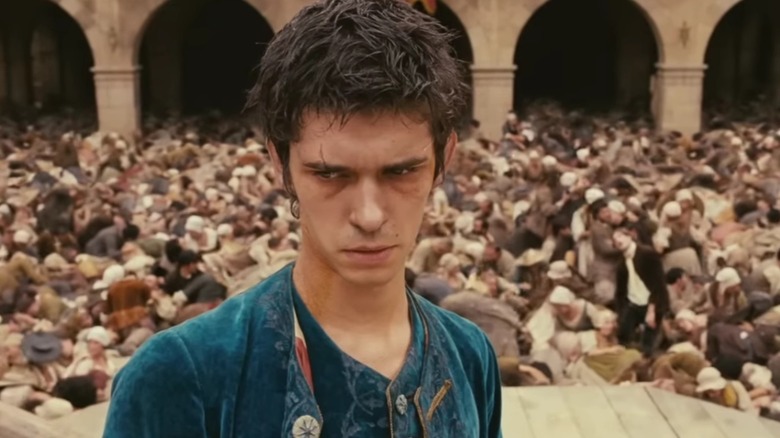
Ben Whishaw stars in Tom Tykwer's film "Perfume: The Story of a Murderer" as the story's titular murderer, Jean-Baptiste Grenouille. The film is a fantastical exploration of the life of a twisted young man who has a preternaturally great nose, allowing him to smell things in ways most people can't. This makes him perfectly suited for a life of perfume-making, which leads him to understand the ways that chemicals can manipulate the human psyche — allowing him to kill and cover up anyone who gets in the way of his pursuit of the perfect scent.
"Perfume" is a beautifully strange film that is unlike the other movies on this list. While the others largely try to reflect something real about the way evil moves through the world, "Perfume" is uninterested in mimicking observable reality. Instead, Tykwer films crowd sequences as gorgeous tableaux that turn humanity into a sea of faces and writhing bodies, making the film as much about the other senses — touch, in particular — as it is about smell.
It's hard to convey smell on screen without the benefit of a schlocky scratch-and-sniff theater card, but Whishaw is more than up to the task. His open, expressive face feels fiercely sympathetic; after all, Whishaw is what Paddington looks like in real life. He gets you to pity Grenouille, even as we watch him commit some truly heinous acts. The film's shocking, over-the-top conclusion should cement the legacy of "Perfume" as one of the wildest serial killer movies ever on its own.
Snowtown
"Serial killers are [...] a uniquely American phenomenon," true crime director Joe Berlinger told The Atlantic in 2019. In addition to helming the seminal "Paradise Lost" trilogy, Berlinger is the director behind several dark true crime shows that everyone binged on Netflix, so he knows a thing or two about the genre. After all, the FBI was the institution that first defined the serial killer, separating certain types of multiple murder out from concepts like spree killings and mass shootings. In comparison to America, Australia doesn't have all that many serial killers, which is why the revelation of the Snowtown murders shocked the entire country in the 1990s. Aussie culture wasn't prepared to handle the news that those killings were mainly committed by two men, with two others involved in the series of crimes that took 12 lives.
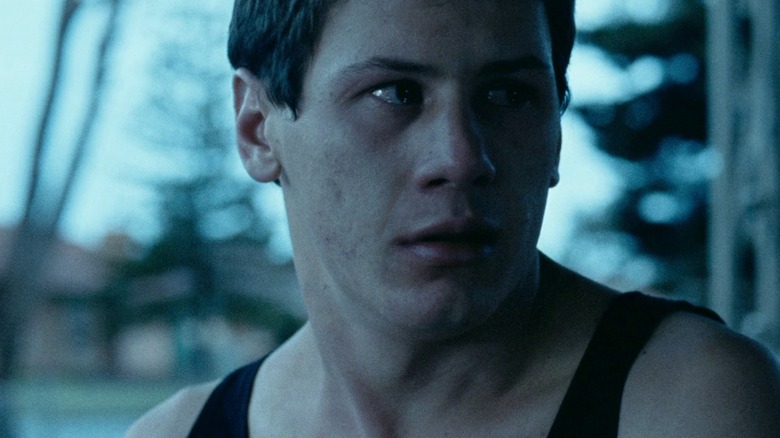
Justin Kurzel's "Snowtown" is one of the bleakest films ever made, full stop. The intimate serial killer drama traces out the relationship between John Bunting (Daniel Henshall) and a younger man named Jamie Vlassakis (Lucas Pittaway), who clearly idolizes his friend. This is a movie about control, the ways that men try to impress each other, and the ways they fear one another. Several of the serial killers on this list are portrayed in a borderline-sympathetic way, but Pittaway's performance as Vlassakis is perhaps the most disturbing one of all. He is a young man who has his mind warped by a charismatic force of nature, giving himself over to humanity's basest impulses. It's not an easy watch, but it's perhaps the most unforgettable on this list.