
5 Reasons Why Netflix's Shadow And Bone Flopped
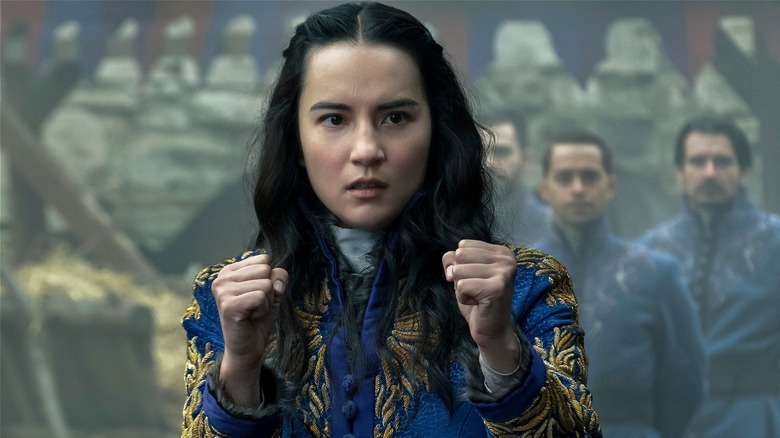
When Netflix had both "Bridgerton" and "Shadow and Bone" in active production cycles at the same time, the streamer was well on its way to becoming a home for all of the romance readers fond of the books getting hyped up in spaces like Booktok. Unfortunately — for fans and Netflix — the streamer decided to cancel "Shadow and Bone" after two seasons. Netflix is no stranger to cancellation, and in fact has received a lot of criticism for how quick it is to axe a series regardless of artistic promise. While some shows never generate much of a following, "Shadow and Bone" definitely had loyal viewers and its cancellation was a big disappointment to many fans.
In Hollywood there are always multiple reasons that a project gets shut down or a show gets cancelled, usually involving a combination of money, critical and audience response, and larger trends affecting the entertainment industry as a whole. Netflix wasn't necessarily wrong to categorize "Shadow and Bone" as a flop, even though the word seems harsh for a show that genuinely had fans and worthwhile merits. A few factors likely went into their decision to cancel the series (and its planned "Six of Crows" spin-off), but Netflix's creative choices about the direction of the series are likely what led to its downfall.
Netflix adapted the wrong book
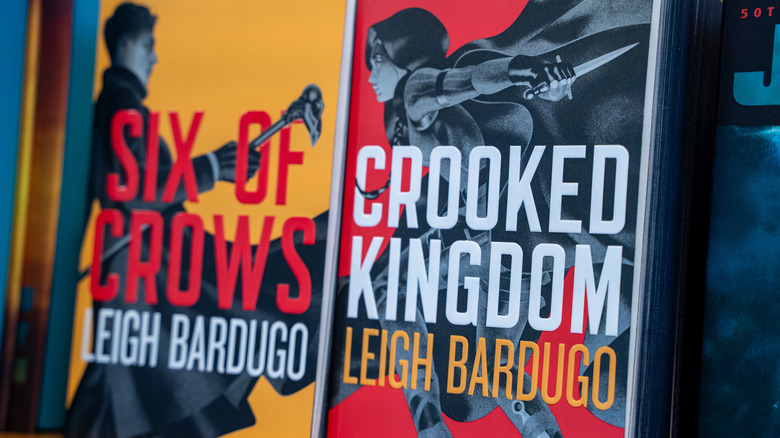
First of all, Netflix never should have adapted a young adult romantasy novel. Most of the momentum in the genre over the past 10 years has come from adult romantasy, like Sarah J. Maas's "A Court of Thorns and Roses" series and Kerry Maniscalco's "Kingdom of the Wicked" literary universe. "Bridgerton" is based on adult romance novels, and matching that tone with its romantasy endeavors would have served Netflix far better. That said, even if they were determined to adapt a novel from Leigh Bardugo's "Grishaverse," it shouldn't have been "Shadow and Bone."
Many fans of the show and readers of the "Shadow & Bone" trilogy are quick to admit that the original story is not actually very good, and in fact many would say that Netflix's version is an improvement. Those same fans are also likely to say that Bardugo's second series in the Grishaverse, the "Six of Crows" duology, offers a far superior story. On Goodreads, "Six of Crows" has a 4.45 out of 5 average fan rating, while "Shadow and Bone" has a 3.91. "Six of Crows" and "Shadow and Bone" take place in the same world, and "Six of Crows" occasionally references events and characters from "Shadow and Bone" because it takes place afterward, chronologically, but there's no narrative reason why Netflix couldn't have adapted "Six of Crows" first.
They still tried to adapt both
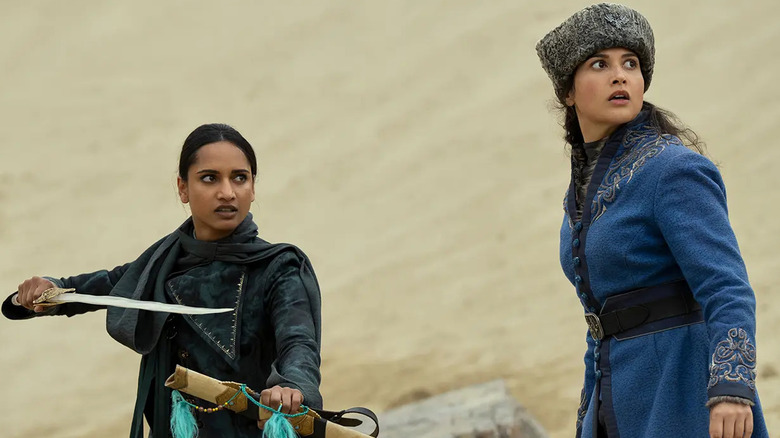
It seems like Netflix was at least somewhat aware that "Six of Crows" is more popular, because they decided to shoehorn all six of the main characters in "Six of Crows" into "Shadow and Bone," a tactic that wobbled-but-worked in Season 1 and imploded in Season 2. Unsurprisingly, many people have cited the "Six of Crows" characters as the best part of the series (and the Grishaverse). Where the story of Alina Starkov and the Darkling is a bit dated (the manuscript was sold to MacMillan in 2010 and published in 2012) and easy to predict, the "Six of Crows" plot brings multiple fan-favorite characters and a much-admired heist plot. The romances from the series are very popular, and Nina (Danielle Galligan) and Mattias's (Calahan Skogman) plotline — largely separate from everything else — was a Season 1 highlight.
In Season 1, an entirely new plotline relating to Alina (Jessie Mei Li) is devised for the Crows and actually fits in fairly well, even if it does steal the show a bit. Season 2, though, had no idea what to do with those characters as they waited for their own dedicated spinoff (too little, too late, Netflix!). They had to be in the season because they were most fans' favorite part of Season 1, but Netflix also didn't want to waste their canon story, so they decided to introduce even more characters from the rest of the Grishaverse (introduced and further explored in the "Shadow and Bone" sequels and the "King of Scars" duology). As a result, it became impossible to keep track of everyone.
Netflix squandered momentum
Another issue that killed "Shadow and Bone" is Netflix's well-documented inability to maintain a prompt production schedule on its most popular shows. It's not always a bad thing for certain shows to take their time, but the longer the gap between seasons, the better the upcoming season needs to be, or else it won't feel like it was worth the wait. Plus, when it comes to an exposition-heavy, fantasy-set show like "Shadow and Bone," the length between seasons is likely to increase viewer confusion over the many details of Season 1 referenced in Season 2.
"Shadow and Bone" had a two-year gap between Seasons 1 and 2, and while there are always handy guides on the internet for viewers who need their memories jogged, it's still jarring to return to a story after two years that's picking up almost exactly where it left off.
The 2023 Hollywood writers' strike was an obstacle
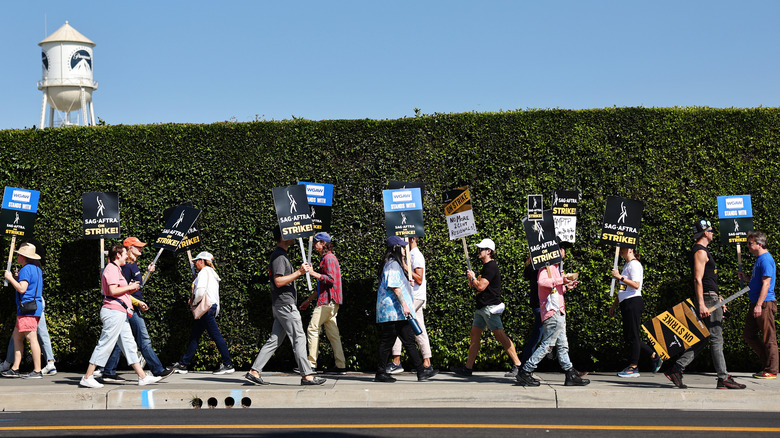
For 148 days in 2023, the Writers Guild of America strike took hold of the film and television industries and forced a halt on many different productions. Unfortunately for fans, casts, and crews, studios saw the strike as a huge liability and one that required extra television cancellations to account for the lost production time. Many shows were cut around the time of the strike, and "Shadow and Bone" is considered a series that may not have been cancelled had the strike never happened (or rather, had the studios not responded to the strike by cancelling shows).
Not only did studios cancel shows, but they also reneged on renewals of many shows. Netflix and other streamers worked to keep shows relatively on time in their projected production schedules, and the ones that weren't going to do that — or be a priority for viewers — were always going to be at risk. As a relatively young series that served a subpar sophomore season, "Shadow and Bone" was likely a prime target of these studio efforts, and industry publications have regularly cited its cancellation as a collateral consequence of the WGA strike. Netflix would likely go further, and claim that "Shadow and Bone" was cancelled as a direct result of the strike.
It was too expensive
There are many factors that go into studio decisions to cancel, renew, or green-light different projects, but at the end of the day it all comes down to money — whether or not executives and decision-makers want to admit it. "Shadow and Bone" was a mid-budget fantasy series for Netflix that did require quite a bit of CGI thanks to the story's many magical elements. It's estimated that Season 1 cost about $3-4 million per episode, which is actually not very expensive compared to other fantasy series' (the middle range cost of production for an episode of "Game of Thrones" sits between $6 and $10 million, for reference). That said, "Shadow and Bone" is still pricier to produce than most contemporary shows.
Season 1 of "Shadow and Bone" was successful with viewers and reached the number one spot on Netflix's top 10 series list in less than two weeks. It recorded 1.19 billion viewership hours according to Nielsen's streaming charts, and while Season 2 compared closely at 1.14 billion, it wasn't popular enough to ever push "Shadow and Bone" to Netflix's number 1 slot (though it was still in the top 10). Many would say that this isn't enough indication of the series' drop in popularity, but combined with less positive critical reviews for Season 2, it makes sense that it likely contributed to the show's cancellation. Add in its considerable budget and the writer's strike, and the series simply didn't have enough hype to overcome so many moderate demerits.