

10 Sci-Fi Shows That Are Absolute Masterpieces
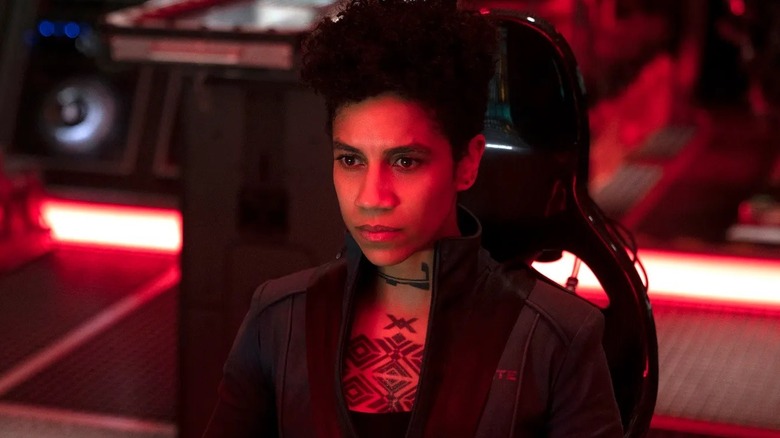
Sci-fi loves television, and TV loves science fiction. It's been true almost as long as the small screen has been a cultural institution, going back to the black-and-white era and stretching into the modern streaming sci-fi renaissance of today as platforms (like Apple TV) have dumped major money into new adaptations and original series. Space operas, hacker dramas, weird fiction anthologies, future Westerns, and more have rarely left the upper echelon of TV popularity. But which shows are the best of the best?
Today, we're running down the absolute best sci-fi TV shows — the series either so good that they defined an era, or so flawless in their brief runs that they left us craving more. In truth, this list could have been much longer, since there are over 70 years of amazing television shows to choose from. However, these series from across the canon reflect the best of what the genre can be. Let's take a look at 10 science fiction shows that are absolute masterpieces.
The Twilight Zone
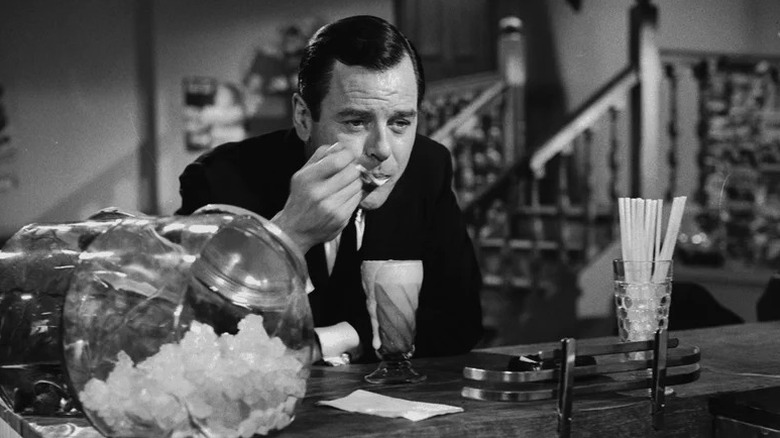
"The Twilight Zone" was not the first successful sci-fi TV show, nor was it the first major sci-fi anthology series. But in a real way, this is where the genre came into its own on television. Rod Serling's original series ran for five seasons from 1959 to 1964, with a range of original scripts and short story adaptations that handled everything from time travel and alien invasions to the nuclear apocalypse, dystopian societies, and artificial intelligence.
There's quite a variety on offer, and while not every episode is a banger, the hit rate is pretty staggering. Plenty of the show's most famous episodes deal with topics more situated in the fantasy, horror, or supernatural spaces, but "The Twilight Zone" is still definitively considered a science fiction series. It's the same way that genre magazines of the day published a wide variety of stories, but with a central grounding under the sci-fi banner.
There really is no case that needs to be made on behalf of "The Twilight Zone" at this point. It is interesting to look at the sheer number of film and TV successors, reboots, and spin-offs that have come since 1964, and note how none of them have even come close to the impact or brilliance of the original. In every era of television, there are those who push the available resources and style to their fullest potential, and "The Twilight Zone" is timeless for that very reason.
Cowboy Bebop
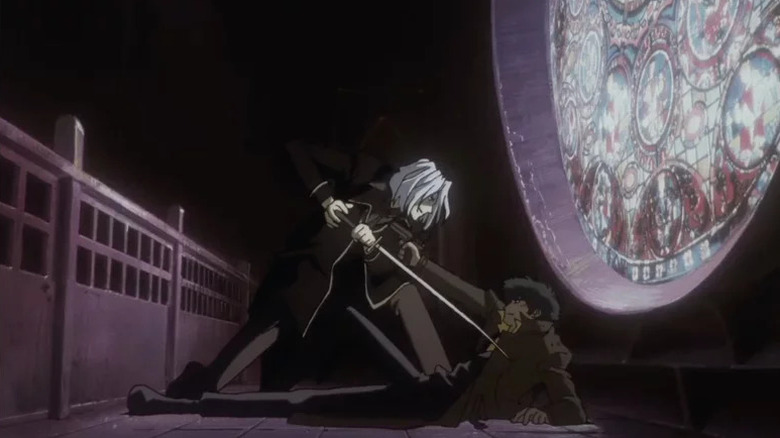
Is it the original space Western? Certainly not. But when you think of the Western genre in modern or futuristic times, you likely think of "Cowboy Bebop" — or another American series coming later on this list. In science fiction, aesthetic is often king, and this late '90s anime series has a strong claim to the number-one spot in that regard.
The space cowboy vibe gets a lot of attention, as does the unbelievable jazz soundtrack from composer Yoko Kanno, for good reason. But it's the way that "Cowboy Bebop" blends those two distinct looks and sounds with lived-in sci-fi world-building, crime fiction, dry humor, and kinetic action that makes the inimitable whole. The canceled Netflix live-action remake of "Cowboy Bebop" was always doomed to fail, because this show, more than perhaps any other in animation, thrives on the merits of its distinct cocktail.
The basic premise of a ragtag space crew making their way through a largely lawless cosmic frontier is a defining format for science fiction on television, and we'll be discussing more shows in that mold here today. But none of them have even a fraction of the swagger that "Cowboy Bebop" carries in every frame.
Battlestar Galactica
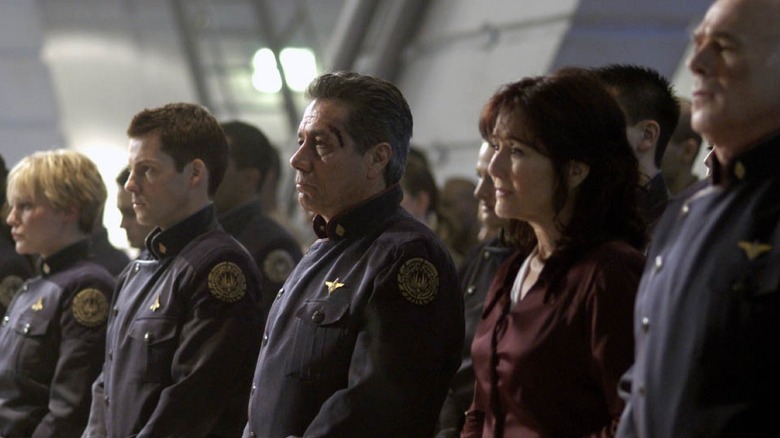
Before "Game of Thrones" and "The Walking Dead," there was "Battlestar Galactica." The big-budget, high-genre prestige drama has become the defining series archetype for the streaming age, and this remake of a 1970s cult hit is, in many ways, the start of that trend. It rocketed the Syfy channel to a level of critical prominence the network had yet to even approach, becoming a pop culture phenomenon that pushed the space opera genre into a more literary position in the eyes of casual TV audiences.
"One of the strongest selling points of 'Battlestar' has always been its ability to anchor fantasy with vivid and recognizable human psychology," Mary McNamara wrote for the L.A. Times in 2009. "That's what lifts all great works out of the confines of genre — be it horror, sci fi, fantasy or mystery — into the plane of literature, and that's what has made 'Battlestar' not just a cult hit but a significant piece of television." In the years since such glowing reviews were penned, the series has maintained a prestigious position in the TV pantheon, and it still holds up well more than two decades after its premiere.
While the show's ruminations on political infighting, religion, and other big-picture themes often get most of the attention, "Galactica" also stays true to its ray gun sci-fi roots, giving the show a sort of retro sheen that kept it fresh among the competition. It's a show that never sacrifices high genre to center its more sophisticated elements, which is part of why it's still so fun to watch.
Andor
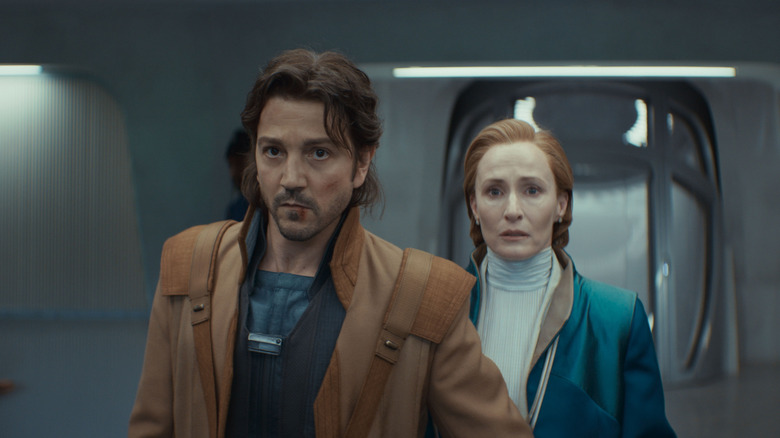
No matter how high your hopes may have been for the Disney+ era of Star Wars, you probably didn't predict one of their shows winning an Emmy Award for best writing in a drama series. But even that achievement undersells what a masterpiece "Andor" is.
Plenty has been said about the sets, the costumes, the monologues, how each performance channels so much emotional complexity, how the action is some of the best in the franchise. What gets lost in all that praise is just how well "Andor" moves. Early criticisms of the first season focused on a perceived sluggishness, which couldn't be more wrong.
In 24 episodes, the show moves from Elmore Leonard in space, to one of the most intense heist arcs ever put on television, to a high-concept sci-fi prison break, to a sobering portrait of democratic erosion under fascism, and finally, to the construction of the rebel movement seen in the original Star Wars. It is an, almost inconceivable amount of material to cover, stretching across subgenres and a massive roster of characters. But "Andor" pulls it off. Every scene is layered so deeply that you get five times the amount of material a lesser show would give you in twice as much screen time.
The debate continues about whether or not "Andor" is the best of Star Wars, or, to the contrary, if it is successful because it is not the usual Star Wars. Ultimately, a ruling doesn't matter. No matter what angle you come at it from, the show is science fiction at its peak — a brilliantly produced sci-fi epic full of spy drama, sophisticated ideas, and some of the best direction the genre has ever received on television.
Firefly
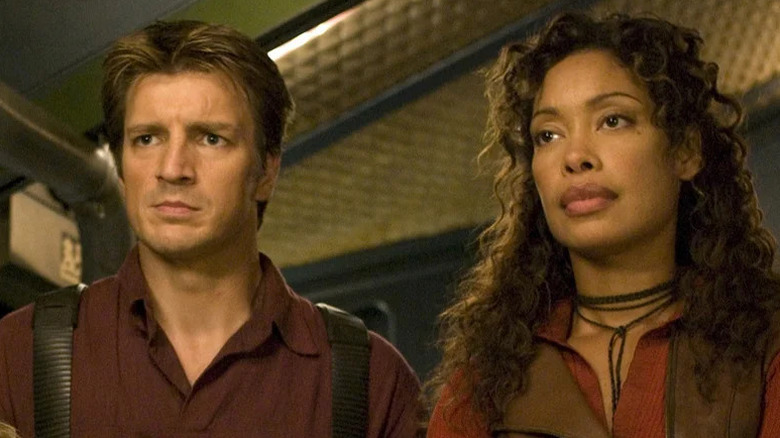
It's been 25 years. Is "Firefly" still good? Why yes, yes it is. It's almost infuriating how a show that ran for such a short time, so long ago, with so little attention during that run, remains spectacular. You'd think that the advent of bigger budgets in TV sci-fi would have made the look and feel of the show's space Western story obsolete, but it somehow looks every bit as good as it did in 2002. The twangy score from composer Greg Edmonson is still every bit as evocative. And those 14 episodes, though brief, are still a ton of fun.
"Firefly" is the definition of a perfect storm. To get that kind of chemistry between every single member of a nine-person cast is difficult enough, and when you marry that to an overall production design that simply hits on all levels, you get TV magic. The series' ongoing popularity in sci-fi spaces — leading to a recent movement from the cast to try to get an animated reboot picked up — is a testament to just how good "Firefly" is. Would it have held the same allure and consistency had it originally gotten more than a single season? We'll never know. What's for sure is that it made the most of the time it had, and the gaps left in the world-building have undeniably been part of the appeal since its cancellation.
Star Trek: The Next Generation
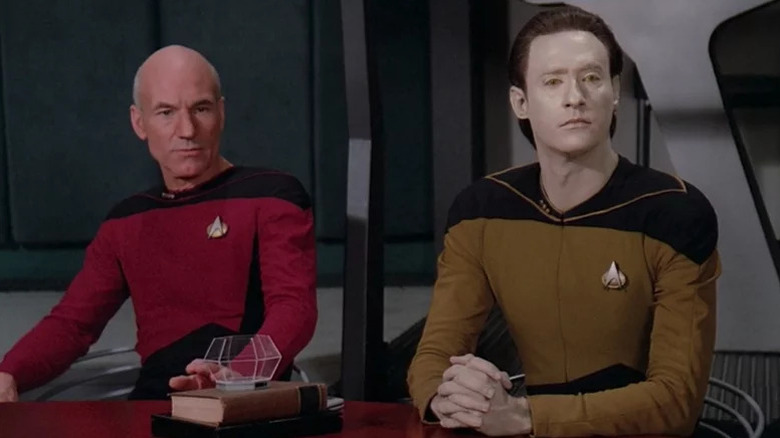
It's hard to pick just one Star Trek show to put here. It seemed wrong to make this into a list of the best Star Trek series, so we had to choose a representative, and with no disrespect to diehard fans of the original, "Star Trek: The Next Generation" is, for the average sci-fi viewer, Trek at its peak.
Yes, every era has its strengths. "Deep Space Nine" has plenty of ardent supporters, and rightfully so. As do some of the modern shows — especially "Star Trek: Strange New Worlds." But when you think of Star Trek, you think first and foremost of those first two shows, and while there is tons of charm and complex sci-fi storytelling in "The Original Series," it's hard to deny that Gene Roddenberry's vision for the franchise was more fully realized in "TNG."
Maybe it's the particular ensemble that made the show so iconic, or the overarching storylines for characters like Q (John de Lancie) and the Borg. Maybe it was how they finally got the aesthetic just right. But without a writers room generating some of the most memorable storylines in sci-fi TV history, it all would have fallen on deaf ears. "Star Trek: The Next Generation" is, for many, the definitive science fiction TV series, and it still has a case as the greatest ever.
Scavengers Reign
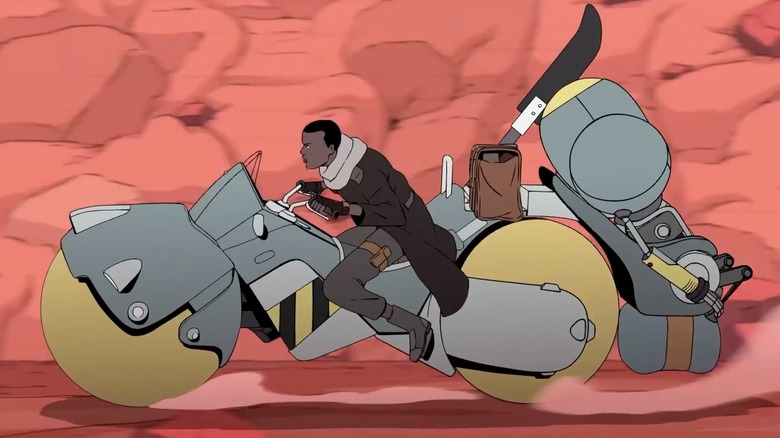
As was the case with "Cowboy Bebop" — a series with admittedly much more cultural clout — "Scavengers Reign" is a masterclass in sci-fi aesthetics and a reminder about the power of animation. The single-season animated series tells the story of a group of survivors stranded on a strange alien planet after their transport ship breaks down. Each one of them encounters different dangers and bizarre, almost psychedelic experiences while wandering the hostile landscape, which is full of the most inventive, horrifying, and fascinating varieties of alien life you'll find out of any show on this list.
Cut short before its time, "Scavengers Reign" is still a fantastic and, dare we say, perfect show. With little dialogue, it lets the colorful and dynamic animation tell the story. The frequent silence makes the show a very different kind of experience, translating the alienation of this strange planet onto the viewer with powerful effect.
The Expanse
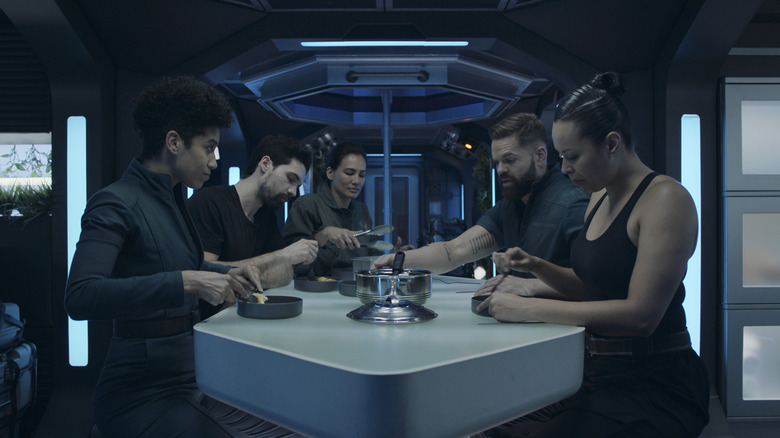
If "Battlestar Galactica" took the space opera and made it modern, "The Expanse" took the modern space opera into the streaming era — even if that's not where the series began. Based on the novel series of the same name, the six-season sci-fi drama explores a colonized version of our solar system where different political powers scuffle and scheme between Earth, Mars, and the asteroid belt. The story follows the crew of a ship called the Rocinante, who get caught up in the ongoing political skirmishes in a variety of ways.
Detailed and grounded, the show is fully deserving of all the praise it received during its run, which included the rare example of a successful fan campaign that saved "The Expanse" after an initial cancellation. "It's not exactly unfinished business," Steve Greene wrote for IndieWire regarding the final season, "but this season is marked by the confidence of a show that's got six seasons under its belt and still doesn't particularly feel like stopping, no matter what any official announcement might say."
Cyberpunk: Edgerunners
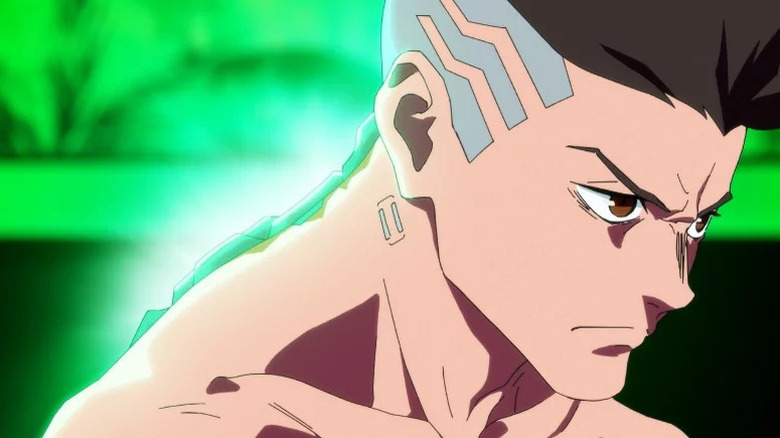
There is a rich legacy of cyberpunk anime — "Ghost in the Shell: Stand Alone Complex," films like "Akira," and more recently, "Cyberpunk: Edgerunners," a Netflix-sponsored spin-off of the Cyberpunk RPG universe (and the CD Projekt video game) animated by Studio Trigger of "Delicious in Dungeon" fame. Though brief, it's a stylish, frenetic series packed to bursting with emotional heft and high-genre theme work, blending a "Book of the Magi" sort of parable with the filthy, neon-lit vibes of Night City.
David Martinez (Zach Aguilar in the English dub) and Lucy Kushinada (Emi Lo) are your anchors — two young people struggling to fight and steal their way out from under the trauma of their brutal pasts. The allure of edgerunner lifestyle, robbing corporations and dueling with the city's street gangs, pushes them forward in a quick rise to the top, but of course, in the world of Cyberpunk, the universe always gets its lick back.
The story smartly focuses on a few basic thematic ideas, channeled through a familiar but beautifully rendered tragedy. The animation from Trigger brings creator Mike Pondsmith's world to life as never before, in all its hard-edged, violent splendor. With a sequel series on the way, there's never been a better time to watch "Cyberpunk: Edgerunners."
Sense8

Few filmmakers have held the level of clout in the science fiction genre over the last 30 years that the Wachowski sisters have. So when, in the early years of Netflix producing its own original programming, it was announced that the minds behind "The Matrix" (along with the creator of "Babylon 5," J. Michael Straczynski) were making a big-budget, high-concept sci-fi thriller for the platform, fans were understandably psyched. Even still, "Sense8" blew expectations out of the water.
Equal parts science fiction epic, queer saga, action thriller, and prestige drama, "Sense8" is a story about eight adults who suddenly find themselves mentally connected, despite living across the globe with little opportunity to have ever met. Discovering themselves to be part of a secret genetic offshoot of humanity, and learning that their kind is hunted by a shadowy organization, they are forced to help each other from across international borders. Each must use their unique skills to figure out the mystery that they are all suddenly a part of.
The series filmed on location all over the world, and that authenticity, married to the Wachowski's skillful filmcraft, makes "Sense8" a visually stunning show. But it's the emotional layer — a story about inclusion, human goodness, and what we might be if we let ourselves believe in it — that elevates the show to all-timer status. "Sense8" is one of the greatest sci-fi shows canceled too soon, though at least we got some closure in the extended finale Netflix funded after waves of fan outcry.