

5 Essential Spy Movies That Everyone Needs To Watch At Least Once
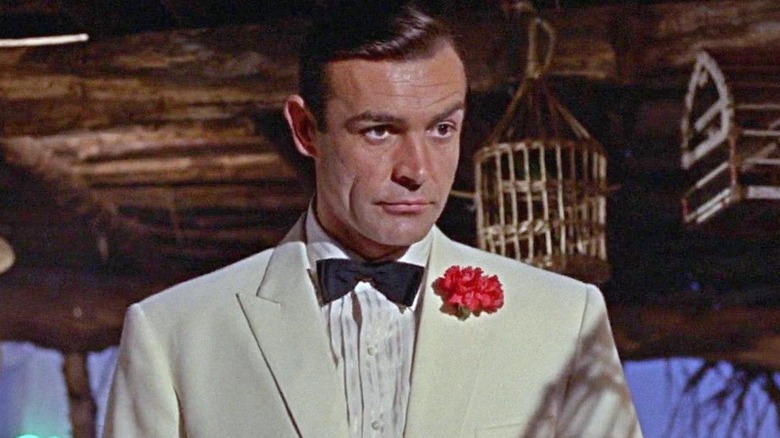
Spies are groovy, baby! Whether your tastes tend more toward Austin Powers or James Bond, the back-stabbing, double-crossing Beverly Hills besties of "Totally Spies!" or the shaky-cam globetrotting dramatics of Matt Damon's Jason Bourne, chances are you've enjoyed a spy story or two. Hollywood loves making them, too. After all, the spy's episodic adventures and frequent changes of scenery make them perfect stock characters to build a franchise around; from the "Mission: Impossible" series to the seven actors who have played James Bond, there's money to be made in the world of espionage. If you make it, fans will show up.
After all, international relations can be confusing, and — especially in a time when it seems like nothing works like it used to — it's nice to watch a story about smart people navigating complex situations. Over the course of cinema history, the world order has gone through several great upheavals; that's meant the spy has needed to change, too. Between technological gadgets that no longer seem so far-fetched and an increasingly strange surveillance state where no one can ever truly be undercover, spies have evolved as the movies have grown up.
If you're looking to get an education in cinematic spycraft, look no further than the five essential spy movies on this list — not only because they're landmarks in the genre but because they're incredibly entertaining to boot.
North by Northwest
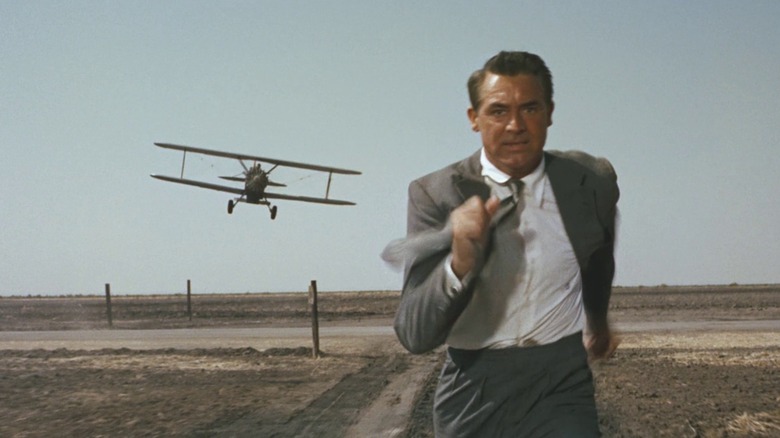
In the early days of cinema, most movies about double-crossing, undercover sleuths would've probably been about a detective, not necessarily a spy. After World War II, though — as the world slipped into the Cold War, where secrets were weapons and the massive machinations of international relations ground away behind the scenes — movies started to focus in on the figure of the spy.
By the time Alfred Hitchcock released "North by Northwest," a movie all film fans need to watch, you could feel the paranoia creeping into pop culture. The 1959 film follows Roger Thornhill (Cary Grant), an everyman mistaken for a powerful person who has run afoul of a shadowy organization. As the "United States Intelligence Agency" pursues Thornhill across the country — culminating in a climactic scramble across the face of Mount Rushmore — he is forced to face the fact that his understanding of the world is fundamentally broken. Something intrinsically good about society is dead, and in its place has risen this inscrutable bureaucracy that he might never be able to convince of his innocence.
Few sequences in all of cinema are as thrilling as the one where Thornhill steps off a bus in the middle of a desolate field, only to see another man in a suit staring back at him. A cropduster whirs in the distance — until suddenly it's not so distant any more.
Goldfinger
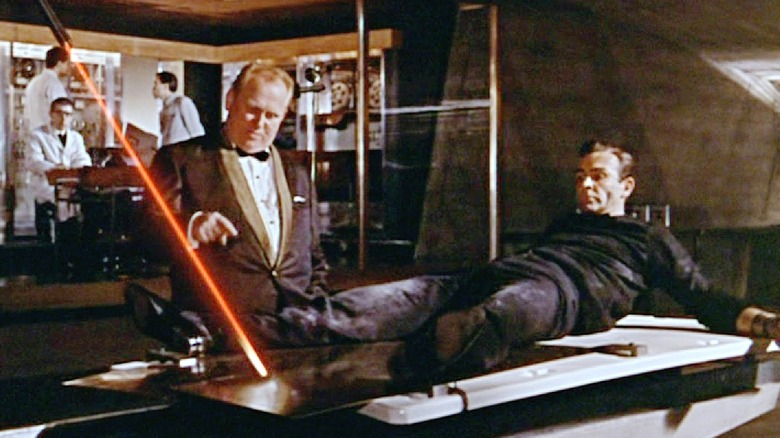
If you're looking to dive into spy cinema, there's no way to avoid James Bond. There are more than two dozen films in the series, but thankfully, there are things that happen in every James Bond movie that will give you a sense of why the franchise is so impactful if you only watch a few of them.
If you only have time for one Bond, make it "Goldfinger." The 1964 entry is a must-see for any fan of on-screen espionage, offering perhaps Sean Connery's most charming turn as the British super-spy. This is where Bond started using wacky gadgetry and the films started prioritizing being straight-up fun. "Goldfinger" finds him facing off against a foe who delivers one of the best one-liners in cinematic villain history: tied down and facing a deadly laser, Bond scoffs, "Do you expect me to talk?" to which Goldfinger replies, "No, Mr. Bond. I expect you to die."
The gentleman spy is a classic archetype; it's what "North by Northwest" is playing against when it has Cary Grant — who was once considered for the Bond role — confused for a secret agent. Connery in "Goldfinger" is the most gentlemanly gentleman spy to ever reach the screen, and it's impossible not to be won over. No wonder there were a billion more sequels.
The Parallax View
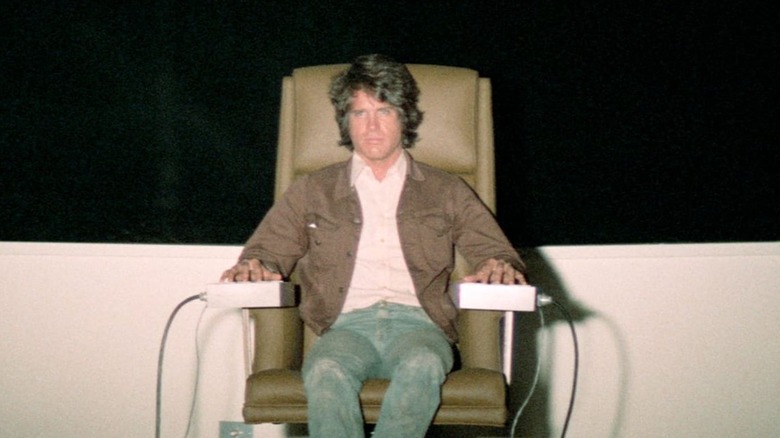
Trust in government plummeted as the 1960s gave way to the 1970s, and by the time "The Parallax View" was released in 1974, the country was grappling with Watergate. We could no longer trust that the spy was a fundamentally good person operating intelligently on the side of a competent government; instead, we knew that the government was lying to us, and that things were happening in the background of our daily lives that were starting to seem inexplicable.
After reporter Joseph Frady (Warren Beatty) witnesses the assassination of a politician — and sees the accomplice, whom the government denies existed, get away scot-free — Frady finds himself overcome by paranoia. Alan Pakula directed three films that people consider a loose trilogy; "The Parallax View" sits right between the more psychologically focused "Klute" and the journalism-centric "All The President's Men," offering the best of both worlds. That's saying something, considering "All The President's Men" is one of the most rewatchable movies of the 1970s.
Like spycraft, journalism too used to be a profession that claimed to have ethics; to not only untangle the conspiracy but to save himself, Frady has to figure out just how far he's willing to go. From the stark shots of bleak, Brutalist bureaucratic buildings to the angular closeups on confused faces seeing something they're starting to suspect they'll never understand, "The Parallax View" is a gripping watch that marks a turning point in the spy's evolution.
Tinker Tailor Soldier Spy
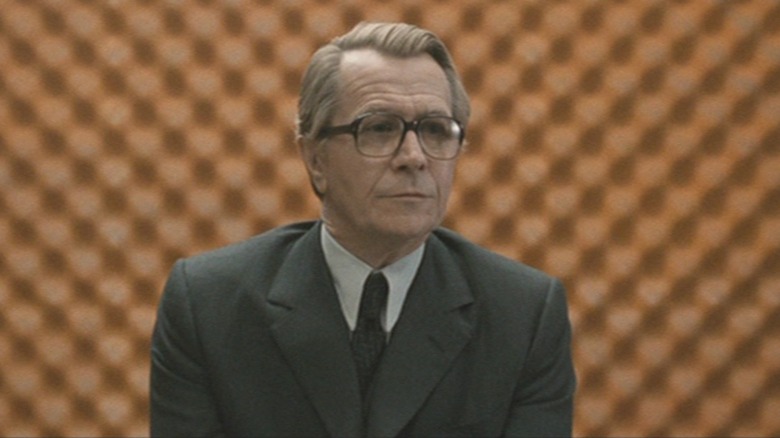
After a cycle of spy films in the 2000s that were, in many ways, a reaction to 9/11 — you'll find concerns about things like the Patriot Act and the surveillance state in later films in the "Bourne" franchise, for example — director Tomas Alfredson brought the spy movie back to its roots with his excellent 2011 adaptation of the classic John Le Carré spy novel "Tinker Tailor Soldier Spy." The book is about British intelligence official George Smiley (Gary Oldman), who comes to suspect that there is a KGB mole somewhere in the organization's London office.
Set in the 1970s, the film stars some of the best actors in the United Kingdom. The movie contains memorable performances from not only Oldman, who does some of his best work as the world-weary Smiley, but also Tom Hardy, Colin Firth, Mark Strong, Ciaran Hinds, Benedict Cumberbatch, and even Stephen Graham, who gave one of the best TV performances of 2025 in "Adolescence."
Though the source novel came out the same year as "The Parallax View," it's interesting that the increasing sense of paranoia you can feel in that movie reads here more like exhaustion. Unlike Warren Beatty's character in that film, you can tell that these characters have inhabited this secretive world for a very long time, and you watch them realize that doing so requires giving up a part of your soul.
Black Bag
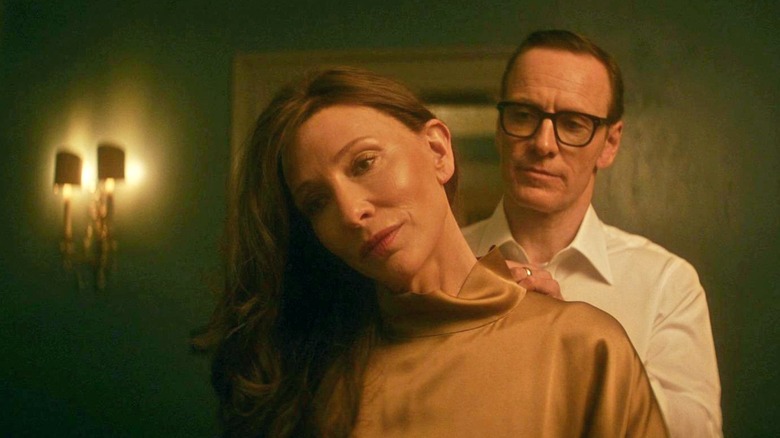
By the time we reach Steven Soderbergh's 2025 thriller "Black Bag," it seems as though the world has once again gotten away from us. The spies of "Black Bag" aren't trying to get ahead of anything anymore; they're barely even attempting to catch up. Instead, they're trying to stay alive, to figure out a way to muddle through a craft — espionage — that has been completely upended by the modern surveillance state. Why does the spy need to exist when governments can find anything and everything online?
Much of the opening act of "Black Bag" unspools like a chamber play; you can easily imagine it staged in a theater. The main characters sit down to a tense dinner party, feeling out each other's allegiances and willingness to lie. It's a bold way to introduce the major players; we spend the rest of the movie trying to figure out who is lying to whom, and whether they even know they're lying to themselves.
Everyone in "Black Bag" pulls their weight, from "Bridgerton" star Rege-Jean Page and "Industry" breakout Marisa Abela to heavy hitters like Michael Fassbender and Cate Blanchett. In fact, this is one of Blanchett's best performances: her Kathryn is a hyper-competent, bone-tired woman, and every expression that crosses her face is riveting. We find ourselves eager to understand her and uncover her secrets — which is how every spy movie should make us feel.