

Martin Scorsese's 10 Favorite Movies Of All Time Need To Be On Your Watchlist
Martin Scorsese has done so much for the world of film. As a director alone, he's delivered so many masterpieces that have forever changed cinema for the better. Even several of Scorsese's box office bombs are among the films that everyone needs to watch at least once, for the kind of classics any filmmaker would kill to have in their filmography. Then there's the "Goodfellas" director's advocacy work when it comes to film preservation. Countless motion pictures from around the world have been saved from obscurity and given a new lease on life because of him championing this cause. In so many ways, the movies are infinitely better because Martin Scorsese was born.
Given how much he lives and breathes movies, it shouldn't be a surprise that Scorsese has some incredible picks for his 10 all-time favorite films. These tremendous titles go all over the map in the genres they occupy, the filmmaking styles they reflect, and the themes they explore. There's even a multitude of different ways one can see these projects influencing Scorsese's own directorial efforts. These 10 features (listed below in alphabetical order) are essential watches that provide an expansive glimpse into cinema's endless possibilities.
If something's captured the attention of the man behind "After Hours," then it must be worth viewing. Prepare to add tons of new movies to your watchlist as we explore Martin Scorsese's 10 favorite motion pictures.
2001: A Space Odyssey
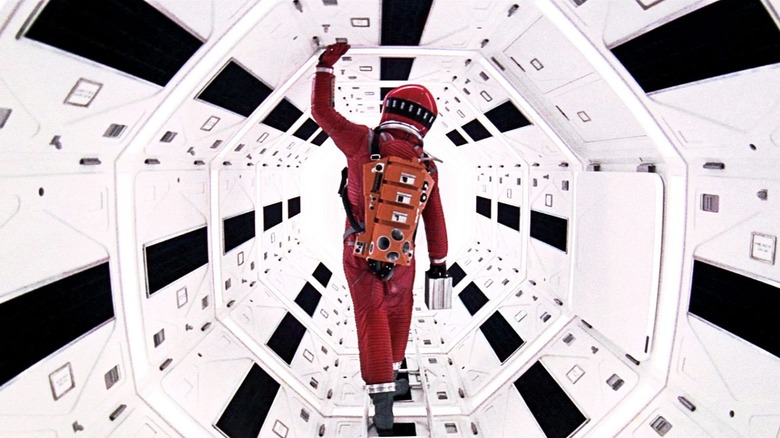
The majority of Scorsese's 10 favorite films were released before 1960. Given that this filmmaker was born in 1942, this likely reflects how impactful the movies he saw in his youth were or his fondness for the eras of filmmaking he grew up in. However, Scorsese has never shied away from hailing quality cinema no matter what era it was released in — just look at how he's publicly celebrated 2020s movies like "I Saw the TV Glow" and "Pearl." Still, it's no surprise that a film from 1968 represents the most recent year on this list. And not just any film, but Stanley Kubrick's "2001: A Space Odyssey."
While Scorsese's own filmography has never brought him to the sci-fi genre, it's hardly shocking that he has an immense fondness for "2001." How could he not? This seminal release still stands tall as a towering work of science fiction, spanning eons of human existence while constantly reinforcing the smallness of humanity. Whether it's a gigantic monolith towering over Earth's apes or HAL 9000 outwitting his human superiors, Kubrick's quiet yet expansive "2001" vision evocatively emphasizes the scale of human beings in the universe.
The tremendous production design and impressively meticulous camerawork (inevitable byproducts of Kubrick's perfectionist tendencies) also make it a widely revered masterpiece. It's inevitable that this masterful 1968 filmmaking feat would garner Scorsese's support.
8 1/2
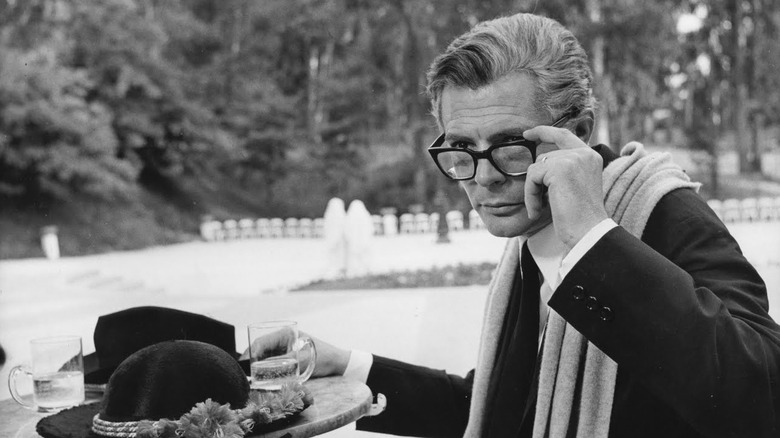
Martin Scorsese's nickname for filmmaker Federico Fellini was "The Maestro," a term reflecting how much respect and admiration the "Goodfellas" auteur had for one of Italian cinema's most recognizable artists. Specifically, Scorsese was bowled over by arguably Fellini's most famous work, "8 1/2." The 1963 film followed filmmaker Guido Anselmi (Marcello Mastroianni), who finds himself drawn deeper and deeper into heightened ruminations on the past as creative stagnation plagues him. The past even begins to prominently seep into the new movie he's trying to realize.
"'8 1/2' has always been a touchstone for me, in so many ways," Scorsese explained to Criterion in 2014. "The freedom, the sense of invention, the underlying rigor and the deep core of longing, the bewitching, physical pull of the camera movements and the compositions." Scorsese's 2005 Bob Dylan documentary "No Direction Home" echoed the central themes of "8 1/2," but it's not just in that film where Fellini's masterwork reverberates throughout Scorsese's output.
The most innovative camerawork and composition choices in Scorsese titles like "The Last Temptation of Christ" or "Killers of the Flower Moon," for instance, harken back to Fellini's exciting visual creativity in "8 1/2." Even beyond the ways that "8 1/2" has inspired elements of Scorsese's filmography, it's not hard to imagine why he would be blown away by the movie. "8 1/2" remains an impressive creation that uses surrealist digressions to tap into ordinary and universal fallibilities.
Ashes and Diamonds
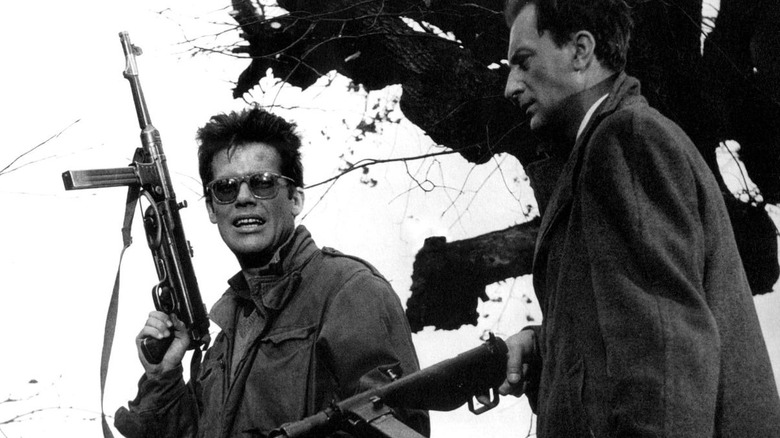
As "Ashes and Diamonds" begins, World War II has just finished. However, writer-director Andrzej Wajda and screenwriter Jerzy Andrzejewski (the latter adapting his own 1948 novel of the same name) unflinchingly depict the brutal reality that, in 1945 Poland, the bloodshed has not stopped. Soldiers are being viciously interrogated and assassination plots are being executed (albeit very clumsily). Corpses are still piling up as opposition to workers rights are suppressed. Yes, World War II has ended. However, bullets are still flying and the carnage isn't over. That's the chilling reality "Ashes and Diamonds" unleashes on the silver screen.
Much like Scorsese's own "The Last Temptation of Christ" was plagued by endless controversy, "Ashes and Diamonds" was often viewed with a negative and divisive light in its home country. Its dedication to highlighting a complicated, bleak interpretation of its nation's history may have scored it some derision. However, those same qualities have made "Ashes and Diamonds" an enduring masterpiece. Decades after its release, the film still resonates as a powerful and searing work. One can see why Scorsese, whose works often linger on the grimy parts of America people don't like talking about, would gravitate towards such a title.
Scorsese has remained so committed to "Ashes and Diamonds" that he's even constantly introduced public screenings of it, including one that occurred as late as July 2025, his dedication reflecting how hard it is to let go of a movie this evocative.
Citizen Kane
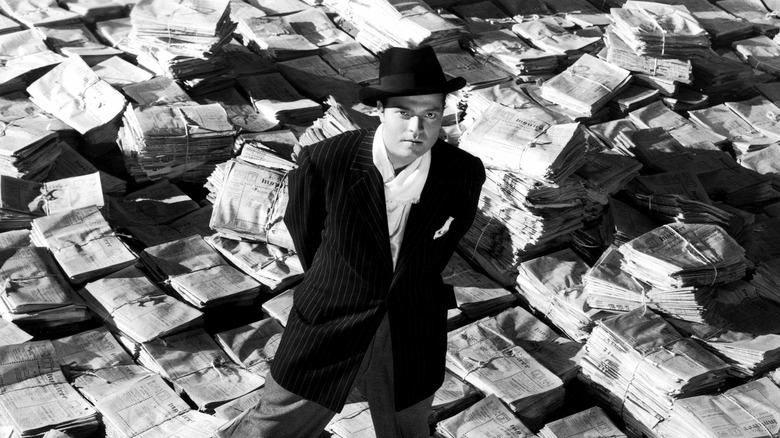
Sometimes artists just hit it out of the ballpark the moment they step up to the plate. With their very first creations, they immediately establish a level of quality and daring that forever changes the world. Orson Welles is very much an example of this phenomenon with one of the greatest directorial debuts of all time, "Citizen Kane." This isn't just one of the 10 best movies of the 1940s: With his very first filmmaking effort, Welles upended American cinema's visual standards and dared to challenge media magnates of the day like William Randolph Hearst.
Martin Scorsese, like countless other souls, was tremendously influenced by "Citizen Kane." That inspiration has inevitably seeped into his works, particularly Scorsese's fascination with exploring the labyrinthine humanity and vulnerabilities of mythic figures. Jesus Christ in "The Last Temptation of Christ" or Jordan Belfort in "The Wolf of Wall Street," while inhabiting wildly different movies, embody this thematic fascination. Emphasizing the internal foibles and messy qualities of these profoundly influential figures makes these films fascinating descendants of "Citizen Kane," which chronicles an uber-rich media titan still plagued by the childhood he never had.
Great art can beget more great art, and "Citizen Kane" inspiring Scorsese's films brilliantly epitomizes that. Chalk up another win for the artists who crush it with their very first endeavor.
Diary of a Country Priest
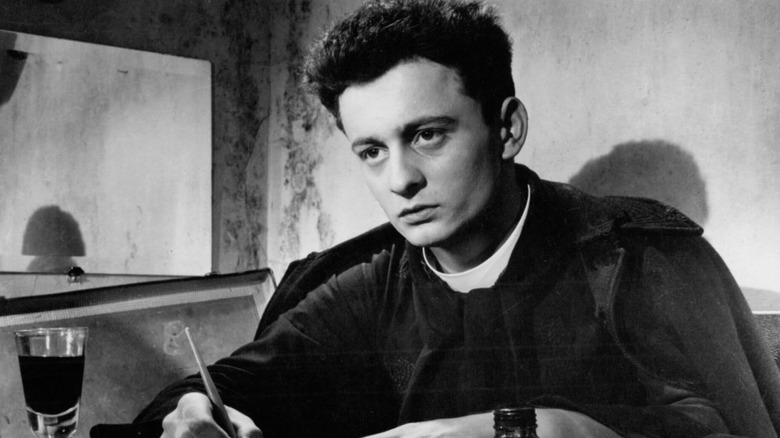
Here's a pro-tip for those navigating classic French cinema for the first time: do not watch Robert Bresson's films when you're in anything remotely resembling a glum mood. The man behind works like "Mouchette" and "Au Hasard Balthazar" made incredibly bleak works that didn't shy away from emphasizing misery ceaselessly affecting ordinary people. This extends to his 1951 movie "Diary of a Country Priest," which follows Curé d'Ambricourt (Claude Laydu) struggling to escape either social ostracization or anguish in a small French town. Things get so bad that even his relationship to God begins to get shaken.
That exploration of a man's theological convictions under tremendous pressure would also fuel Scorsese's 2016 masterpiece "Silence." The director has also openly talked about how "Country Priest" specifically informed some of his earliest critical darlings like "Taxi Driver." Decades before those Andrew Garfield and Robert De Niro star vehicles, however, "Diary of a Country Priest" explored such material through Bresson's trademark grim filmmaking style. The visual and tonal mastery on display throughout the project has even helped secure it a reputation as one of Bresson's greatest works, an impressive feat given the tremendous body of work he cultivated.
Such a lasting legacy (even just in influencing Scorsese's movies alone) speaks highly of grim cinema's power. The world is a brutal, often harrowing place, and art should reflect that. Robert Bresson's "Diary of a Country Priest" demonstrates how to cinematically grapple with reality's inescapable cruelties.
Ikiru
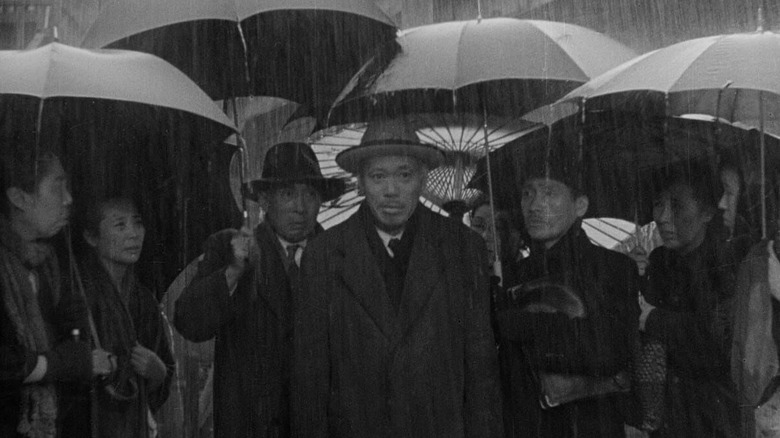
Movies don't get more perfect or moving than "Ikiru." Director Akira Kurosawa's exploration of a withdrawn, work-oriented businessman, Kanji Watanabe (Takashi Shimura), learning that he's at death's door lets viewers confront an inescapable reality: all of us have a finite time on this Earth. What will we do with the limited years at our disposal? "Ikiru" achingly portrays a man stumbling through this question. Will he burn all his money on immediate, surface-level pleasures? Will he do something that makes a difference to others long after he's gone?
These weighty concepts are explored through impactful imagery and tremendously involving performances, particularly that of Shimura. In "Ikiru," Shimura delivers one of the greatest leading turns in cinema history. A close-up of his aching eyes and haunted face is more than enough to make your heart shatter. Shimura's turn also informs one of the film's most effective sequences, depicting Watanabe sitting on a swing in the snow and crooning "Gondola no Uta." Everything about this scene, particularly Shimura and the visuals, will leave even the most stone-faced viewer sobbing. It's impossible to extract his performance or the film itself from your mind once you've seen it.
Naturally, given its endless virtues, "Ikiru" made Scorsese's list of all-time great movies. Scorsese has made it no secret how much he adores nearly every Akira Kurosawa movie (he even acted in Kurosawa's "Dreams"). It'd be outright egregious, then, if one of Kurosawa's greatest accomplishments didn't land as one of Scorsese's favorite films.
The Leopard
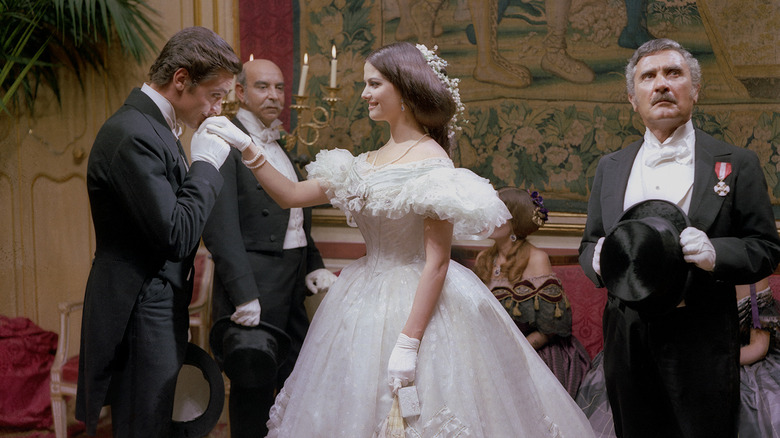
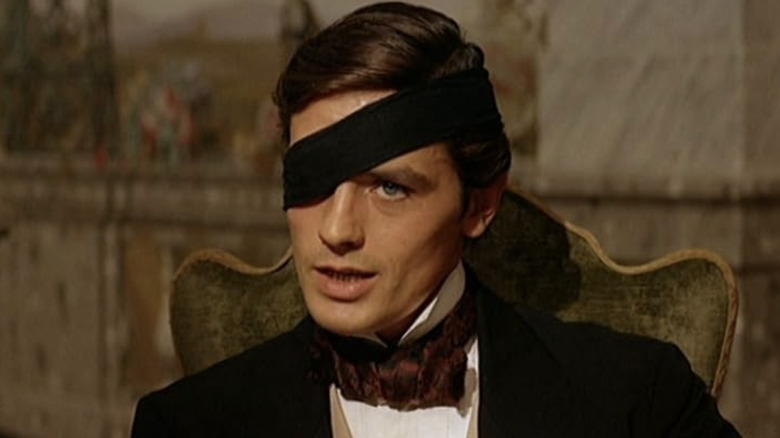
How could there not be multiple examples of acclaimed Italian cinema on Martin Scorsese's list of great movies? Hailing from the director's ancestral country is "The Leopard," a 1963 directorial effort from filmmaker Luchino Visconti. Starring Burt Lancaster and Alain Delon (among several other notable performers), "The Leopard" takes audiences back to Italy in the 1860s. Here, a wealthy family, which includes Prince Don Fabrizio Salina (Lancaster), struggles to adjust to radical alterations in their existence as they attempt to cling to the luxurious staples of their everyday lives.
Scorsese's affection for "The Leopard" is so fervent that he oversaw a meticulous restoration of the film that premiered at the 2010 Cannes Film Festival to rave reviews. "I live with this movie every day of my life," Scorsese reportedly declared about "The Leopard" (via The Film Foundation) while premiering its restoration. He also praised its "deeply measured tone ... its use of vast spaces and also the richness of every detail." Such qualities are legion in Scorsese's filmography: Epic works like "Killer of the Flower Moon" and "The Irishman," both of which feature expansive narratives and visuals, are spiritual successors to the scope of this 185-minute classic.
Meanwhile, the meticulous detail in the costume design must have been on Scorsese's mind as he filmed "The Age of Innocence" and its 19th century garb. There's so many ways "The Leopard" seems to have seeped into Scorsese's work. Even beyond its connection to this master filmmaker, though, it remains a beloved and towering milestone.
Ordet
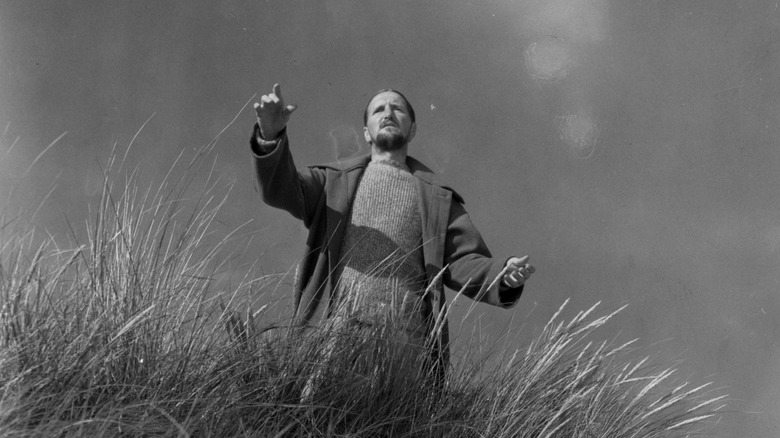
If you look closely, you might just spot ruminations on religion in some of Martin Scorsese's films. All sarcasm aside, Scorsese's Catholic upbringing and his adult relationship to faith has been a pivotal part of many of his movies. Even the trashy Roger Corman movie he helmed, "Boxcar Bertha," culminated in a crucifixion harkening back to Jesus Christ's death. Danish filmmaker Carl Theodor Dreyer similarly never shied away from pontificating on the theological in his cinematic exploits. That was especially clear in his 1957 work "Ordet," one of the 10 best movies of the 1950s.
The film concerns a trio of sons belonging to farmer Morten (Henrik Malberg), all of whom carry varying approaches to religion. One of the kids is an atheist, another is a mirror of his theologically devout father, while still another is convinced he himself is Jesus Christ. Eventually, tragedy consumes this family and everyone contends with how their individual beliefs response to the unthinkable. It's not hard to see why 21st century film critics drew a straight line between a film like "Ordet" and Scorsese's "Silence," since both are about people's complex relationships to larger theological concepts. It's equally unsurprising that a film as visually precise as "Ordet" would win Scorsese over.
This production is awe-inspiring in its restrained camerawork, while the thoroughly believable performances amplify its verisimilitude. Like many of Scorsese's own films, "Ordet" is peak religion-focused cinema.
Paisan
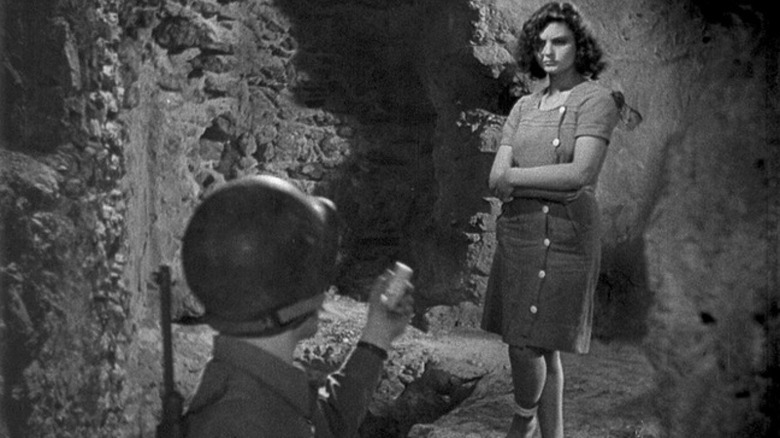
Director Roberto Rossellini's 1945 feature "Rome, Open City" vividly demonstrated his commitment to realizing then-contemporary Italian society on celluloid. Rossellini would not allow the world to forget his country's working-class hardships, using cinema to accomplish this goal. One year after "Rome. Open City," Rossellini delivered another acutely relevant work with "Paisan." This time, Rossellini bounced across six different plotlines over 18 months of history as American forces enter Italy during World War II. Though taking place over less than two years, "Paisan" chronicles a slew of cultural clashes as these two nations collide.
Martin Scorsese doesn't just adore "Paisan," but has even recently declared it a pivotal feature in shaping his decision to pursue a filmmaking career. "I was experiencing the power of cinema itself," Scorsese recalled to Criterion about seeing "Paisan" for the first time, "In this case made far beyond Hollywood, under extremely tough conditions and with inferior equipment." Decades after first experiencing "Paisan," Scorsese remains bowled over by its dedication to chronicling ordinary lives stumbling through history, adding that it's "like seeing reality itself unfolding before your eyes."
Such feats came naturally to Rossellini, drawn from the striking experiences he and other Italians endured in World War II. Want to see a movie that ensured Scorsese would pursue a career that gave the world "The Last Temptation of Christ" and "The King of Comedy"? Just press play on "Paisan."
The Red Shoes
David Hinton's 2024 documentary, "Made in England: The Films of Powell and Pressburger," explored the artistic legacy of Michael Powell and Emeric Pressburger, two esteemed filmmakers whose works (among many other accomplishments) were some of the most sumptuous-looking color films ever produced. The narrator of "Made in England" was Martin Scorsese, who takes viewers on a journey of appreciating both the intricacies of the duo's films and their personal histories, while also exploring the ways in which Powell and Pressburger informed the creative trajectory of Scorsese's filmography.
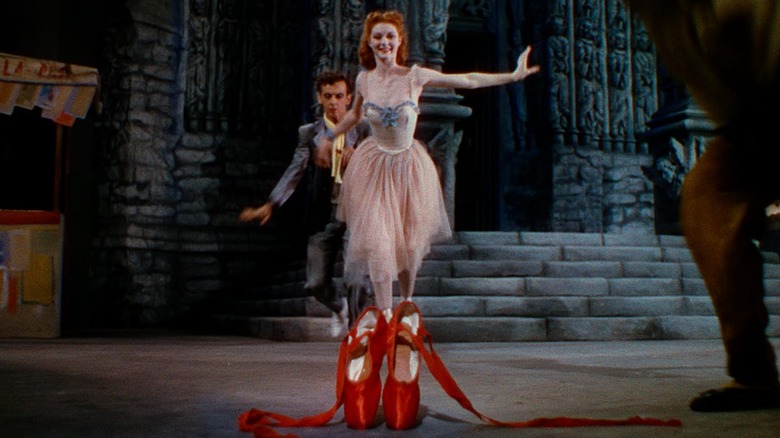
Given how much of an immense fan Scorsese is of this directorial duo, it would be remarkable if they didn't have a film on his top 10 greatest features list. But they did indeed make it in with one of the best musical movies ever, "The Red Shoes." The film follows ballerina Victoria Page (Moira Shearer), whose life eventually forces her to pick which is more important: dancing or the love of her life. This grandiose story is told through some of the most eye-popping images ever put to screen, with every frame, every hue, every piece of blocking nothing short of radiant. Few movies are this beautiful.
The grand dance sequences, meanwhile, are an incredible display of magnificent physicality. Everyone's talents are in rare form in the outstanding "The Red Shoes," and one viewing of this masterpiece will make anyone as big a Powell and Pressburger devotee as Scorsese.