

10 Best Movies Of The 1940s, Ranked
We may receive a commission on purchases made from links.
As the world dealt with a global war throughout much of the 1940s, people turned to art to make sense of the ceaseless tragedies happening around them. Even when the conflict ended in August 1945, World War II's shadow lingered over the planet. Art continued to be a vital medium for coping with the unspeakable becoming everyday reality. Luckily for these moviegoers, fantastic films from around the world were getting crafted. Some of these titles offered plucky escapism from ordinary woes. Others used the cinematic medium to confront the harshest truths of daily life.
Decades after this era, the best motion pictures of the 1940s are timeless masterpieces that do far more than soothe the nerves of circa 1943 audiences. The 10 best movies of the 1940s (ranked below from "least best" to greatest) are some of the most finely produced features ever conceived. Some of these 10 movies delivered visuals that still astonish now, putting the imagery of countless modern films to shame. Others had evocative atmospheres that never leave the heads of the audience. Still others were jam-packed with memorable performances that people continue to talk about today.
Whatever virtues underpinned the artistry of the best movies of the 1940s, these films are well worth celebrating. They aren't just stuffy time capsules or visions of yesteryear. They're fervently alive works whose artistic prowess can still stun audiences just like they enraptured tormented moviegoers in the 1940s.
10. Day of Wrath
- Cast: Thorkild Roose, Lisbeth Movin, Sigrid Neiiendam
- Director: Carl Theodor Dreyer
- Rating: Not Rated
- Runtime: 97 minutes
- Where to Watch: Criterion Channel
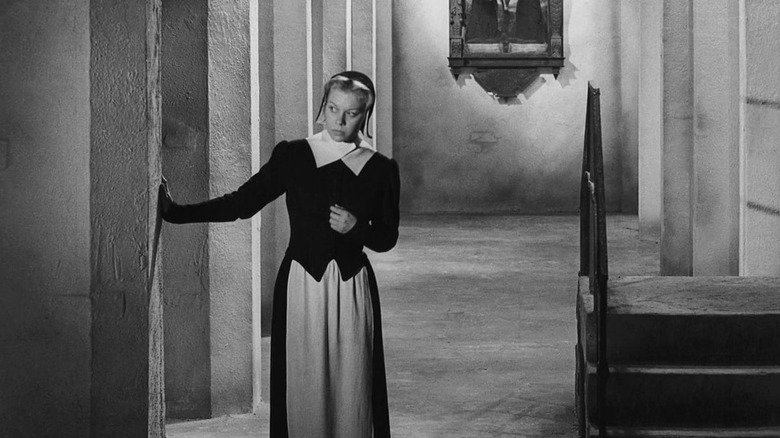
Director Carl Theodor Dreyer's directing career began in 1919. From there, this Danish auteur established a fascination for topics like women in anguish and theology's impact on everyday people. His penchant for consistently groundbreaking filmmaking (from the harrowing intimacy of "The Passion of Joan of Arc" to "Gertrud's" unblinking single-takes) further cemented his reputation as a legend. One of many films contributing to his towering eminence is 1943's "Day of Wrath." Anne Pedersdotter (Lisbeth Movin) is the centerpiece of this project, a woman whose mother's reputation as a witch constantly looms over her existence.
"Day of Wrath" (which is based on real people and historical events) is a Sisyphean ballad of a woman navigating a society where women exerting any independence or autonomy are doomed to be burned and demonized as "witches." Some of Dreyer's most impactful images in this production come from him and cinematographer Karl Andersson lingering on Movin depicting Anne's spunkier side. The small moments of this character giggling uncontrollably or flicking a toy are not only transfixing in Movin's hands, but also lend moving insight into the part of Anne's psyche that society is suppressing.
Striking images and haunting atmosphere are in plentiful supply in "Day of Wrath." This movie doesn't flinch in its commitment to a tragic aesthetic that only Carl Theodore Dreyer could execute so potently.
9. Bicycle Thieves
- Cast: Lamberto Maggiorani, Enzo Staiola, Lianella Carell
- Director: Vittorio de Sica
- Rating: Not Rated
- Runtime: 89 minutes
- Where to Watch: HBO Max
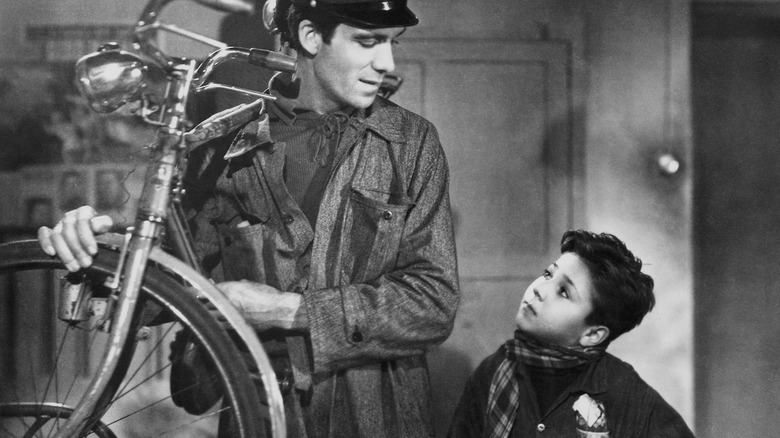
Antonio Ricci (Lamberto Maggiorani) needs a bicycle. This cash-strapped lead of "Bicycle Thieves" can't work at a job he desperately needs without a bike. Temporarily procuring a bicycle simply leads to it getting stolen under Ricci's nose. Such is the unflinchingly grim world that director Vittorio de Sica paints in "Bicycle Thieves." Ricci and his son Bruno (Enzo Staiola) inhabit an unforgiving landscape where poverty is omnipresent, and obstacles to escape it are similarly pervasive. While 1940s American films were forced to adhere to the Hays Code and its strict black-and-white visions of morality, the Italian neo-realism poster child "Bicycle Thieves" had the flexibility to depict reality's more complicated nuances.
There are no clear-cut heroes and villains among the penniless working class here. That truth makes it absorbing to see where the "Bicycle Thieves" script takes its lead father/son duo next. It also ensures that, like with so many de Sica movies, the most devastating developments hit the viewer like a ton of bricks. Especially aching among those developments is Ricci's descent into desperation across the runtime, a transformation Maggiorani handles with authentic finesse.
Vittorio de Sica never shies away from brutal reality throughout "Bicycle Thieves," but he also doesn't just turn his characters into punching bags for endless misery. His camera is always focused on registering characters as discernible human beings, navigating a reality that could be happening just outside.
8. Late Spring
- Cast: Setsuko Hara, Yumeji Tsukioka, Kuniko Miyake
- Director: Yasujirō Ozu
- Rating: Not Rated
- Runtime: 108 minutes
- Where to Watch: Criterion Channel
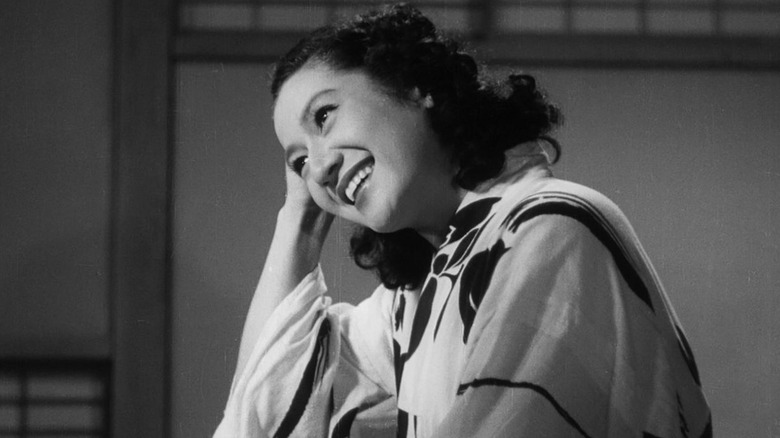
Shukichi Somiya (Chishū Ryū) worries about his daughter, Noriko (Setsuko Hara), the two leads of "Late Spring." Somiya frets that, when he passes away, his daughter will be all alone. Thus, he proposes an arranged marriage to ensure she won't have to navigate existence in a solitary fashion. Director Yasujirō Ozu's famously intimate gaze means that "Late Spring" is a story of largely low-key conversations as this father/daughter pair contend with their differing views on how to navigate the future. Under some artists, that might not be enough to sustain a whole movie. Ozu, though, can wring magnificently involving cinema out of the most mundane scenarios.
Part of that achievement also stems from centering "Late Spring" around two incredibly talented performers. There are countless reasons why Setsuko Hara is one of the 13 best actresses of all time, and her immense chops especially prosper within the confines of "Late Spring." Sometimes bubbly, sometimes solemn, always riveting in her portrayal of Noriko's humanity, Hara is sensational here. Ozu's deeply personal narrative and visual impulses let one truly relish in Hara's immense talents.
Equally memorable are "Late Spring's" evocative images, conveying palpable anguish and uncertainty. Deeply human vulnerability marks the entire production right up through its silently shattering ending. Masterpieces like "Late Spring" implore viewers to simmer in everyday interactions and witness the complexities quietly hiding in plain sight.
7. The Philadelphia Story
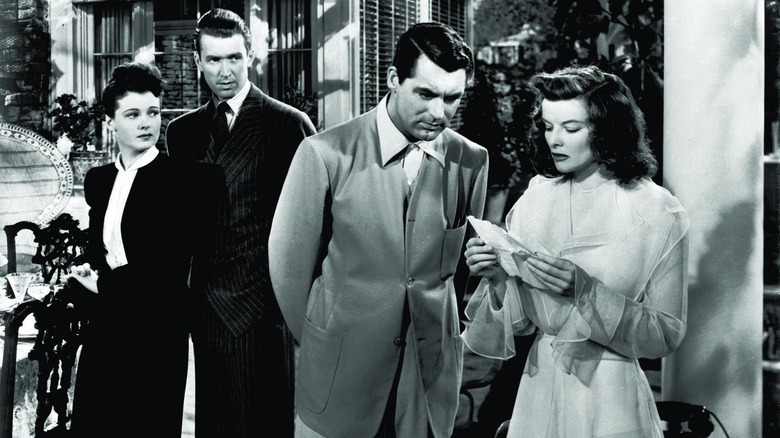
- Cast: Katharine Hepburn, Cary Grant, Jimmy Stewart
- Director: George Cukor
- Rating: Not Rated
- Runtime: 112 minutes
- Where to Watch: Prime Video
"The Philadelphia Story" was headlined by three of the greatest actors ever. Katharine Hepburn, Cary Grant, and Jimmy Stewart: All three were here and bouncing off each other under the direction of master filmmaker George Cukor. Something would've had to go horribly wrong for this collection of talent to not produce something memorable or entertaining. Happily, this quartet of artists (working alongside other valuable talent like screenwriter Donald Ogden Stewart) delivered a knockout of a comedy that still stands as one of the most entertaining American movies ever produced.
"The Philadelphia Story" is the saga of a woman, Tracy Samantha Lord (Katharine Hepburn), who finds all her wedding plans going down the drain when she becomes infatuated with two men, journalist Mike Connor (Jimmy Stewart) and ex-lover C.K. Dexter Haven (Cary Grant). This plot proves a phenomenal vessel for all the assembled actors to flourish in their respective talents. It isn't just the three leads that excel here, though. Even the most fleetingly seen performers leave a mighty impression here with their excellent deliveries of lines like, "What is thee wish?" The visual sensibilities on display are also razor-sharp and prove vital in making the punchlines extra impactful.
Best of all, Hepburn, Stewart, and Grant all have outstanding chemistry together. Their sizzling rapport endures decades after "The Philadelphia Story" debuted. Movies this excellent never go out of style.
6. It's a Wonderful Life
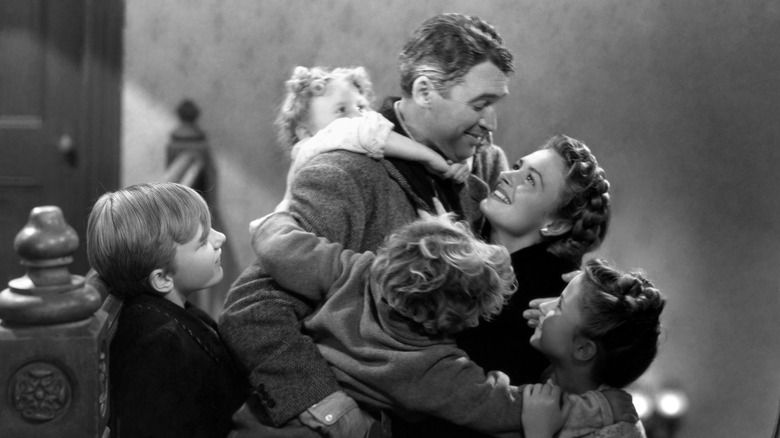
- Cast: Jimmy Stewart, Donna Reed, Lionel Barrymore
- Director: Frank Capra
- Rating: PG
- Runtime: 130 minutes
- Where to Watch: Prime Video
Every December, countless audiences across the globe sit down and revisit Frank Capra's 1946 masterpiece "It's a Wonderful Life." A Yuletide tradition for many no matter what holiday you celebrate, this Jimmy Stewart star vehicle has been rerun and reviewed endless times throughout the years. Considering its ubiquity in pop culture, one might assume its high artistic stature is simply because people are so familiar with it or associate it with lots of pleasing nostalgia. In reality, though, "It's a Wonderful Life" remains a deeply moving exercise worthy of its iconic status.
Jimmy Stewart has many great performances under his belt, but his work as George Bailey is especially exceptional. His depiction of Bailey growing from an idealistic young man to someone more burdened and frustrated with everyday challenges is impressively handled. It's hard to imagine that the role of George in "It's a Wonderful Life" was almost played by Cary Grant, given how perfect Stewart is in the part. Meanwhile, the script is incredibly touching in so many regards, including its depictions of Bailey bonding with the various denizens of his hometown of Bedford Falls.
Many have said "It's a Wonderful Life" could never be remade today, and they're absolutely right. Capra and company got it right the first time. Why remake something that's not only so excellent, but still entertaining people every holiday season?
5. Rome, Open City
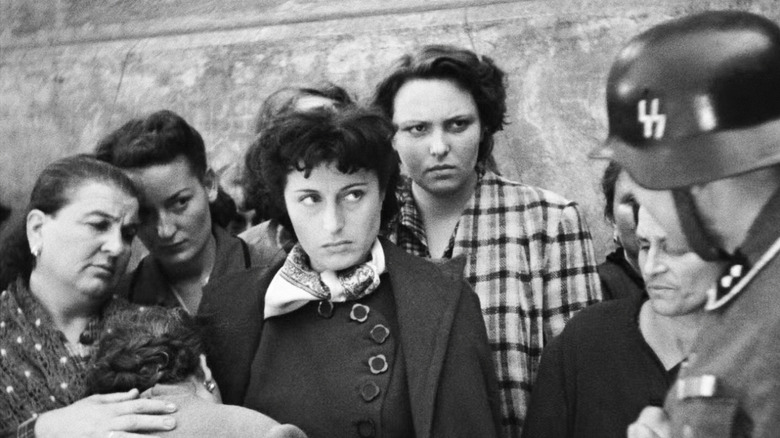
- Cast: Aldo Fabrizi, Anna Magnani, Marcello Pagliero
- Director: Roberto Rossellini
- Rating: Not Rated
- Runtime: 103 minutes
- Where to Watch: HBO Max
It's impossible to make any movie divorced from reality. All feature films contain ripple effects of the external world they originated from. That's especially true when it comes to motion pictures like director Roberto Rossellini's "Rome, Open City." This 1945 feature about the Nazi occupation of Rome, Italy was made directly after World War II's conclusion. The wounds of these fascist forces were still fresh on the minds of Rome's denizens. Yet folks like Rossellini kept going and made this feature chronicling their plight. Reality didn't just inform "Rome, Open City." It flowed through this movie's veins like blood pulsating through a human being.
"Rome, Open City's" script has a handful of especially prominent characters, like Don Pietro Pellegrini (Aldo Fabrizi), but its story largely jumps around from one perspective to the next. This way, the sheer scope of Nazi rule can be shown, while many different oppressed points of view can fill up the screen. This bold maneuver works wonders at conveying the scale of hardship that Rome's citizens are enduring. That concept is also communicated vividly through "Rome, Open City's" most striking images.
The camera's emphasis on Nazis climbing an endless series of stairs, or characters walking near rubble where buildings once stood, hauntingly conveys the magnitude of how fascism has capsized these lives. Drawing so heavily on fresh, brutal reality makes "Rome, Open City" a feature as harrowing as it is transfixing.
4. A Matter of Life and Death
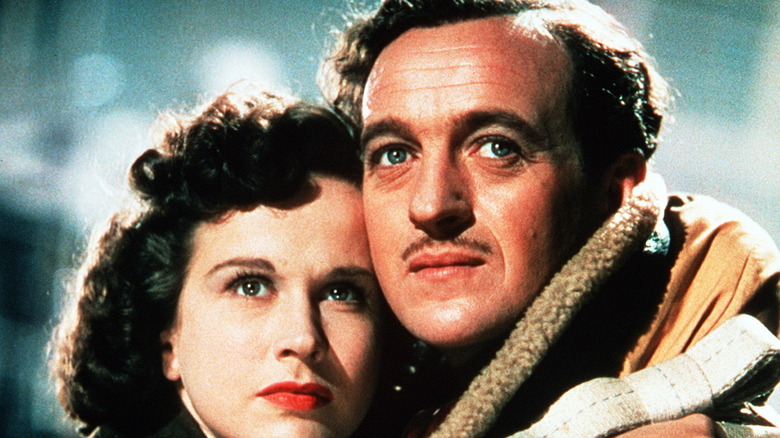
- Cast: David Niven, Roger Livesey, Raymond Massey
- Directors: Michael Powell and Emeric Pressburger
- Rating: PG
- Runtime: 104 minutes
- Where to Watch: Blu-Ray
In 1946, colorized feature-length films were still relatively new. Even in the nascent stages of this art form, directors Michael Powell and Emeric Pressburger delivered one of the most imaginative and luscious uses of vibrant hues in cinema history with "A Matter of Life and Death." This is the story of Squadron Leader Peter David Carter (David Niven) almost perishing until a mishap ensures that he isn't sent to the afterlife as planned. Instead, he miraculously survives and strikes up a romance with June (Kim Hunter). The folks in charge of the afterlife, though, plead for Carter to return to this domain where he belongs.
To emphasize how Earth is where Carter's romantic passions lie, sequences set in this realm are realized with vibrant colors. Rarely have pink and purple plants, red lips, blue skies, or any other colorful things looked so radiant on film. Meanwhile, the afterlife sequences are captured in monochromatic coloring. This not only differentiates this realm from Earth, but reflects the black-and-white worldview of those running the show there. "A Matter of Life and Death" has so much thoughtfulness informing its visuals, which are also just stunning in surface-level terms. Combine this bombardment of awe-inspiring imagery with a sweeping romance and countless perfect performances, and "A Matter of Life and Death's" masterpiece status is a no-brainer.
3. Drunken Angel
- Cast: Takashi Shimura, Toshirō Mifune, Noriko Sengoku
- Director: Akira Kurosawa
- Rating: Not Rated
- Runtime: 98 minutes
- Where to Watch: Criterion Channel
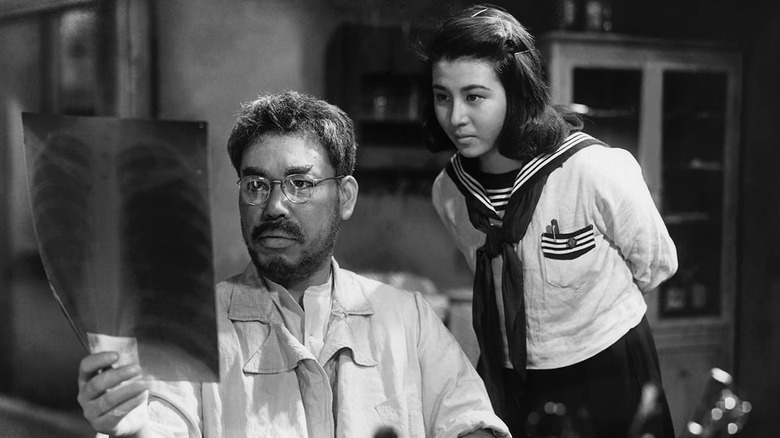
It takes more than a great ending to define a movie as a masterpiece. However, the excellent "Drunken Angel," from writer/director Akira Kurosawa (who penned the script with Keinosuke Uekusa), is already a magnificent creation even before it delivers one of the best endings in the history of cinema. Said ending concerns Doctor Sanada (Takashi Shimura), staring out at a sea of nuclear waste-affected water, expressing pessimism over the world. Just as he's committed to hopelessness, a patient of his (Yoshiko Kuga) appears, fully healed from her prior sickness, and noting Sanada owes her a sweet for recovering.
In this conclusion, one can fascinatingly see Kurosawa and Uekusa bouncing back and forth between bleak and hopeful outlooks for the future. The former element is understandable, given not only what Sanada endures in "Drunken Angel," but also given the horrors that Japanese society experienced during World War II. The reappearance of this patient, though, offers a glimmer of hope for what tomorrow brings. It's important to recognize reality's horrors, but also not to give up on a better future.
Every Akira Kurosawa movie has at least one iconic sequence. "Drunken Angel's" seminal ending certainly lives up to that tradition. To boot, the preceding feature is also outstanding, particularly in how it lets actors Shimura and Toshiro Mifune shine. Of course an emotionally unflinching work from Akira Kurosawa would become one of this decade's most amazing achievements.
2. Citizen Kane
- Cast: Orson Welles, Joseph Cotten, Dorothy Comingore
- Director: Orson Welles
- Rating: PG
- Runtime: 119 minutes
- Where to Watch: Prime Video
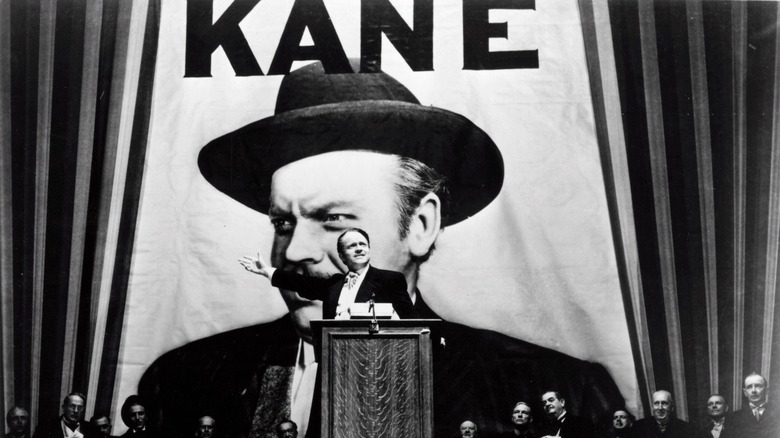
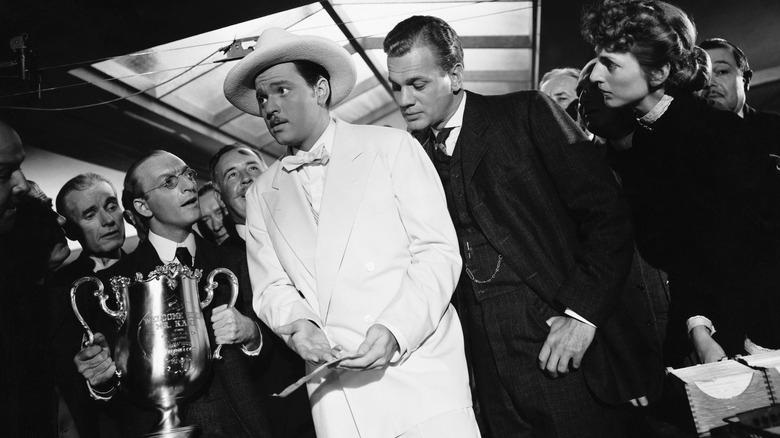
"Citizen Kane" is so often talked about as the pinnacle of all cinema that it can be easy to take its virtues for granted. Its visual accomplishments have been entrenched into every subsequent movie under the sun, while everything from "The Simpsons" to "Over the Hedge" has referenced its most iconic lines (like "Rosebud"). "Citizen Kane" should not just be known, though, for the way it reverberates through other cinematic works. Strip away everything else, and you'll find that this Orson Welles directorial effort is still a remarkable motion picture on its own.
One of the best directorial debuts of all time, "Citizen Kane" persists as a masterpiece on many fronts, but especially with its potently tragic ambiance. The saga of Charles Foster Kane (Welles) is one that reflects how elusive even the most famous figures can be. Told through various interviews with Kane's accomplices after this mogul's passing, "Citizen Kane" is a saga told in assorted fragments coalescing into a tragedy. Nobody has a full vision of Kane, but viewers still grasp a captivatingly sad, unfulfilled aura off his descent into opulent reclusiveness.
Along the way, the performances remain mesmerizing, while the visuals (particularly the shots that deftly use depth of field) are remarkable. Even with its massive influence, there's never been and never will be a movie quite like "Citizen Kane."
1. Casablanca
- Cast: Humphrey Bogart, Ingrid Bergman, Claude Rains
- Director: Michael Curtiz
- Rating: PG
- Runtime: 102 minutes
- Where to Watch: HBO Max
How do you praise a movie like "Casablanca?" Its towering artistic stature is immense. Everybody seems to agree that it's one of the greatest things ever put on celluloid. Yet, much like with "Citizen Kane," it's easy to take for granted all the things "Casablanca" does so well. If it were a cinch to make motion pictures this good, then masterpieces on par with "Casablanca" would flood multiplexes every week. Director Michael Curtiz and company were working on a specific kind of cinema magic here that continues to enchant.
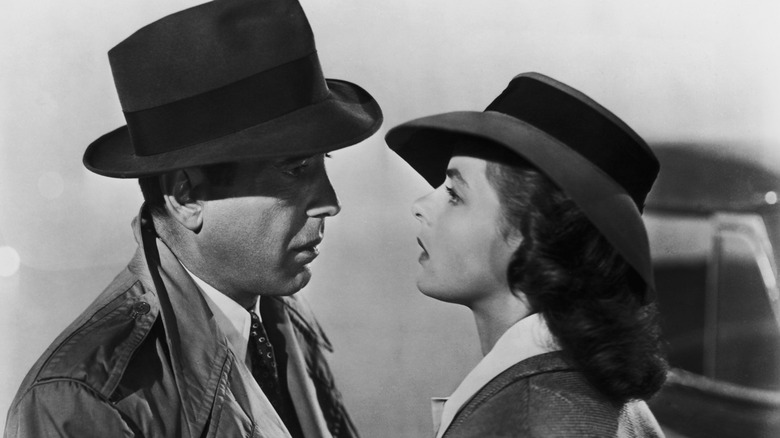
Part of this film's success comes from its story allowing a tremendously talented cast to strut their stuff. Humphrey Bogart, Claude Rains, Peter Lorre, Ingrid Bergman, Sydney Greenstreet, they're all terrific here. They each bring so much to their respective roles, including Humphrey Bogart's improvised line that changed "Casablanca" forever. The narrative hinging on rejecting apathy in the face of fascism and injustice, meanwhile, is effortlessly involving. Set pieces like a group of characters defiantly crooning "La Marseillaise" have to be seen to truly appreciate their wondrousness.
With "Casablanca," everything just works, including that final scene where Rick bids farewell to Ilsa. Even after so many pop culture parodies of this sequence, it still registers as outstandingly poignant. "Casablanca's" virtues defy words. It's the kind of accomplishment that the entire cinematic medium was made for.