

Young Sheldon's Contradictions With The Big Bang Theory Are Fixed By One Key Twist
Welcome to "Fanon Fixing Canon," a weekly column where we investigate infamous plot holes or terrible storyline decisions. Through a combo of detective work and meticulous fan theorizing, we fix these problems so they no longer exist — and canon is immaculate once again.
Fans of "The Big Bang Theory" know that the prequel series "Young Sheldon" isn't without its issues when it comes to matters of canon. The two shows contradict each other in numerous ways, as "Young Sheldon" both fixes and creates several plot holes. Is "Young Sheldon" deliberately ignoring some aspects of "The Big Bang Theory" to work better as a show? Does the spin-off show simply not care about continuity? Or has adult Sheldon Cooper's (Jim Parsons) early life been misrepresented all along before "Young Sheldon" blew the truth gates wide open? The fandom must know — but can it know?
"Fanon Fixing Canon" says yes. In fact, there's a pretty simple solution to the various differences between the two shows. As adult Sheldon's cameo in the aptly titled "Young Sheldon" finale, "Memoir," confirms, the entire show is a memoir he's writing. While the series doesn't explicitly state it, the revelation offers an interesting possibility that all of the differences between his backstory, as given on "The Big Bang Theory," and the events of "Young Sheldon" are the result of artistic decisions and egoistical embellishments by the author. Let's see why this may be the best way to explain the contradictions between the two shows.
The many discrepancies between The Big Bang Theory and Young Sheldon
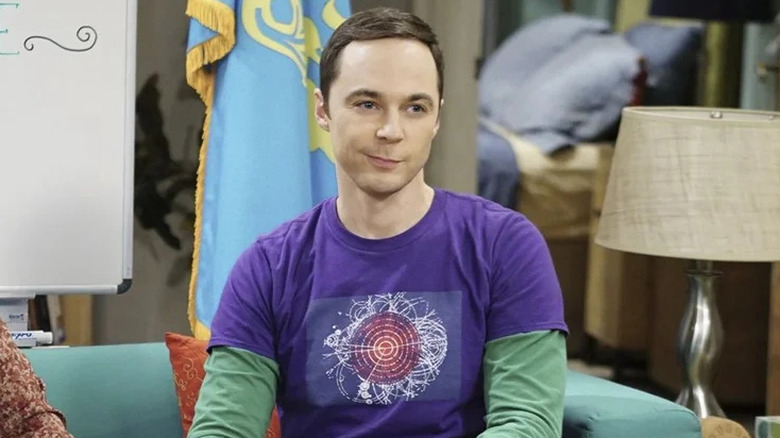
The biggest difference between "The Big Bang Theory" and "Young Sheldon" is without doubt George Cooper Sr. (Lance Barber). The prequel reimagines him as a salt-of-the-earth kind of guy who's full of heart and a genuinely good father — a far cry from his "TBBT" depiction of being an alcoholic and a cheater. Likewise, Sheldon's Meemaw (Annie Potts) is far kinder in the prequel than she is on the parent show.
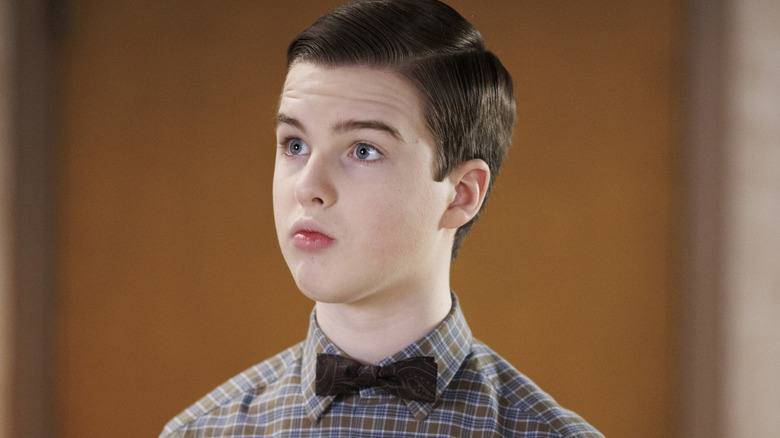
"Young Sheldon" also presents Sheldon (Iain Armitage) as far better-adjusted than he ever let on while discussing his youth on "The Big Bang Theory." The "Young Sheldon" Sheldon has friends, isn't bullied much, lives in a nice house, and generally has a better relationship with his family members than previously described.
All of this can technically be attributed to the people behind the show taking creative liberties, especially as the spin-off's co-creator Steven Molaro has specifically said that you should stop comparing "Young Sheldon" to "The Big Bang Theory." Of course, people are still going to do that, because what else are you going to compare it to? As such, the "Sheldon is getting creative with his memoir" theory makes all sorts of sense, especially because nearly every change between the shows makes him and his loved ones seem nicer and more normal than the offbeat childhood he claims to have had on "The Big Bang Theory."
It makes perfect sense that Sheldon Cooper would be willing to whitewash the truth
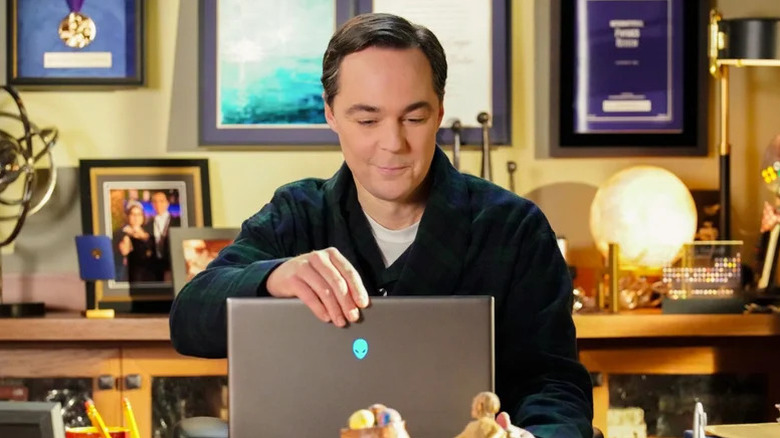
Sheldon Cooper is a unique guy and he knows it. As someone who looks up to famous scientists like Stephen Hawking, he's also likely aware that, after he's won his Nobel prize in physics, future generations of young Sheldons will look up to him in turn. Would he not be willing to make himself seem more presentable than he actually is in his memoir, knowing that these aspiring young scientists will read it? Of course he would. The man has an ego, after all.
Sheldon doesn't much care about social convention, so while he can't keep secrets or lie well, he'd have few issues about making himself seem better by sanding down some of the sharper corners of his actual adolescence — especially in written form, where he can think about what he's putting on paper and commit it to his eidetic memory for future interviews and whatnot. He might even see the memoir's softer and lighter approach as the logical solution to the "problem" of his childhood.
Of course, this tactic would have its downsides. For one, Sheldon might fold like a house of cards if someone who's familiar with his real childhood reads the memoir and challenges him, which could set our Nobel winner up for some seriously embarrassing situations down the line. Then again, when has that possibility ever stopped Sheldon when he thinks he's in the right?
The memoir theory would also explain the stylistic decisions of Young Sheldon
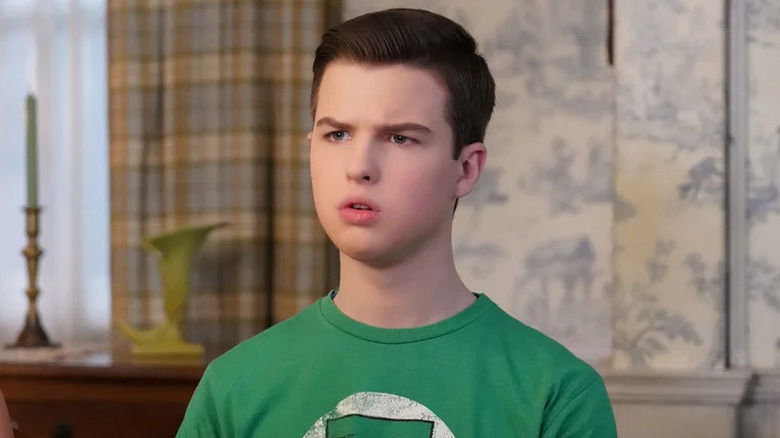
Apart from all the aforementioned aspects of "Young Sheldon," the show being the visual representation of Sheldon's memoir-writing process makes sense from a stylistic standpoint. The adult Sheldon's narration, of course, is a dead giveaway, and the overly complex episode titles could very well be his idea of captivating chapter naming. Even the single-camera format of "Young Sheldon" slots neatly into this theory. "The Big Bang Theory" is a multicam show because it has multiple main characters and they all have their own points of view. Meanwhile, "Young Sheldon" is exclusively about one guy, and that guy's highly specific viewpoint.
Sheldon Cooper is a theoretical physicist who's interested in routine, order, and coming across as superior to others. Would it be so difficult to believe that he applied all his talents into the simple task of putting his own life retroactively in order — at least, when it comes to the way the public perceives it?
Rewatching "The Big Bang Theory" after "Young Sheldon" can turn it into a completely different show. However, by treating the prequel spin-off as Sheldon's own version of his story instead of as a conflicting canon experience, he becomes an unreliable narrator. That allows the viewer to enjoy both shows in a way where they don't contradict each other.