

Mortal Kombat 2 Details Only True Fans Noticed
Contains spoilers for "Mortal Kombat 2"
"Mortal Kombat 2" is a worthy sequel to 2021's "Mortal Kombat," and far closer to the spirit of the video game series than the first film ever was. Princess Kitana's (Adeline Rudolph) revenge arc and Johnny Cage's (Karl Urban) hero's journey provide the film with two extremely different key protagonists who offer their own flavors of martial arts mastery. Meanwhile, the existing characters and storylines surrounding them provide an entertaining backdrop for the multitude of cool fight scenes in the film — many of which will give any of the best martial art movie fights in the last five years a run for their money.
Being an adaptation of the iconic "Mortal Kombat" fighting game series, of course, "Mortal Kombat 2" is also much more than just a sequel that's better than the original film. It contains a massive number of references to various characters' special moves, video game backstories, and general franchise lore. Some of these nods are pretty obvious: For instance, everyone who's even slightly familiar with the games will notice the film versions of the characters' designs and unique move sets.
However, other details in the film are slightly more nuanced, and may require a finer knowledge of the source material in order to truly understand the references. Here's a closer look at the "Mortal Kombat 2" details that only true fans of the franchise are liable to notice.
Several fights take place in iconic Mortal Kombat 2 arenas
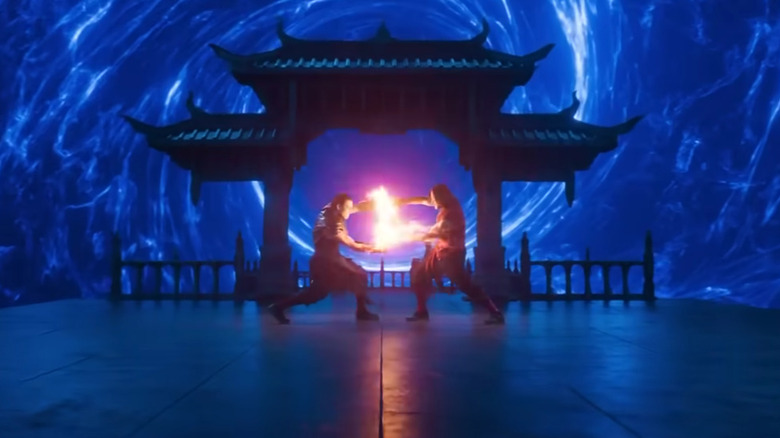
Even viewers who dislike "Mortal Kombat 2" must surely admit that the movie's set design is on point. Every single fight takes place in a gorgeous or suitably ominous arena, most of which feature several environmental elements that come in play in one way or another.
Of course, "Mortal Kombat 2" has a major ace up its sleeve when it comes to set design. After all, the video game series it's based on features numerous eye-popping arenas to choose from, and the movie draws inspiration from them pretty liberally. In fact, perceptive fans will notice that virtually every major fight in the film is directly influenced by one or more of these arenas.
For instance, the walkway platform surrounded by green acid that Shao Kahn (Martyn Ford) and Cole Young (Lewis Tan) fight on is a fairly faithful adaptation of the Dead Pool from the "Mortal Kombat II" game. Likewise, the gorgeous arena where Liu Kang (Ludi Lin) battles Kung Lao (Max Huang) is based on the Portal and Blue Portal stages from the same game, with maybe a pinch of Edenian Ruins from "Mortal Kombat: Armageddon" thrown in.
Sonya Blade (Jessica McNamee) and Sindel (Ana Thu Nguyen) clash in what looks like a version of the Shaolin Trap Dungeon from "Mortal Kombat 11," while the setting of the fight between Cage and Baraka (CJ Bloomfield) is heavily inspired by the Tarkatan Colony from "Mortal Kombat 1." The Bi-Han (Joe Taslim) fight in Netherrealm clearly draws visual inspiration from the Krossroads and Hell arenas. The makers have done their homework, and the movie provides plenty of opportunities for backdrop spotting.
Johnny Cage's fight with Baraka is full of Uncaged Fury callbacks
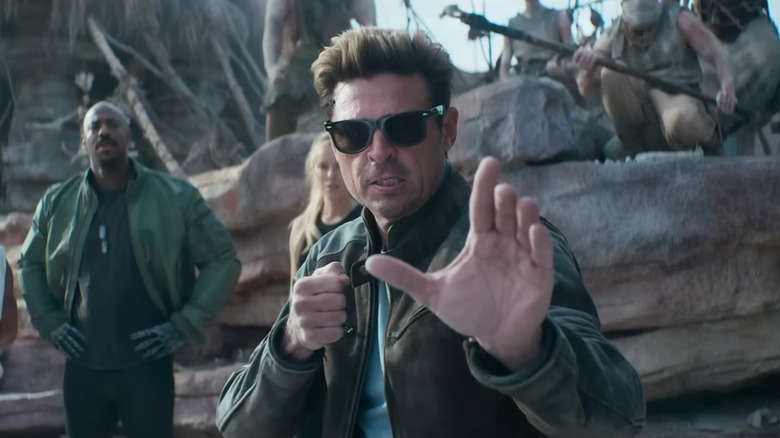
The fight between Johnny Cage and Baraka is an important moment in "Mortal Kombat 2." The fight itself illustrates Cage's progression from a bitter, darkly funny loser to a genuinely heroic Earthrealm warrior — even if he has to act his way into being one. Style-wise, the two fighters are also an excellent match, with Baraka's unique look and inhuman power set juxtaposing nicely with Johnny's viewpoint character experience.
What you might not realize, however, is just how much this fight draws inspiration from an earlier Johnny Cage scene. The character is introduced by way of his extremely cheesy 1980s movie, "Uncaged Fury," which features the sort of combat even Jean-Claude Van Damme at the most direct-to-video stage of his career would have rejected as over the top. However, Johnny finds out that these kinds of moves are exactly what a successful Kombatant needs. As such, if you pay attention, you'll find that the Baraka fight features some fun tactical references to the "Uncaged Fury" one.
Apart from the middle finger-and-sunglasses taunt, we have the stick-spinning sequence, which Johnny uses to great effect in "Uncaged Fury" but finds ineffectual against Baraka's forearm blades. When Johnny dons his sunglasses and gets his second wind, he immediately starts moving like he does in "Uncaged Fury," notably dodging Baraka's projectiles in a sequence lifted directly from his film fight. It's a clever way to show that Johnny's abilities stem from his self-confidence, and tapping into his movie background enables him to weaponize his heavily choreographed style of fighting.
Kitana's iconic weapons get a new backstory
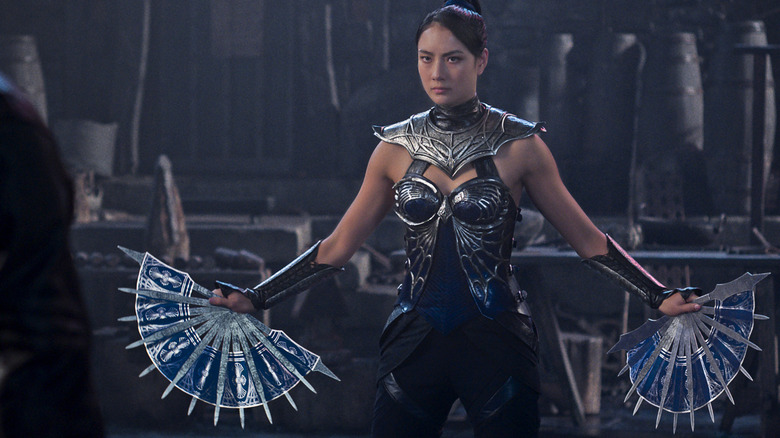
There are many amazing weapons in "Mortal Kombat 2," and honestly, it's still very hard to beat Hanzo "Scorpion" Hasashi's (Hiroyuki Sanada) iconic "Get over here" rope dart or Kung Lao's blade hat. Even so, Kitana's steel fans in the film definitely enter the conversation of greatest "Mortal Kombat" weapons. In her early fight against Johnny Cage, Kitana uses these weapons in extremely imaginative ways that would finish Johnny many times over were she actually out to kill him. Her apparent ability to magically control the fans allows her to use them as both melee weapons and as highly precise, spinning projectiles that defy physics. They even manage to give trouble to Shao Kahn himself.
This is nothing new, since the steel fans have been Kitana's overarching primary weapon since her debut in the "Mortal Kombat II" video game. However, there's one major change in how the movie treats these blades: Namely, it gives them a proper backstory.
In the games, the fans have always just sort of been there. In the film, we actually find out where Kitana got them: Jade (Tati Gabrielle) gives them to her as a gift before the Mortal Kombat tournament, symbolizing the pair's friendship. No word on how Kitana learns to fight with these complex weapons in what's implied to be a few days at most, but hey — logic is often the first casualty in matters of Mortal Kombat.
Kano still doesn't get his iconic metal face plate
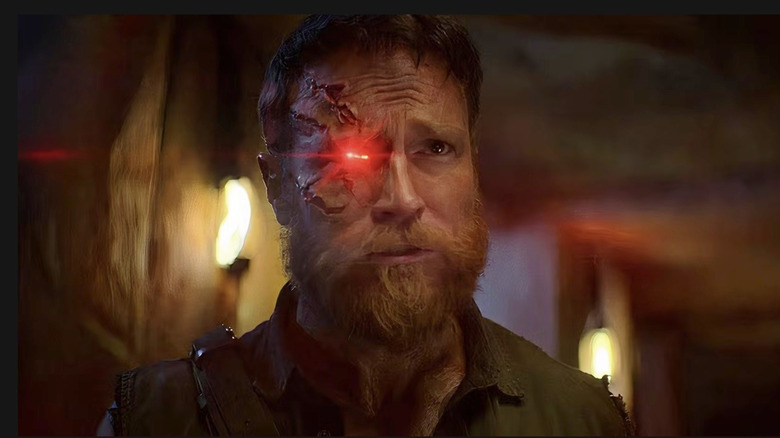
"Mortal Kombat 2" character Kano (Josh Lawson, who you've seen before) is a charming, yet unreliable opportunist who's always good for a one-liner. In the games, Kano has gone through a lot of changes. His design and background have floated between the original nondescript balding mercenary-criminal and a hirsute Australian wisecracker modeled after Trevor Goddard's performance in the 1995 movie.
However, there has been one largely consistent element of his portrayal. Kano tends to have a metallic plate over his right eye and the upper right side of his face, while his laser-shooting eye is an artificial construct. You'll notice that this aspect of the character is still missing in "Mortal Kombat 2." While Kano does get a new eye, it's simply a gross, yet effective biological replacement that Quan Chi (Damon Herriman) magically creates after growing weary of Kano's pestering.
The 2021 "Mortal Kombat" movie chose the organic eye route with Kano due to the concept of special arcana powers that the fighters can unlock through training and dedication. This means that Josh Lawson's version of the character is able to shoot lasers from his biological eye, with no need for any distracting artificial enhancements. Still, the movie does tease that Kano might finally receive the iconic implant in "Mortal Kombat 2," since Sonya Blade destroys his right eye. Alas, this is not meant to be — but hey, maybe in "Mortal Kombat 3," right?
Shao Kahn literally removes Cole Young from canon
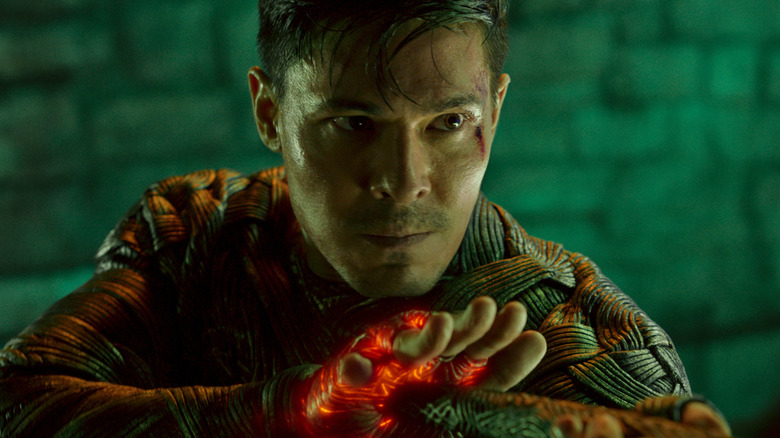
Lewis Tan's "Mortal Kombat" newcomer Cole Young really can't catch a second's break in "Mortal Kombat 2." All we see of the "Mortal Kombat" protagonist is some background character-level sparring, a short mention that he's said goodbye to his family, and a thoroughly unfair fight against Shao Kahn — who, you'll remember, can't be killed at this point in the movie. Seeing as Cole is the only major character in the film series who isn't from the video games, it's not all that surprising to see him go the way of the dodo, especially since it was one of the hype-inducing "Mortal Kombat 2" rumors circulating long before of the movie's premiere. However, it takes keen eyes to realize just how thoroughly "Mortal Kombat 2" disposes of all available evidence of Cole's presence in the film series.
Apart from defeating the first movie's protagonist and bashing his head in with a giant hammer, Shao Kahn wraps up the fight by casually dragging Cole's maimed body into the green liquid surrounding them. What happens next isn't explicitly shown, but the stage is based on the Dead Pool arena from the "Mortal Kombat II" game. As the people who have played the game (as well as other "Mortal Kombat" games where Dead Pool makes an appearance) know, the green stuff is highly dangerous acid. As such, Kahn's act is not only characteristically cruel but highly symbolic: The warlord is very literally removing every physical trace of Cole from the "Mortal Kombat" franchise.
Quan Chi is played by a franchise veteran
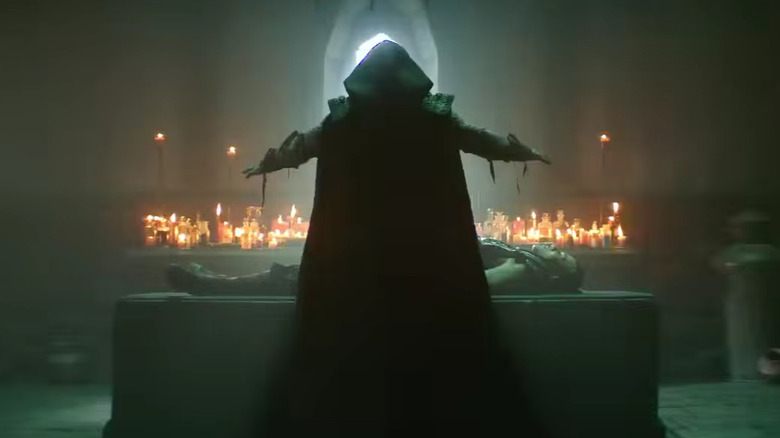
"Mortal Kombat 2" introduces several prominent new characters, all of whom come from the deep pool of kombatants in the video games. Among the most important new arrivals is Quan Chi — played by Damon Herriman, who was played the role of Charles Manson in "Once Upon a Time in Hollywood." Apart from the attack in Raiden's Temple, the character doesn't really fight in the movie, but proves to be instrumental in resurrecting old favorites so they can join the fray once again.
Quan Chi also hides a fun little secret for those who have kept up with the film series' casting game. As it happens, this isn't Herriman's first "Mortal Kombat" rodeo: In the 2021 movie, the deadly Kabal is physically portrayed by Daniel Nelson, but Herriman provides the character's voice.
Since he survives the events of the movie and his video game version is a noteworthy antagonist, necromancer Quan Chi will likely play an important role in the movie series going forward. This also opens up an interesting possibility. Since Quan Chi can and does raise characters from the dead, "Mortal Kombat 3" could potentially see him resurrect Kabal, leading to a situation where Herriman might play two separate characters in the same "Mortal Kombat" movie.
Mortal Kombat creator Ed Boon makes a cameo
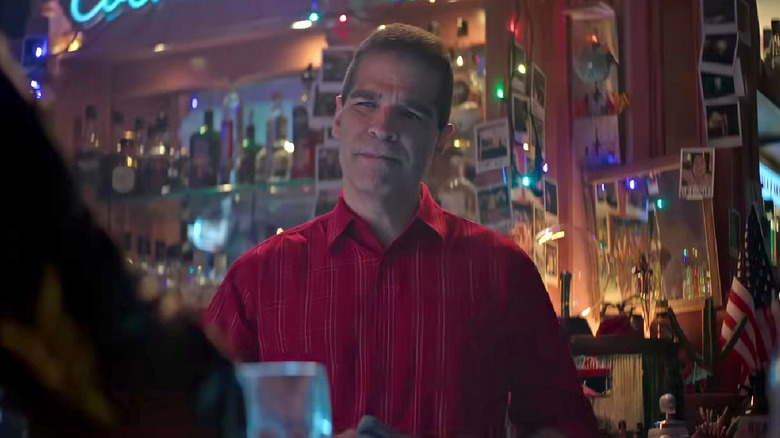
The critic-stunning "Mortal Kombat 2" is so full of different characters that it's hard to keep track of every single background figure, especially if they aren't fighters. Even so, there's one very specific character who doesn't throw a single punch in the movie, but who's still worth paying attention to. This is because he's played by one of the guys who are responsible for the entire "Mortal Kombat" experience: Ed Boon, who co-created the game series with John Tobias.
Boon turns up in the scene where Johnny Cage nurses a drink at a bar and grimly shoots down the compliments and comeback suggestions of a fan. Perhaps fittingly, the "Mortal Kombat" creator doesn't play the fan. Instead, he's the bartender serving drinks to Johnny and kindly questioning the washed-up movie star's behavior.
It's a smooth cameo that stealthily puts Boon in a position of power — after all, he can cut Johnny off or make him pay his tab. In all fairness, though, the makers of the film seem to have been quite confident that the fans will catch this one. After all, Boon's barman even makes a blink-and-you-miss-it appearance in the "Mortal Kombat 2" trailer.
There's a reason Liu Kang isn't bothered by his defeat
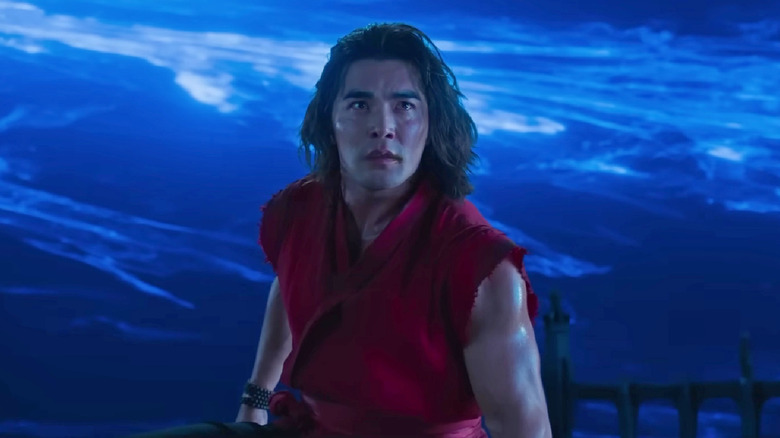
Liu Kang is on a completely different level in "Mortal Kombat 2" than he is in the 2021 movie. Unleashed, his fire magic is powerful enough that it would probably make fast work of Shao Kahn if it wasn't for the latter's immortality. When he eventually falls in the final fight against Kahn, he also seems to be surprisingly chill about what should be a certain death. Of course, this may have something to do with the fact that he doesn't actually seem to die. Instead, he ascends to the sky, realizing that his mission was never to defeat Shao Khan in the first place.
This unexpected power-up might seem like it comes completely out of the blue, but "Mortal Kombat" fans who are up to date with the game franchise's lore know full well what's up. The combination of Liu's vast fire abilities and his serene final scene strongly imply that we're seeing one of the most important Liu Kang character evolutions from the games: He's becoming the God of Fire.
In this divine role, Liu Kang plays an important part in the supernatural bits of the overall "Mortal Kombat" story, to the point of actually replacing thunder god Raiden (played in the movie by Tadanobu Asano) as the Big Good protecting Earth and its warriors in the games' current timeline. Expect future movies to explore this part of the character's journey further.
The film teases a major villain
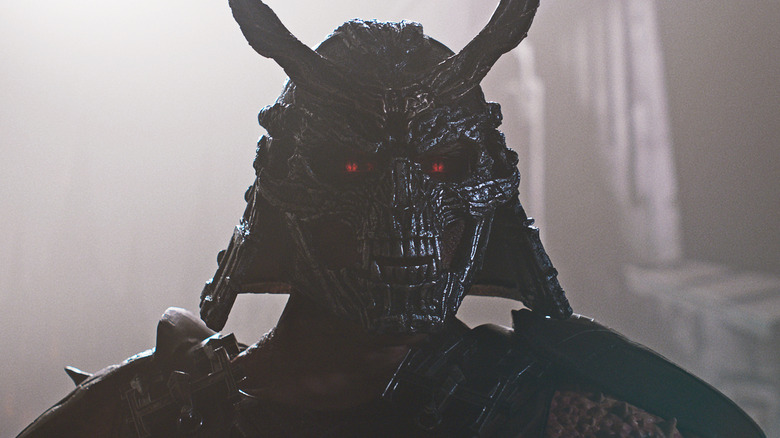
Liu Kang might be on his way to godhood, but future "Mortal Kombat" movies may also have to deal with another, considerably less benevolent deity. "Mortal Kombat 2" doesn't make a huge deal of it, but the film very much plants the seeds of bringing in Shinnok, the Elder God of Death and the lord of the Netherrealm, as a future antagonist.
Shinnok is a major presence in "Mortal Kombat 2" thanks to the Amulet of Shinnok, a mystical artifact that grants its user immortality when properly charged. By and large, the amulet is to Shinnok what the One Ring is to Sauron in the "Lord of the Rings" franchise, and the Outworld forces use it to grant Shao Kahn immortality. As it happens, the amulet is destroyed in the movie's endgame, which Shinnok likely isn't very happy to find out.
Introducing Shinnok in a roundabout way at this stage makes sense. In the video game series, he's the central antagonist after Shao Kahn is defeated, so it might very well be his turn to take over in "Mortal Kombat 3" — unless the franchise decides to focus on a "Mortal Kombat: Deadly Alliance" storyline thanks to Quan Chi and Shang Tsung (Chin Han) both surviving the events of the movie.
The film downplays the name of its most powerful revenant
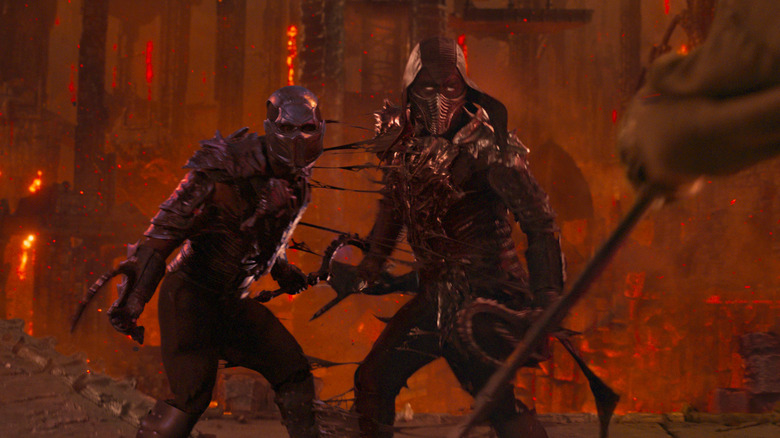
Joe Taslim's Bi-Han — formerly known as Sub-Zero — Makes his grand return in "Mortal Kombat 2" as one of the revenant fighters resurrected by Quan Chi. Since he was already extremely powerful in the previous movie, he has naturally received a massive power-up for the sequel. Instead of ice powers, he now rules shadows, and is able to teleport using them. For offense, he not only retains his own fighting ability, but can also summon a shadow clone that's strong enough to fight Earthrealm warriors on even terms — and then some.
There is one thing "Mortal Kombat 2" holds out on Bi-Han, though: The name of the character he's actually become. As any "Mortal Kombat" fan can plainly see, Bi-Han has become Noob Saibot, the legendary shadow ninja who started out as a secret character in the games but eventually became playable. Yet the movie severely downplays this fact, referring to the character as Bi-Han. This is actually pretty understandable when you consider the origins of the name Noob Saibot, which is just the last names of "Mortal Kombat" creators Ed Boon and John Tobias spelled backwards.
There's also a decent in-universe reason for the character to avoid the name. Scorpion doesn't much care for his arch enemy's code name, referring to him as Bi-Han as usual. Meanwhile, Johnny Cage and Jade aren't exactly on first name terms with Bi-Han and have little time to exchange pleasantries. As for Kano, he clearly isn't aware of any possible in-universe Noob Saibot monikers — otherwise, the chronic wisecracker would likely have a field day with it.