

5 TV Shows From 1980 That Are Better Than You Remember
The more time that passes, the less pop culture remembers anything that is neither especially great nor notoriously awful. There is an entire spectrum of media between those two extremes that gets lost in nostalgia discourse, as there is a tendency to summarize previous eras by focusing only on the best and worst representations of the time. As such, a lot of older TV shows that were really good — yet not truly great — can be wrongfully tossed in with the forgettable stuff. Another side effect of this phenomenon is that there are shows that aren't forgotten at all, but whose quality is miscategorized because they're lumped in with the stuff that is actually bad.
This seems to affect television particularly hard. Up until recently, with the advent of streaming, old TV shows weren't recirculated for decades after they ended, the way movies were. That is, unless those shows happened to be among the top tier of series deemed worthy of indefinite rerun status — "Cheers," "M*A*S*H," "The Andy Griffith Show," et al. As hard as this is to accept for people of a certain age, 1980 is now over 45 years ago. This puts it right in that sweet spot for shows debuting that year to either be forgotten entirely or simply misremembered because they weren't the absolute best nor the utterly worst TV shows of all time.
Fridays
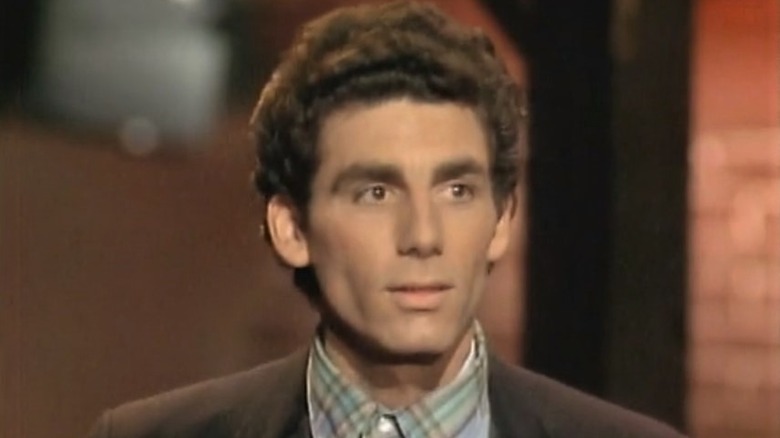
Nobody quite knew what to expect from "Saturday Night Live" when it first debuted in 1975. But it only took a few seasons for it to become a full-blown phenomenon. In fact, Season 3 through Season 6 of "SNL" remain the top four highest-rated seasons in the show's entire history, which means that the show reached the height of its popularity between the late '70s and early '80s. So in retrospect, maybe 1980 wasn't the best year for ABC to release its own competing day of the week-specific live sketch comedy show — but that's exactly what the network did when it debuted "Fridays" that year.
To be fair, the talent both in front of and behind the camera of "Fridays" was undeniably impressive. The cast included Larry David and Michael Richards, and its creative department was made up of writers and directors of some of the best sketch comedy shows ever: "Mr. Show," "MADtv," and "In Living Color," not to mention "Seinfeld." The show was well-received at the time, with a New York Times article from 1981 proclaiming that "Fridays" was on its way to usurping the sketch comedy crown from "SNL."
Of course, that's not what happened. Within three seasons, "Fridays" was gone — thanks in no small part to ABC bumping it to a later, less successful time slot in favor of "Nightline." As "SNL" would go on to literally dozens of additional seasons, "Friday" quickly fell into obscurity as that forgotten "SNL" rip-off. But it doesn't deserve that dismissive distinction, and was a great show with great talent that very well could have supplanted "SNL" if ABC had actually given it the chance.
Beyond Westworld
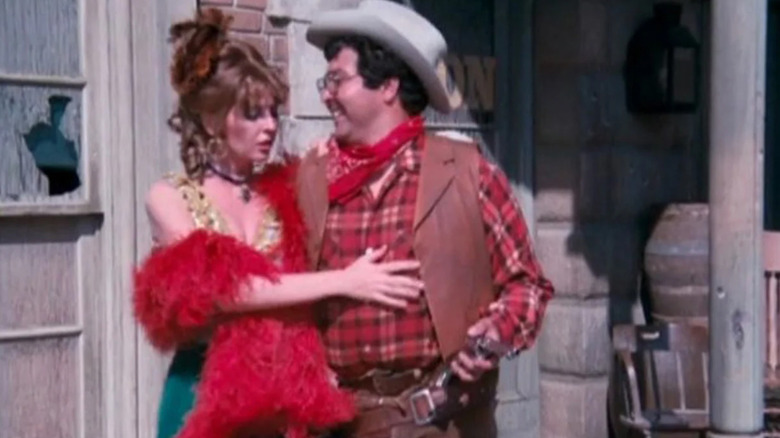
Everyone knows about the "Westworld" TV series that ran on HBO between 2016 and 2022. Slightly fewer people are aware that "Westworld" was originally a 1973 movie that was written and directed by Michael Crichton himself. And the world got together and collectively agreed to pretend that "Futureworld," the 1976 film sequel to "Westworld," never even happened. Among all that, there was a 1980 TV series called "Beyond Westworld," which also ignored "Futureworld" and instead served as a legitimately good follow-up to the events of "Westworld." Sadly, it doesn't get the credit it deserves, and is far too often dismissed as yet another forgettable arm of the overall rather shaky "Westworld" franchise.
One of the reasons "Beyond Westworld" probably got off on the wrong foot with people is that the pilot episode saw the titular futuristic amusement park destroyed. You want a show about Westworld to be, well, about Westworld. Once people realized it wasn't going to be that, the few who had tuned in didn't stick around for long. Ratings were so abysmal, especially in relation to how pricey the show was, that CBS aired a mere three of the already produced five episodes before pulling the plug on the whole thing.
But looking back, it was an ambitious concept to take the rogue robot hunting action into the real world. The episodic approach allowed for some really interesting stories and settings, and it resulted in five fun hour-long sci-fi adventures (the two unaired episodes were later released on DVD) that even scored two Primetime Emmy nominations.
Tenspeed and Brown Shoe
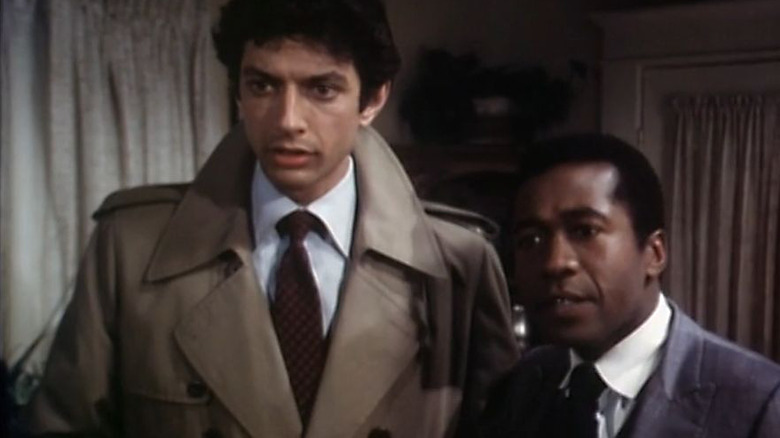
If you remember "Tenspeed and Brown Shoe" at all, it's likely only a faint memory of a quirky show with a weird title starring two leads you weren't yet familiar with. Indeed, it was an early acting role for Jeff Goldblum, and a rare non-stage role for musical theater vet Ben Vereen. Both are undeniably talented performers who proved they have fantastic chemistry together, but not the type to sell a show with a bizarre title, which is why it only lasted for 14 episodes.
"Tenspeed and Brown Shoe" is admittedly a similar type of show to a lot of other shows that were out around the same time: mismatched leads forced to work together in spite of their differences, coming together to do some form of investigative and/or law enforcement work that was equal parts serious and funny. Yeah, there were quite a few of that specific type of show in the '70s and '80s. And a lot of those shows are products of their era and are incredibly difficult to revisit — that is, if you even have the chance to revisit them. Most of these shows barely run on TV anymore and aren't prominent on any of the major streaming services.
But "Teenspeed and Brown Shoe" might be the best of that subgenre, even if it isn't as well-known. Naturally, a lot of that has to do with Goldblum in what is now unfortunately one of his most forgotten roles. If you happen to come across the show streaming, definitely check it out. You will be pleasantly surprised, we promise.
Shōgun
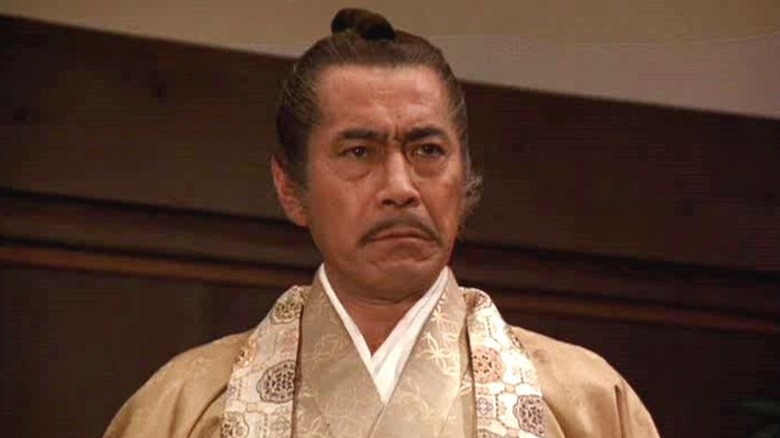
When James Clavell's acclaimed 1975 novel "Shōgun" was adapted into a 2024 miniseries for FX and Hulu, it came with a stellar 99% rating on Rotten Tomatoes, with a critical consensus that specifically calls it better than the 1980 miniseries. It was presumed that there was no reason to bother with the 1980 version anymore. Surely a 2024 prestige cable and streaming show would have the budget to outdo a 1980 network television miniseries in basically every way.
Well, to quote ourselves, Hulu's "Shōgun" is great, but the 1980 miniseries changed TV forever. Is the 2024 version better? Most definitely. It brings Clavell's tale of a Japanese warlord and a British sailor in the 17th century — and the way their chance meeting affects their respective lives — to the screen in all the breathtaking scope it deserves. The fact that it won a record-breaking 18 Primetime Emmys only served to solidify its superiority not only over the 1980 version but over most other shows, period.
That being said, 1980's "Shōgun" won three Primetime Emmys of its own. A few short of 18, sure, but a three-time Emmy winner is nothing to scoff at. It also scores points over the 2024 version by being filmed entirely in Japan — rather than Canada — and having the legendary Toshiro Mifune playing Lord Toranaga. Not to mention narration by Orson Welles. For these reasons and more, 1980's "Shōgun" doesn't deserve to be completely supplanted by 2024's "Shōgun." It might be slightly inferior overall, but it's not nearly as inferior as you might think.
Magnum, P.I.
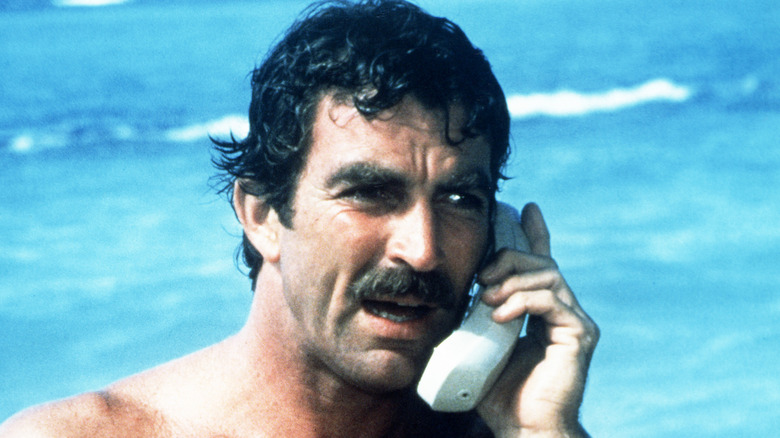
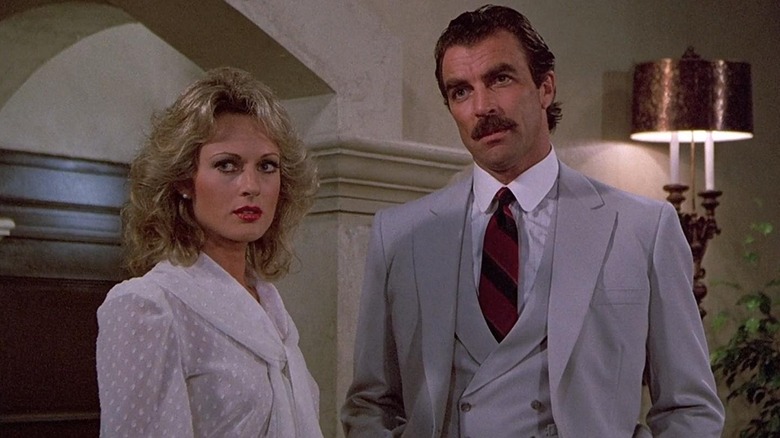
The 1980s quickly became the decade of the cheeseball action shows that were fun enough in their day but became horribly dated and borderline unwatchable not long after the calendar rolled into the '90s. "Knight Rider," "The A-Team," "Airwolf," "MacGyver," "Spenser: For Hire," "The Greatest American Hero," the list goes on and on. Oftentimes, "Magnum, P.I." gets lumped into that class of corny actioners that served no purpose after they ended, other than to be a punchline. The fact that most clips and memes of "Magnum" these days focus on star Tom Selleck smirking or giving a goofy thumbs up in one of his gaudy floral shirts certainly doesn't help.
However, "Magnum, P.I." is actually a much better — and much less silly — series than its pop culture legacy would have you believe. For starters, Thomas Magnum (Selleck) is a more serious character than people remember. He could be a ladies' man, and was often quick with a joke or charming one-liner, but he was also portrayed as a Vietnam veteran who sometimes struggled with PTSD and other such issues. He had serious character flaws, and the show didn't shy away from them. In fact, "Magnum, P.I." got a 2018 reboot that long-time fans couldn't stand, which got criticized for downplaying the character being a military veteran and treating it as little more than a bullet point in his backstory.
The original "Magnum" also didn't go completely overboard on trying to be hip and stylish — cough, cough "Miami Vice" — which allowed it to age better than many of its crime drama peers. It might find itself in rerun packages with some of those aforementioned shows, but "Magnum" was better than them then, and it's certainly better than them now.