

All 7 Seasons Of Star Trek: Voyager, Ranked
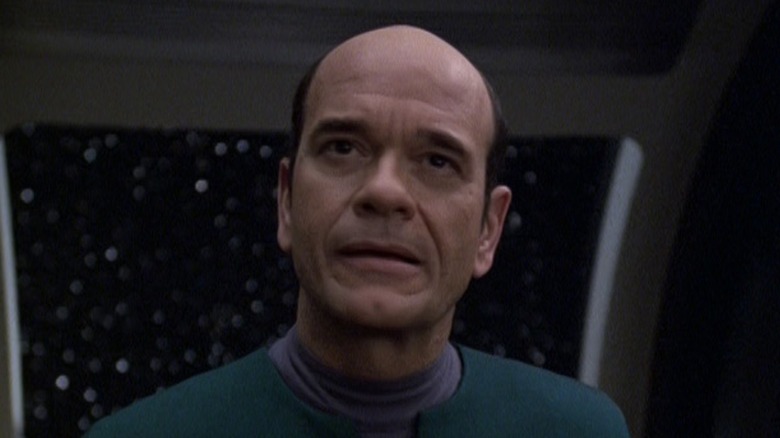
Like most Star Trek series, "Star Trek: Voyager" presented fans with plenty of engaging, quality storytelling and characters. But in "Voyager," Trek writers created a tale with more opportunities for darker, edgier narratives. Thrust nearly a lifetime from home in the Delta Quadrant, the combined Starfleet and Maquis crews of Star Trek have no choice but to work together and make the most of their situation, one that could find them all dining on Neelix's (Ethan Phillips) struggle cuisine for the next 70 or so years. They find themselves so far outside the boundaries of the Alpha Quadrant that mandates like the Prime Directive start to look a little less carved in stone, and that makes for some pretty compelling storytelling.
But, as is the case with any seven-season series, some "Voyager" episodes stand out as the best, while a handful range from obvious filler to borderline camp. While Trek fans tend to take the good with the bad, it's nice to know what to expect on your next "Voyager" binge. To find out which seasons totally nailed it and which seasons were more of a completionist's slog, we consulted IMDb and Rotten Tomatoes and ranked each season based on the highest to lowest critic and audience scores. Hang onto your "even better than coffee substitute" as we rank every "Voyager" season from practically perfect to nearly unwatchable.
1. Season 4
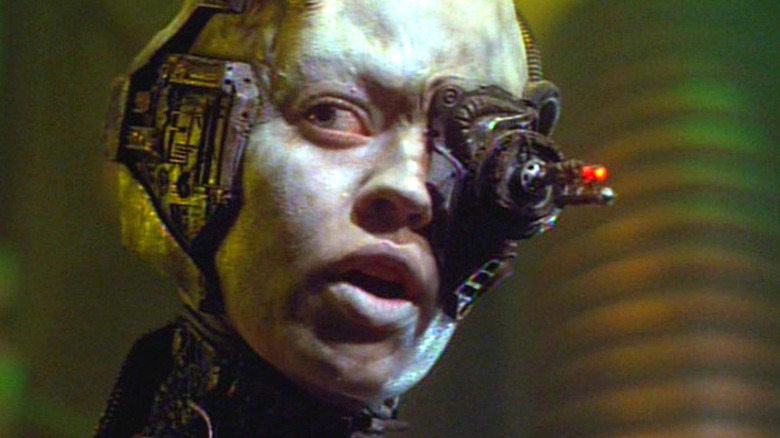
Even with the whole Delta Quadrant storyline, interest in "Voyager" was already starting to wane by Season 3. Writers had all but abandoned any serious emphasis on the crew's limited resources, in part because keeping track of things like how many torpedoes were left proved to be a messy, continuity-error-laden business with so many writers working on "Voyager." As part of their effort to beef up audience interest and ratings, "Voyager" showrunners brought in a new character ahead of Season 4 in Seven of Nine (Jeri Ryan). The former Borg became instantly popular and would go on to become one of the franchise's most beloved and iconic characters, despite only showing up for the series' final three seasons.
Season 4 started off strong with its Nielsen rating, drawing fans back in with its re-focus on the moral gray area content that represents "Voyager" at its best, while also generating interest from online communities eager to discuss the ethical implications of Captain Janeway's (Kate Mulgrew) handling of the tenuous Borg alliance against Species 8472. The season is full of strong storylines with lots of high-concept sci-fi anchored in the series' central moral complexity, with episodes like the two-parter "Year of Hell," "Message in a Bottle," and "The Omega Directive" serving as standout moments. Fans also loved the introduction of the Hirogen and the prototypical Prometheus-class ship central to "Message in a Bottle." The season sits at a 100% Tomatometer rating from critics and an 85% Popcornmeter audience score on Rotten Tomatoes with consistently high episode ratings on IMDb (many above 8 out of 10).
2. Season 3
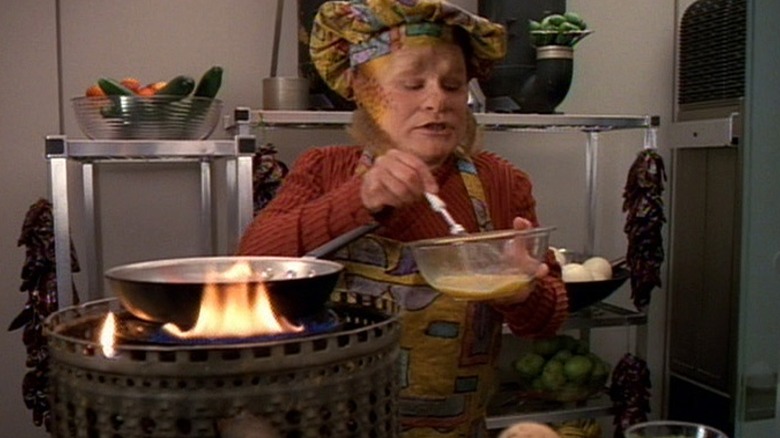
Even if "Voyager" Season 3 has a reputation among Trek fans for presenting some of the most inconsistent writing of the series, it still ranks high on Rotten Tomatoes with a 100% Tomatometer and a 79% Popcornmeter score. And while the season's IMDb ratings aren't the highest, most of the episodes range from high 6s and up, indicating a pretty consistent "Trek" season. The season offers up plenty of everything fans love to see in "Voyager," like more Tom (Robert Duncan McNeill) and Harry (Garrett Wang) hijinks, Borg with identity crises, and timey-wimey shenanigans.
The time-travel two-parter "Future's End" finds the Voyager crew traveling to 1990s Los Angeles, where they get to hang out with Ed Begley Jr. and Sarah Silverman. "The Q and the Grey" brings a visit from our old friend Q (John de Lancie), who is interested in making a half-Q baby with Captain Janeway amid a Q civil war cosplaying as the American Civil War (since Qs will take any old excuse to LARP). The Janeway-Q banter alone is worth the price of admission on this episode. And in "Real Life," the Doctor (Robert Picardo) creates a simulated family in a story that truly pays off decades later in the Doctor-centric "Starfleet Academy" episode "The Life of the Stars," one of the most emotional stories in the Star Trek canon. In "Worst Case Scenario," we get one of the most entertaining storylines of the series when Tuvok's Maquis uprising simulation becomes an accidental hit holonovel. Overall, Season 3 is a solid season full of stories that, while not earth-shatteringly good, make for solid "Star Trek" fare.
3. Season 1
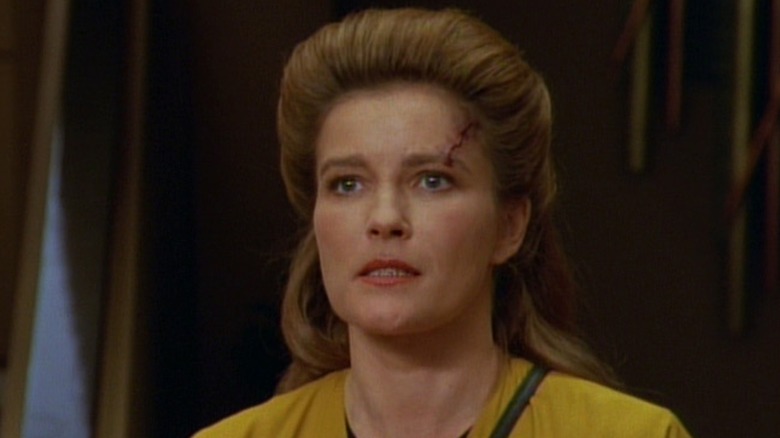
Season 1 sets up the premise and central conflicts of "Voyager," and that alone makes for promising television. Coming in with an 86% Tomatometer and 76% Popcornmeter on Rotten Tomatoes, not to mention a fairly steady average of mostly 7s on IMDb, the season marked a strong start to the series many "Star Trek" fans consider a favorite. The introduction of Captain Janeway, the perfect tough-as-nails captain to end up lost in the Delta Quadrant, along with her cool new ship and capable crew, is a refreshing addition to the "Star Trek" canon. And once you get past the disappointment of the Kazon, the-one dimensional villains they meet in the Delta Quadrant, and the suspiciously fast way the Maquis blend into the Voyager crew post-crisis, Season 1 manages to pack in some pretty good sci-fi.
After the slow-burn political dramas of "Deep Space Nine," "Voyager" brings back the "star trekking" to Star Trek through a story that, by its very nature, is incapable of slowing down. Episodes like "The Cloud" and "Eye of the Needle" drive home the drama of the situation by emphasizing the Voyager's resource shortages and the need to contact home. The season also offers plenty of satisfying episodic sci-fi tales like the standout "Faces," an updated take on the classic "Star Trek" episode "The Enemy Within." While some other Star Trek series tend to start off a little shaky in their first season, "Voyager" makes a strong start right out of the gate in one of the better-ranked first seasons in all of Star Trek.
4. Season 7
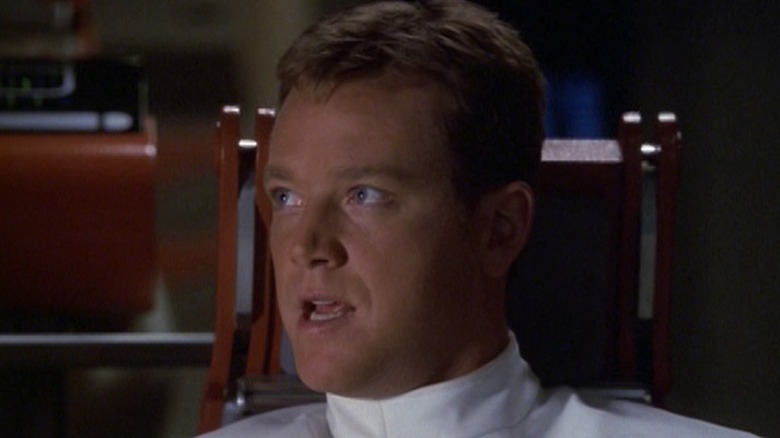
The Rotten Tomatoes ratings take a dramatic dip for "Voyager" Season 7, coming in at a 64% Tomatometer score and 84% on the Popcornmeter. But if you're going by this season's IMDb ratings, most episodes rank above 7, with many ranging in the high 7.6-plus range — so forget the critics and listen to the fans on this one. While it's not the powerful, gravitas-laden finish we might have dreamed of for the Voyager's homecoming, the season does provide a decent finish for the most part, unlike the controversial ending of "Star Trek: Enterprise."
The two-part episode "Workforce," which finds the crew abducted and brainwashed into a workforce planet that can't quite erase their connections, is classic "Voyager." "Shattered" presents more high-concept science fiction as it splits the Voyager into different moments in time. There's some cool storytelling revolving around photonic beings, permanent ensign Harry Kim getting his first real taste of command, lots of Tom and B'Elanna (Roxann Dawson) drama, plenty of Tom in the pilot's seat drama, and the return of the Borg Queen (Alice Krige) from "Star Trek: First Contact" — not to mention plenty of Emergency Medical Hologram-centric storytelling.
5. Season 5
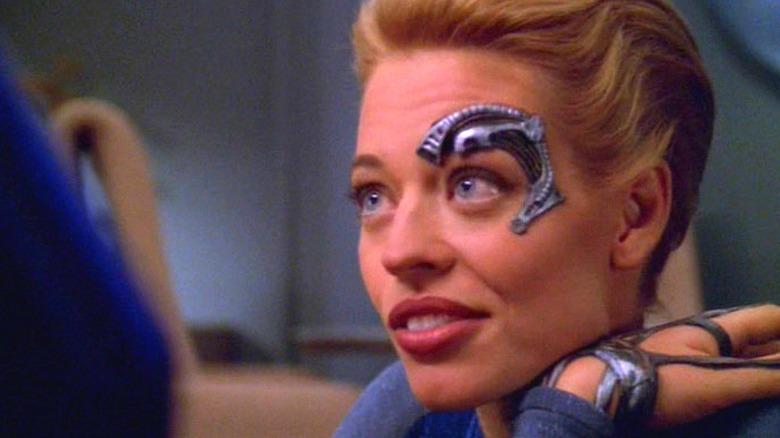
With Seven of Nine fully integrated into the Voyager crew, Season 5 gives us more of the character development and relationship-building that helps make the best "Star Trek" so good as we see Seven building relationships with crew members like the Doctor and Naomi Wildman (Scarlett Pomers). Overall, it's another steady season of "Voyager," garnering an 80% Tomatometer, an 86% Popcornmeter, and decent per-episode ratings on IMDb.
There are a handful of very middling episodes in Season 5, mostly revolving around characters reminiscing about one thing or another. Take "Thirty Days," the episode focused on Tom Paris' 30-day brig incarceration, "The Fight," which finds Chakotay recalling his time at Starfleet Academy, or "11:59," which deals with Janeway's ancestor Shannon O'Donnell — all of which spend far too much time not focusing on putting the Voyager crew to the test with high-stakes science fiction drama.
But Season 5 also has some pretty high high points with episodes like "Counterpoint," which finds Janeway walking the ethical tightrope by smuggling telepaths through a space corridor run by a rigidly anti-telepathic dictatorship. And "Latent Image" presents some of the spookiest, most existentially unsettling science fiction to be found in Star Trek through the Doctor's discovery that his memories appear to have been tampered with.
6. Season 6
Season 6 of "Star Trek: Voyager" is fairly comparable to Season 5, in terms of consistently mid-range storytelling marked by a few high points with an overall ever-so-slightest slump in quality. With only four critical entries on Rotten Tomatoes, all we have to go on is the 85% Popcornmeter score, which seems fairly skewed by diehard fans praising the series overall. But one audience member review from user James B better reflects the scores we see on IMDb for this season with the pithy, "Save a handful of episodes, 'Voyager's' sixth series leaves viewers feeling as though they were 35,000 light years away from anything remotely interesting."
Standout episodes include "Tinker Tenor Doctor Spy," an amusing EMH-focused entry that exploits Robert Picardo's comedic skill as an alien race "spies" on Voyager via his programming — except they're actually spying on the Doctor's daydream program. There's also "Pathfinder," the episode that brings back "The Next Generation" favorite Reginald Barclay (Dwight Schultz) through his efforts to communicate with Voyager, and "Blink of an Eye," which finds Voyager egregiously violating the Prime Directive by accident thanks to the magic of time dilation. There are also a handful of passable episodes like the charming "Virtuoso" and "Tsunkatse," the cage match episode featuring The Rock.
And then there are the stinkers. Not one but two episodes — "Fair Haven" and "Spirit Folk" — revolve around the turn-of-the-20th-century Irish village holodeck program created by Tom. And in "Alice," Tom becomes mutually (and toxically) obsessed with a stalkerish AI-powered alien hot rod space racer, much to the chagrin of B'Elanna. It's not great, but even at its worst, "Voyager" is still entertaining.
7. Season 2
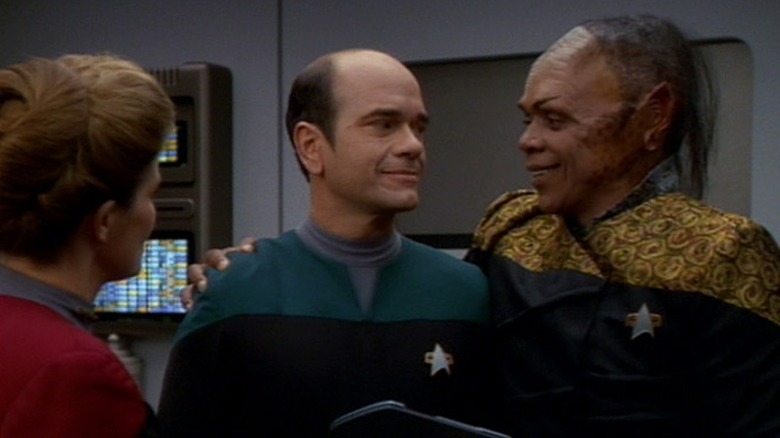
Coming in last on the list is the disappointingly meh second season of "Voyager." Despite its perhaps overly generous 72% Popcornmeter score, the series has a grim 33% on the Tomatometer on Rotten Tomatoes, and many of the season's IMDb ratings for episodes fall below the 7 mark. For perspective, some of Season 2's better episodes revolve around the Kazon and a cryogenically frozen Amelia Earhart.
After a season of struggling to decide how much they care to focus on the Maquis and Starfleet drama or deal with the resource shortages Voyager would inevitably be struggling with, the writers appear to have largely given up on both fronts. The novelty of the concept had worn off at this point, but the series still hadn't found its footing, often feeling a bit directionless. While the characters finally start to come into their own development-wise in Season 2, Neelix is still nigh intolerable in his relationship to Kes (Jennifer Lien). And while his character eventually becomes more likable and nuanced, it's pretty grating and one-dimensional at this point in the series, which can come on unbearably strong at times.
"Voyager" Season 2 is also responsible for some of the notoriously worst episodes in all of Star Trek. Take "Threshold," the episode where Tom Paris' breaking of the transwarp barrier somehow leads to his becoming a giant salamander. Worse, he has giant salamander babies with Janeway that the Voyager then just leaves on a random planet. And because that procreation nightmare isn't bad enough, there's "Elogium," the episode that finds Kes dealing with the Ocampa version of Pon Farr — and it's not pretty.