

90s Sci-Fi Movies That Changed The Genre
The 1990s were a great time for sci-fi fans. There was an explosion of genre filmmaking, and even some of the worst movies of the decade are well-remembered today. Ask your nearest science fiction fan to tell you about "Hackers" or "Johnny Mnemonic" and watch their faces light up.
Whether it's the stinkers we look back on through rose colored glasses or sci-fi classics that haven't actually aged well, the point is that the '90s were filled with all kinds of futuristic movies. The genre was going through serious changes, experimenting with different tones, storytelling styles, and even filmmaking techniques. Some filmmakers were envisioning a dark future through animation while others were inventing new camera techniques to create mind-blowing sci-fi special effects that still look great today. Each decade has transformed the genre in its own way, but we've been feeling the effects of how these '90s movies changed the science fiction genre ever since.
Stargate
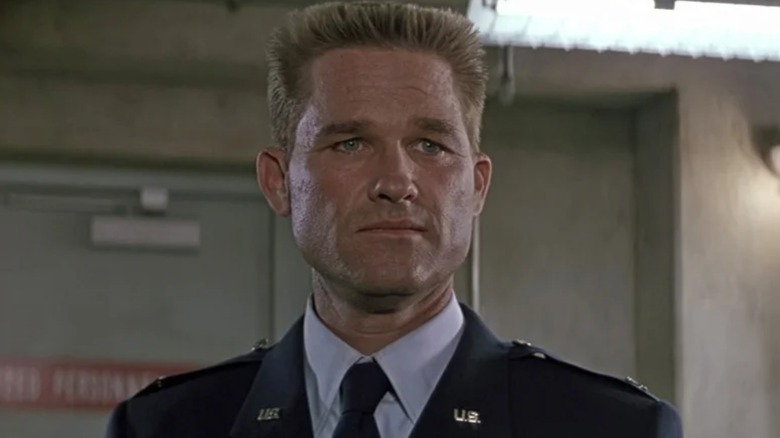
Directed by Roland Emmerich, 1994's "Stargate" has been an influential force in the sci-fi genre for more than 30 years. The movie begins in Egypt, several decades previous, where an archaeological dig reveals something strange. Years later, Daniel Jackson (James Spader), who blends his degrees in Egyptology and linguistics to fresh and controversial effect, is recruited to finally decipher the artifact, under the cynical eye of Colonel Jack O'Neil (Kurt Russell).
The work reveals that the artifact is an ancient gate — specifically an alien stargate, as the title relays. Once activated, the gate leads to a distant world where an ancient Egyptian-styled society is ruled over by a godlike alien being called Ra (Jaye Davidson). Daniel and Jack have to work together to topple Ra's rule if they want to return home safely, and to prevent Ra's army from coming back to Earth through the Stargate.
Emmerich co-wrote the movie with Dean Devlin, and the duo planned for it to be the start of a sci-fi trilogy. Despite more than tripling its budget at the global box office, "Stargate" didn't get a sequel, and Emmerich's and Devlin's vision went up in smoke. That actually turned out to be a great thing for sci-fi fans. Emmerich rode the movie's success to his next project, the iconic "Independence Day," which might have never existed if he'd started work on "Stargate 2."
Meanwhile, "Stargate" got spun off into multiple SyFy Channel original series. The first, "Stargate: SG-1" is one of the best sci-fi TV shows ever made. Others like "Stargate: Atlantis" and "Stargate Universe" kept the franchise alive for decades. In 2025, Amazon also greenlit a new series that will surely keep the legacy going.
Ghost in the Shell
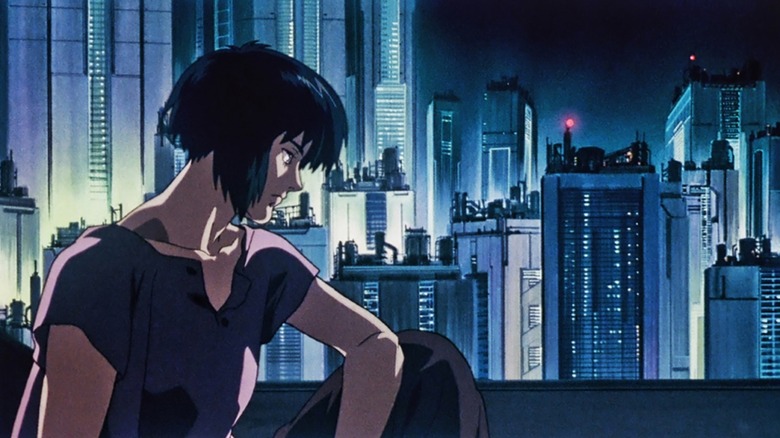
In the 1980s, a new subgenre, kicked off by books like William Gibson's "Neuromancer" and movies like "Blade Runner," imagined a high-tech, low-life future where godlike technology didn't necessarily make the world a better place. Masamune Shirow began writing the cyberpunk manga "Ghost in the Shell" in 1989, and six years later an animated adaptation became one of the most impactful sci-fi movies of all time.
If you need quick proof of how important 1995's "Ghost in the Shell" is to the sci-fi genre, look no further than the film's cinematic legacy. While the manga got sequels of its own, the movie's sequel "Ghost in the Shell 2: Innocence" tells an original story and debuted in 2004. The movie also inspired two separate anime series, which in turn got their own feature-length follow-ups. Then there's the poorly received 2017 live action remake starring Scarlett Johansson.
All those projects demonstrate how enduring the popularity of "Ghost in the Shell" has been, but you can also see reflections of the movie's visual style in countless other places. The ships and weaponry of "Cowboy Bepop," a beloved animated sci-fi series, hold similarities to "Ghost in the Shell" tech. In the live action world, the leather and gunmetal aesthetic of "The Matrix" feels perfectly at home alongside the gritty high-tech world in the 1995 animated movie. "Ghost in the Shell" is a cyberpunk behemoth, and modern sci-fi wouldn't look the same without it.
Contact
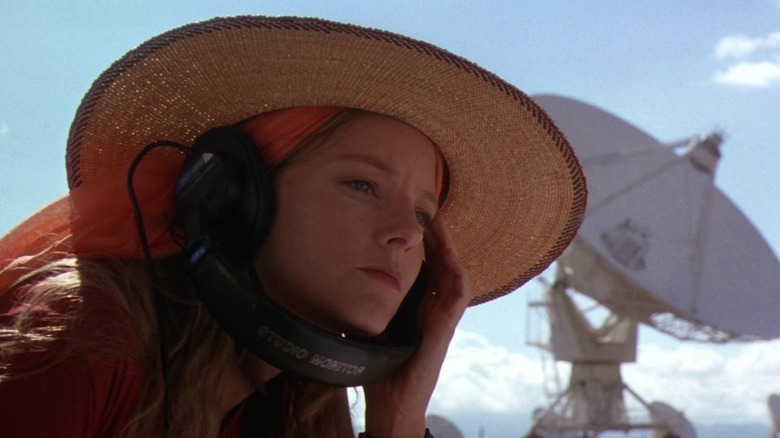
Just a handful of years after wrapping up the "Back to the Future" trilogy, director Robert Zemeckis found himself at the helm of another massive sci-fi undertaking. 1997's "Contact" is an adaptation of a novel from astronomer Carl Sagan, and decades later it's still one of the best alien first contact stories that's ever graced the big screen. Starring Jodie Foster as deep space researcher Dr. Ellie Arroway and Matthew McConaughey as Christian philosopher Palmer Joss, the movie is deeply concerned with how humans would deal with alien contact on a spiritual level.
"Contact" has left a lasting mark on not just the sci-fi genre but also film at large. When the movie debuted, it was embroiled in controversy over its use of actual footage of President Bill Clinton and its use of real news anchors as actors in certain scenes. "Contact" wasn't the first movie to use those techniques, but it paved the way for today's world, where no one blinks at seeing a CNN anchor in a Marvel movie.
In the sci-fi world, "Contact" set a high bar for alien encounter stories that arguably still hasn't been surpassed. You can feel echoes of those spiritual concerns from Zemeckis' film in more recent alien movies like "Arrival" and "Interstellar," too. The same year that "Independence Day" was demonstrating how aliens could be fodder for epic action sequences, "Contact" showed that philosophical concerns about aliens can be just as grand.
Galaxy Quest
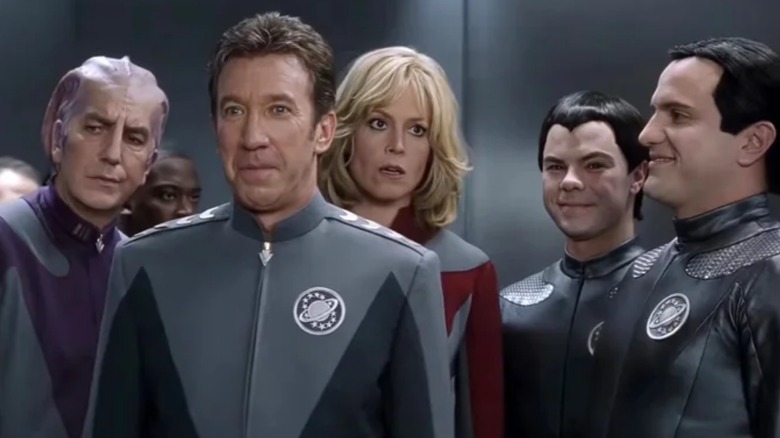
What's the best "Star Trek" movie of all time? A room full of fans would all give you different answers, but some percentage of them would undoubtedly say "Galaxy Quest." Released in 1999, the movie takes an affectionately satirical look at "Star Trek" and its fandom. The main characters are themselves actors in a spacefaring sci-fi show with a captain (Tim Allen), a sexy comms officer (Sigourney Weaver), and a stoic alien crewmember (Alan Rickman), just like "Star Trek." When an alien race without media literacy comes to the "crew" for help, the cast leaves fan conventions behind for a real space adventure.
"Galaxy Quest" is much more than a satire. The movie is undeniably hilarious, but it's also heartfelt and emotional. "I see comedy as tragedy," director Dean Parisot told The Hollywood Reporter in 2019, adding, "so I looked at the film as a drama that happened to be funny."
The characters aren't one-note jokes but real people struggling with their identities and with their unexpected and larger-than-life adventure. "Galaxy Quest" became a cult classic, and a touchstone for sci-fi fans. A 2019 documentary called "Never Surrender" explores the history of the film and its lasting legacy in the genre, proving the power of affectionate fandom.
The Matrix
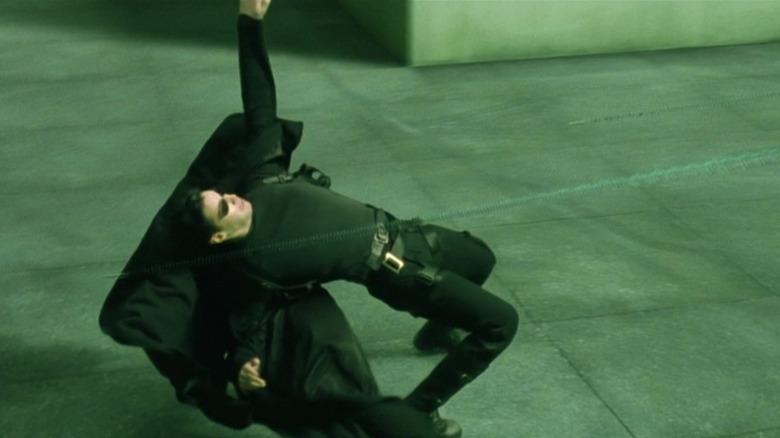
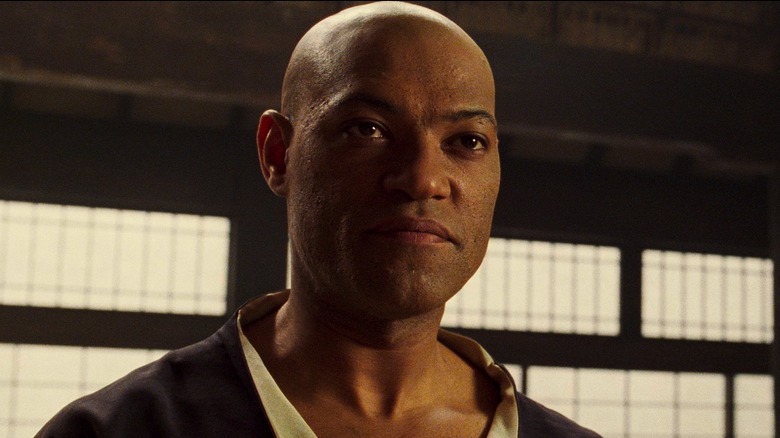
"The Matrix" isn't just one of the best sci-fi movies of the 1990s, it's also one of the best action movies of the decade. The film follows a hacker named Neo (Keanu Reeves) who's obsessed with tracking down a man called Morpheus (Lawrence Fishburne). When they finally meet (in the wake of a terrifying encounter with Hugo Weaving as Agent Smith), Morpheus reveals to Neo that the entire world is a computer simulation called the Matrix, created by intelligent machines that enslaved all of humanity after a cataclysmic war. Neo has to unlock the secrets of the Matrix and secure his own identity in order to fight back against the machines — and save the human race.
Nearly three decades on, "The Matrix" is still one of the greatest examples of cyberpunk fiction ever put to film. It made simulation theory both mainstream and popular while also launching a massive multimedia franchise with sequels, video games, and comic book tie-ins. The storytelling is fantastic, but what really helped "The Matrix" make such an impact was its style. Green filters and plenty of leather give the movie's world a gritty, lived-in feeling, but by inventing new camera techniques, "The Matrix" pulled off legendary fight scenes that have been imitated ad nauseam ever since.