

10 Sitcoms Everyone Needs To Watch At Least Once
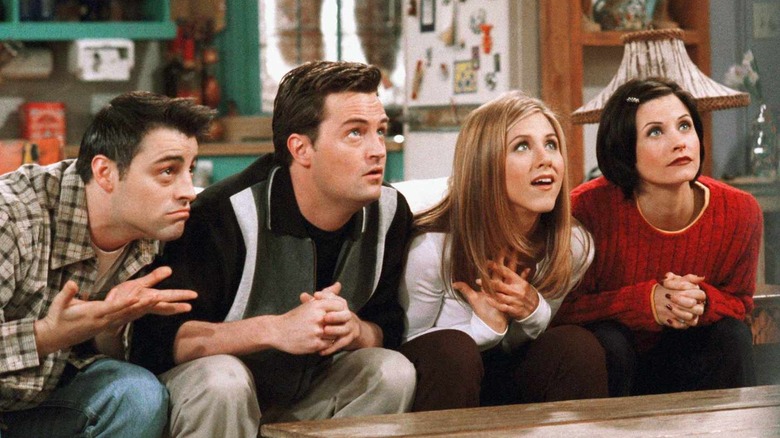
What makes an iconic sitcom? After all, situational comedies don't draw you in with big twists or epic action set pieces week after week. Instead, people want to come back to these shows for the relatable characters going through humorous situations. There may be small arcs, like a will-they-won't-they romance, but sitcoms typically need to revert to the status quo. Despite that, these are the sitcoms that changed the game.
There are many right answers when it comes to determining the best sitcoms of all time, but that's different than figuring out the most essential ones. These are the comedies that any avid TV viewer should have in their back pocket. These are the shows that influenced a generation of sitcoms that followed.
You need to watch all of these sitcoms at least once to have a thorough understanding of the genre's history. You may recognize plenty of tropes, but it's important to recognize that, more often than not, these are the series that created those tropes to begin with. If you've seen these sitcoms, you've more or less seen them all.
I Love Lucy
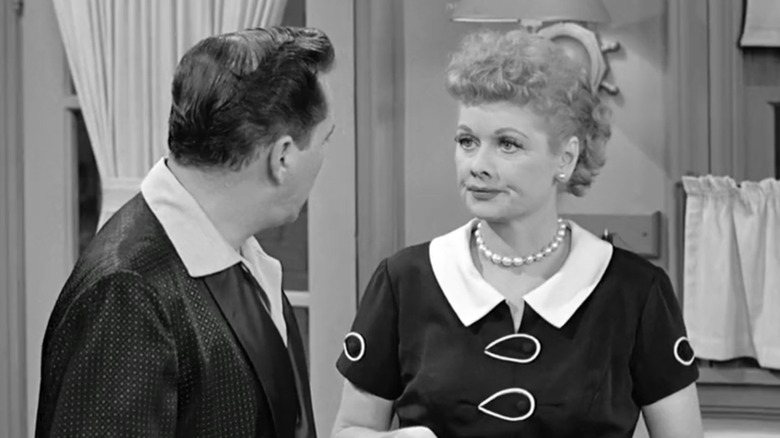
Sitcoms had their origins in old radio shows before making the move to a new medium called television. The sitcom as we know it has roots in the 1940s with "Mary Kay and Johnny," but it wasn't until "I Love Lucy" captured America's heart that people really started to take notice.
"I Love Lucy" established many classic sitcom tropes that anyone could recognize today. You have zany housewife Lucy (Lucille Ball) who plays against her irritable husband Ricky (Desi Arnaz). Many classic gags still hold up, like Lucy and Ethel (Vivian Vance) — two TV friends who couldn't stand each other in real life – working at a chocolate factory when the conveyor belt starts moving too fast, and hilarity ensues.
Without "I Love Lucy," we also wouldn't have the syndication market as we know it. Think about all of your favorite sitcoms; chances are you were first introduced to them on syndicated networks in the form of reruns before watching them as they premiered for the first time. "I Love Lucy" shot on 35 mm film, as opposed to airing live. This made it a lot easier to show episodes later, so Ball and Arnaz effectively created syndication, allowing audiences to enjoy their favorite episodes over and over again.
M*A*S*H
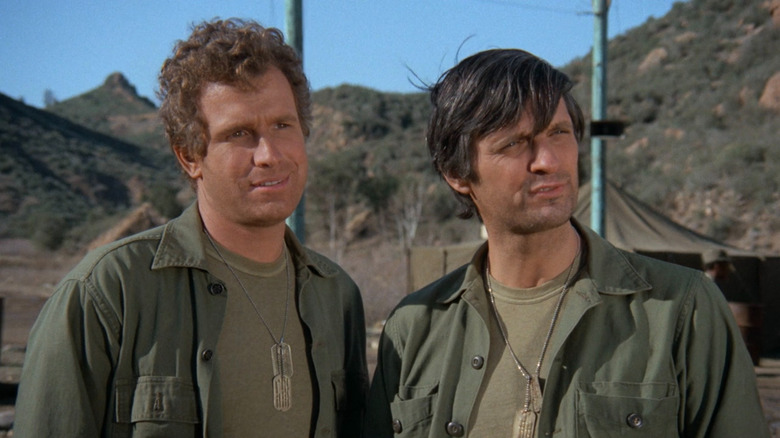
"The Big Bang Theory" was considered a monster hit because it drew in about 20 million viewers per episode at the height of its popularity. But the finale to "M*A*S*H," one of the most satisfying finales in TV history, was watched by 106 million people, which is simply unheard of today. It was a true cultural institution and a sign of the monoculture that existed throughout the 1970s and '80s. Everyone watched the same thing, as opposed to having a household of folks who are all watching different YouTubers from their individual devices.
And it's no wonder the country became enraptured with "M*A*S*H." Set during the Korean War, the show had ridiculous gimmicks but a strict maudlin tone when it needed it. Hawkeye (Alan Alda) would pull pranks and womanize, but when he was in the operating room, he was extremely serious. When you go back and watch the show, you'll notice that there's no laugh track when surgeries are happening. "M*A*S*H" knew when to stop playing games, and you can see that DNA present in shows like "Scrubs," where characters are similarly silly but also treat the reality of working in a hospital with the utmost care.
Even watching it today, "M*A*S*H" proved sitcoms didn't have to be pure escapism. They could offer real-world commentary, and what "M*A*S*H" has to say about the horrors of war still ring true.
All in the Family
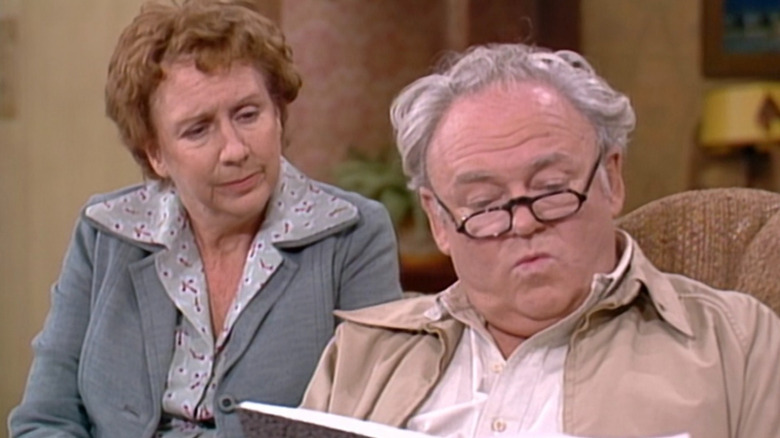
Many articles have been written about how "All in the Family" couldn't be created today. The series featured the bigoted main character Archie Bunker (Carroll O'Connor), who frequently used slurs when talking about topical issues. While many TV shows still tackle important issues, it's rare to see someone like Archie on our televisions these days — unless you're looking at someone like "South Park's" Eric Cartman, who's basically Archie Bunker if he ever chopped up a kid's parents and fed it to him inside a bowl of chili.
However, "All in the Family" could still easily work today because Archie's viewpoints were never met lying down. Archie's son-in-law Michael (Rob Reiner), also known as Meathead, embodied 1960s countercultural ideas and pushed back on pretty much everything Archie said. "All in the Family" encouraged discussions. Yes, the studio audience would often laugh at Archie's bigotry, but ideally, the show would also help people talk to family members they disagreed with and try to reach some greater understanding.
"All in the Family" didn't just change sitcoms based on its subject matter. In fact, there's an entire "All in the Family" universe of spinoffs. The popularity of the show allowed for more representation on TV for Black characters, as is the case with "The Jeffersons" and "Good Times," as well as older women like "Maude."
The Mary Tyler Moore Show
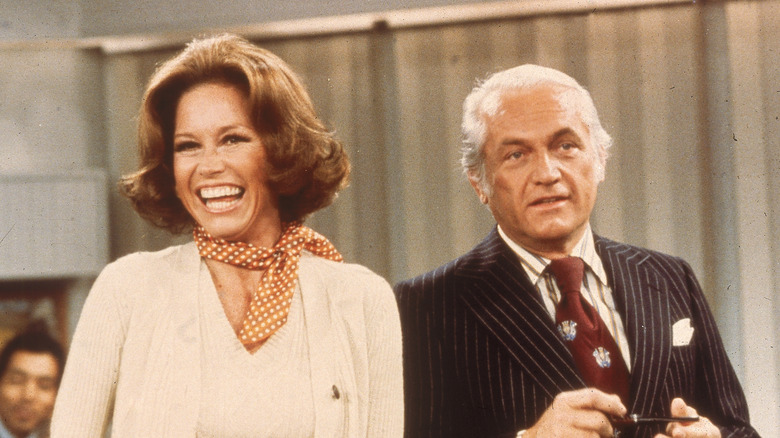
Throughout the first couple of decades of sitcoms, most attention was paid to family dynamics. The focus was on married couples or families, where the parents would impart wisdom upon their children. It's a far cry from many of the sitcoms we see today, where characters often have found families within their workplaces, and you have "The Mary Tyler Moore Show" to thank for that.
The groundbreaking TV series followed single woman Mary Richards (Mary Tyler Moore), who becomes a news show producer. She wasn't married and didn't need to be to have a great life. She found comfort in her eccentric coworkers, and there was a greater emphasis on building out jokes through characters rather than slapstick.
"The Mary Tyler Moore Show" ran for seven seasons and never missed a step. You'd be pressed to find a truly awful episode in the bunch, as the show has ample classics that still hold up. One highlight is Season 6's "Chuckles Bites the Dust," where Mary can't stop laughing at a clown's funeral despite berating her coworkers earlier for making fun of such an event. "The Mary Tyler Moore Show" is the perfect blend of hilarity and heart that would come to define many of James L. Brooks' sitcoms to follow, and it's surprisingly unproblematic for today's sensibilities.
Cheers
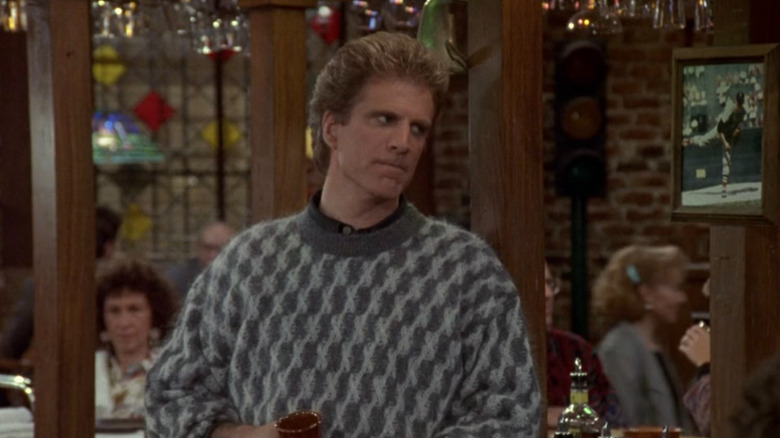
A major appeal of sitcoms is in their inherently comfy nature. You can turn on any episode from any season and immediately pick up on what's happening. Character relationships are quickly established, and you find yourself simply wanting to check in with these folks. "Cheers" had all of that and more within the titular bar, with a kooky cast of regulars who would pop by to dissect their problems.
All the while, they had the comforting ear of bartender Sam Malone (Ted Danson), who'd offer solutions while trying to get with Diane Chambers (Shelley Long). The regulars like Norm (George Wendt) were always great to see, but you'd also have the upsets to the status quo with new faces who perhaps needed some advice. The rotating nature of bars made it easy for "Cheers" to have numerous celebrity cameos you probably completely forgot about.
"Cheers" consists of non-stop, witty one-liners, each of which feels perfectly in-character for whoever's saying it. Norm has a completely different view of the world than Diane, and this can lead to them trading digs with one another. And while they may bicker and argue, there's a genuine camaraderie here.
Friends
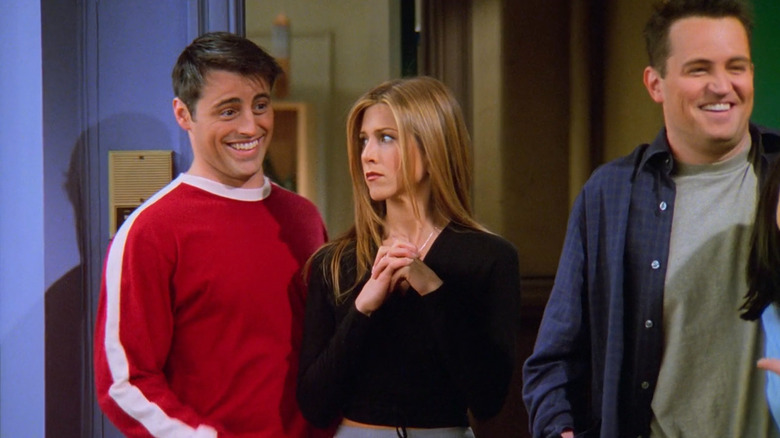
Maybe you haven't seen "Friends" before, but there's a good chance you've at least watched "New Girl" or "How I Met Your Mother" or "The Big Bang Theory." All these shows owe a debt to "Friends," which itself ripped off "Living Single" — a show that, despite airing first, somehow managed to exist in its successor's shadow. But there's no denying the place "Friends" holds within the zeitgeist.
"Friends" is the ultimate example of comfort viewing. You can watch a dozen episodes in a row without even realizing how much time has passed. It helped launch the "hangout" sitcom, where you never feel too tense during the 22-minute runtime. The likes of Rachel (Jennifer Aniston) and Chandler (Matthew Perry) have some minor squabble they're trying to get through, and all is well by the end of the episode.
"Friends" simultaneously feels of its time but also timeless. It never got into heavy subject matter, like having an episode directly addressing the events of 9/11 (though the show did address it in subtler manners). "Friends" is a show everyone needs to watch because it's the platonic ideal of what a "friends hanging out"-type of sitcom needs to be.
The Simpsons
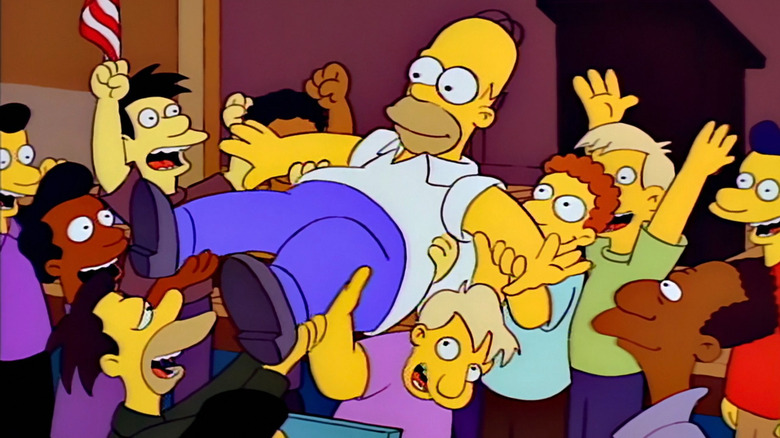
It might seem like a daunting task to say that everyone should watch "The Simpsons," considering the series has over 800 episodes and counting. But if nothing else, everyone needs to at least watch the first eight seasons to see some of the best comedy ever — not just in television, but within any medium. The golden era of "The Simpsons" genuinely produced some of the greatest American art of our time, and it deserves its place among the all-time great sitcoms just for that.
"The Simpsons" has a ton of rewatchable episodes where you can go back and notice new jokes and gags every time, but one thing a lot of people tend to overlook from those early years is how much heart the show had. You'd laugh for 20 minutes straight, and then the show would hit you with an absolute gut-punch of an ending. For instance, in "And Maggie Makes Three," we get the story of Maggie's birth that ends with the iconic image of Homer keeping all of Maggie's photos by his workstation at the power plant, reminding him of why he continues doing such a thankless job (no matter how bad he is at it).
If nothing else, everyone needs to watch "The Simpsons" because so many memes and iconic jokes came from it. From Homer backing into a hedge to Lionel Hutz envisioning a world without lawyers, you can't navigate the internet without running into something originating from "The Simpsons." That's not even getting into the fact the show spawned so many real-world words like "embiggen" and "cromulent."
Seinfeld
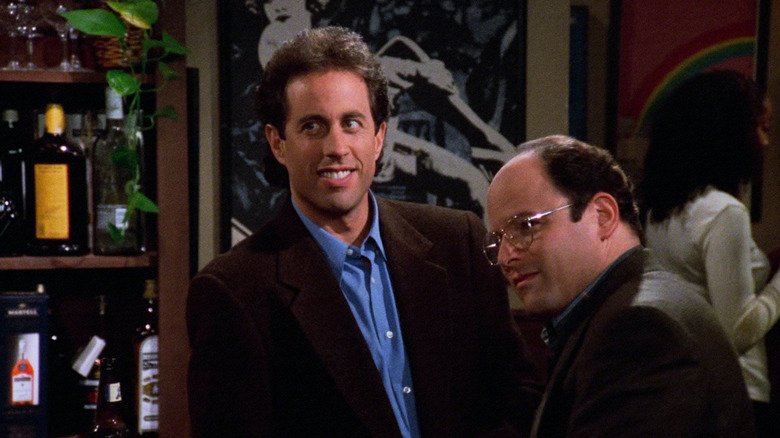
"The Simpsons" changed the dynamics of family-oriented sitcoms by having a dumb father whose kids don't respect him. In that same regard, "Seinfeld" changed the trajectory of friend-centered sitcoms. Up until that point, many shows about found families and friend groups still had likable characters. Protagonists didn't need to be married, but they were at least the kind of people you'd probably want to hang out with in real life. There's no denying that Jerry (Jerry Seinfeld) and his buddies are hilarious, but when you get right down to it, they're pretty awful people.
This usually leads to someone getting their comeuppance by the episode's end. "Seinfeld" also broke the mold by intentionally not focusing on major life lessons. It has been said repeatedly that "Seinfeld" is a show about nothing. A common plotline would involve Jerry seeing a new woman romantically, only to get turned off by some minor quibble. The jokes rest in how absurd it is to get annoyed by something so trivial, but co-creator Larry David would take that idea to its logical extreme in his next sitcom, "Curb Your Enthusiasm."
"Seinfeld" didn't moralize; and, along with "The Simpsons," it spearheaded a more postmodern sitcom that was aware of the tropes the genre utilized. "Seinfeld" and other shows of its ilk expected the audiences to be avid TV watchers who knew what to expect, and subverted expectations at every turn.
The Office
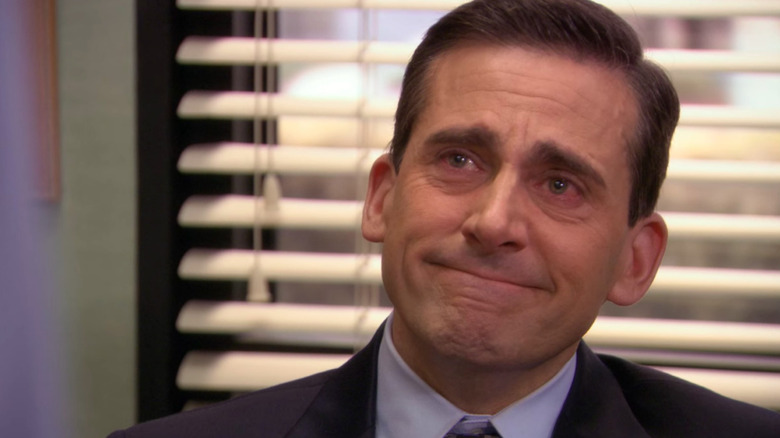
The British version of "The Office" is great, but when you hear that title, we all think of the American adaptation. That's in large part thanks to the cultural presence created by Michael Scott (Steve Carell), the dim-witted boss of Dunder Mifflin who never knew when to shut up. He'd say offensive things, but then the camera would cut to another co-worker looking completely dismayed, letting us all know that what Scott said clearly wasn't acceptable to them, either.
"The Office" perfectly blends the ideal of old-school sitcoms with a crasser style of humor that was more mainstream in the 2000s. There were life lessons and sweet moments, especially when it came to the burgeoning romance between Jim (John Krasinski) and Pam (Jenna Fischer); but the show was also silly for the sake of being silly. It was the best of both worlds, rarely standing on a soapbox but also showing how there could still be beauty in the most mundane of places, allowing two people to find love while selling paper.
That being said, most will associate "The Office" with popularizing cringe comedy. It was far from the first TV show to utilize it, but watching Michael promise kids to pay for their college tuition only to back out at the last second will never not leave a pit in your stomach. It's a style of comedy that isn't everyone's cup of tea, but it makes you relate to the characters even more because you just want them to get out of this situation as quickly as possible.
30 Rock
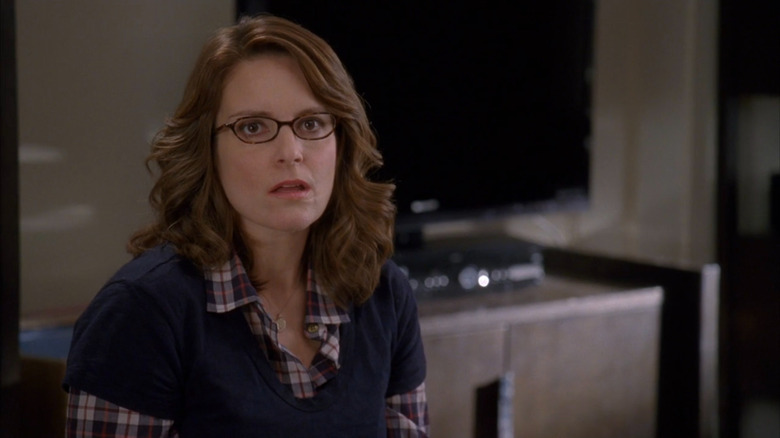
If "The Simpsons" had a true successor for the most tightly written sitcom of all time, it would be "30 Rock." In 2014, The Atlantic's Talib Visram once did the math and found that the Tina Fey-led series was the most joke-dense sitcom of all time, with an average of 7.44 jokes per minute. That means it's pretty tough for anyone to narrow down the funniest "30 Rock" moments of all time.
And it's easy to see how it would be able to cram in so many jokes so often. Every character is basically designed to be a one-liner machine. "30 Rock" never got bogged down in trying to be realistic. Instead, it used absurdity to its advantage to depict the wild entertainment industry. In many ways, "30 Rock" has been incredibly prescient. Any time a bizarre new reality series gets announced, it will inevitably draw comparisons to the in-universe show "M*** Island." When an actual show called "M*** Manor" came to light, it was like witnessing Nostradamus in action.
And since "30 Rock" is all about a TV show's production, there's ample meta commentary to make on the nature of show business, with some of the best product placement jokes we've ever seen. It paved the way for future shows like "Community" to poke fun at typical sitcom stories.