

10 Worst Episodes Of Star Trek: The Original Series
We may receive a commission on purchases made from links.
"Star Trek: The Original Series" is nothing short of a sci-fi trailblazer, but let's face it: "Highly influential" and "great across the board" are two very different things. As Looper has told you before, a ranking of all three "Star Trek: The Original Series" seasons shows that there's a notable difference between them. The same very much applies to individual episodes, which come in every flavor from amazing experiences to embarrassing clunkers.
The best episodes of "Star Trek: The Original Series" can make you think, laugh, and feel. As for the worst episodes, well, let's just say that they can also elicit emotion. Of course, art is subjective, and everyone has their own preferences, so determining precisely which "The Original Series" episodes are the absolute worst can be a tricky thing. For the purposes of this list, we've chosen 10 episodes that are among the worst-rated in the entire series and picked those that are particularly messy or uncomfortable from a contemporary point of view. Now, let's take a look at the low-point episodes of this history-making science fiction series.
Mudd's Women (Season 1, Episode 6)
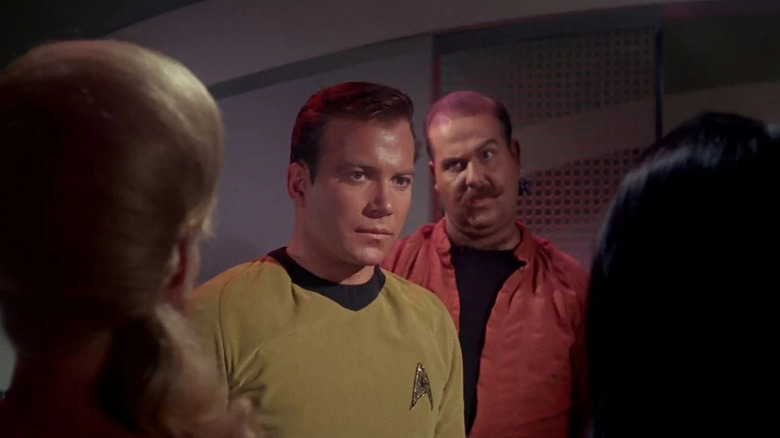
Con man Harry Mudd (Roger C. Carmel) is a recurring presence in the world of "Star Trek," and he's generally up to no good. This is particularly true with his introductory con, which is to transport three women to a place where they have better marriage prospects. The con in question: The girls are actually less attractive than they appear to be. Yeah, really.
In "Mudd's Women," the three women have been taking a glamour-inducing drug that allows them to temporarily appear pretty for their prospective husbands. Of course, James T. Kirk (William Shatner) steps in to teach one of the ladies, Eve McHuron (Karen Steele), that beauty is all about attitude — by switching her Venus drug to a placebo without her knowledge or consent. Apart from Kirk's mansplaining and the Enterprise crew's swooning at the women, Harry Mudd's pimp-coded antics, and the way much of the episode presents the ladies as cargo that only has aesthetic value, make "Mudd's Women" one of the show's worst episodes.
Patterns of Force (Season 2, Episode 21)
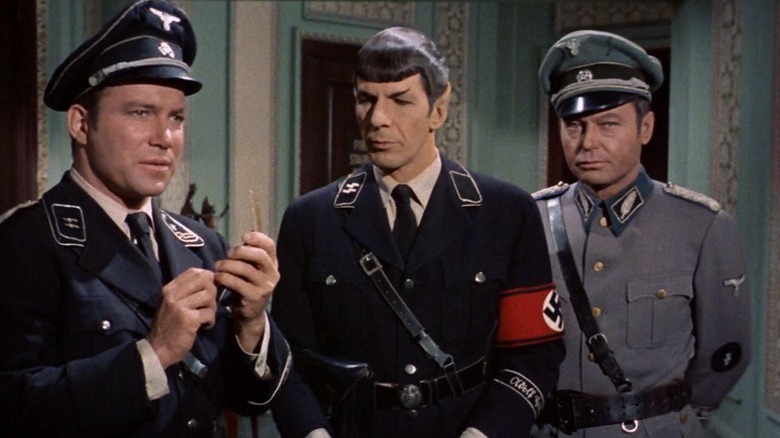
There are many "Star Trek" episodes that would never air today, but only one of them features the main characters in full Nazi regalia, swastikas and all. In "Patterns of Force," the Enterprise crew finds to their horror that the formerly chaotic planet Ekos has been shaped into a Nazi society by former Starfleet Academy history professor John Gill (David Brian), who has made himself the Führer and is unleashing an invasive force against the peaceful planet next door.
Full of "final solution" speech, Nazi Germany imagery, and Captain Kirk in an S.S. officer's uniform, "Patterns of Force" is all about playing with Nazi themes. While there are some twists along the way, the episode ultimately fails to do anything meaningful enough to justify its approach, and even features discussion about the positive sides of Nazi Germany's efficiency. As Looper's sister site /Film has noted, Germany quite understandably banned the "Star Trek" Nazi episode as soon as the country caught wind of it, and kept things that way until the mid-1990s.
Wolf in the Fold (Season 2, Episode 14)
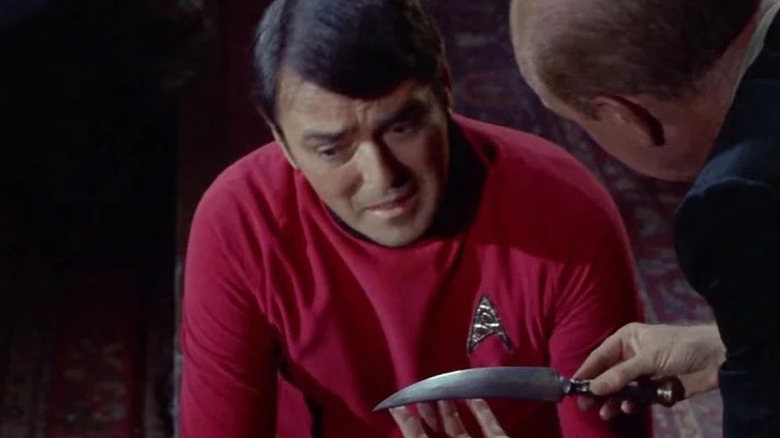
Ah, "Wolf in the Fold" — the "Star Trek: The Original Series" episode that happily tells the viewer that women are worthier targets for a terror-eating entity because they get way more scared than men. The episode had so much potential, too. "Wolf in the Fold" is a horror-themed concept episode that not only introduces a paranormal killing spree, but eventually reveals that the culprit is an evil spirit who was also responsible for the Jack the Ripper murders. The way the early parts of the episode just keep framing poor Montgomery "Scotty" Scott (James Doohan) as the killer is pretty neat, too.
However, the center cannot hold. The aforementioned sexist commentary is jarring, and the occult aspects of the episode pair with classic "Star Trek" atmosphere roughly as well as corn flakes and motor oil. Fortunately, "Star Trek: The Original Series" Season 2 corrected course with the very next episode, the classic "The Trouble With Tribbles." Still, this episode is a clear misfire for the show's finest season.
Elaan of Troyius (Season 3, Episode 13)
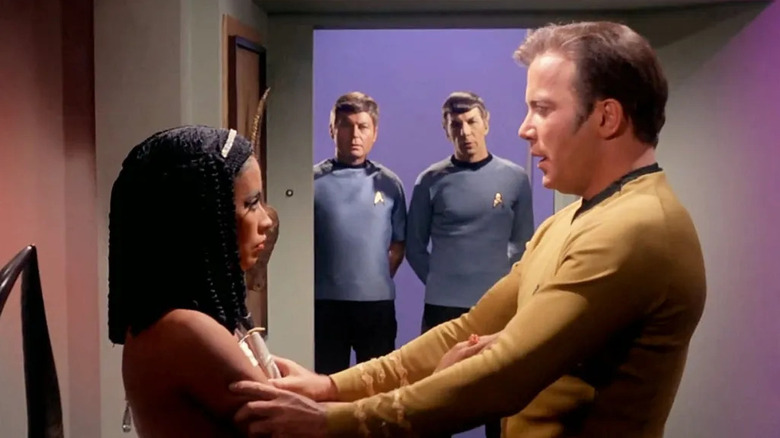
"Star Trek: The Original Series" Season 3 often showed signs of a well that's running dry, and "Elaan of Troyius" is a great example of this noticeable lack of (good) ideas. From the episode title's cringeworthy play on "Helen of Troy" to the fact that the whole plot is effectively just a messy sci-fi version of William Shakespeare's "The Taming of the Shrew," there's little to like here.
The titular Princess Elaan (France Nuyen), who's understandably reluctant to enter a prearranged marriage pact, is one of the episode's biggest issues. Played by an actress with Asian heritage, Elaan is portrayed as a stereotypical Other: a violent, manipulative woman from a different culture who's eventually "tamed" into subservience by Captain Kirk, the show's resident savior figure who, of course, starts a relationship with Elaan the second he can.
Interestingly, "Elaan of Troyius" was specifically intended for female fans. However, no amount of hammy Shakespeare is going to change the fact that the episode's optics for any sort of female empowerment (or even basic autonomy) are not great by any stretch of the imagination.
The Man Trap (Season 1, Episode 1)
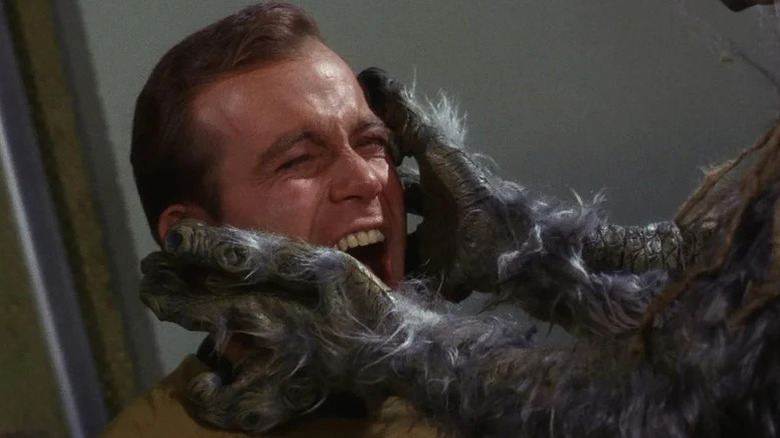
The first "Star Trek: The Original Series" Season 1 episode to air, "The Man Trap," should have been a wild one, and in many ways, it was. Unfortunately, it wasn't a very good episode of "Star Trek."
A goofy monster of the week number about a remote research station haunted by a shape-shifting alien that feeds on salt, "The Man Trap" is an uncharacteristically brash and one-dimensional introduction to a franchise that would become known for its philosophical and diplomatic approach to confrontation. The nameless "salt vampire" stalking the humans is a rubbery, hairy thing that's arguably the cheesiest of the many silly "Star Trek" monsters (sorry, Gorn Captain), and the overt emphasis on being a "monster show" makes "The Man Trap" a very unfitting episode to start the series, tonally speaking.
The episode's major problem is that it likes violence way too much to embody "Star Trek" values: Here, the monster kills brutally, therefore it must be killed brutally. The franchise rarely dabbles with this sort of eye-for-an-eye approach without including a moral dilemma, and it's jarring to see "The Original Series" start its run in this fashion.
The Way to Eden (Season 3, Episode 20)
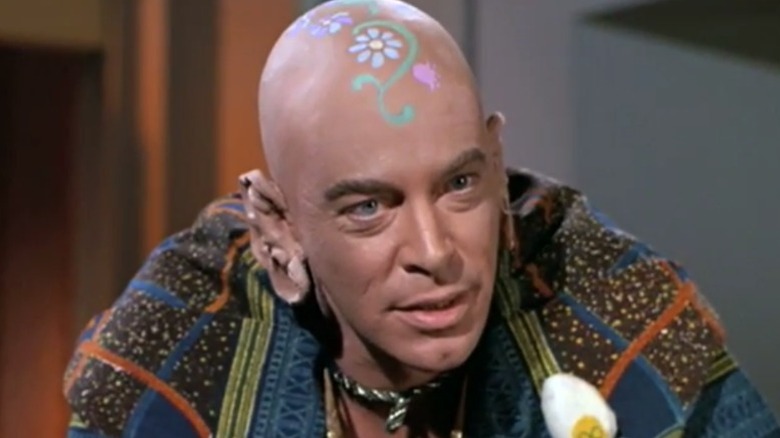
"The Way to Eden" is the infamous "Star Trek" episode where space hippies take over the Enterprise. In all fairness, there are some amusing ideas here, like the idea of Spock (Leonard Nimoy) of all people connecting with what amounts to a flower power cult. By and large, though, the episode simply can't cut the mustard. Much of this is because the doomed hippies are genuinely annoying, thanks to their overall antics and their one-note ambition to find the mythical planet Eden without a shred of precaution.
What's more, the plot is painfully predictable. Of course, their leader (Skip Homeier) is an antagonist. Of course, their Eden turns out to be a death trap. Of course, the most reasonable person among the hippies is the one who has a preexisting connection with an Enterprise crew member. This means that apart from its many nerve-racking characters, the episode has little in the way of surprises to make up for their vexing presence.
Oh, and if you're planning to watch "The Way to Eden," take a moment beforehand to mentally prepare for the hippies' music, all right? It's really something, and not necessarily in a good way.
The Alternative Factor (Season 1, Episode 27)
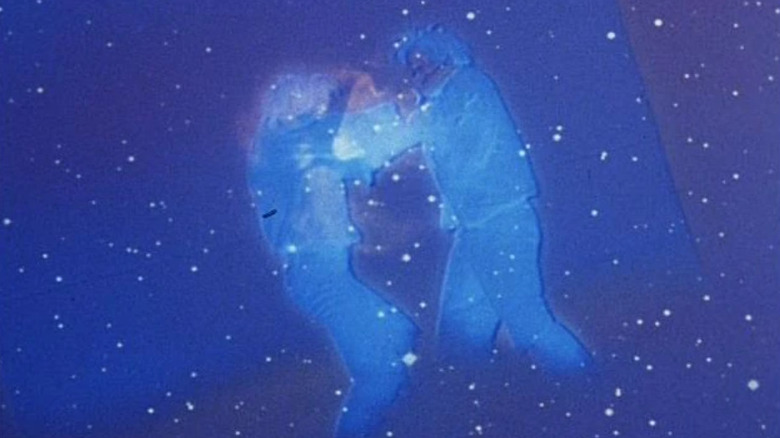
"Mirror, Mirror" is the one episode everyone goes to when it comes to "Star Trek: The Next Generation" and alternate realities. However, before the episode rolled out the "Star Trek" Mirror Universe with its goatees and evil character counterparts, there was "The Alternative Factor."
"The Alternative Factor" introduces a mysterious disturbance that's messing with the entire galaxy. The source of the issue is a mystery man called Lazarus (Robert Brown), who seems to be locked in a lengthy conflict with his antimatter universe counterpart. There's one problem, though: They can't physically interact for fear of destroying both universes. Well, two problems, actually: As it turns out, the matter-universe Lazarus is absolutely unhinged and prepared to destroy both universes, while the supposedly monstrous anti-Lazarus is a chill guy. Also, the two occupy the same body. It's a lot.
The whole plot is weird and convoluted while simultaneously coming across as extremely mundane and boring. Because Lazarus is effectively out to destroy everything just to defeat his antimatter counterpart, the viewer already knows that he'll be wiped off the board by the time the episode is over. As such, when Kirk muses, "What of Lazarus?" in the end, it's easy to quip back: Yeah, what of him?
The Paradise Syndrome (Season 3, Episode 3)
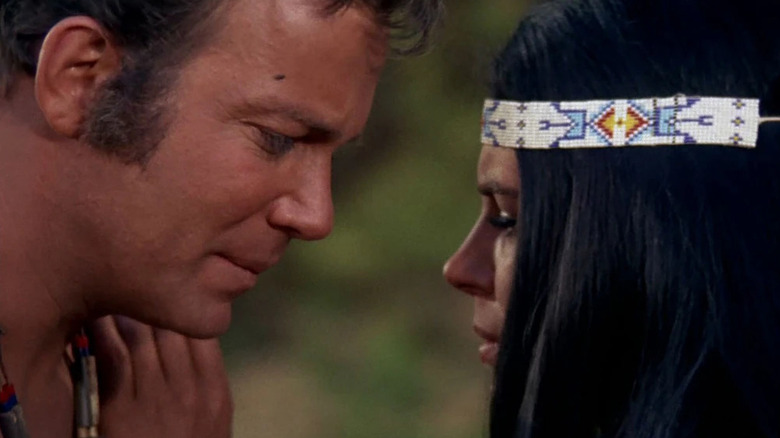
Wildly skippable, full of "white savior" tropes, and more than a little racist, "The Paradise Syndrome" fails to deliver on nearly every front. Here, the USS Enterprise has to deal without its captain, who's too busy romancing Native American caricatures to attend to the mission of saving the planet from destruction by an asteroid. Granted, James T. Kirk has the better than usual excuse of having been mind-wiped by a mysterious obelisk. Unfortunately, after finding out that the episode opts to use this plot device to have Native American-coded aliens start worshipping Kirk, the viewer may want to run across that memory-wiping obelisk, too.
As Kirk is busy getting local priestess Miramanee (Sabrina Scharf) pregnant, the rest of the Enterprise crew forms a cunning plan to deflect the asteroid, saving the day and restoring Kirk's memory at the absolute last moment. As for Miramanee? She tragically dies, of course. Can't have the dashing captain settling down, after all.
Spock's Brain (Season 3, Episode 1)
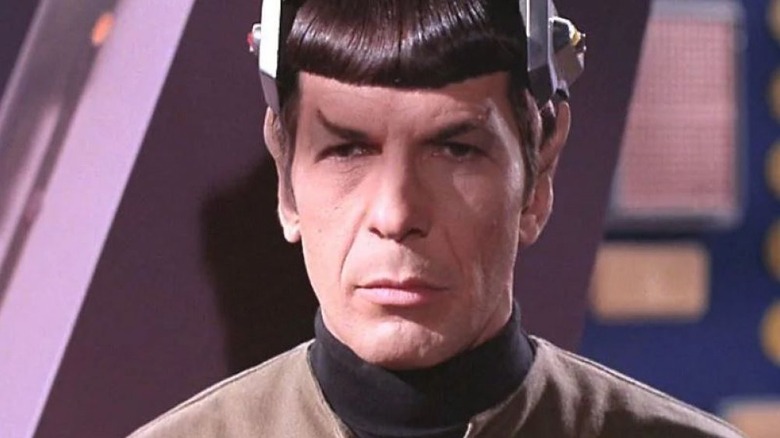
"Spock's Brain," the "Star Trek: The Original Series" Season 3 premiere, has one of the weirdest openings in the series — which is saying something. An alien called Kara (Marj Dusay) infiltrates the Enterprise, stuns everyone, steals Spock's actual brain, and leaves. The crew has 24 hours to get the brain back, or Spock dies. If that sounds stupid, it doesn't get any better. Apart from Spock spending much of the episode as a brainless husk, there's a planet full of people who have been separated by gender, and the Enterprise gang once again uproots the status quo of an entire civilization to save a single crew member.
There are many scenes that "Star Trek" actors regret filming, and in Leonard Nimoy's case, the entirety of "Spock's Brain" qualifies. "Frankly, during the entire shooting of that episode, I was embarrassed, a feeling that overcame me many times during the final season of 'Star Trek,'" the actor wrote in his book "I Am Spock."
"Spock's Brain" is "Star Trek" reduced to B-schlock sci-fi, with very few things that make the show special in sight. Unfortunately, this isn't even the worst episode Season 3 has to offer. It (and the show at large) ends in an even more awkward fashion.
Turnabout Intruder (Season 3, Episode 24)
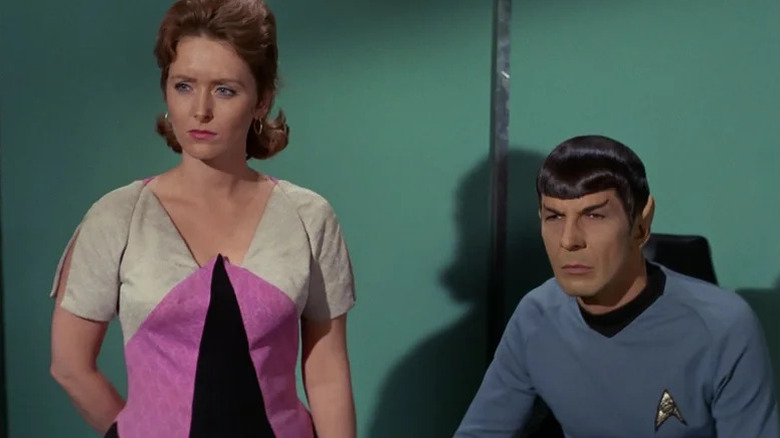
"Star Trek: The Original Series" was a progressive show in terms of 1960s television, but it still has its share of storylines that have aged terribly. The worst of them all is the show's very last episode, "Turnabout Intruder."
"Turnabout Intruder" features Dr. Janice Lester (Sandra Smith), Captain James T. Kirk's ex from back in the day. She's convinced that Starfleet is a sexist organization that has sabotaged her aspirations to captain a starship and is obsessed with avenging it all on Kirk. To amend this, she uses an alien device that body-swaps her and Kirk, and proceeds to use the good captain's body to ... act like a shrieking, sexist caricature of a woman for the duration of the episode. It takes barely any time at all for Spock to notice that something's amiss. Some mutiny-themed shenanigans and an overabundance of hysterics later, the most sexist story arc in Starfleet history is thankfully over.
For those who enjoy the idea of seeing William Shatner play a stereotypically hysterical and conniving female villain, "Turnabout Intruder" delivers. For anyone else, it's a prime example of bad writing wrapped around sexism. Even the "Star Trek: The Original Series" timeline went on to conspire against the episode's argument of the Starfleet not allowing female captains: Kirk takes command of the Enterprise in 2265, and the franchise eventually confirmed that Philippa Georgiou (Michelle Yeoh) was already captaining the USS Shenzhou in 2249.