

Star Wars: Every Clue To How Palpatine Returned
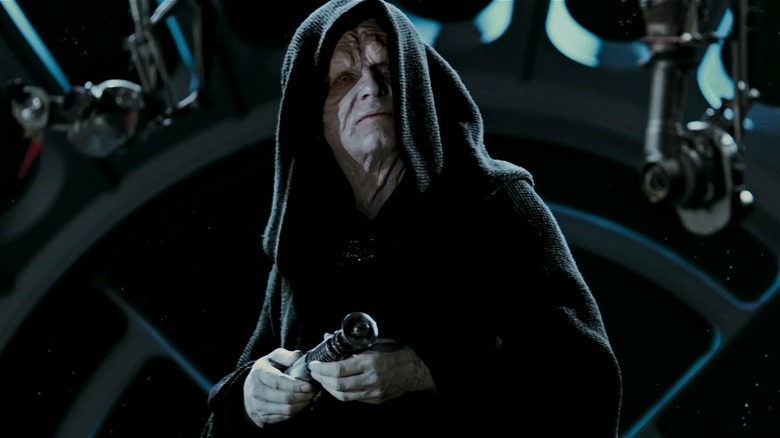
"Somehow, Palpatine returned."
It's become one of the most infamous lines in the entire Star Wars canon, right up there with "I don't like sand," "Now this is podracing," and "I have the high ground." But whereas those prequel quotes are considered somewhat endearing these days, Poe Dameron's (Oscar Isaac) line from the beginning of "The Rise of Skywalker" is something else entirely. For many, it represents the collapse of Disney's sequel trilogy; a story so poorly planned out that its leading antagonist comes back from the dead off-screen in the final entry.
The line is bad, yes. "The Rise of Skywalker," and its waste of the legendary Ian McDiarmid, are some of the worst things Disney has done with Star Wars since buying it. But the resurrection of Palpatine himself? That's another matter. While the films do an abysmal job of building up to what could have been a climactic return, the survival of Darth Sidious beyond the original trilogy isn't actually so crazy. And now, nearly seven years after "The Rise of Skywalker" came out, Star Wars has done a lot of reparative work to retroactively explain how it all came to be.
This is how Palpatine actually returned, every clue that's been added since the infamous line, and why it all actually makes sense (even though the movie is still awful).
Palpatine was always obsessed with immortality
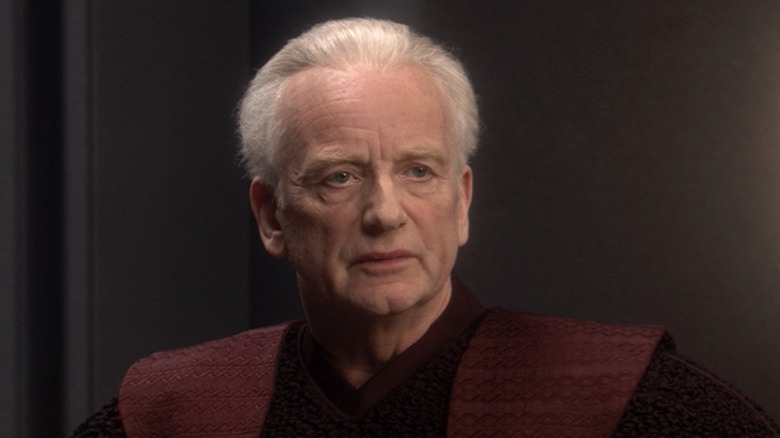
First, let's look at ol' Sheev himself. Palpatine is often characterized as the pure personification of evil with a never-ending desire for power. But he's also a distinct character, and his avarice, while enormous, often comes down to one specific desire — immortality.
It's the thing he tried to achieve with his master, Darth Plagueis, and it's the power he may have killed him for. He uses the promise of immortality — or, more accurately, the power to stop death — to seduce Anakin Skywalker (Hayden Christensen) to the dark side. However, Sheev craved the skill just as badly, and it's likely that he saw his new apprentice as a means to finally capture the immortality that had always eluded him.
Of course, the two are unable to conjure the skill, even through their combined might. But that doesn't stop Palpatine from seeking it. This is all to say that while the specifics of Palpatine's efforts to clone himself are outlined in earnest in the Disney era, and especially in the wake of "The Rise of Skywalker," his obsession with living forever has been a key part of his character for much longer. The old "Dark Empire" comics, for instance, detailed a Sheev resurrection even before the prequels came out (for better or worse).
Palpatine started dark force cloning experiments the moment the Empire began
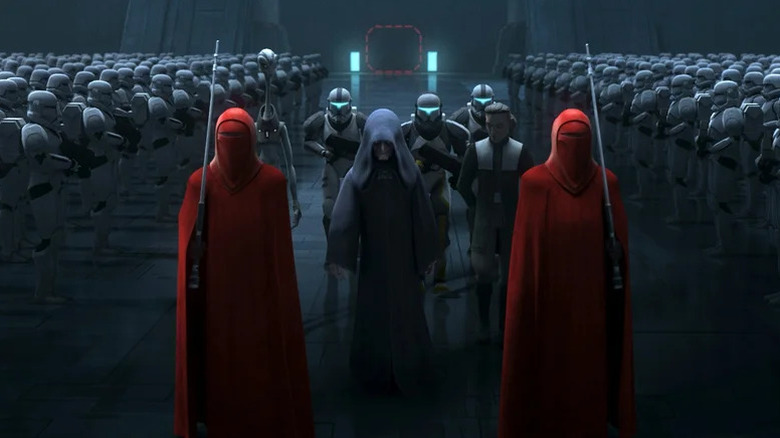
"Star Wars: The Bad Batch" is all about cloning. The story takes place in the immediate aftermath of the Clone Wars, beginning on the day Order 66 is enacted. The animated show explores how the Empire moved the leading scientists of Kamino's cloning program to secret black sites, bombed the planet's Tipoca City, made it look like a natural disaster, and began conducting more aggressive cloning research in secret — namely, a project called "Necromancer," the exact thing Sheev wishes to become.
This work comes into increasing focus in Seasons 2 and 3, which frequently visit an Imperial cloning facility housed beneath Mount Tantiss on the planet Wayland. Old Expanded Universe fans will recognize those names from Timothy Zahn's beloved "Heir to the Empire" and its sequels, where they were also connected to some shadowy cloning storylines.
In "The Bad Batch," the focus is all about Force-sensitive cloning. The researchers are determined to find a subject whose genetic material can hold high midi-chlorian counts, making Palpatine's direct involvement clear. He wants a new body that can contain his Force power, allowing him to transfer himself into it when necessary through dark Force magic. In other words, the second the Empire was established and the Jedi were eradicated, Palpatine's entire focus turned to his immortality.
The Mandalorian explains Snoke and Palpatine's resurrection
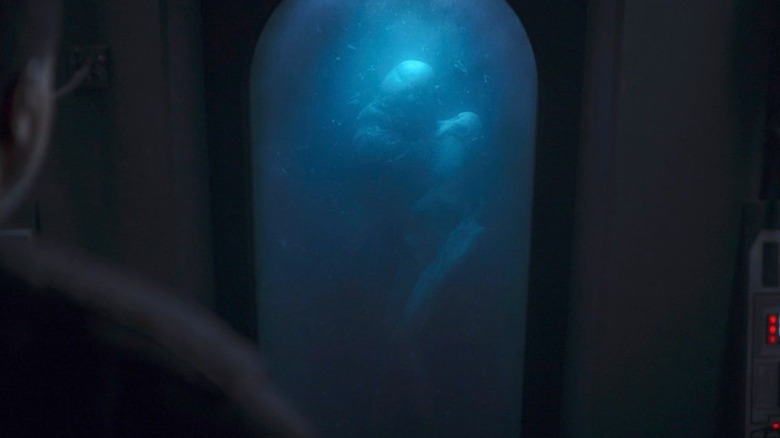
Like "The Bad Batch," "The Mandalorian" pulls back the curtain a bit on Palpatine's Force-sensitive cloning experiments, which continued even after the Empire fell. The Imperial Remnant's goal for capturing Grogu is the same as in the animated series — trying to accrue rare genetic material that can sustain high midi-chlorian counts across cloned bodies.
Season 2 of "Mando" even shows some strand-cast organisms grown in Imperial test-tubes that resemble Snoke (Andy Serkis). This suggests that while Palpatine struggled to build a sustainable clone body for himself, creating powerful Force-sensitive beings of an artificial nature was somewhat more successful.
The "Mandalorian" timeline also fills in some gaps regarding the First Order, and how it arose. Certain scenes detail a scattered but loosely united Imperial Remnant, each corner of which has a different primary focus. In Season 3, some emphasize slowly gathering strength in the Unknown Regions, where decades later, Palpatine rises on Exegol. Over a span of nearly 40 years from "Return of the Jedi" to "Rise of Skywalker," and another 25 or so during the Imperial era, it stands to reason that Palpatine could have built up all of the infrastructure for both a resurrection and a second wave of military conquest should the Empire fall.
It just, you know, would have been nice if that was actually in the movies.
Palpatine's return could have been a great story
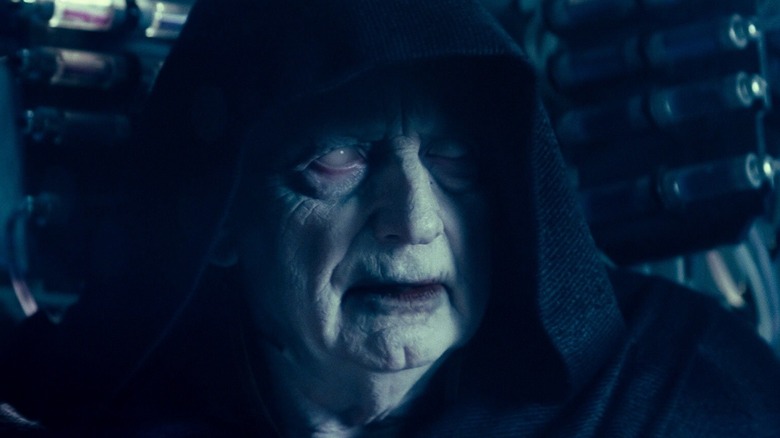
The problem with Palpatine's return is not that it makes no sense. To the contrary, it would be all too logical if the most powerful man in the galaxy with endless resources at his disposal and an obsession with immortality didn't find some way to come back.
And even with all of that, the plan still fails. As detailed in the canon novel "Shadow of the Sith," his obsession led to countless failed experiments, until one such attempt escaped and begat a daughter, who grew up to become Rey — Palpatine's ultimate downfall. In this way, he is quite literally his own undoing. With his constructed bodies unable to sustain him, Palpatine lives, but only as an animated corpse, rigged up to the galaxy's most expensive life support system, locked in a cave.
The real problem with "The Rise of Skywalker" is that it wastes its rich narrative potential. The thematic weight that could have made Palpatine's resurrection effective is given no buildup in the prior movies, and is dumped in favor of a rushed scavenger hunt plot. Somehow, yes, Palpatine returned, but as a pitiful, pathetic creature who just couldn't let himself go. If the Force is the essence of the natural balance, then it is only fitting that it would strike down such a distortion. If only that had been the story we got.