

Tragic Details About Star Trek's Jean-Luc Picard
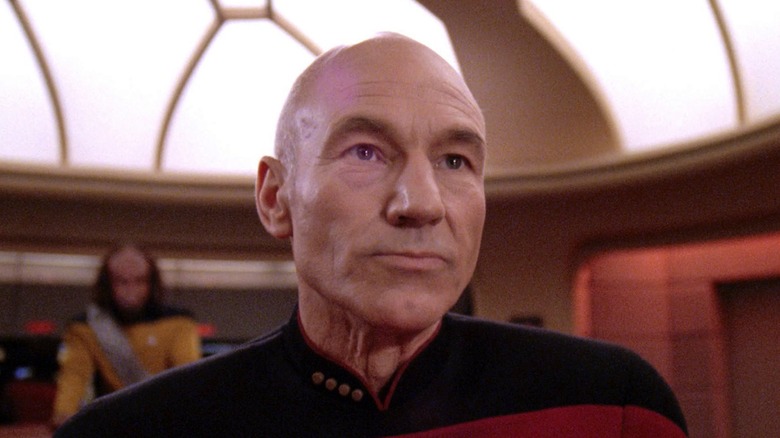
Captain Jean-Luc Picard (Patrick Stewart) of the Starfleet flagship Enterprise-D is many things: a complicated intellectual and archaeology geek with a deep love for Earl Grey tea, Shakespeare, and horseback riding. Part-time lover and late–night snack with a penchant for skimpy deep V-neck leisurewear to show off the goods. Formidable military leader and natural diplomat. And unfortunately, a serious trauma survivor.
The captain's preference for ASMR-after-hours entertainment once drew ridicule from Q (John de Lancie), who remarked Picard is "no fun; he's always quoting Shakespeare, he's always making wine" in the "Star Trek: Lower Decks" episode "Veritas." But with all that man has been through in Picard's long and troubled timeline, Jean-Luc is more than entitled to dedicate some of his downtime to a few lo-fi pursuits. From family tragedies to personal health struggles, JL (as Raffi likes to call him) is a case study in resilience. Here's a breakdown of the biggest tragedies in Captain Picard's backstory.
He suffered profound heartache and loss as a child
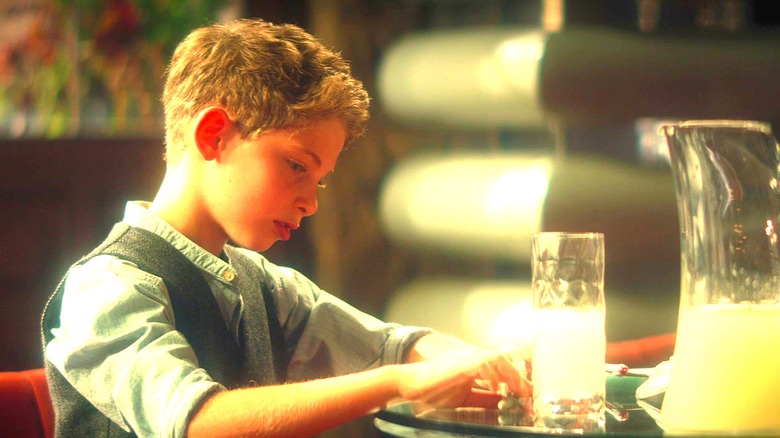
Jean-Luc Picard's lifetime of suffering began when he was just a young boy. Raised in the family château amid their bucolic vineyards in LaBarre, France, Picard was the second child of Maurice (James Callis) and Yvette (Madeline Wise), born after his older brother, Robert (Jeremy Kemp). And yet as idyllic as that life might have appeared outwardly — particularly given his family's preference for traditionalism over technology, Jean-Luc's younger years were confusing, painful, and eventually shattered by the trauma of losing his mother, with whom he was very close.
As told throughout "Star Trek: Picard" Season 2, young Jean-Luc felt deeply connected to his mother, who fed his imagination and dreams as she told him stories, created art, and played with him throughout the ancient estate with its labyrinthine tunnels and endless nooks and hiding places. What the child failed to comprehend was that his mother had been struggling with severe mental illness, a struggle that ultimately cost Yvette her life when she died by suicide, leaving her son broken-hearted and confused.
If you or someone you know is struggling or in crisis, help is available. Call or text 988 or chat 988lifeline.org.
He had troubled family relationships
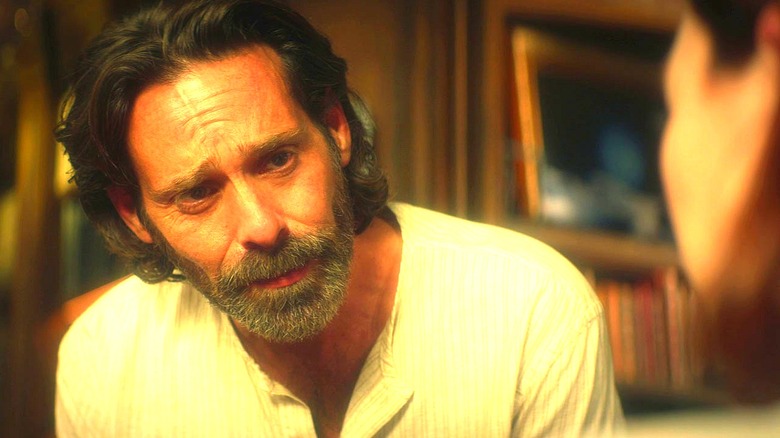
As a young boy watching the mother he loved suffer from extreme ups and downs, Jean-Luc Picard mostly saw the good in her. At the same time, he perceived his father as stern, even cruel, for Maurice's apparent efforts to control and stifle Jean-Luc's mother. In his desperation to keep her safe during Yvette's most severe psychotic breaks, Maurice even resorted to locking her up in her bedroom at times.
But young Jean-Luc could only see the cruelty of his father's actions. Misinterpreting Maurice's efforts as abuse through the eyes of a child, Jean-Luc would grow to resent Maurice after his mother's death, not realizing that it was the boy unlocking her door that ultimately led to her death.
As he grew, Jean-Luc's dream of heading to the stars only served to widen the rift between son and father, who saw his son's desire to leave as abandonment of the family legacy. This would also widen the rift between Picard and his brother Robert, who had bullied him as a child and came to resent him for his Starfleet career path as an adult. The tragedy of these rifts would haunt Picard for most of his adult life.
He nearly died as a young man
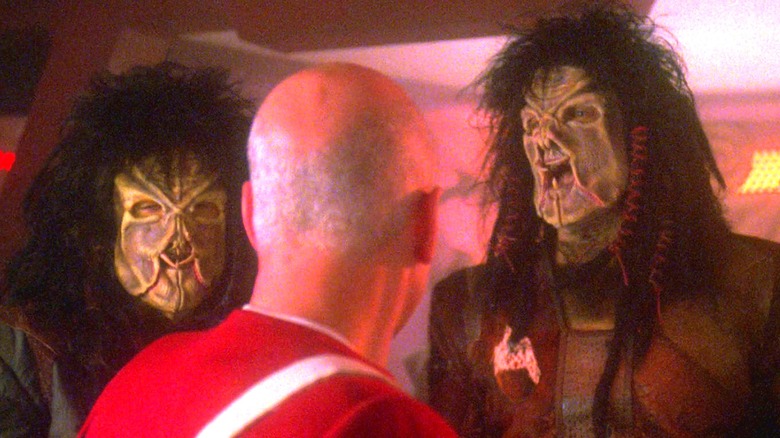
Even without his father's blessing, Jean-Luc Picard followed his plans to join Starfleet as a young man. Although he was a gifted, exceptional student graduating at the top of his class, Picard would later reflect to Q in "Tapestry" that he'd been "arrogant, undisciplined, with far too much ego and too little wisdom." That arrogance nearly got him killed when he crossed paths with a trio of Nausicaans.
As Picard recounts to Wesley Crusher (Wil Wheaton) in "Samaritan Snare," he had still been very young, green, and cocky when the young officer and a group of friends had shown up at Far Space Starbase Earhart — then a remote galactic outpost — on their shore leave. Not long after the group had stumbled into the Bonestell Recreation Facility, the Nausicaans had followed, clearly in the mood for some good old-fashioned fisticuffs. Unwisely, Picard had been eager to accommodate, shuffling right up to the toughest Nausicaan to insult him. But he'd got more than he'd bargained for, ending up with a knife in his back that went straight through his heart. The accident had left Picard with an artificial heart, serving as a permanent reminder of the youthful foolishness that nearly got him killed.
His fear of commitment cost him a chance at true love
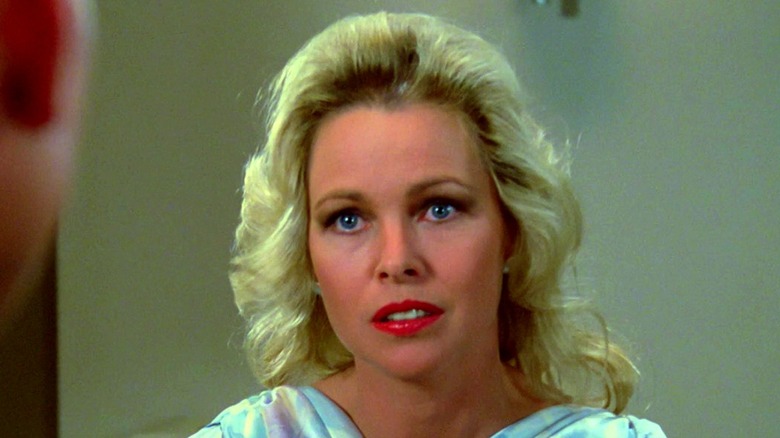
Although Jean-Luc Picard spends most of his life as a single gentleman, he certainly experiences his share of loves and heartbreaks through the years. One of the most painful was his breakup with Jenice (Michelle Phillips of The Mamas & The Papas), the woman he ghosted as she waited for him on their last day together in Paris.
Years later, Jenice told Picard that she'd looked up at the sky for years, wondering about him. Confessing in turn that he'd thought of her each time he returned to Earth, Picard admitted he had left her alone because the thought of getting tied down was too much to bear. "It was fear," he told her. "Fear of seeing you, losing my resolve. Fear of staying, losing myself. Fear that neither of these choices was right ..."
He couldn't save his good friend
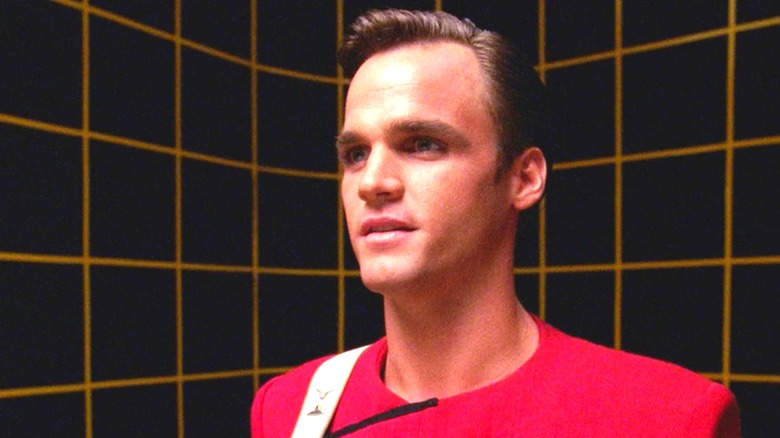
When Jean-Luc Picard was putting the Enterprise-D crew together, one of the officers he hand-picked was Dr. Beverly Crusher (Gates McFadden), a woman he had once been close to, along with her late husband, Jack R. Crusher (Doug Wert). Jack and Jean-Luc had been particularly close, with the captain considering Jack his best friend when they'd been serving together as younger officers aboard the USS Stargazer. The friends had met while back at Starfleet Academy, with their friendship continuing even as Jack worked under the captain's first command aboard the Stargazer.
But command can often lead to difficult, life-and-death decisions — the kind Picard faced when he lost his best friend in an accident while on an away mission. As Jack R. Crusher's son, Wesley, would later relate to Chang (Robert Ito) in "Coming of Age," Picard had been forced to choose between saving two people. "Because someone made that choice, and my father died," Wes concluded after struggling with a similar test as part of his Starfleet training. After Jack's loss, Picard had to break the news to Jack's wife and son, later joining Beverly as she said her goodbyes to Jack in the Starbase 32 morgue.
He spent weeks drifting in space only to be court martialed
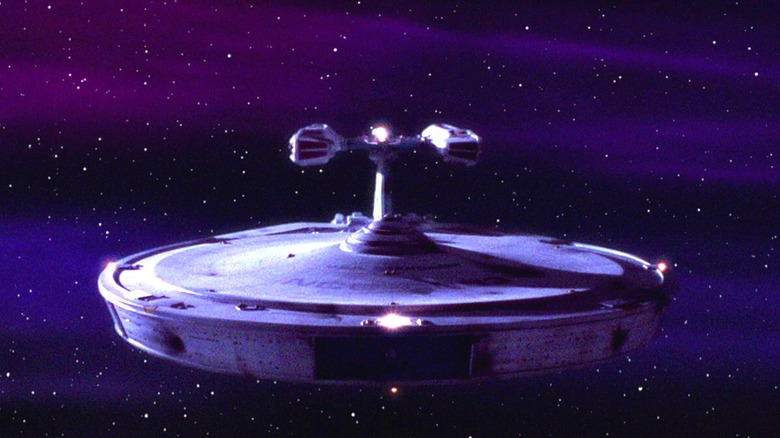
As recounted in the "TNG" episode "The Battle," Jean-Luc Picard once endured weeks spent drifting through space aboard a shuttlecraft after an event that would become known as the Battle of Maxia. The incident, which had taken place about nine years before, had occurred as the Stargazer was making its way through the Maxia Zeta system. Although Picard would end up destroying the other ship, which turned out to be a Ferengi vessel, the Stargazer took heavy damage in the battle.
In the heat of battle, Picard had invented a tactic that would one day be known as the Picard Maneuver by dropping into high warp and then stopping just ahead of the enemy's bow to fire while the enemy perceives the ship to be in two places at once. After knocking out the Ferengi ship, Picard would later recount, "We were finished. On fire. We had to abandon ship. We limped through space in shuttlecraft for weeks before we were picked up." And upon getting picked up, he would end up getting court martialed for his trouble — which fortunately led to exoneration.
He was partially assimilated by the Borg
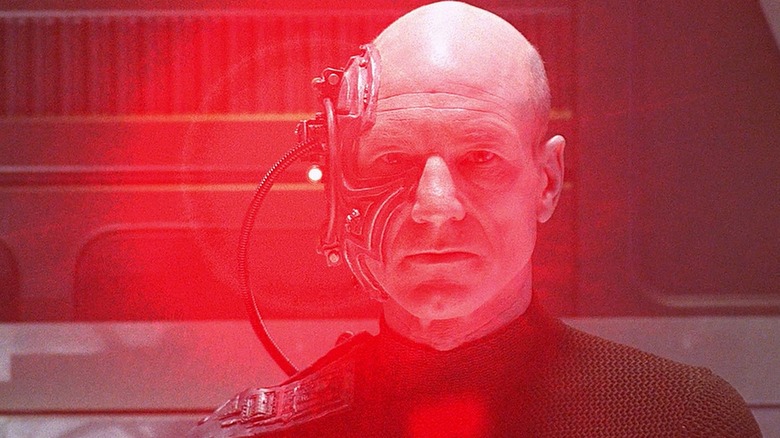
One of the most horrific traumas Jean-Luc Picard would ever experience took place while he was serving as captain of the Enterprise. The events happened during the two-parter "The Best of Both Worlds," spanning the Season 3 finale and the Season 4 premiere of "The Next Generation." While facing off with the Borg, suddenly intent on taking over Earth, Picard is abducted aboard the Borg Cube, where he's partially assimilated and fitted out with cybernetic implants in what had to be some serious body horror.
But becoming one of Star Trek's greatest villains is just the beginning of Picard's Borg horror story. Under their control and renamed Locutus, Picard acted on behalf of the Borg, killing thousands of Starfleet personnel, including Jennifer Sisko (Felecia M. Bell), the wife of Benjamin Sisko (Avery Brooks), as part of his attack on Wolf 359. Although he would eventually be freed and returned to his human state, the event would leave him battling severe PTSD with genetic alterations that wouldn't become apparent for decades.
He lived an entire life and lost his family
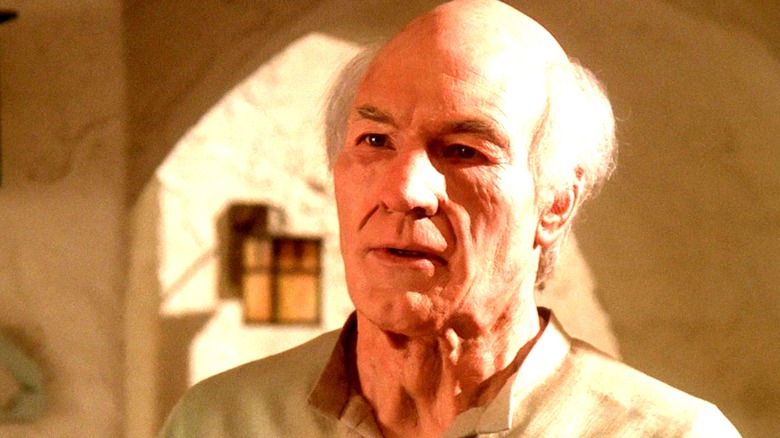
While Jean-Luc Picard devotes his life to duty and Starfleet, choosing those obligations over marriage and family life, he once lived out an entire lifetime with a beloved wife, children, and a community he came to hold dear — only to watch the whole world face its imminent demise as he grew old and died, helpless to stop it. The whole thing takes place in one of the most rewatchable "TNG" episodes, "The Inner Light," when a probe interfaces with Picard's consciousness, presenting him with an entire lifetime through first-person POV as a now-dead pre-warp civilization's last-ditch effort to preserve their way of life on the eve of their inevitable destruction as their sun went nova.
While interfacing with the probe, Picard finds himself living as Kamin. After years of denying his reality, insisting he's Jean-Luc, he finally gives in and learns to love his family and community, only to realize they are about to go poof. Even before drawing his final breaths in that life, Picard had to accept the fact that his grandchildren would never grow up. When he returns to his real life with a newfound musical gift, we realize that the entire reality was very real to him, implying that all of those losses were also very real.
His real family died in a fire
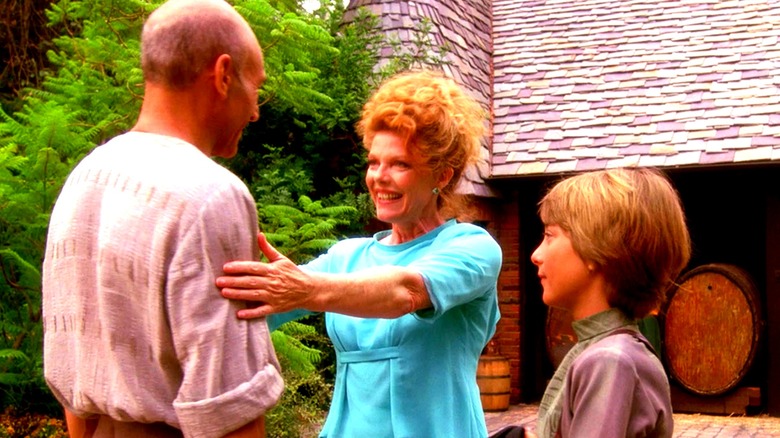
As if it isn't bad enough that Jean-Luc Picard loses his probe family to a supernova and experiences endless heartache after his mother dies amid his familial estrangement, Jean-Luc's trauma only deepens when he loses his remaining family to a house fire at some point down the road. After years wasted dealing with a complicated, antagonistic relationship, Robert and Jean-Luc finally make up in a touching moment in "Family."
It's a beautiful resolution, giving Picard a much-needed opportunity to heal from his Locutus nightmare while spending time with his brother's family, particularly growing close with his young nephew, René (David Tristan Birkin). This feel-good "Star Trek" episode just makes it that much more of a gut punch when we learn they died in a horrific fire off-screen in "Star Trek: Generations."
The Romulans made a whiny knock-off version of him
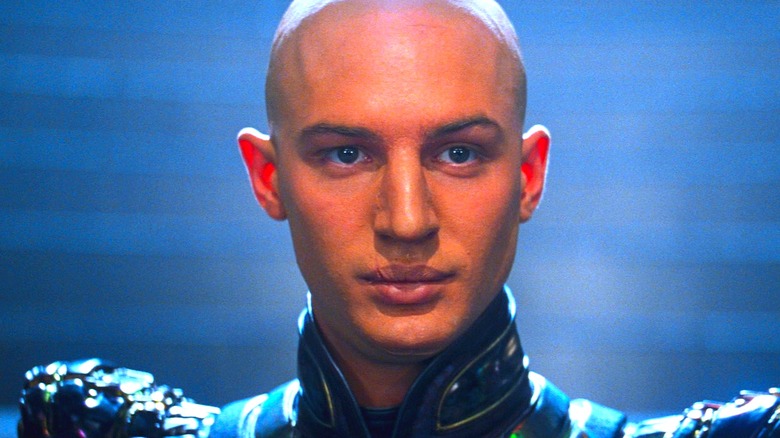
Even if Picard had to lose two families, at least he got a new sort of brother in "Star Trek: Nemesis." The Romulans were up to their old shenanigans and surreptitiously cloned Picard to make Shinzon (Tom Hardy), only to ditch the clone in some filthy Reman dilithium mines. Predictably, this doesn't go well in terms of nature versus nurture, and Shinzon's appearance turns out to be yet another disappointing Picard family reunion.
When Picard first meets Shinzon, he seems kind of alright for a Temu knock-off of Jean-Luc decked out in skintight color-shifting Lycra. But he turns out to be yet another overrated "Star Trek" villain with a major chip on his shoulder. He's a jealous little hater who is willing to lay waste to countless human lives purely out of spite by using theralon radiation to literally commit genocide against planet Earth after assassinating the entire Romulan senate.
He was personally affected by the Synths' devastating Mars attack
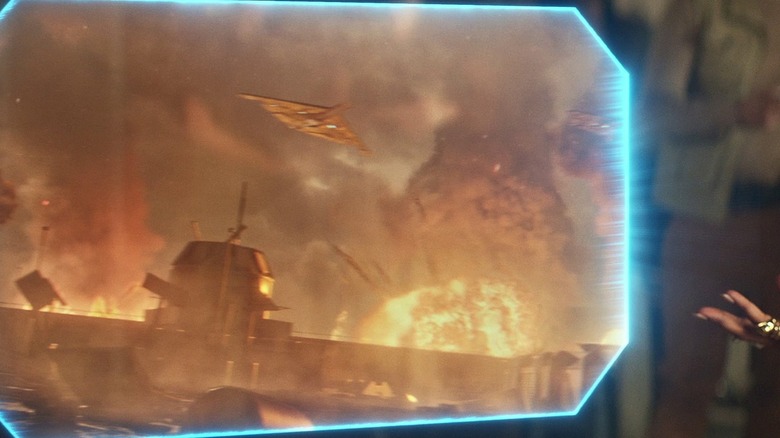
As revealed in "Star Trek: Picard," Jean-Luc Picard continues to suffer when the Synths turn on humanity cylon-style in a devastating attack on Mars that took out the Utopia Planitia Fleet Yards and the Mars Orbital Facility, among other Martian facilities. There are 92,000 lives lost in the First Contact Day attack, which was orchestrated by a Romulan cabal leveraging the Synths of the Daystrom Institute.
The devastation is especially impactful to Picard, who had successfully petitioned Starfleet to mobilize a massive rescue fleet of 10,000 warp-capable ships to evacuate 900 million Romulans threatened by a coming supernova. In the aftermath of the attack, Starfleet abandons its already unpopular plan to mount the rescue mission, ultimately leading to Picard's resignation from the admiralty. The experience also contributes to recoloring Picard's once-rosy view of Starfleet as he begins to see the ideals of the Federation darkened by politics.
He had a son he didn't know about for decades
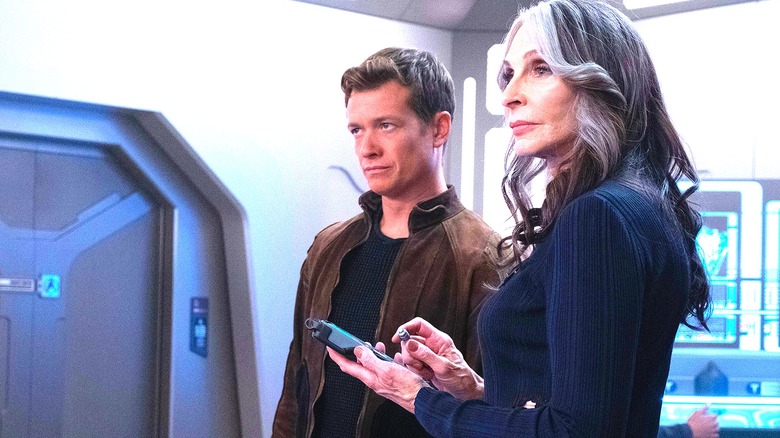
On top of all of his cumulative family trauma, Jean-Luc Picard takes another blow in "Star Trek: Picard" when he learns he has a son he didn't know existed for decades — a son he fathered with his late best friend's wife and former ship's doctor, Beverly Crusher. Hoping to insulate Jack (Ed Speleers) from the dangers associated with Picard's high-profile Starfleet reputation, and fairly convinced Picard isn't interested in a family, Beverly decides to keep things on the down low and conveniently "forgets" to tell Jean-Luc about the whole thing.
What makes this story even sadder is that Jack once considered reaching out, only to change his mind after watching his dad from afar at 10 Forward Avenue. Approaching Picard without revealing his identity, Jack had asked whether Picard regretted not having a family, to which Jean-Luc replied that Starfleet had been all the family he'd needed. It would be years later before the truth would finally be revealed to Picard.
He suffered from Shalaft's syndrome
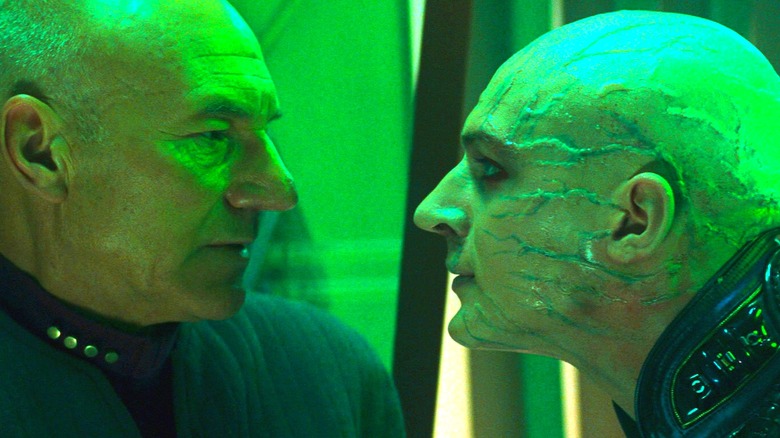
On top of all the suffering Jean-Luc Picard had to endure as a child, the poor kid also suffered from Shalaft's syndrome, a rare genetic disease known for causing an extreme sensitivity to sound, among other symptoms. As noted in "Star Trek: Nemesis," Picard inherited a particularly aggressive variation of the syndrome, causing severe, agonizing pain in his young ears.
Although Picard would be treated at a young age, the symptoms before treatment are unbearable — something his clone Shinzon describes in detail. As Shinzon recalled, "Even the slightest whisper caused me agony. No one could do anything about it." Much like Picard, however, Shinzon was eventually treated by a doctor with knowledge of Terran illnesses, ultimately completely restoring his hearing as good as new. While it's never mentioned whether Jack Crusher had Shalaft's, it's possible his doctor mom would have diagnosed it early, saving him the trauma his dad once suffered.
He also suffered from a terminal brain abnormality
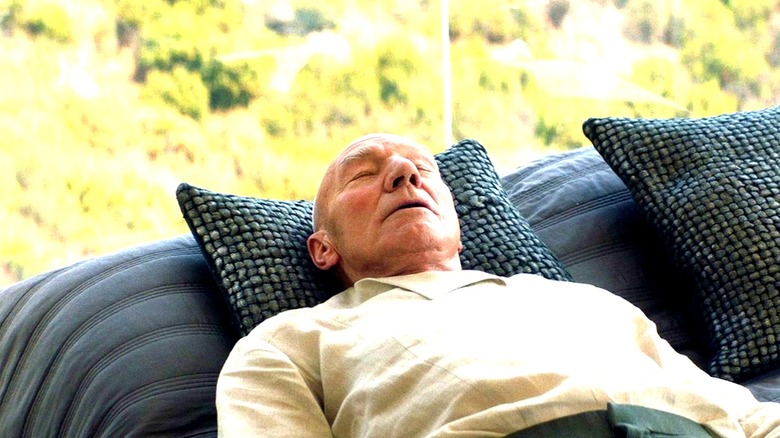
In the "Star Trek: The Next Generation" series finale, "All Good Things...", we learn Captain Jean-Luc Picard has been suffering from a condition called Irumodic Syndrome. After returning to his own time from an alternate version of reality, Picard learns from Dr. Beverly Crusher that he does, in fact, have a brain abnormality frequently associated with Irumodic Syndrome.
In "Star Trek: Picard," Picard is again diagnosed with a brain abnormality, with Dr. Moritz Benayoun (David Paymer) indicating the defect will ultimately prove fatal in "Maps and Legends." Altan Soong (Brent Spiner) also observes Picard's brain abnormality in "Dominion" after Picard dies from the condition, only to be resurrected in a hybrid organic-synthetic body. After Jack Crusher is diagnosed with the same condition affecting his parietal lobe, the Changelings eventually reveal that both father and son's condition is actually due to the Borg's genetic manipulations. But no matter how it got there, the Picard boys' brain condition is a real downer.