

Tragic Details About Stephen King

You might think that legendary horror writer Stephen King lives a great life, and on many levels, that seems to be true. He is responsible for some of the scariest moments in pop culture history, having written dozens of bestselling books, many of which have been turned into blockbuster movies that made an impact in their own right. He's constantly dreaming up new ways to frighten his beloved Constant Readers, pumping out one to three books a year for the last several decades.
However, as you might be able to guess from the dark subject matter that he writes about, King has also dealt with a number of tragedies in his life, several upsetting situations that influenced the horrific worlds of his books. You can find hints of this in his non-fiction book "Danse Macabre," like an early warning that reads, "Horror in real life is an emotion that one grapples with ... all alone. It is a combat waged in the secret recesses of the heart." Yikes!
The tragic details about Stephen King on this list range from early childhood memories — or lack thereof — to recent tragedies that shook the culture. Sometimes, he explicitly writes himself into the narrative, but sometimes these tragic details show up in his stories like distorted funhouse-mirror versions of his life. King has seen it all, and he's turned it all into some of the best horror literature in living memory.
Stephen King's father abandoned their family when he was little
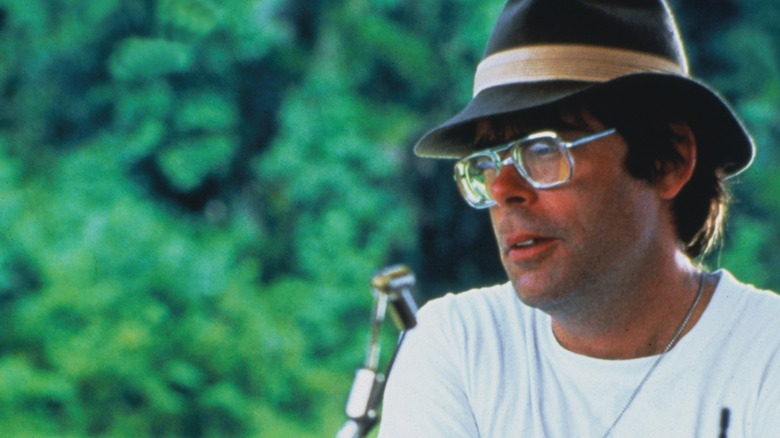
Stephen King's experience with tragedy began very early in his life. His father, Donald, was a door-to-door vacuum cleaner salesman who traveled a lot. According to the biography "Haunted Heart," Stephen later learned that his father had been cheating on his mother regularly. "As my mother once told me," he recalled, "he was the only man on the sales force who regularly demonstrated vacuum cleaners to pretty young widows at two o'clock in the morning." Ouch. When Stephen was only two years old, his father became a walking cliché. He told his wife he needed cigarettes, left the house, and never returned. "He was a man with an itchy foot, a travelin' man, as the song says," King later said. "I think trouble came easy to him."
In the wake of his father's abandonment, Stephen's childhood was marked by poverty and instability. His mother, Nellie, raised Stephen and his brother, Dave, on her own, moving them repeatedly around the country in an effort to find family who would let them stay long-term. They even stayed with his paternal grandmother for a while, and young Stephen was frightened of her. "I can still see her cackling like an old witch through toothless gums," he said.
Troublesome, sometimes-absent fathers are a recurring theme in Stephen's work. It's easy to understand why those early anxieties would've eaten away at him for the rest of his life.
Stephen King may have witnessed a horrifying incident as a child
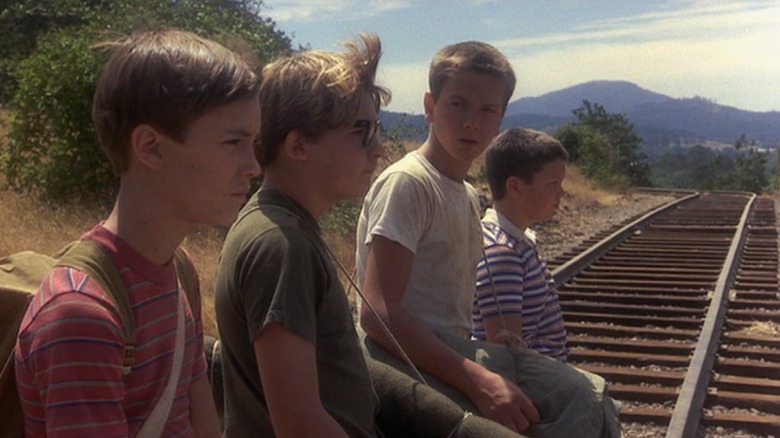
"Stand By Me" is one of the most faithful Stephen King adaptations, directed by Rob Reiner from King's novella "The Body." It's about a pivotal summer in the lives of four boys standing on the precipice of adulthood, learning what it means to grow up. As the title of the novella suggests, there's a dead body in this story, and there are a number of important scenes that revolve around train tracks, too.
It turns out that King might've written "The Body" as a way to process childhood trauma lurking deep in his subconscious. When King was only four, he returned home from a friend's house late, shaken, and unwilling to talk. He wrote in "Danse Macabre" that he found out what had happened later in life. "The kid I had been playing with had been run over by a freight train," he explained. His mother told him someone collected the pieces of the kid's body in a wicker basket. "My mom never knew if I had been near him when it happened," he wrote, and he didn't remember the incident either. Maybe it had happened after he left? Maybe he'd just wandered off after witnessing a friend die brutally?
King wrote that he told the story while on a panel, insisting that he had no memory of the moment. Panelist Janet Jeppson replied, "You've been writing about it ever since."
Stephen King faced a lot of rejection in his early career
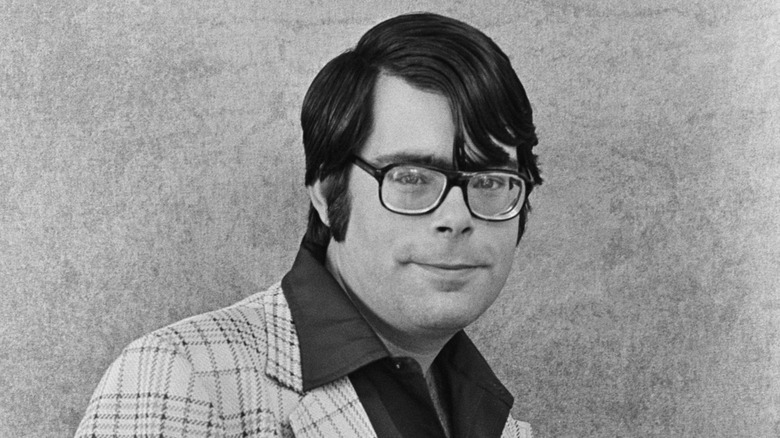
In his teenage years, Stephen King began dealing with his tumultuous childhood through writing horror fiction. He would write stories and submit them to magazines, and while some were accepted for publication, many, many others were rejected. In his memoir "On Writing" (via The Guardian), King recalled nailing the rejection letters that followed those early works to his wall. "By the time I was 14 ... the nail in my wall would no longer support the weight of the rejection slips impaled upon it," he wrote. "I replaced the nail with a spike and went on writing."
Some of his writing got quite dark, including an early novel called "Rage," a Stephen King novel that might be one of the most valuable items in your home. The book is about a school shooter, long before culture had any such concept. It would later be published under King's alias, Richard Bachman, and later still removed from publication altogether, cited in a number of real-world school shootings.
In an essay about why he used a nom-de-plume, King explained (via Lilja's Library), "That was the purpose of all my early fiction: to save my life and sanity. What made me feel so crazy so much of the time back then? I don't know, Constant Reader, and that's the truth. My head felt like it was always on the verge of exploding, but I have forgotten why."
Stephen King trusted himself so little that he nearly trashed Carrie
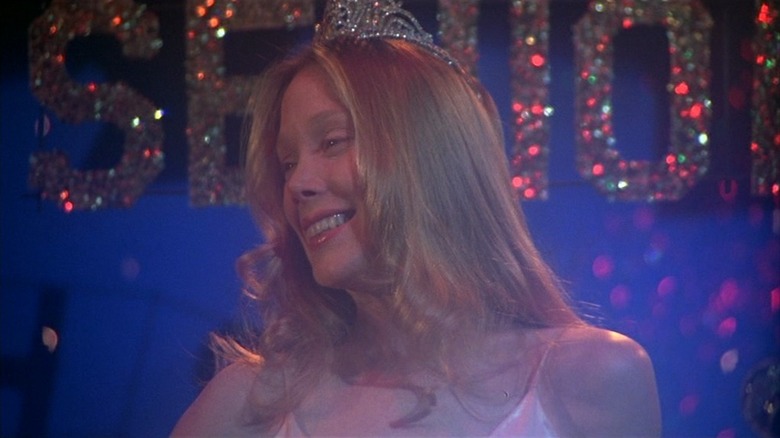
As the 1970s rolled around, Stephen King had married his wife Tabitha and was trying to raise a family. They were quite poor, which was a state of being that the future multi-millionaire knew well. Tabitha worked at Dunkin' Donuts, and Stephen taught high school English for the most part and tried to sell stories for some extra income.
Eventually, he hit upon an idea that he thought he might expand into a novel — what if the onset of a bullied teenage girl's period also came with frightening telekinetic powers? Enter: "Carrie," based on a true story ... in the sense that he once knew two girls in high school who were badly bullied. Overcome with self-doubt, however, the future bestseller soon gave up and tossed the early draft in the trash.
"I couldn't see wasting two weeks, maybe even a month, creating a novella I didn't like and wouldn't be able to sell. So I threw it away," he later wrote in "On Writing." His wife, however, thought this was a mistake. She rescued the draft from the trash bin and had it waiting for him when he got home that night. "You've got something here," she told her husband, and she was right. Though "Carrie" was rejected by numerous publishers, it was eventually sold, becoming his debut novel. The paperback rights went for $400,000, changing the family's fortune forever.
Stephen King has been open about his experience with drug and alcohol addiction
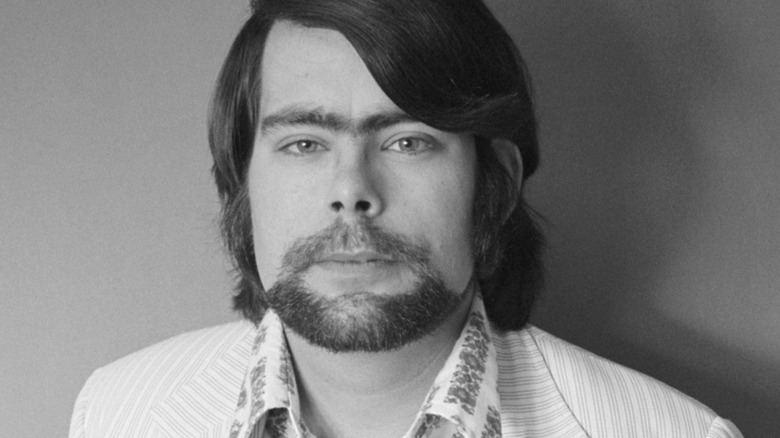
Though Stephen King's financial troubles had subsided, his early career was marked by other struggles. Namely, King spent several years severely addicted to both alcohol and cocaine. He's been open about his experience in the decades since he got sober, telling The Guardian that although he felt like he hid his drinking decently well, the cocaine was another story altogether.
"I was high much of the '80s, and I'm not a very reflective person, so it never crossed my mind that it was an existential thing, or that it was wasteful or anything else," he reflected. "It was just what I was doing that day."
The drinking took a toll on his relationship with his family, and you'll find quite a few alcoholic fathers showing up in King's work, perhaps as a way to process what he was putting his own family through. Jack Torrance in "The Shining," for example, is an alcoholic writer who begins to lose his mind, cooped up in a frozen hotel with his wife and son. "I was never the guy who said 'Let's have a gin and tonic before dinner,'" King explained to The Guardian. "I'd have to have like 12 gin and tonics and then I'd have to say 'f*** dinner' and have 12 more. So I guess that was difficult to live with from time to time."
If you or anyone you know needs help with addiction issues, help is available. Visit the Substance Abuse and Mental Health Services Administration website or contact SAMHSA's National Helpline at 1-800-662-HELP (4357).
Stephen King doesn't remember writing Cujo
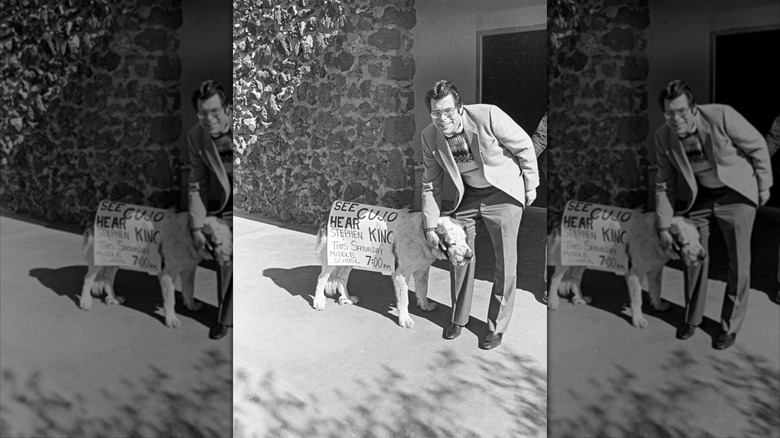
Stephen King insists that he wasn't violent like some of the addict fathers he would write about. He told The Guardian that he hid his drinking from his children ... or so he told himself. He also insisted that he never had any kind of hard-partying lifestyle, explaining, "It [was] never about swinging from the chandeliers or throwing people through the window, or getting laid, or partying. I didn't go to bars much. One drunken a**hole was all I could handle and that was me." He added, "I wrote."
King's addiction meant gaps in his memory, and he tragically doesn't even remember writing one of his most iconic novels. "At the end of my adventures I was drinking a case of 16-ounce tallboys a night, and there's one novel, 'Cujo,' that I barely remember writing at all," he wrote in "On Writing" (via Parade). King added, "I like that book. I wish I could remember enjoying the good parts as I put them down on the page." King has since reconstructed his process, and he's revealed that "Cujo" is one of several Stephen King books inspired by real-life events.
Thankfully, around the time of that novel, King realized that he needed to make a change. He wrote, "At the start of the road back I just tried to believe the people who said that things would get better if I gave them time to do so."
Stephen King's mom died of uterine cancer early in his career
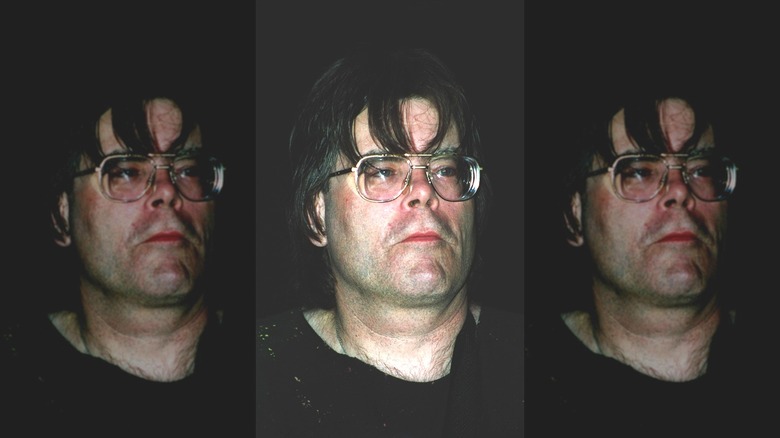
Stephen King was raised by Nellie Ruth Pillsbury King, a single mother, and his childhood was marked by a search for stability. Eventually, he found it, and his career took off like a rocketship; within a few short years, he'd gone from a nobody struggling to make the rent to the household name behind hit films like Brian De Palma's "Carrie" — which, for the record, has one of the greatest horror movie endings of all time.
Unfortunately, Nellie didn't actually live to see her son become the world-famous writer he is today. When "Carrie" brought such a staggering sum for the paperback rights, the "Misery" author used much of the money to care for his mom, who had developed uterine cancer. "She was in excruciating pain by that point. And my brother and I, we said, 'Mom, you're done. There's enough to take care of you now, because the book sold for a lot of money, and you can go home," he later told CBS Sunday Morning. His mother was emotional. "And she just put her hands over her face and cried."
She was able to live her last days in relative comfort, but Nellie died before "Carrie" was even released. She'd worked her entire life to set her son up for success, but she never knew just how successful he would become.
A man burglarized Stephen King's home in a frightening incident
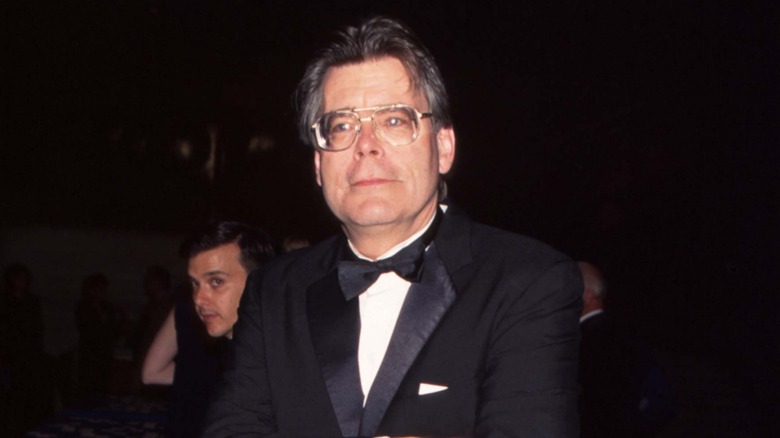
As Stephen King's career took off, he became almost as famous as his stories. Fans were particularly fascinated by his love of his home state, Maine, which features prominently in many of his novels. While many successful people might've moved to some place like Los Angeles — it seems like an underrated Stephen King film adaptation is released every few months — King and his family stayed in Maine.
That made his home somewhat of a tourist attraction, and in 1991, his public notoriety led to a frightening incident where his home was burglarized. A man named Erik Keene broke into King's home, insisting to authorities that he was there because King had stolen "Misery" from him. Keene brought a fake bomb with him, terrifying King's wife Tabitha when she found the man in the attic. Keene claimed insanity, and he actually wound up suing the state of Texas for not stopping him and letting him travel to Maine while he was on probation.
The incident changed King's approach to his safety in public. "Usually those people write, they don't turn up," he told The Independent, revealing that he'd built up the fence around his house and added a padlock to the gate.
In 1999, Stephen King was in a terrible car crash
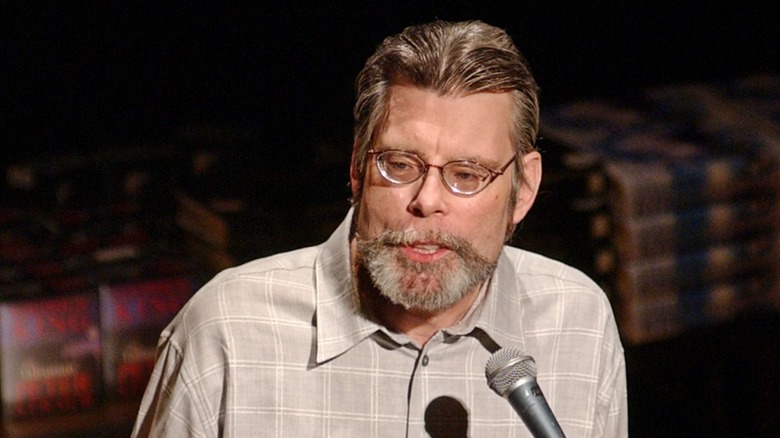
In 1999, Stephen King was walking along a rural Maine roadside when a van veered off the road and struck him. The collision sent King to the hospital and into a long recovery, during which he wrote his memoir "On Writing." In an interview with NPR, King recalled that time in the hospital as a strange sort of familiar sensation. "When you've been seriously hurt, there's a kind of numbing shock that sets in, and as a result, everything is — there's no surprise involved with any of the things that seem to go on," he said. "You just sort of — the things come and you deal with them. It's like being cast adrift and riding the waves."
In a shocking twist, Bryan Smith, the man who'd been driving the van, died on King's birthday the following year. The trauma of the accident proved to be a pivotal moment in King's career. King blurred fiction and truth in "The Dark Tower," re-imagining his own traumatic accident as a pivotal moment in the series. He wrote his characters crossing over into the real world, making Smith an antagonist in the books and himself a character. He'd adapted many other tragic moments in his writing, but this was the first time that King, so to speak, played himself.
Stephen King's friend and collaborator Rob Reiner was murdered
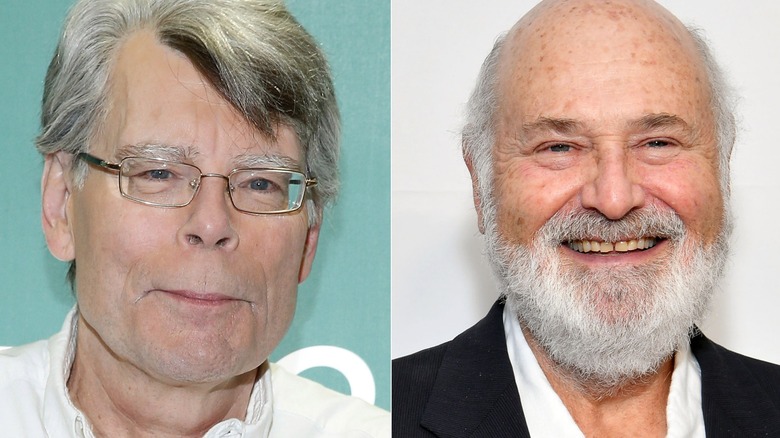
Stephen King claims to take a relatively hands-off approach to overseeing adaptations of his work, but he does like to get to know the people involved in turning his stories into films. There have been many repeat collaborations over the years, covering everything from Drew Barrymore starring in both "Cat's Eye" and "Firestarter" to Mike Flanagan directing adaptations of "Gerald's Game," "Doctor Sleep," "The Life of Chuck," "Carrie," and more.
Rob Reiner directed "Stand By Me" and "Misery," two of the best films based on King's work, and two movies that could not have been more tonally different. Tragically, Reiner and his wife, Michelle, were murdered late in 2025, leaving Hollywood reeling with shock. In an emotional essay for The New York Times, King wrote about being overcome with emotion the first time he watched "Stand By Me." He couldn't believe how well his nostalgia, his yearning for youth, had been captured by the man who adapted his work.
"He was a political presence, a social commentator, and a wicked satirist. But all that still pales for me when I watch Chris Chambers say to the weeping Gordie Lachance: 'You're gonna be a great writer someday,'" King wrote. "That weeping boy was me. It was Rob Reiner who put it on the screen."