

The Most Underrated Sci-Fi Movies Of The 1970s
We may receive a commission on purchases made from links.
The 1970s was an incredible era for cinema, especially science fiction. Rising anxiety over the direction in which the world was headed created a perfect environment for films envisioning a dystopian future, from "A Clockwork Orange" and "THX 1138" to "Soylent Green." Although you had the stray "Star Wars" to brighten your day, most sci-fi movies from the decade were incredibly pessimistic about what the future held. Whether they were set in space or on Earth, the best sci-fi movies of the '70s served as a warning for what might happen if drastic societal change wasn't enacted.
The soil of the 1970s New Hollywood movement was so rich that it produced a slew of great sci-fi films, with many of the most underrated space movies you need to watch coming out of that era. As for the most underrated sci-fi movies of the 1970s overall, you won't find the likes of "Alien," "Close Encounters of the Third Kind," or "Solaris" on this list. You won't even find "The Omega Man," "Logan's Run," or "Demon Seed." We're here to discuss movies that are truly underrated, films that have perhaps unfairly faded into obscurity and are desperate for a reappraisal.
The Andromeda Strain
- Cast: Arthur Hill, James Olson, Kate Reid
-
Director: Robert Wise
-
Rating: G
-
Runtime: 131 minutes
-
Where to watch: Prime Video, Apple TV
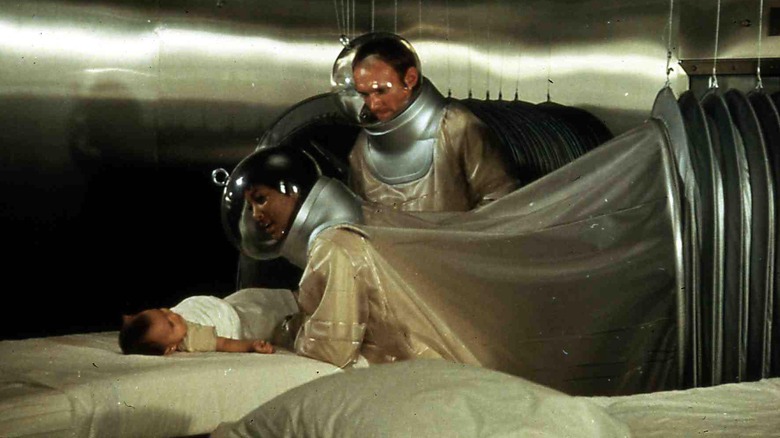
When a military satellite mysteriously returns to Earth, almost all of the residents of Piedmont, New Mexico wind up dead. A group of scientists led by Dr. Jeremy Stone (Arthur Hill) are dispatched to figure out why only two townspeople — a 6-month-old baby and an elderly drunk — survived. The scientists suspect the satellite might have harbored an alien microorganism that turned into a bioweapon when it came into contact with the human population. With the clock ticking, Dr. Stone and his team try to contain the virus before it can spread beyond the lab, which is equipped with a self-destruct mechanism to prevent that from happening.
Released in 1971, "The Andromeda Strain" was the first movie adaptation of a Michael Crichton book, and it has been somewhat overshadowed by the author's own successful career as a filmmaker throughout that decade (including the 1973 sci-fi classic "Westworld"). Directed by Old Hollywood legend Robert Wise of "The Sound of Music" fame, "The Andromeda Strain" is a G-rated movie released at a time when studios were churning out grittier fare. But that doesn't mean it's any less terrifying in its depiction of a mysterious virus with the potential to wipe out humanity, making it one of those '70s sci-fi movies that was way ahead of its time.
No Blade of Grass
- Cast: Nigel Davenport, Jean Wallace, John Hamill
-
Director: Cornel Wilde
-
Rating: R
-
Runtime: 96 minutes
-
Where to watch: Prime Video, Apple TV
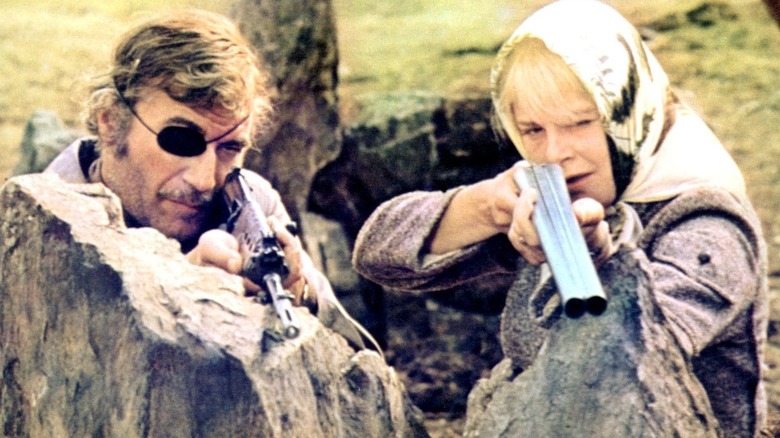
In the near future, pollution has created a strange new virus that destroys different strains of grass, including wheat, rice, and maize. This causes a worldwide famine, which in turn leads to food riots, mass murder, and cannibalism. One Londoner, John Custance (Nigel Davenport), tries to protect his wife, Ann (Jean Wallace), and their two children as they travel across a post-apocalyptic landscape in search of food and shelter.
When it was released in 1970, "No Blade of Grass" was controversial due to a graphic rape sequence involving an actress who was only 15 when filming began. Director Cornel Wilde cut almost 90 seconds out of the scene, which was later restored for the home video release. Much like "A Clockwork Orange" and "Straw Dogs," two films released the following year, it felt like a degradation of moral standards, glorifying violence and even justifying it as a means of survival.
"No Blade of Grass" received largely poor reviews at the time, but more recent reviews have been a lot kinder to the film. It feels more relevant with each passing year, presenting a nightmare scenario of how society can fall apart if something isn't done about climate change. In that way, the graphic depiction of violence is necessary, as it serves as a warning for how terrible things can get if we lose the capacity for empathy.
If you or anyone you know has been a victim of sexual assault, help is available. Visit the Rape, Abuse & Incest National Network website or contact RAINN's National Helpline at 1-800-656-HOPE (4673).
Silent Running
- Cast: Bruce Dern, Cliff Potts, Ron Rifkin
-
Director: Douglas Trumbull
-
Rating: G
-
Runtime: 89 minutes
-
Where to watch: Prime Video, Apple TV
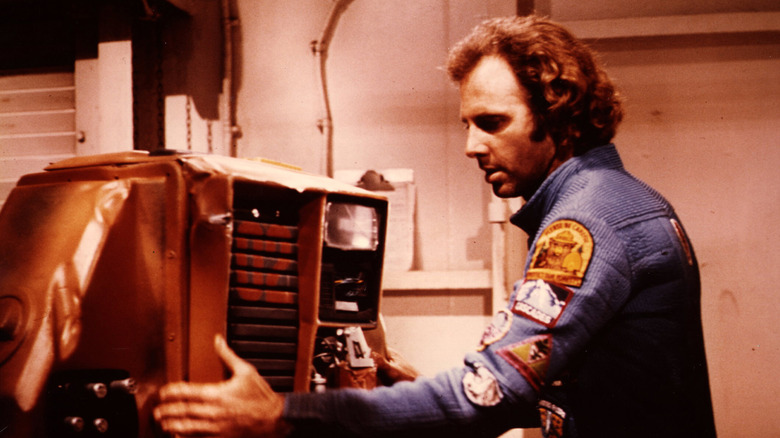
After pollution has destroyed all of Earth's forests, a group of astronauts gather as much botanical life as possible into a giant greenhouse attached to an orbiting space station. Ecologist and botanist Freeman Lowell (Bruce Dern) cares for the plants with his three service robots in the hope that one day they can return to Earth with them. Those hopes are shattered when Lowell is ordered to destroy the plants to make room for cargo. Rather than follow through, Lowell and his robot pals rebel against the other crew members, taking desperate measures to protect the near-extinct specimens.
Released in 1972, "Silent Running" was the directorial debut of Douglas Trumbull, one of the special effects wizards behind "2001: A Space Odyssey," "Close Encounters of the Third Kind," and "Blade Runner." "Silent Running" is not often mentioned in the same breath as those films, perhaps because Trumbull's directorial career never reached the heights of Stanley Kubrick, Steven Spielberg, or Ridley Scott. However, its influence can be felt throughout many sci-fi classics, including "Star Wars," which similarly features an adorable tiny robot (R2-D2) assisting a human in their noble mission. Co-written by Michael Cimino of "The Deer Hunter" fame, the film is a small-scale thriller that takes a bleak view of our future and the measures environmentalists might have to take in order to save plant life.
The Ultimate Warrior
- Cast: Yul Brynner, Max von Sydow, Joanna Miles
-
Director: Robert Clouse
-
Rating: 94 minutes
-
Runtime: R
-
Where to watch: Prime Video, Apple TV
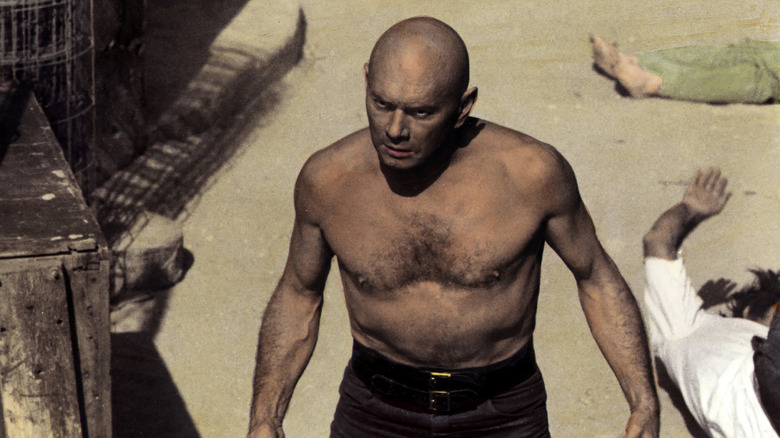
In the year 2012, a global pandemic has caused mass extinction, and those that remain have sectioned themselves off into tribes. Baron (Max von Sydow) rules over what remains of New York City, and his chief botanist (Richard Kelton) has developed a plague-resistant chemical that allows plant life to grow in a small garden. The fresh fruits and vegetables are coveted by roving gangs that try to break through the fortified walls of NYC, endangering the safety of the residents within. To protect his followers, Baron enlists the help of Caron (Yul Brynner), a highly trained warrior who lends out his services at a price.
When it was released in 1975, the plot of "The Ultimate Warrior" felt a little far-fetched. In the post COVID-19 world, though, it doesn't seem so bizarre — fights broke out over things like toilet paper as people rushed to stockpile during the global pandemic. Unfortunately, the film has been somewhat overshadowed by another '70s sci-fi classic starring Yul Brynner: 1973's "Westworld." Yet, aside from sharing the same lead actor, these two films offer distinctly different visions of the future. Directed by Robert Clouse (who also helmed Bruce Lee's martial arts masterpiece "Enter the Dragon"), "The Ultimate Warrior" envisions man turning against man as food becomes a luxury.
Zardoz
- Cast: Sean Connery, Charlotte Rampling, Sara Kestelman
-
Director: John Boorman
-
Rating: R
-
Runtime: 105 minutes
-
Where to watch: Prime Video, Apple TV
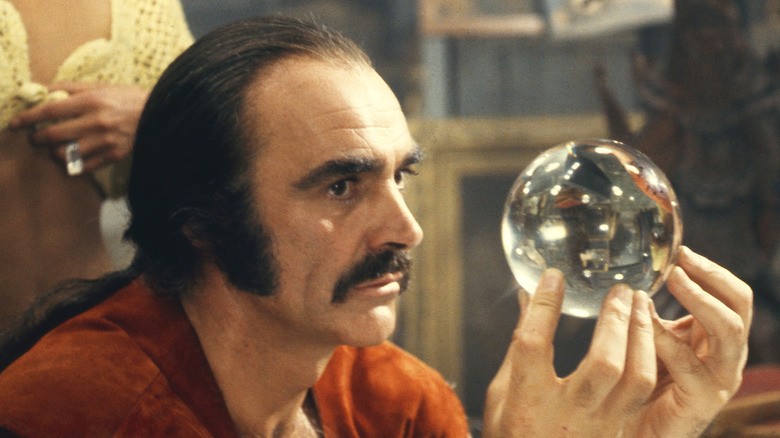
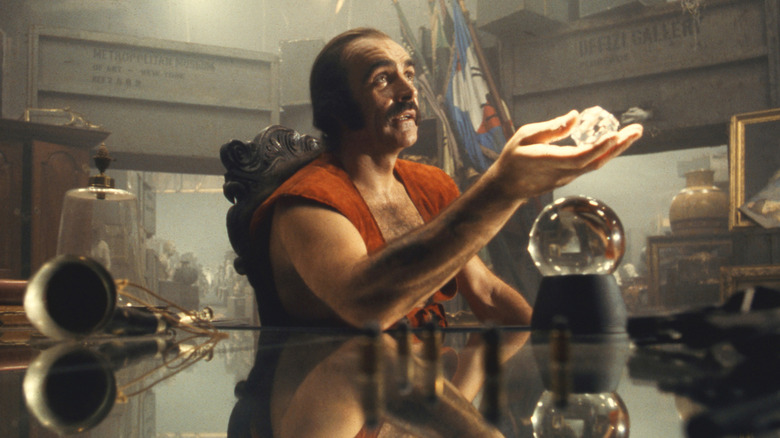
In the distant future, the world is divided into two classes of beings: the Eternals and the Brutals. The immortal Eternals rule over the mortal Brutals, who live in a wasteland growing food at the behest of their overlords. Brutal Exterminators kill their own kind to appease Zardoz, a flying stone deity made by the Eternals, who live in a paradise called the Vortex. One Brutal Exterminator, Zed (Sean Connery), takes refuge inside Zardoz and ends up in the Vortex. He's taken captive and seeks to save humanity from further subjugation after learning the truth about Zardoz.
Long before Peter Jackson did so with aplomb, director John Boorman sought to bring "The Lord of the Rings" to the big screen. When that bonkers-sounding adaptation (it would have included Galadriel and Frodo getting intimate and the Witch-king of Angmar riding a horse with no skin) fell through, he decided to make an original sci-fi fantasy. The result was "Zardoz," one of the craziest films of the 1970s (or of any decade, really).
Critics hated the movie upon its release, but it has since been reclaimed as one of the most underappreciated fantasy movies of all time, with many coming to love the gonzo approach to the production. More than a decade after its release, The Chicago Reader printed a defense of the movie: "Probably John Boorman's most underrated film — an impossibly ambitious and pretentious but also highly inventive, provocative, and visually striking SF adventure with metaphysical trimmings."