

10 Most Forgettable Oscar-Winning Movies Of All Time
The Academy Awards are a ceremony ostensibly designed for celebrating the best of cinema in a given year. However, despite such an upbeat starting concept, this awards show can often attract an avalanche of toxicity. Sometimes that comes from online discussions about what "should" have gotten nominated (which can spiral out of control into full-on nastiness). Other times, it comes from the bizarrely underwhelming movies that the Oscars choose to hand out statues to. Just look at the 10 worst best visual effects Oscar winners in history for prime examples of the latter phenomenon.
Things get so heated involving the Academy Awards that, often, it seems like only either the best or worst movies in history get recognized at this ceremony. In reality, though, there's a lot more nuance to the artistic merits of what gets showered with Oscar wins. Specifically, there have been plenty of forgettable, but not necessarily terrible, features that have secured momentous Academy Award triumphs.
These are the middle-of-the-road motion pictures that likely won't inspire passionate vitriol from anyone (hopefully). However, they're still deeply flawed productions that ended up winning Oscar statues that could've gone to other debatably superior movies. It's important to recognize the existence of such motion pictures as well as the artistic highs and lows of such endeavors. After all, Oscar-based discussions often get carried away with hyperbole. Remembering the 10 most forgettable features to ever win Oscars, meanwhile, provides countless reminders that, sometimes, movies that are just "meh" end up victorious at the Academy Awards.
The Queen (2006)
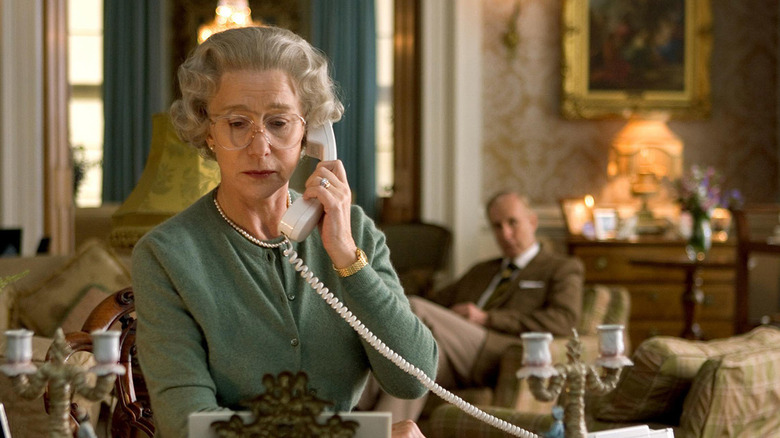
The Academy sure loves a movie about the British royal family of any era. Whether it's "The King's Speech" or 1998's "Elizabeth," some of the most recognizable figures in England are often at the center of award season discussion. One notable modern example of this trend was 2006's "The Queen," a Stephen Frears directorial effort chronicling Queen Elizabeth II (Helen Mirren) and other members of the royal family grappling with the sudden death of Princess Diana. Elizabeth II and her relatives want to keep the grieving process for Diana private, while the rest of the world craves a chance to mourn "The People's Princess."
"The Queen" was an Oscar monster back at the 79th Academy Awards, scoring six nominations (including one for Best Picture) and a Best Actress win for Mirren. Frears has made some mighty interesting films in his extensive career, including 1985's "My Beautiful Laundrette" and the 2013 charmer "Philomena." "The Queen" is far from a blight on his filmography, but it's also way too understated and conventional to get invested in.
The public's devastation over losing Diana was a singular event, but neither Frears nor screenwriter Peter Morgan imbue much uniqueness into "The Queen." Told chronologically and with minimal visual imagination, this project never goes anywhere unexpected or especially challenging. About 103 minutes spent with Elizabeth II and company doesn't lend much depth to them as people. There are solid performances and emotional beats in here, but "The Queen" is mostly forgettable fluff.
Alice in Wonderland (2010)
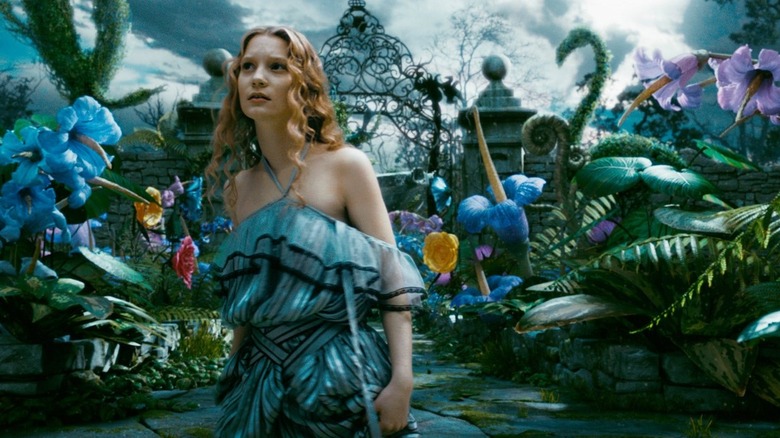
Believe it or not, 2010's "Alice in Wonderland" reimagining from Tim Burton took home two Academy Awards. Scoring wins in the Best Costume Sesign and Best Art Direction categories, that made "Alice in Wonderland" one of only a handful of movies to win multiple Oscars at the 83rd Academy Awards. What an oddly prestigious distinction for a tentpole lacking in creative verve. Burton's "Wonderland" is voyage into Lewis Carrol's world puzzlingly devoid of much color, whimsy, or wit. Instead, there's a lot of swordplay and Johnny Depp mugging towards the camera.
Granted, in the pantheon of underwhelming 21st century Burton directorial efforts, "Alice in Wonderland" doesn't come close to the dismal depths of "Planet of the Apes" and "Dumbo." At least the outfits (courtesy of cinema costume legend Colleen Atwood) do look divine, while certain voice-over performances (from the likes of Alan Rickman and Michael Gough) are laudable. Still, "Wonderland" does suffer from many of the problems plaguing most post-"Big Fish" Burton works.
Specifically, the weirdness (save for one bit involving a gigantic beasts plucked-out eyeball) is too formulaic rather than radiating the unpredictable chaos of earlier Burton works like "Beetlejuice" or "Batman Returns." The story's thoroughly predictable nature only amplifies the feeling that "Alice in Wonderland" is fonder of talking about chaos than engaging in it. The less said about the repulsive "realistic" computer-generated character designs, the better. Though not torturous to sit through, "Alice in Wonderland" frustratingly sees Burton in egregious autopilot mode.
Spectre (2015)
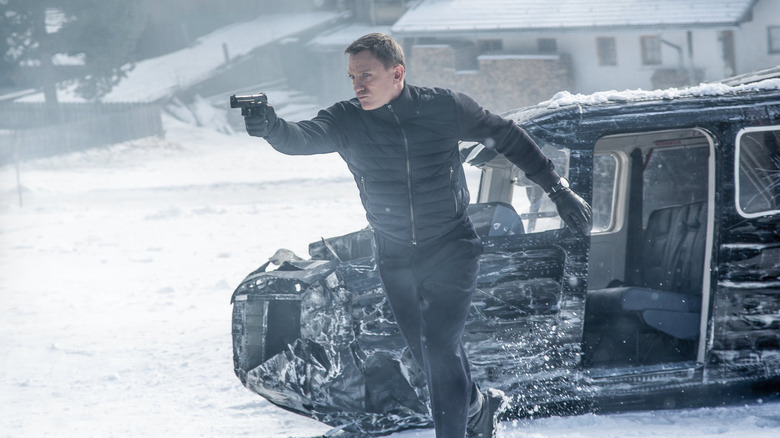
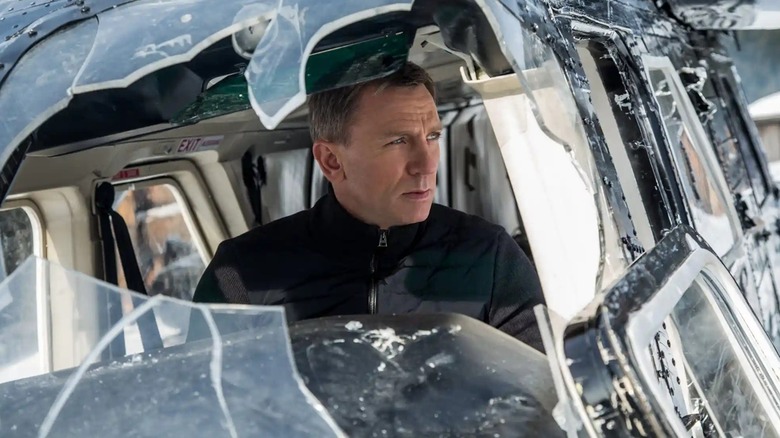
"Spectre" starts out on a solid note as an unblinking camera follows a masked James Bond (Daniel Craig) navigating his way through a crowded parade in Mexico City. This, of course, is a prelude to a skirmish with an assassin. It's a fine sequence to kick a new 007 adventure on, but then the opening titles begin and Sam Smith's dreadful "Writing's on the Wall" song consumes the soundtrack. The Academy bestowed this tune with a Best Original Song Oscar win, but that doesn't suddenly make it an actually agreeable anthem.
From there, "Spectre" is fitfully fun, especially whenever Bond contends with the tragically-underutilized henchman, Mr. Hinx (Dave Bautista). Director Sam Mendes still shoots the proceedings with a polished look (albeit with a less refinement than he did on 2012's "Skyfall"). However, "Spectre" eventually dissolves into a tedious reveal involving Ernst Stavro Blofeld's (Christoph Waltz) long-simmering connection to James Bond. The twist is dumb and this version of Blofeld isn't especially memorable or fun.
A prolonged third act light on really dazzling spectacle reinforces how the 148-minute "Spectre" is such a slog to endure. There's certainly elements and action beats in here that work, but by the time "Spectre's" script delivers the climactic line, "Isn't that what M stands for...moron?" it's all crumbled into a mess. Frustrating retcons of prior Craig-led Bond movies abound, but where's the fun? That terrible opening Oscar-winning song was an ominous harbinger for the film's overall quality.
My Octopus Teacher (2020)
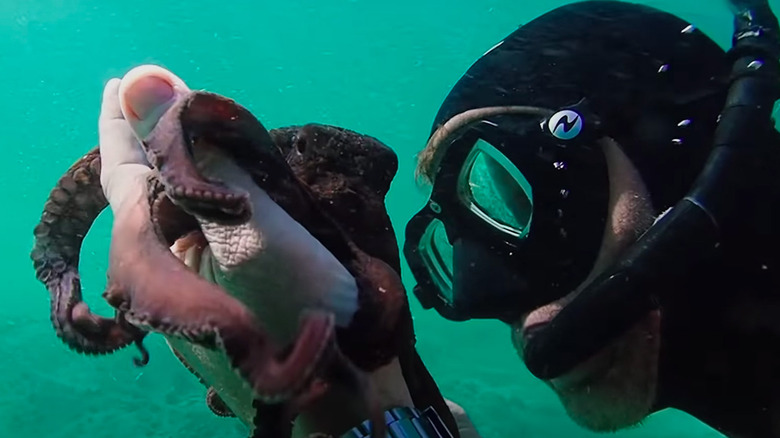
The 2020 Netflix documentary "My Octopus Teacher" follows Craig Foster as his various free-diving experiences in South Africa lead him to meet an octopus. Foster and this critter keep running into each other and eventually develop a strong friendship. This octopus, and the way she interacts with the world, even inspires Foster to live his life better in certain ways. It's a classic, tender tale of man bonding with an unexpected animal, with directors Pippa Ehlrich and James Reed trying to accentuate the pathos of this unity by reminding viewers that this all actually happened.
Make no mistake, "My Octopus Teacher" is a cute movie. The titular underwater animal is especially charming and the feature as a whole would undoubtedly be improved if it eschewed Foster's perspective entirely just to focus on her ordinary existence. Some of the aquatic imagery captured here is truly extraordinary as well. If there's a larger problem keeping "My Octopus Teacher" firmly in the realm of competent, but not great, it's simply that it's (ironically) a surface-level feature.
Nothing in either the story of "My Octopus Teacher" nor its form really delivers anything unexpected. It's a routine animal-based documentary in enough respects to keep it from being especially memorable. Oscar voters, though, went gaga for this project, as "My Octopus Teacher" somehow won the Best Documentary Feature Oscar over vastly superior and weightier nominees like "Collective," "Time" and "Crip Camp." Looks like cute animal friendships are just irresistible to awards voters.
The Artist (2011)
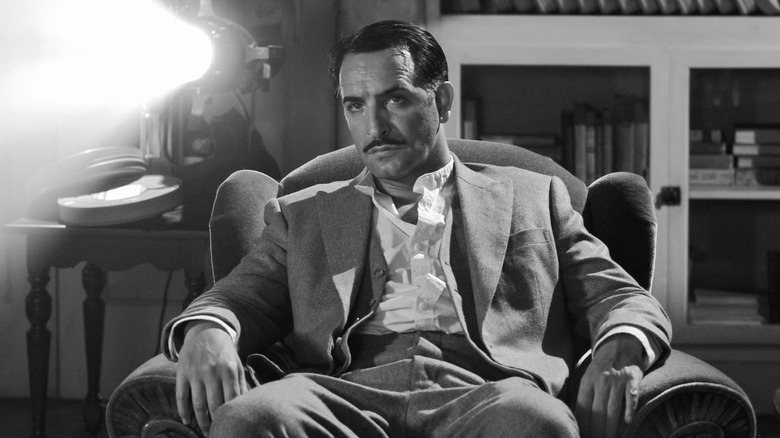
One problem with making a movie functioning as a feature-length homage to vintage cinema is that you're constantly reminding viewers of towering masterpieces. In the process, you can inevitably lead people to ask, "Why am I just not watching those sublime older movies instead?" It's a difficult process to make something new that harkens back to the past without getting overwhelmed or consumed by that legacy. This was the quandary 2011's "The Artist" confronted, with this project being seeped with the aesthetic of some of Hollywood's first major films, an era that produced silent horror movies that will give you nightmares.
Writer/director Michel Hazanavicius commendably commits to the bit with "The Artist," as he fully eschews conventional dialogue and sound. Lead stars Jean Dujardin and Bérénice Bejo, meanwhile, effectively channel classic stars like Janet Gaynor or Douglas Fairbanks in their physical performances. Still, "The Artist" never goes anywhere especially unexpected or thoughtful with its trip to the past. Anyone expecting some substantial insight on cinema's earliest years will leave disappointed.
Meanwhile, Hazanavicius and company's imagery can't hold a candle to the most striking visuals created by silent cinema masters like F.W. Murnau and Abel Gance. In calling back to pre-1930 cinema, "The Artist" unfortunately reaffirms how it isn't as visually distinctive as the motion pictures it's calling back to. The five worst Best Picture Oscar winners show far weaker films than "The Artist" have won this award, but that doesn't erase this film's struggles living up to silent cinema's artistic legacy.
Fantastic Beasts and Where to Find Them (2016)
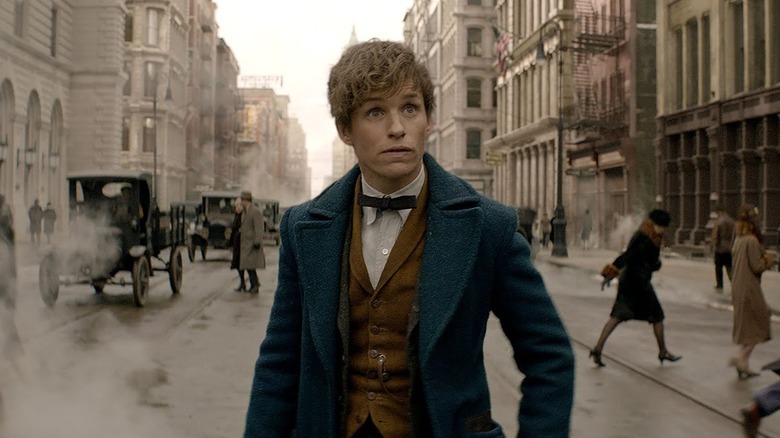
In hindsight, "Fantastic Beasts and Where to Find Them" could've been worse. A lot worse. Two further "Fantastic Beasts" installments that each went off the rails creatively make one slightly appreciate the elements that this inaugural outing did get right. A heavy focus on the charming Dan Fogler as human baker Jacob, for instance, serves this project well. Meanwhile, the more constrained scope of the cast (compared to the next two "Fantastic Beasts" entries) makes the drama easier to follow.
Above all else, at least this installment seems to have been designed to feature the titular "fantastic" critters from the get-go, whereas the sequels struggled to figure out how those animals could factor into their respective plots. Even with these details keeping "Fantastic Beasts and Where to Find Them" from traipsing into outright abysmal territory, this is still a largely underwhelming enterprise.
Not only is Eddie Redmayne's performance a bore, but too much of the film is told through dim lighting and drab colors. Visually unpleasant and emotionally stagnant, the charms of "Fantastic Beasts and Where to Find Them" are fleeting and not enough to overcome its grave problems. Puzzlingly, this enterprise did eventually score an Oscar win for Best Costume Design. Colleen Atwood's garbs for this project were certainly solid, but there were arguably countless 2016 features with superior costume work. Then again, perhaps we should all just be grateful it was this film and not "The Crimes of Grindelwald" that took home an Oscar. Now that would've been an unforgivable award season travesty.
Darkest Hour (2017)
Director Joe Wright doesn't always make masterpieces, but he's constantly pursuing unique visions and audacious approaches other filmmakers would ignore. 2012's "Anna Karenina," for instance, blurred the lines between a "staged" production and a traditional film to fascinating effect. A decade later, 2022's "Cyrano" was an unorthodox musical that wore its heart on its sleeve to endearing effect. In sharp contrast, his weakest works, like "Pan" and "The Woman in the Window," feel like they could've been helmed any director.
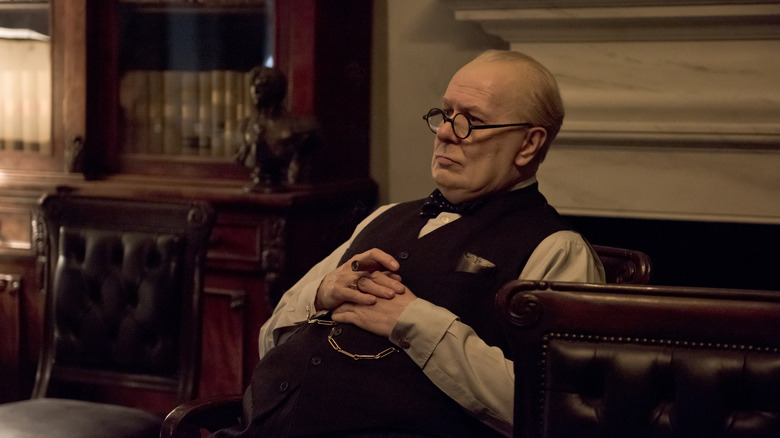
2017's "Darkest Hour," which follows Winston Churchill navigating endless political obstacles in May 1940, features its share of commendable flourishes. The more constrained narrative scope (covering just a month in Churchill's life) is a welcome departure from the default cradle-to-the-grave approach of most historical dramas. There's also some flashy visuals that only Wright's imaginative vision could produce.
Unfortunately, too often, "Darkest Hour" lapses into being a stuffy and routine British period piece. There's far too many straightforward images and dramatic beats within this motion picture, while the one-dimensional portrait of Churchill doesn't uncover new depths in a man endlessly explored previously in pop culture. Certain scenes and performances have enough vigor to keep one's attention, but "Darkest Hour" is too often paint-by-numbers. These shortcomings didn't stop the Academy from giving this middle-of-the-road Joe Wright directorial effort a pair of Oscar wins, including giving Gary Oldman his first Best Actor victory. If only other, superior Wright works experienced this level of Oscar success.
Judy (2019)
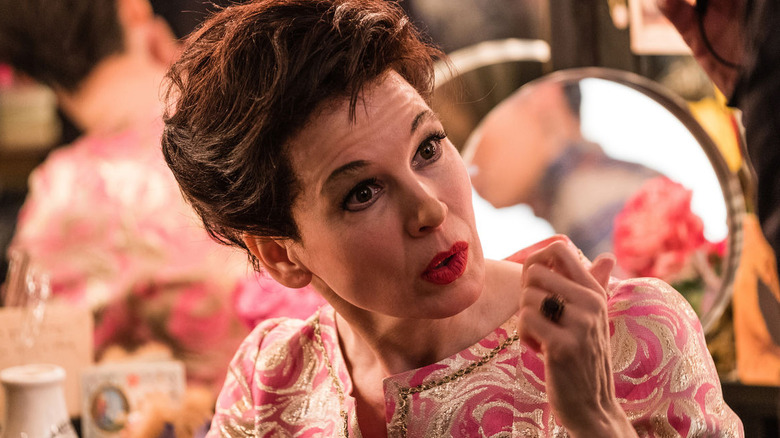
In hindsight, it's almost hard to believe the very existence of the 2019 film "Judy," which saw Renée Zellweger playing an older Judy Garland embarking on a London tour and falling in love with Mickey Deans (Finn Wittrock). This feature, which also contained extensive flashbacks to Garland's traumatic child actor days, came, won Zellweger a Best Actress Oscar, and then left without leaving much of an imprint. There are no famous memes or GIF's that came from this title. Nor are quotes about it constantly traded in real-world social conversations. It hasn't even randomly exploded on streaming in the years since it premiered.
This immediate post-release invisibility speaks to "Judy's" unfortunate problem of not being especially memorable as a film. Little in it is bad and most of the production details (costumes, sound work, sets, etc.) are well-constructed. However, director Rupert Goold realized this production with such a rudimentary approach that little in the title stands out as notable, for good or ill. It's all just going through the motions and giving the audience what they'd expect.
While the real Judy Garland's performances and art were rife with unexpected flourishes, "Judy" was just middlingly predictable. There's no question Zellweger does perform fine work inhabiting the finer nuances of Garland while rendering her a human being. However, beyond its Oscar accomplishments, there's just not much else to discuss about "Judy." It's far from terrible, but it also vanishes from your mind the moment the credits roll.
The Imitation Game (2014)
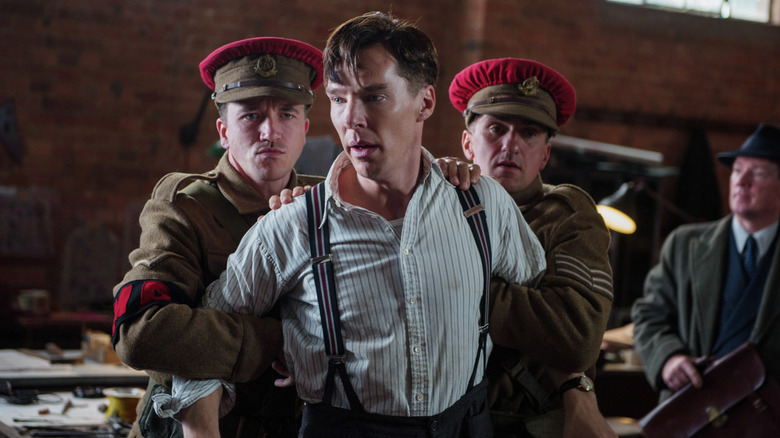
Benedict Cumberbatch's best movie and TV roles span across all genres and types of characters, from cruel, suppressed cowboys to Marvel superheroes, among so many other figures. Though he's had an extensive and esteemed career, the Academy has only seen fit to give Cumberbatch two Oscar nominations (both in the Best Actor category). The second of these came with "The Power of the Dog," which gave Cumberbatch ranking skills he used to help a family cornered by a cow herd. Seven years earlier, he scored his first Oscar nomination by playing Alan Turing in "The Imitation Game."
This Morten Tyldum directorial effort, which went on to win Best Adapted Screenplay at the Oscars, saw Cumberbatch playing a disagreeable, socially inept genius who could change the world. It's a role he's played many times in his career, though his best performances (in films like "Dog," "August: Osage County," and "The Book of Clarence") tend to deviate heavily from that archetype. Cumberbatch is comfortable and solid as Turing, but he neither stretches himself as a performer nor challenges the audience.
"The Imitation Game" as a whole adheres to that sensibility. The stacked cast turn in fine work and the whole thing is very polished, but it's also deeply lacking in a distinctive personality. This is a buttoned-up work too lacking in vigor or idiosyncrasies for its own good. Unless you're a Cumberbatch completist, there's little reason to make the disposable "The Imitation Game" a must-watch.
Hamlet (1948)
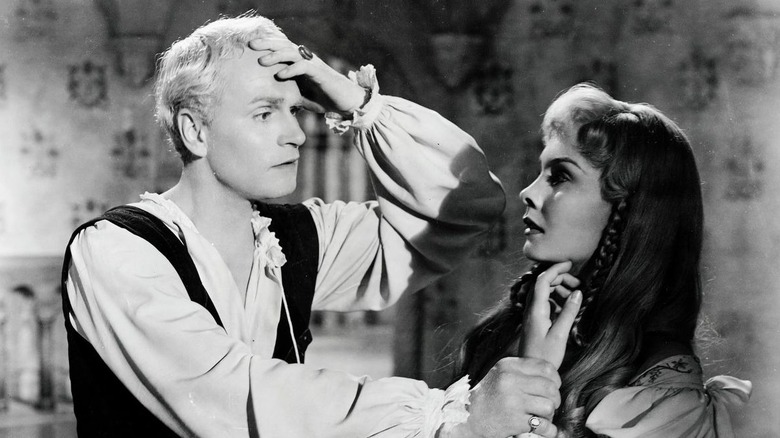
The best movie adaptations of William Shakespeare's plays reflect how The Bard's prose just won't die. This man's writing and characters keep reverberating into cinema's present in exciting, new ways that make arcane texts feel brand new. The only problem with this ubiquity is that a motion picture can't skate by on just the "novelty" of a being a Shakespeare adaptation. With so many motion pictures drawing from this playwright, you have to do something truly special to stand out from the crowd. Otherwise, you'll just contribute a bunch of noise that will get drowned out by the cacophony of your contemporaries.
1948's "Hamlet," the product of leading man and director Laurence Olivier, is unfortunately such a straightforward adaptation of "Hamlet" that it can't escape a feeling of redundancy. That's not to say the whole enterprise is a wash. Olivier's commanding acting style remains striking decades after this movie's release, while the feature's most evocative images similarly endure as commendable.
There are remarkable elements here, but too often, "Hamlet" feels like a feature going through the motions. Whether it's Olivier's performances, the staging, or the translation of key "Hamlet" moments into film, the proceedings can't evade a surface-level nature. Despite these issues, "Hamlet" was an Oscar juggernaut, winning four statues, including scoring Olivier awards for Best Director and Best Picture. Clearly, this legendary actor's lavish take on "Hamlet" struck a chord with enough people to cement it a towering award season legacy. That's the power of Shakespeare encapsulated.