

10 Worst Episodes Of Star Trek: The Next Generation, Ranked
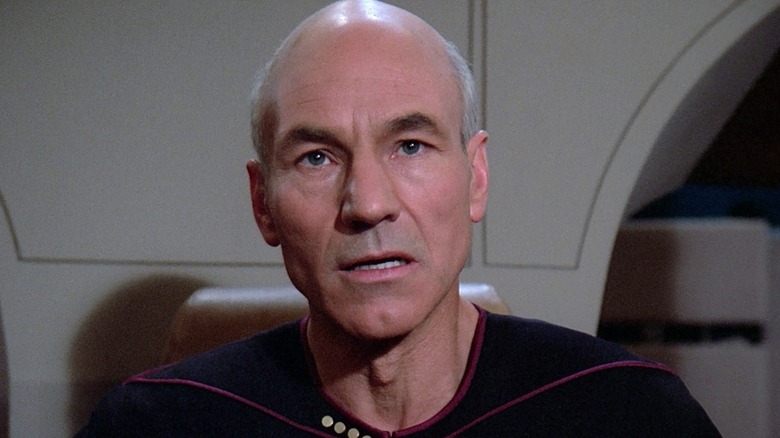
To this day, "Star Trek: The Next Generation" stands as one of the best entries in the canon, with its vision of an expanded ship's complement under the leadership of the diplomatic Captain Jean-Luc Picard (Patrick Stewart). During its run, the series racked up 17 Emmy Awards including a 1994 win for outstanding drama series, changing TV forever and raising the bar for small screen sci-fi ... most of the time, that is.
For all of Captain Picard's gravitas-heavy speeches and every culturally relevant allegory, "TNG" also has plenty of low points from mishandled metaphors to storylines that never paid off. While episodes like "Masks," which saw Data (Brent Spiner) transform into a pair of ancient, mask-wearing gods, and the blue-gilled parasite episode "Conspiracy," are divisive among Trek fans, there are a few that are almost universally hated. Here are the worst "Star Trek: The Next Generation" offenders ranked from almost-acceptable to tragically offensive.
10. The Last Outpost (Season 1, Episode 4)
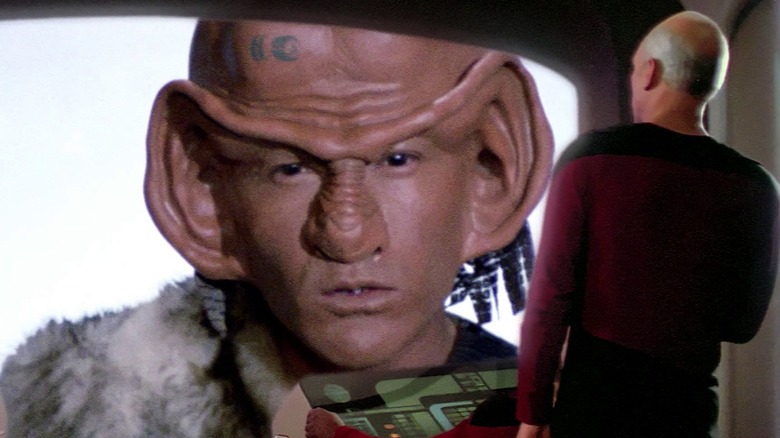
Long before Quark (Armin Shimerman) became one of the best characters on "Star Trek: Deep Space Nine," the Ferengi rollout in "The Last Outpost" proved less than impressive. Widely regarded as one of the worst offenders in an already messy first season, "The Last Outpost" presents a one-dimensional version of the Ferengi that borders on unwatchable thanks to some questionable writing and production decisions.
The episode finds the Enterprise tracking a shipload of Ferengi, a race the Federation had never encountered before, to recover some property. Both ships are inexplicably stopped in orbit above an ancient Tkon outpost suffering a power drain knocking many of their systems offline. As both races are forced to cooperate, it becomes apparent that the Ferengi are leering, capitalist creeps who find clothing on women abhorrent and are obsessed with gold.
The general concept of "The Last Outpost" is fine. Most of this episode's problems begin and end with how the Ferengi are written. Inspired to create a new villain, Gene Roddenberry pressed co-producer Herb Wright to come up with a species that stood out from the Romulans and Klingons of yore. Inspired by the greed and excess of the 1980s, Wright obliged, and the sexist, obsessively capitalist Ferengi were born. The only problem? The execution was devoid of subtlety or nuance, resulting in a caricature that felt almost cartoonish. Fortunately, the Ferengi gradually evolved into the more interesting iteration we get in "Deep Space Nine."
9. Man of the People (Season 6, Episode 3)
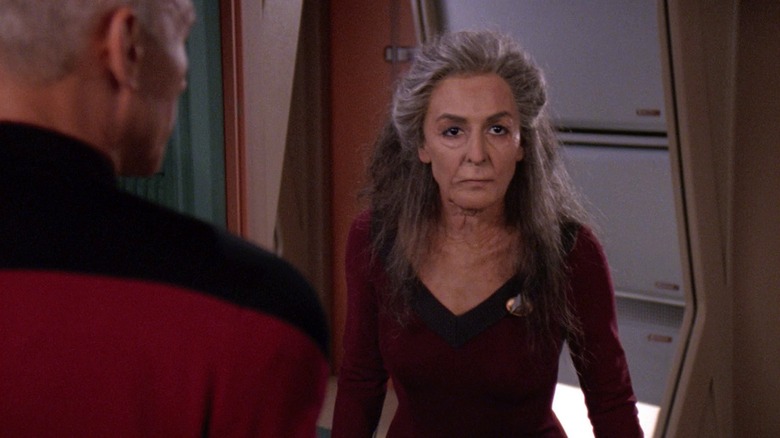
"Man of the People" is a Deanna Troi-centric (Marina Sirtis) "TNG" episode that, as unfortunately is too often the case when the lady bridge crew members get the spotlight, has a decidedly abusive angle to it. The story finds the Enterprise-D crew navigating a complex negotiation between two factions, one that threatens Federation interests. Arriving to defuse the situation, we meet mildly empathic Lumerian diplomat Ambassador Ramid Ves Alkar (Chip Lucia) accompanied by an elderly woman (Susan French) introduced as his mother.
Before long, Alkar and Troi strike up a friendly rapport. Later, the diplomat's "mom," Sev Maylor, confronts Troi, asking if she has slept with him yet. When Maylor dies of unknown causes shortly thereafter, Troi helps Alkar with Maylor's "funeral ceremony," which involves interacting with some funeral stones. From there, the episode devolves into a preternaturally rapidly-aging Troi throwing herself at Alkar and just about every other man she crosses paths with. It's eventually revealed that Alkar used those "funeral" stones to hijack Troi's empathic abilities, using her as a dumping ground for his negative energy, and draining her body of vitality as a side effect.
The episode is among several that see Troi's body abused without her consent. The focus on objectifying Troi rather than emphasizing the trauma she's forced to endure make this one of the worst episodes to draw on this mishandled trope.
8. The Child (Season 2, Episode 1)
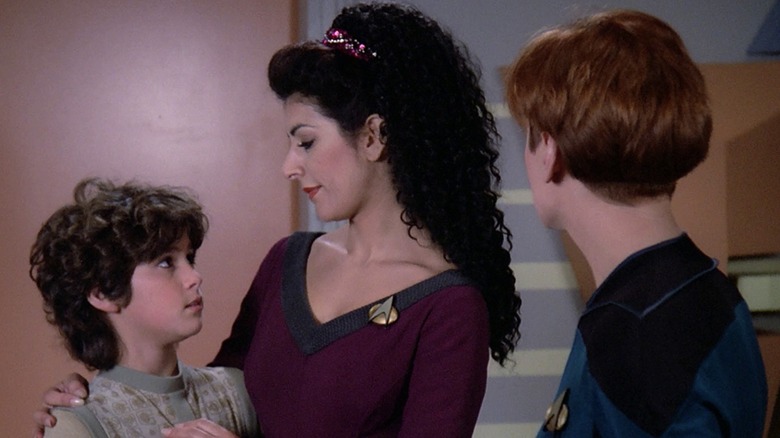
"The Child" is another obscenely Troi-violating "Star Trek: The Next Generation" episode, one that finds Troi impregnated without her knowledge by an alien being she then births, raises, and watches die within mere days. The pregnancy begins when a tiny energy ball floats its way into the ship, taking up residence inside Troi's womb, where Dr. Pulaski (Diana Muldaur) observes stunningly rapid fetal development.
As the bridge officers discuss what to do about the security crisis, Troi isn't having it. It's her body, and by gosh, if she wants to endanger her life for a non-consensually implanted life form, it's her choice. 36 hours post-implantation, Troi delivers a half-Betazoid, half-human baby boy she names Ian (R.J. Williams). As he experiences human existence firsthand, Ian grows to around 8-years-old within the first day. But when he realizes his radiation is interacting with some sketchy cargo, Ian abruptly decides to peacefully self-exit, leaving a tearful Troi childless once more.
The episode largely fails to address any of the complex physical and emotional issues associated with pregnancy and loss. While Troi isn't the only one to gain and lose a child over the course of a single episode — Data also experiences this in one of TNG's best episodes, "The Offspring" — her devastating loss is never mentioned again. Perhaps even more egregiously, it makes Riker (Jonathan Frakes) act like a total Chad when he accusatorially asks, "I don't mean to be indelicate, but who's the father?"
7. Justice (Season 1, Episode 7)
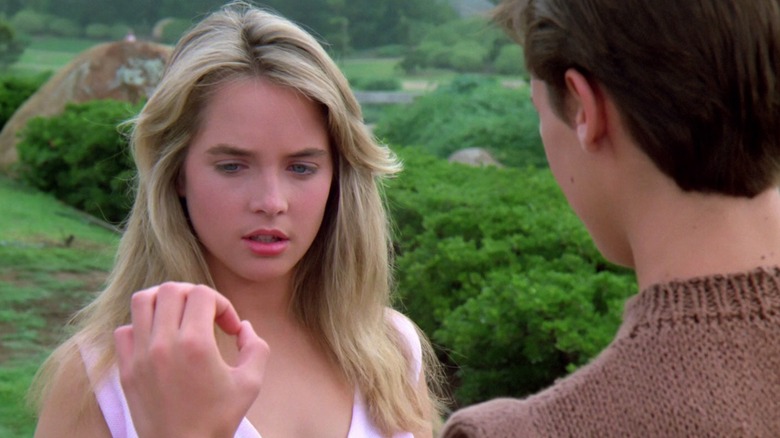
Frequently landing on lists of the worst episodes in the entire "Star Trek" canon for its cringe-inducing Epsteinian subtext, absurd plot, and wanton Wesley-whomping is the horny Season 1 "TNG" flop "Justice." The episode begins with the Enterprise delivering McGuffins to a random solar system when, surprise, they spy an idyllic planet populated with nubile blonde ingénue-coded young women and men dressed in what appears to be Spirit Halloween "Sexy Toga" costumes. The whole thirst trap is so inviting that everyone completely spaces on the whole Prime Directive thing and decides to drop in uninvited.
Tasha Yar (Denise Crosby) and Geordi La Forge (LeVar Burton) share what they've learned of the planet's human-like inhabitants, noting that they're both "puritanical" and "ultra lawful" while at the same time making love "at the drop of a hat." No red flags are raised, and Picard feels it's a great place to bring the minor child working aboard. So of course everyone is rightfully shocked when Wesley Crusher (Wil Wheaton) accidentally breaks a rule and gets sentenced to death.
This planet is unbearable to watch, from the bad bleach blonde wigs to how the Edo people sensually greet the away team and invite them to "play at love." The whole thing feels in line with the very worst "Star Trek: The Original Series" episodes, down to the cheesecake costuming.
6. Sub Rosa (Season 7, Episode 14)
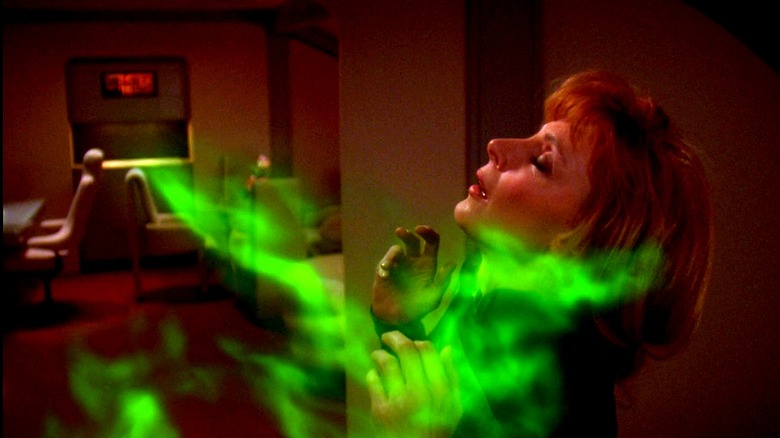
"Sub Rosa" is one of those fever-dream "Star Trek" episodes that's so head-scratchingly absurd it's hard to understand what you're seeing at times. Once again, we get an episode centered around one of the Enterprise women that turns out to be about someone or something violating her body. Throw in an obligatory "best-girlfriends-chatting-about-how-much-they're-turned-on-by-some-dude" scene, and it's peak Roddenberry "Next Generation" in the post-Roddenberry era.
The drama unfolds when Crusher (Gates McFadden) visits the Disneyfied Scottish colony her grandmother recently died on. After burying her Grams, Beverly finds herself enthralled with the old lady erotica in her grandmother's journal, which outlines the woman's affair with a younger man. Before long, the Dancing Doctor is sensually possessed by a horny green ghost guy named Ronin (Duncan Regehr) who claims to have been ghost-banging Beverly's entire family line since the 17th century. Beverly doesn't quite believe him, but she's so turned on by Ronin's ghost hands that before long, she's ready to dip on the Enterprise for her ancestors' sloppy seconds.
As if all that wasn't absurd enough, Ronin turns out to be a non-corporeal energy creature living in a vintage plasma candle who parasitically clings to his ladies by possessing their bodies. Even if he makes them feel really good while he's doing it, the whole vibe is pretty nonconsensual. If all that wasn't enough, there's also a zombie grandma resurrection thrown in the mix.
5. Rascals (Season 6, Episode 7)
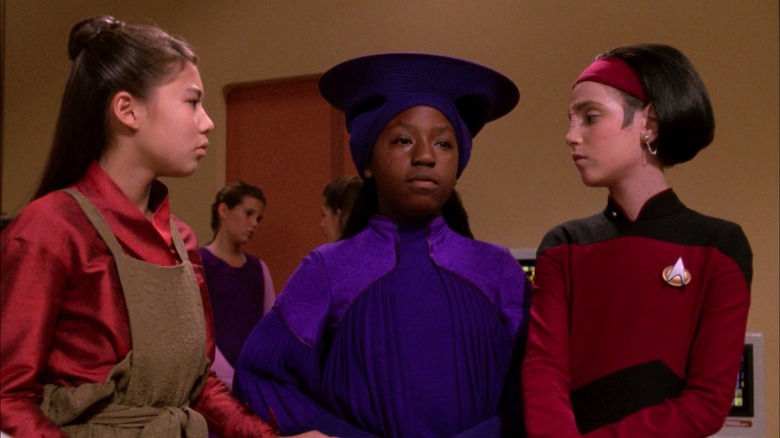
"Rascals" is an episode that, conceptually, could have been a funny, "Fistful of Datas"-esque storyline if not for the poor writing and acting. The episode finds Guinan (Whoopi Goldberg), Keiko (Rosalind Chao), Ro Laren (Michelle Forbes), and Picard nerding out on their hyperfixations en route back from an expedition when their shuttlecraft suddenly breaks up in an energy field, forcing Miles O'Brien (Colm Meaney) to beam them out on the fly with his fancy transporter chief magic. Except, oopsies, they all rematerialize as kids with their adult minds intact.
Although Crusher almost immediately identifies the problem as a straightforward and correctable transporter error, everyone gets temporarily relieved of duty so we can spend some time enjoying a quartet of adorable Starfleet officers in their uniforms. While they're busy dragging their feet, a gaggle of rogue Ferengi show up to menace the crew, and shenanigans ensue as the grownup children pose as actual children.
It's a long, poorly-paced episode that missed its chance to be funny, full of uninteresting moments and far too much focus on Ro Laren's brooding. Its one saving grace is a moderately amusing self-referential scene where Riker dazzles a Ferengi with nonsensical technobabble.
4. Up the Long Ladder (Season 2, Episode 18)
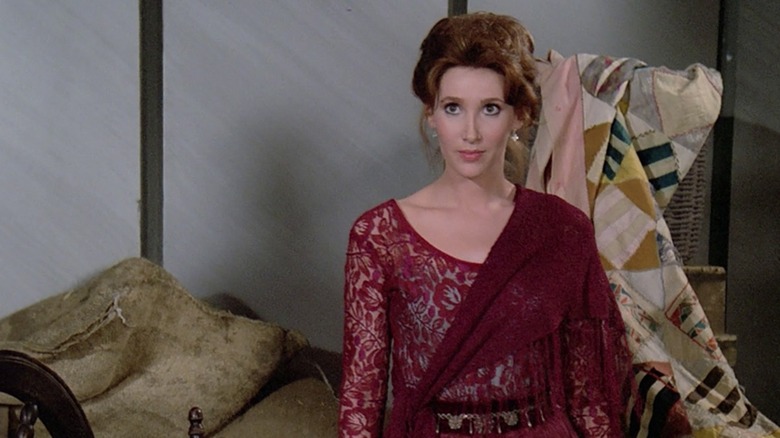
"Up the Long Ladder" deals with the Enterprise assisting two very different human colonies with serious problems. First, they beam up the Bringloidi, a small population of about 200 offensive Irish stereotypes who've been living an off-the-grid lifestyle when their planet is suddenly threatened by life-threatening solar flares. It turns out they're a pretty flexible crew, and everyone is happy drinking and dancing in an Enterprise cargo bay until a new home is found. The second group, the Mariposans, are a colony made up entirely of clones. After generations of clinical scientific duplication, they've all forgotten how to make babies, which is inconvenient because their DNA has started to go all Hapsburg jaw thanks to genetic drift.
The good news is that, in between running cover for Worf's (Michael Dorn) B-plot Klingon measles, Pulaski comes up with a plan to solve everyone's problems. The bad news is that the plan is compulsory polyamorous breeding between the sex-naive Mariposans and the uncouth Bringloidi in all their sexy cottage core glory.
Much like the tipsy Bringloidi leader Danilo Odell (Barrie Ingham), this episode is positively loaded with loathable moments, from an unfortunate feet stuff scene to the even more unfortunate decision to call the Bringloidi "breeding stock." It's an episode that wasn't great back then and has since aged like sour milk.
3. Angel One (Season 1, Episode 13)
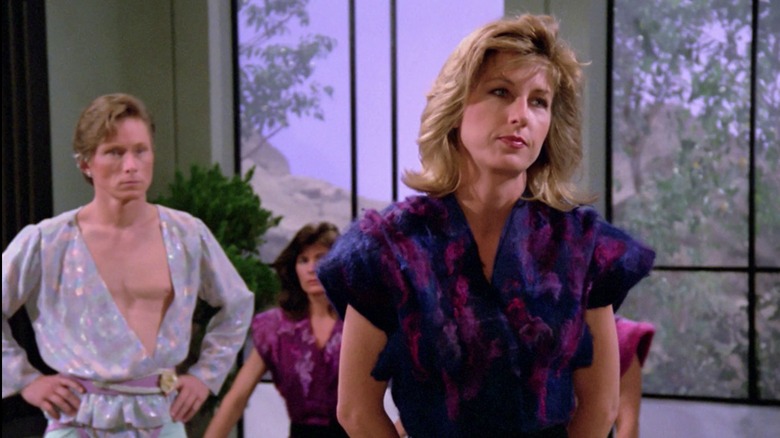
"Angel One" is a prime example of "Star Trek" tackling an ostensibly important social justice issue with good intentions and then absolutely fumbling it. In this case, it's the concept of patriarchy, which has been gender-swapped in the matriarchal society of Angel One.
The Enterprise-D crosses paths with the planet while searching for the survivors of a disabled freighter. They find the freighter crewmen, who have long since settled into life on the planet, taking wives and starting families along the way. But on the female-dominated Angel One where the ladies rule and the men only exist to please them, the survivors' egalitarian partnerships are a major taboo — the kind that warrants a death penalty. Meanwhile, the Enterprise crew is stuck in bed suffering from yet another inconvenient B-plot illness that, for some reason, smells like perfume.
Like far too many "TNG" Season 1 episodes, "Angel One" overplays the cringe-inducing erotic moments like when Data declared himself "fully functional" in "The Naked Now." Riker wearing a saucy, flamboyant femme top is a rare highlight, but it's not remotely entertaining enough to make up for all the alpha-dogging overkill from the Angel One crew.
2. Shades of Gray (Season 2, Episode 22)
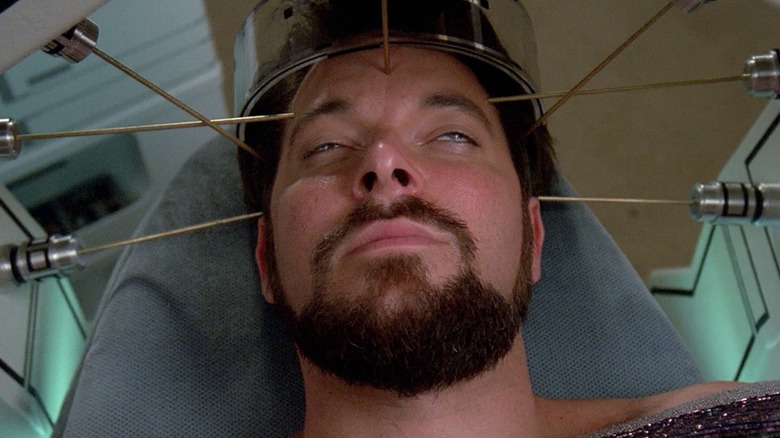
Even the best sci-fi franchises are entitled to their budget-saving, phoned in entries — so long as they're worth watching. It's one thing to produce a great character-developing midseason bottle episode, and quite another to throw together a half-hearted clip show like the Season 2 finale "Shades of Gray."
"Shades of Gray" is a Riker episode that finds the officer mind-glitching through his memories thanks to an alien infection picked up on yet another ill-conceived away mission that could have been avoided had only one officer thought to send down a recon drone first. Riker's away adventures on planet Red Flag are cut short when he's suddenly bitten by a mystery critter. Fortunately, he's fine and in his usual high spirits — that is, until mere moments later, his body rapidly starts to go numb, causing Pulaski to declare he'll be dead within the hour.
To buy herself time while trying to find a cure for Riker's space Lyme disease, the doctor plugs him into a neural stimulator. That's when we learn that the illness and all of its associated exposition is just a prelude to the episode's true purpose: rehashing Riker's big scenes from Seasons 1 and 2. Considered by fans as one of the worst episodes among the lower register of "Next Generation" stinkers, "Shades of Gray" adds nothing to the series aside from taking up space where a quality season-ending cliffhanger should have been.
1. Code of Honor (Season 1, Episode 3)
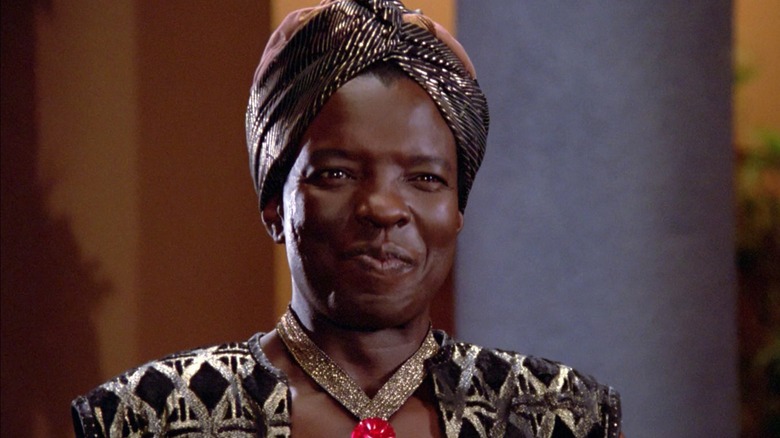
On paper, "Code of Honor" isn't necessarily the worst "Star Trek: The Next Generation" episode. The plot, which finds an Enterprise security officer competing in a one-on-one cage fight-gladiator situation, has been done a few times in the canon. The problems stem from the absurd rendering of the obscenely sexist alien race, all played by Black actors whose portrayal is disturbingly reminiscent to retro Hollywood's depictions of tribal Africans.
Like the myriad of other "Star Trek" episodes that deal with the Starfleet transporting or administering a vaccine, "Code of Honor" begins with what could have been a fairly routine pickup on a lifesaving immunization on the planet Ligon. But the Ligonian leader Lutan (Jessie Lawrence Ferguson) spies something he likes in the spicy Tasha Yar and turns the party into a good old-fashioned kidnapping.
Between his first wife's displeasure with the turn of events and the Federation's inclination to maintain diplomacy with the people who fully Helen of Troyed a Starfleet command officer, Yar ends up in a sexy gladiator style fight-to-the-death. The harem-pantsed Lutan leers on from the sideline in all his oiled-up, bare-chested glory as the ladies' catfight plays out. After a drawn-out display of fight choreography blocked with all the skill of a middle school drama class, Yar puts Yareena (Karole Selmon) out of her misery — a mercy the episode Frakes called "a racist piece of s**t" (per TrekMovie) could only wish for.