

5 Most Controversial Changes Fallout Season 2 Made To The Game's Lore
Lore never changes. Or, at least when it does, someone tends to get upset. The first season of "Fallout" ended up blowing everyone away, and part of the reason for that was the way the Prime show managed to capture the spirit of the games. It stayed mostly faithful to the established "Fallout" canon and told a genuinely entertaining story that stands on its own.
The ending of "Fallout" Season 1 put the show's main character on the path to Las Vegas. That set the series on a collision course with the mountains of lore from 2010's "Fallout: New Vegas," and fans had to brace themselves for changes. In Looper's review of "Fallout" Season 2, we had plenty to say about what makes the show so entertaining, but that's not everything hardcore fans want in a "Fallout" TV series.
The second season of "Fallout" made some changes to the lore from the games, and fans are likely going to be debating the full implications of them for years to come. Here are the five most controversial alterations that the showrunners decided to make.
The show's Brotherhood is not like the games
The Brotherhood of Steel is arguably the most iconic faction in "Fallout," and to the uninitiated, they might look like the heroes of the franchise. Brotherhood members get to use Power Armor and wield the coolest weapons, but in the games, they are not really interested in ruling over or protecting the Wasteland. The Brotherhood was created solely to gather and hoard pre-war technology to prevent humanity from ever creating nuclear levels of destruction again. From time to time, when Brotherhood leaders became too focused on saving lives in the Wasteland, factions would splinter off to return to the Brotherhood's original purpose.
In the "Fallout" TV series, the Brotherhood definitely cares about collecting technology, but that's not its sole focus. Quintus (Michael Cristofer) wants to consolidate power and have the Brotherhood, under his control, become a major player in the Wasteland. While talking with Maximus (Aaron Moten), Xander Harkness (Kumail Nanjiani) implies that the Commonwealth Brotherhood is all about protecting the Wasteland from danger. This doesn't tally with the Brotherhood from the games.
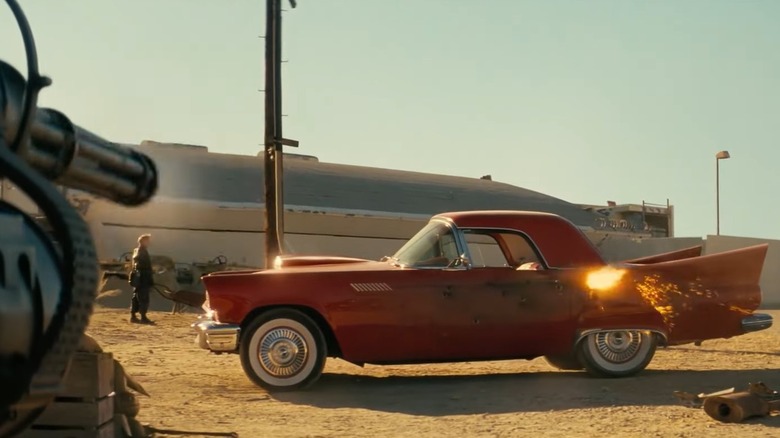
Also, the lower-level Brotherhood members we see in the TV show don't seem that concerned about the group's original mission. In Season 2, the Brotherhood uncovers a stash of technology at Area 51. Among the treasures is a perfectly preserved classic car — which the Brotherhood Knights excitedly shoot at until it blows up. The moment is a funny reference to how "Fallout" players make use of preserved cars, but it was too out of character for the Brotherhood for some fans. "They're supposed to preserve and catalogue pre war tech," one Redditor pointed out. "So shooting an invaluable, intact, probably working, pre war car is just absolute gobledigook."
The original Caesar is already dead
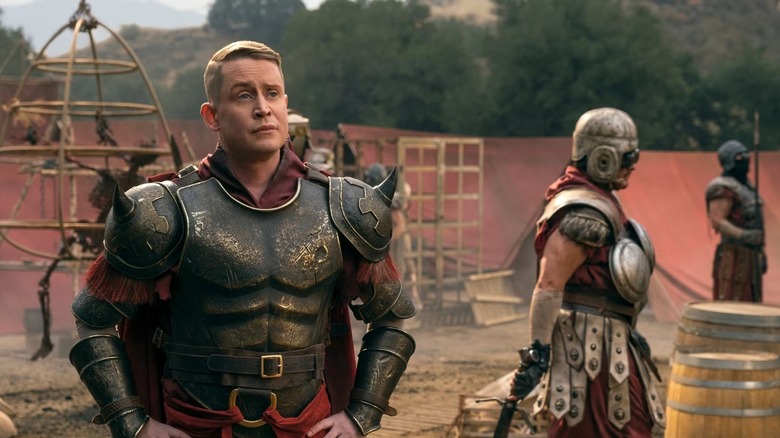
The second season of "Fallout" brought in several major characters and factions from "Fallout: New Vegas," including Caesar's Legion. Led by co-founder and original Caesar Edward Sallow, the Legion is one of the groups in "New Vegas" vying for control of the Mojave Wasteland. Players have the option of siding with the Legion in a battle against the New California Republic for control of the still-functioning Hoover Dam.
Fans are torn on the way the show has handled the Legion so far. The Prime series properly introduces them in the Season 2 episode "The Profligate," in which Lucy (Ella Purnell) becomes their prisoner. While attempting to save her, the Ghoul (Walton Goggins) learns that the Legion has been in the midst of a civil war — Sallow is already dead, and there are two new would-be Caesars claiming control.
In "Fallout: New Vegas," Sallow has a brain tumor, and, if the player doesn't cure him, he dies. However, there are several outcomes to this storyline that leave Sallow's fate open. The show has taken a big swing by not only confirming Sallow's death, but having it take place off screen and at a different point in the timeline. By the end of Season 2, the Legion has a new leader (played by Macaulay Culkin) and is set to clash with the NCR in Season 3.
The fate of the NCR is still an issue
In its first season, the "Fallout" TV show changed the game's lore in some big ways. The show revealed that Shady Sands, the capital city of the New California Republic, got blown up by a nuclear bomb by Lucy's father Hank (Kyle MacLachlan). Season 2 answered some lingering questions that fans had about the NCR, but it also introduced some new and somewhat confusing changes regarding the faction.
The NCR primarily shows up in two episodes in "Fallout" Season 2. In "The Profligate," the Ghoul and Lucy meet a couple of NCR soldiers who've apparently been waiting for reinforcements to meet them out in the desert for years. When the Ghoul talks to the soldiers, he seems to imply that the NCR is completely gone — though fans should remember that he's actually been buried alive for several decades. The NCR then shows up in a much bigger way in "The Strip," the season finale.
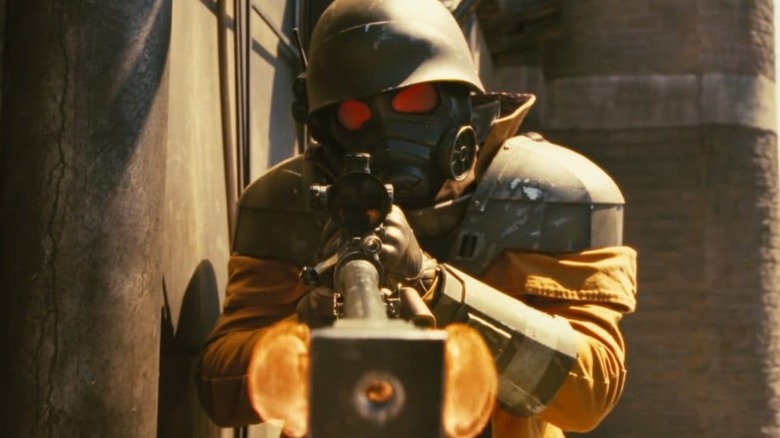
Using some NCR power armor, Maximus is able to defeat several of the Deathclaws that have taken up residence on the New Vegas strip. Eventually, the Deathclaws start overwhelming him, but, at the last moment, a group of NCR soldiers shows up to save the day. This moment confirmed that the NCR isn't as finished as the Ghoul thought, but it's still a far cry from the large and prospering post-apocalyptic nation that fans know from the game. Many fans aren't happy about having so little information about such an important group in the "Fallout" universe.
Robert House is digital now
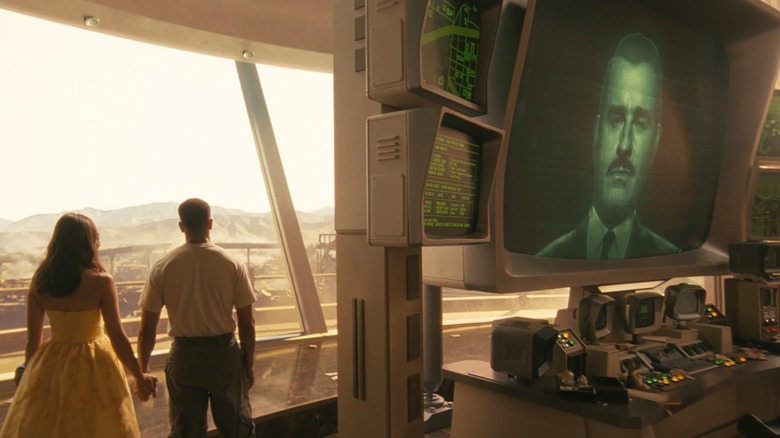
The "Fallout" series is inextricably linked with the events of "Fallout: New Vegas," which takes place years before the show in the franchise's timeline. In "New Vegas," players have the option to side with one of several different factions to determine the fate of the Mojave Wasteland. In one of the endings, players side with Mr. House and help him establish a firm grip on the Strip. In other endings, players find House's physical body in a special preservation pod and kill him in whatever ridiculous fashion they can imagine.
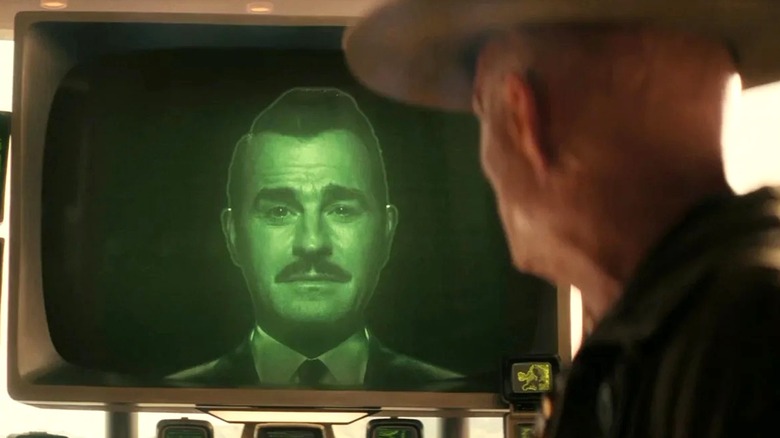
The "Fallout" Season 2 finale revealed that House (Justin Theroux) is very much alive, but he's digital now, communicating with the Ghoul through a screen. House tells the Ghoul that he had himself digitized because his physical body had become a liability to his long term plans, a nod to the games. "Over the years my body became a target for wandering travelers with something to prove," he says.
In his speech, House references some fan-favorite ways of killing him in "New Vegas." His explanation means that the show technically isn't contradicting anything that happened in any of the endings from "New Vegas." It's a smooth way to avoid stepping on the game's legacy, but having House exist inside a computer rather than in a pod is still a big change made for the series.
The Enclave is still around
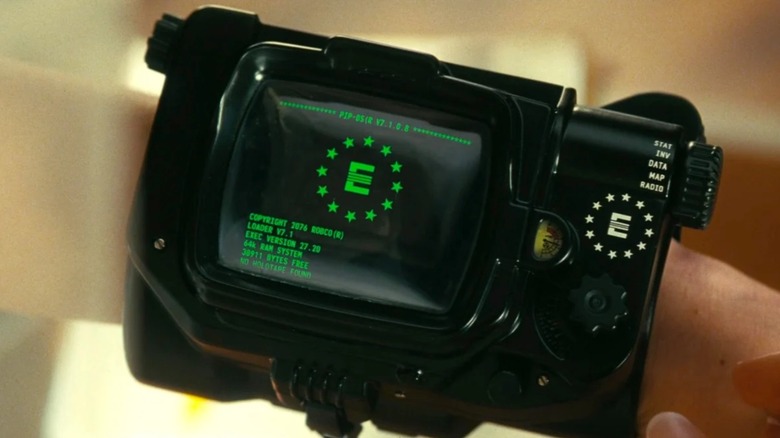
"Fallout" Season 2 kept its biggest reveal for the finale. After the Ghoul saves Lucy from Hank, Lucy decides to fit her dad with the mind control chip that he had intended to use on her. Lucy then forces Hank to leave the underground Vault-Tec office, and, on the steps of the Lucky 38 casino, Hank admits to something huge: He tells Lucy that the Wasteland itself is one grand experiment that's being controlled by a secret organization that existed before the war. This line blew the minds of "Fallout" game fans, even if it didn't leave all of them happy.
While talking to Lucy, Hank doesn't explicitly say the name "Enclave," but we see the faction's iconic logo from the game and a building that is presumably the group's secret headquarters in the mountains. The Enclave being around in the "Fallout" TV series is a huge change from the games because players destroyed the villainous faction all the way back in "Fallout 3."
To be fair to the show, there's already precedent for bringing the Enclave back from the dead as a surprise villain. Before players had the option to blow up the Enclave's Washington D.C. base in "Fallout 3," they fought the faction on the West Coast in "Fallout 2." That game ended with the Enclave being "destroyed," so maybe we shouldn't be that surprised that they're still lurking in the Wasteland in the TV series.