

'70s Shows That Broke Network Rules
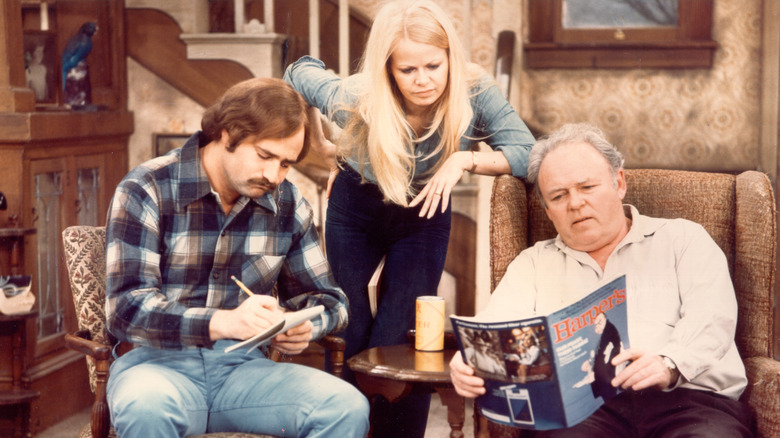
The 1970s was a transitional era for small screen entertainment. Many of the best TV shows of the 1970s, were built around the younger generation's free-spirited ideals clashing with the stubborn old guard that still held the power and weren't giving it up without a fight.
And that dichotomy wasn't only happening on screen. Behind the scenes, creative struggles abound in the '70s, with writers hungry to push boundaries and break away from the safety of '60s television constantly butting heads against older executives who didn't think middle America was ready for edgy.
It's hard to imagine that these creative teams were given any guidelines when you consider what series like "Three's Company" and "Taxi" got away with. But indeed, these four shows each found themselves in the direct crosshairs of their network, and were forced to find creative ways to bend — if not outright break — direct mandates from executives.
M*A*S*H
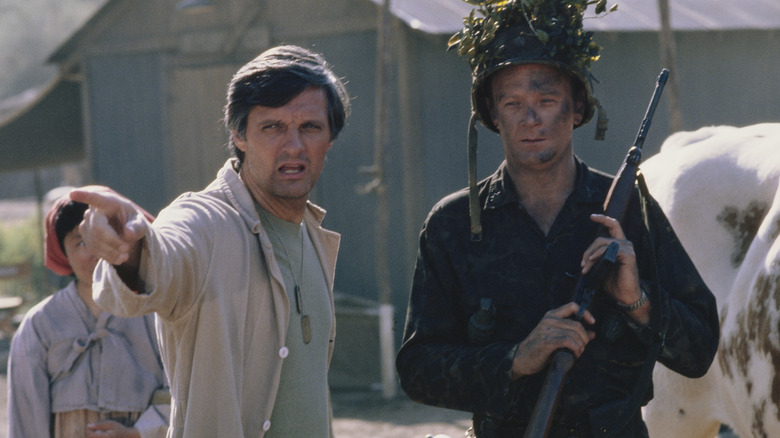
While "Hogan's Heroes" tried to mine the atrocities of Nazi war camps for sitcom silliness, fellow CBS show "M*A*S*H" used a mix of comedy and heavy drama for its wartime setting. Even then, its comedy always stemmed from light moments among the staff and patients of the titular medical facility, rather than making light of the Vietnam War.
Even so, executives didn't seem to have a problem with comedy shows about war. That is, until those shows got naughty. For instance, the network forced the writers to remove Radar (Gary Burghoff) referring to himself as a "virgin," outright forbidding the use of the word. In response to that, the team wrote a scene in a subsequent episode where a character says he is from the Virgin Islands — which, being a real place, the network had no reason to object to. And thus, they got the word in.
Another way the "M*A*S*H" crew circumvented network guidelines without the network getting wise was to intentionally overload a script with a mild cuss word — such as "damn" — that CBS only allowed limited use of. When the note would come back that a script had too many of such a word, the network would be sufficiently appeased when the writers would cut the number of utterances in half, often letting them use a lot more of the word than they otherwise would have.
Maude
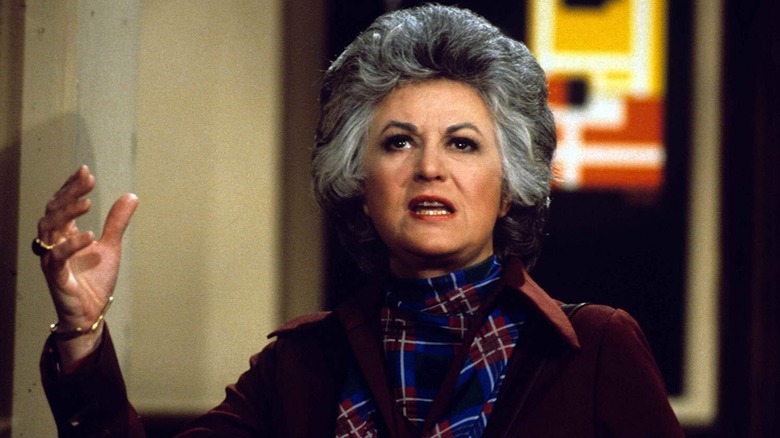
Though not immune to scenes that aged poorly, "The Golden Girls" remains popular specifically thanks to its progressive nature. And those who knew star Bea Arthur beforehand knew that this style of sitcom — that depicted the lives of older woman with equal comedy and frankness — wasn't new to her. And that said show, "Maude," likewise wasn't afraid to tackle subjects that were not only taboo at the time but are still more often than not avoided to this day.
A spin-off of "All in the Family," "Maude" hadn't even reached the end of its first season before the show decided to wade into a topic that literally hadn't ever been addressed on primetime television before that point — abortion. In the two-parter "Maude's Dilemma," Maude (Arthur) discovers that she is pregnant. Being 47, not to mention already a grandmother, Maude sees nothing but cons in going through with the pregnancy and ultimately decides to terminate it. To its credit, CBS actually okayed the episode, asking only that, regardless of what Maude ultimately chooses, the plotline explore both views on the topic, a request the writers agreed to.
However, some of CBS's affiliates deemed that "Maude's Dilemma" broke their specific rules. Two Illinois-based affiliates refused to air the episode at all, the first time that happened in CBS's history. After the episode aired, the backlash picked up steam, and a total of 40 affiliates wouldn't air "Maude's Dilemma" in reruns.
Saturday Night Live
Almost everything about "Saturday Night Live," from it being a 100% live broadcast to its unpolished "not-ready-for-primetime" cast of players, was designed to rock the very foundations of network television. While creator Lorne Michaels has since become a television legend, he initially battled with the network in the sketch show's early years. And that precedent was set in the very first episode, over the very first guest host.
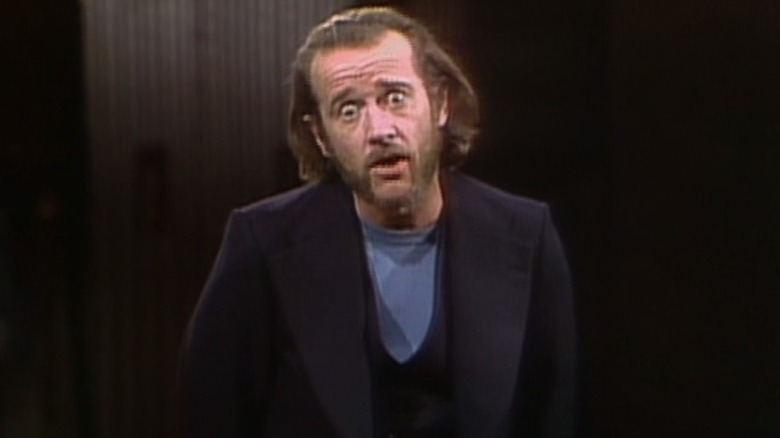
Legendary comedian George Carlin was known at the time for his unkempt, hippie-influenced style that involved wild hair and casual — often brightly-colored — attire. For whatever reason, NBC thought that the host of a late night screwball comedy should dress like they were emceeing a prestigious event. And so the network demanded that Carlin not only wear a suit, but that he cut his hair.
As it is now widely known, Carlin wasn't going to be made to do anything on "SNL" he didn't want to do — including sketches that were specifically written for him. Needless to say, the haircut didn't happen. As for the suit, he at least relented and put on a jacket, but had on a clearly visible blue shirt underneath. And like that, "SNL" established itself as a rebel that was going to either skirt the rules, or defy them completely. And since the show is live, there isn't anything NBC can do until after the fact — and by then, it's already been seen by millions of people.
All in the Family
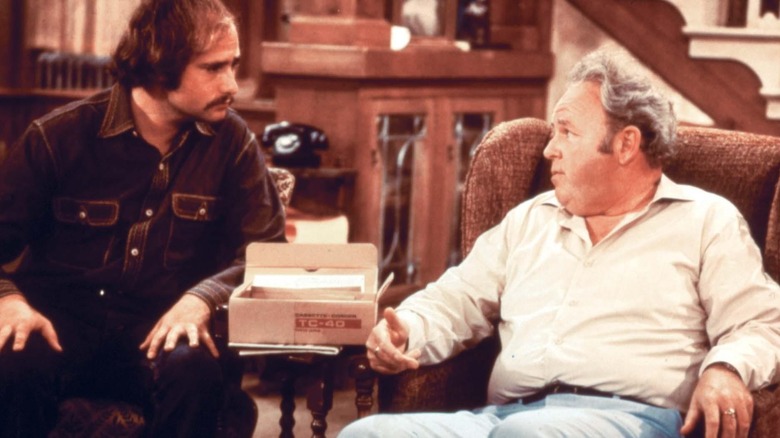
Given that its popularity led to an entire "All in the Family" TV universe, it's safe to say that the creatives behind the anchor series had earned some serious clout with CBS. Now, the network deserves a lot of credit for not only greenlighting "All in the Family," but letting it push so many boundaries that resulted in multiple landmark pop culture moments. But that's not to say that the network didn't still try to bring the censorship hammer down a few times.
Once again, the mention of sex got executives nervous. The network tried to axe a joke in the first episode that only lightly inferred interrupted sex — sex between a married couple, no less — but creator Norman Lear pushed back. It was a minor, easily excisable line, but he knew he'd be setting the precedent for giving into every note and demand requested if he didn't fight for it. In fact, he literally battled with the network over that one joke until the night the episode was set to air. Lear won, but not without CBS slapping a content warning at the beginning.
And for the remainder of "All in the Family," Lear was sent notes that he either pushed back against, or outright ignored. But when you're the highest-rated show on television for half the decade, you can get away with that type of thing.