

10 Great TV Shows That Feel Like Long Movies
The line between film and TV used to be clearer. Films were projected on the silver screen, where most stories were told with a beginning, middle, and end. TV shows, on the other hand, were produced in smaller, bite-sized pieces at 30 to 60 minutes long, with each segment featuring its own three-act story. Normally, each episode would reset so that the story would stand alone. This way, no viewer was required to watch every episode to understand what was going on.
With the advent of TV recording like TiVo (remember that?) and home video streaming apps like Netflix, everything changed. Now, TV shows don't need to be reset every episode. And since creators now know audiences will watch each episode in order, they can make TV shows that tell one sprawling story like a really long movie. Here are the 10 best TV shows that tell a sprawling story just like an extended film.
Mindhunter
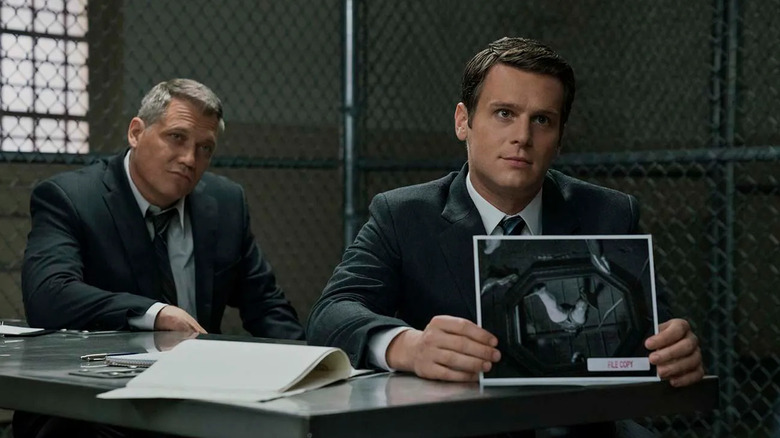
David Fincher was one of the very first filmmakers to work with Netflix on its original programming. As such, he helped define the cinematic, serialized streaming format with "House of Cards." Yes, there were broadcast dramas like "Lost" and cable hits like "The Sopranos" that had filmic qualities to them, but these shows were still in the model of what had come before, with each episode focusing on one story while still advancing a broader story. It was in "House of Cards" that Fincher brought his exacting eye for detail to TV and used it as a canvas to tell a single, expansive story, but with his follow-up series, "Mindhunter," he perfected it.
Fincher is no stranger to serial killer detective stories, having made two canonical genre entries with his grisly thriller "Seven" and his meditative "Zodiac," but many would say "Mindhunter" is among the best work of his career. The series follows three FBI agents who pioneer the Behavioral Analysis Unit at the FBI, plumbing the minds of serial killers to understand how they think and hopefully thwart future killers.
"Mindhunter" feels very much like a Fincher film with its stunningly photographed scenes and extreme attention to detail. Fincher was so exacting in fact that it ended up being the show's undoing. In an interview with French newspaper Le Journal du Dimanche, Fincher revealed that the series was "a very expensive show and, in the eyes of Netflix, [it] didn't attract enough of an audience to justify such an investment."
Beef
One of the defining elements of a 'TV show that feels like a really long movie' is that, like a feature film, you should feel the need to watch it all in a single sitting. Few shows reward that kind of anti-social behavior more than Netflix and A24's "Beef."
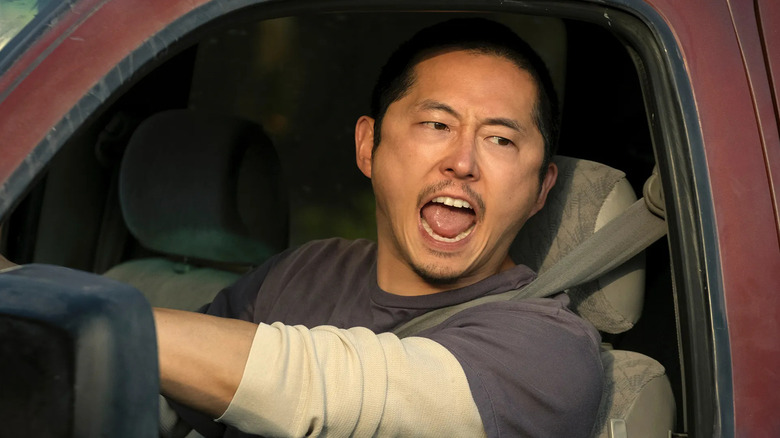
If you've ever felt a tinge of road rage when someone cuts you off, you can relate to the premise of this blisteringly funny and cathartic series in which Danny (Steven Yeun) obsessively pursues a woman (Ali Wong) who flips him off on the road. Both are trapped in a hell of their own making, living unhappy lives that are already spiraling out of control before their newfound enemy pours gasoline on the fire, to hilarious results.
With only 10 episodes at 30 minutes a piece, "Beef" is easily one of Netflix's most bingeable shows. Its expanded scope allows it to probe deeper into the psychology of its characters than any comedy film ever could.
Band of Brothers
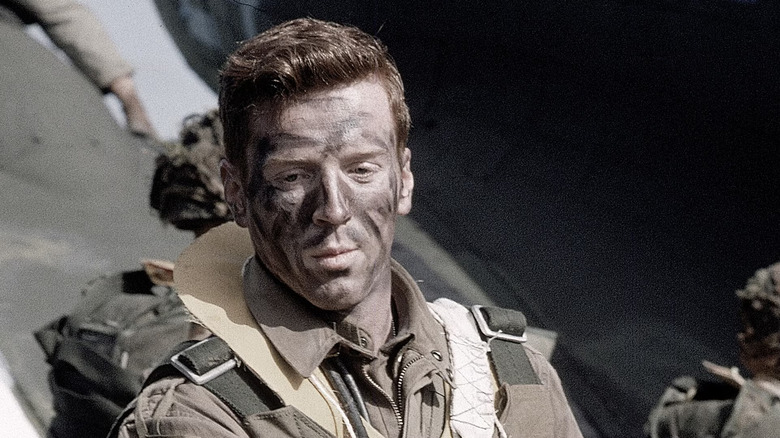
Everyone's dad loves watching World War II films, which might explain why there are so many to choose from, but one of the very best isn't a movie at all. It's the HBO miniseries "Band of Brothers." Steven Spielberg and Tom Hanks had already created one of the most viscerally realized war films with "Saving Private Ryan," but they outdid themselves in almost every respect with this spiritual sequel that followed a parachute infantry team known as "Easy" Company throughout the war.
"Saving Private Ryan" was no slouch when it came to realism, but with the epic scope of a 10-hour prestige miniseries, "Band of Brothers" was able to go even farther, giving each member of "Easy" Company a moment to shine. With a level of verisimilitude that had never been seen on TV before, "Band of Brothers" is one of the best World War II stories bar none. After you watch it, the follow-up series "The Pacific" is waiting for you as well.
Scavengers Reign
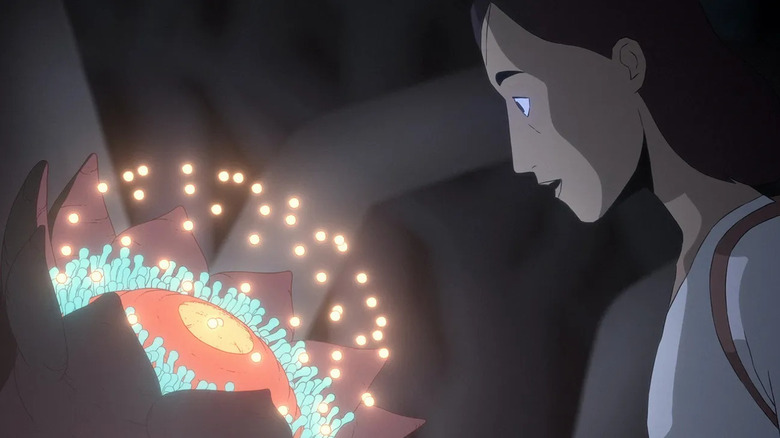
In the Western world, adult animation has a fairly narrow definition. These are typically crudely drawn and even more crudely written sitcoms like "Family Guy" and "Big Mouth" which use animation to bring bawdy comedy to life. But any anime fan knows that animation can be used for a lot more than scatological humor and "Scavengers Reign" is the rare American animated series that plays less like a rip-off of "The Simpsons" and more like Hayao Miyazaki's enigmatic post-apocalyptic film "Nausicaa of the Valley of the Wind."
"Scavengers Reign" follows three sets of survivors who crash land on a bizarre alien planet and struggle to survive and return home. One pair, Sam (Bob Stephenson) and Ursula (Sunita Mani), gradually uncover the planet's secrets while another, the resourceful Azi (Wunmi Mosaku) and her droid companion Levi (Alia Shawkat), are transformed by the planet's influence. Last is the cowardly Kamen (Ted Travelstead), who finds himself bonded with an alien creature that uses him for ulterior motives.
The art of "Scavengers Reign" is unlike anything you've ever seen before, making it the rare series you can't look away from for fear of missing a new beautiful creature or vista. Sadly, HBO Max canceled the series in 2024, but "Scavengers Reign" now lives on Netflix, while the creative team has invested themselves in a worthy follow-up, "Common Side Effects," which is on HBO Max and applies a similarly distinctive visual style to the paranoid thriller genre.
The Last of Us
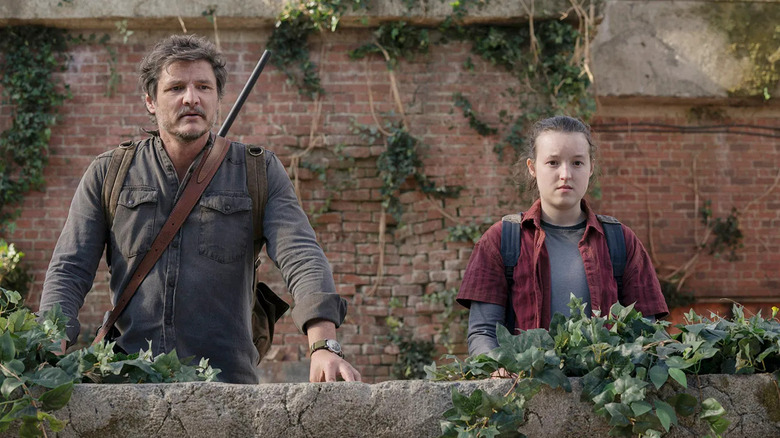
"The Last of Us" may be an odd choice for this list considering that it often feels more like the video game it is adapting, but the video game strives so hard to feel like a feature film it's only natural that the HBO adaptation also ends up feeling like one really long movie. The series was more or less directly translated from the story of the two "Last of Us" games, with Season 1 framing hardened survivor Joel (Pedro Pascal) as the reluctant babysitter to a mysteriously immune child, Ellie (Bella Ramsey), as the unlikely duo go on a road trip across America.
The series strikes a smart balance between retaining the "playable character" focus on Joel while also using the prestige TV aesthetic to expand and deepen the supporting cast of characters and give us a better understanding of both the world before the cordyceps took over and what followed in their wake. Season 2 was well received by critics, adapting roughly half of "The Last of Us Part 2." With Season 3 on the way, this "movie" is slowly creeping towards its dramatic conclusion.
Adolescence
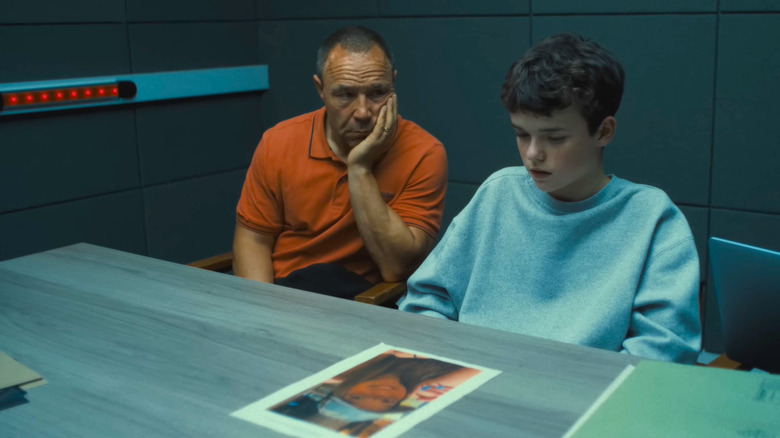
Most of the series on this list are 10 or more hours long, but "Adolescence" pulls off an ambitious season of TV in only four episodes, meaning this TV show is just about as long as some movies. The series tells the story of a father (Stephen Graham) who must come to grips with why his son (Owen Cooper) has brutally killed one of his female classmates.
This dark procedural drama is widely considered one of the most gripping and tense shows of 2025, thanks largely to the bold choice to shoot each episode in a single continuous take. This transforms what could be a fairly ordinary miniseries into a white-knuckle high-wire act that never gives you a moment to catch your breath. Few films are as ambitious as "Adolescence," and for that reason alone, it's an easy addition to this list despite the controversy which surrounded it upon its initial release.
The Queen's Gambit
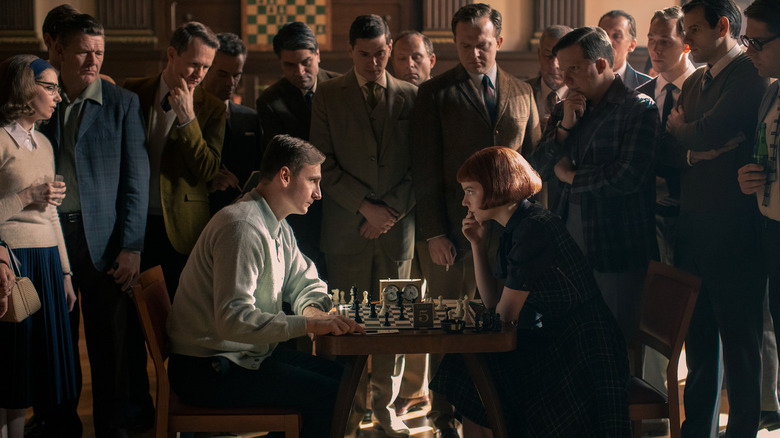
Anya Taylor-Joy was already well on her way to A-list status by the time "The Queen's Gambit" premiered on Netflix in October 2020, but her steely performance in the miniseries made her a bona fide star. Not many actors could make chess, a famously meditative and sedentary game of wits, look cinematic and enthralling, and Taylor-Joy did exactly that as Beth Harmon in the adaptation of Walter Tevis' novel.
During the series, Beth transforms from a wayward orphan to a chess grandmaster, but her inner demons threaten to sabotage everything she's built for herself. Like a feature film, "The Queen's Gambit" delves deep into Beth's psyche. The series tracks her journey similar to how a great sports film might, with all the dramatic highs and crushing lows that come with chasing perfection. We'll likely never see a Season 2 of the critically acclaimed series, which is probably for the best since "The Queen's Gambit" already functions so well as a page-turning paperback novel.
Devs
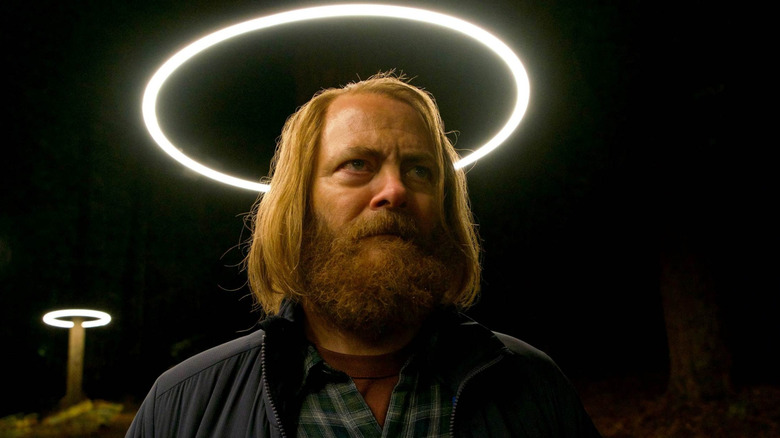
Alex Garland can be something of a controversial figure. Either you vibe with his particular brand of science fiction nihilism in which humanity appears doomed to destroy itself or you find his filmmaking too cold and calculated to be emotionally affecting. No matter where you fall on Garland, you cannot doubt that his FX miniseries "Devs" is one of the filmmaker's most ambitious projects.
Over the course of six episodes, Garland crafts a propulsive conspiracy centered around a Silicon Valley tech company's attempts to unlock the future of humanity. The series explores the cutting edge of what technology is capable of, asking questions about free will and human existence as a software engineer (Sonoya Mizuno) uncovers a conspiracy centered around the apparent suicide of her boyfriend (Karl Glusman) after he is taken in by the company's mysterious founder, Forest (Nick Offerman).
Garland wrote and directed every episode of "Devs," bringing his precise visual language to the small screen in a six-hour miniseries that will worm its way under your skin, with a captivating performance by Offerman and star-making turns for veteran character actors Stephen McKinley Henderson, Zach Grenier, and newcomer Cailee Spaeny. "Devs" questions whether humanity has any free will or if our every decision is predetermined. Either way, you'll have no choice but to watch the next episode.
Andor
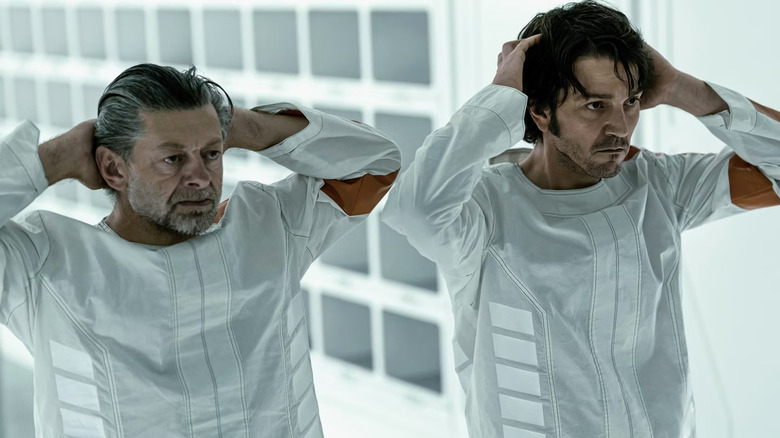
"Star Wars" was made strictly for the big screen, with each installment of the Skywalker saga making full use of the latest technological breakthroughs to craft some of the most exciting action spectacles of all time. Over time, this shifted, beginning with "The Clone Wars" series, which brought the galaxy far, far away to television. The trend continued with Disney+ streaming series like "The Mandalorian" delivering filmmaking spectacle to the small screen. But these other series still lean heavily into the episodic feel of TV, crafting bite-sized stories of life in the galaxy.
"Andor" is something completely different. A prequel to "Rogue One," "Andor" is, like the best "Star Wars" stories, about outsiders unlocking their own greatness to fight for peace and justice in a lawless galaxy. But unlike anything else in "Star Wars," "Andor" does so with one foot firmly planted in the history of real-world revolutions.
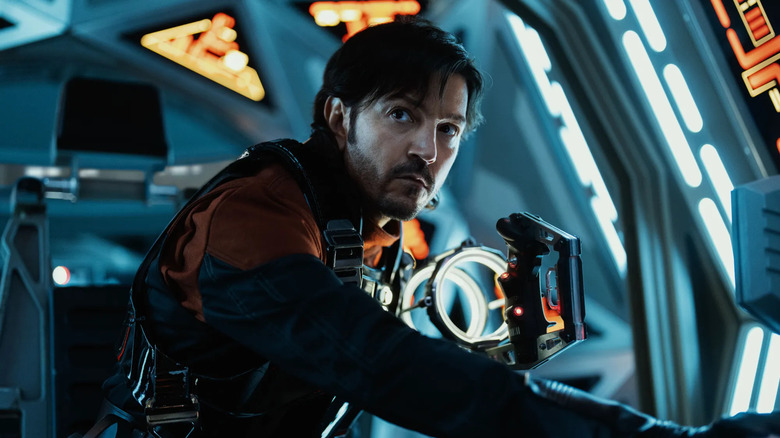
"Andor" isn't just a show that feels like a movie: It's actually eight movies. Each season is made up of three mini-arc episodes, illustrating Andor's (Diego Luna) journey from sleazebag to hardened rebel operative. Along the way, you see a perspective of the galaxy unlike anything you've seen before with emotional moments throughout that tug at your emotions and make you pump your fists in delight as the struggle for a free galaxy becomes more tangible than ever before.
Twin Peaks: The Return
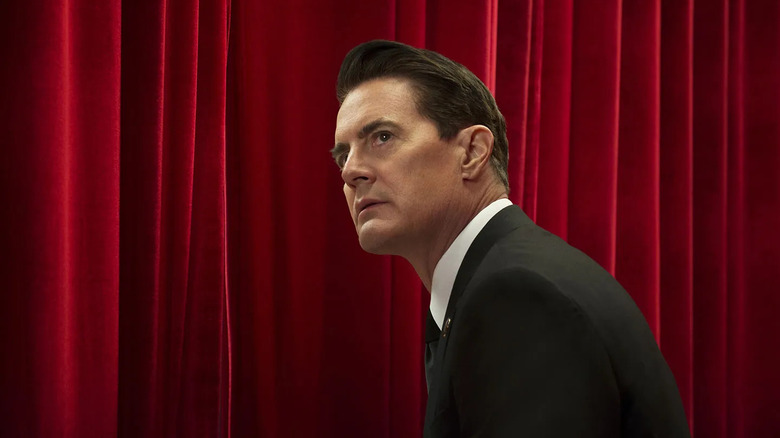
In the 2010s, every TV network scrambled to find the biggest shows for legacy sequels, and David Lynch's "Twin Peaks: The Return" stands as one of the most remarkable achievements. Lynch was already an accomplished director when he created the original "Twin Peaks" on ABC, with films like the industrial art film "Eraserhead" and the provocative "Blue Velvet." Still, it was the bizarre and idiosyncratic detective series starring Kyle MacLachlan that turned Lynch into a household name. The series was very much a TV show, with an episodic feel that slowly unraveled the mystery of who killed Laura Palmer (Sheryl Lee). 25 years later, Lynch returned to the secluded town of Twin Peaks for a third season that brought the unique visual language he had developed over the preceding two decades back to TV.
The result is one of the most radical deconstructions of TV as a medium, although Lynch himself insisted on calling "The Return" a film. It's impossible to grapple with everything in "The Return" one episode at a time. Since Lynch died in 2025, the series has screened in theaters around the country, allowing audiences to see the stunning compositions and striking sound design as the filmmaker intended. It's not hyperbole to say that "Twin Peaks" changed everything we thought we knew about TV, and movies, too.