

10 Horror Movies You Didn't Know Were Remakes
Remakes of horror films get a bad rap, and mostly for good reason. The genre is littered with ill-conceived or unnecessary "reimaginings" of classic horror titles as "Child's Play" and "The Omen," multiple takes on "Halloween" and "The Texas Chain Saw Massacre," and the much-reviled "A Nightmare on Elm Street," which Redditors have declared the absolute worst horror remake ever.
But the idea that all horror remakes are terrible is not only reductive but also untrue: Even a cursory glance at the last 50 years of screen horror will show that some of its best and most beloved films — David Cronenberg's "The Fly," John Carpenter's "The Thing," Gore Verbinski's "The Ring," Takashi Shimizu's 2004 take on "The Grudge" — are in fact, remakes.
The truth is that there are a lot of horror remakes, and not all are terrible. Nor are they as well-known as "The Thing" or "The Fly." There are dozens of movies (if not more) that draw on international or obscure horror flicks as source material. Here are 10 horror films that you might not know are remakes — and that you might want to know better.
Let Me In (2010)
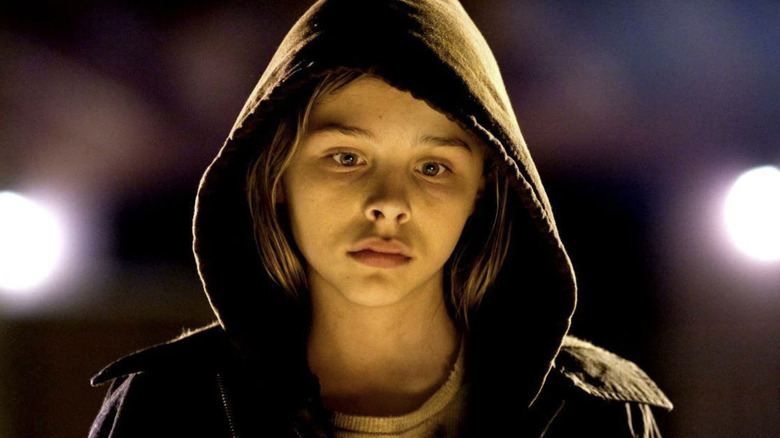
In most cases, horror remakes are criticized for straying too far from the original, or altering its story in unsatisfactory ways. However, Matt Reeves' 2010 feature "Let Me In" earned a few brickbats for hewing too closely to its source: Tomas Alfredson's 2008 adaptation of John Ajvide Linqvist's novel "Let the Right One In." Both films follow very similar plots involving a bullied young boy (Kåre Hedebrant in the 2008 film, Kodi Smit-McPhee in Reeves' version) who befriends a new neighbor (Lina Leadersson/Chloe Grace Moretz) who may be a vampire. Many critics praised Reeves' take — Stephen King called it one of the best films of 2010 — but some took it to task for bearing too close a resemblance to its predecessor.
"How he can take the credit 'written and directed by Matt Reeves' seems almost laughable when you note how similar the script and the direction are to the original?" wrote Beth Accomando from KPBS, adding, "A 'lifted by' or 'facsimile by' might be more accurate." Granted, these negative reviews are in the minority, and "Let Me In" is generally considered to be one of the best horror remakes from the 2000s. But these films also illustrate a point that's often not addressed in the discussion of horror remakes: They can falter for being too faithful to the original film in the same way that they can stumble for straying too far afield.
We Are What We Are (2013)
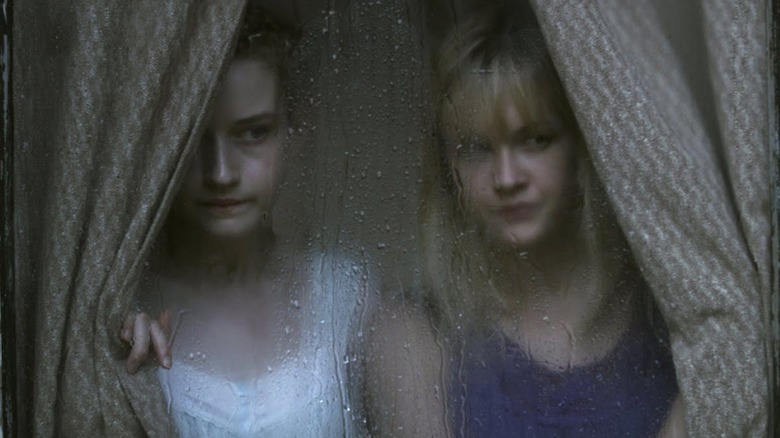
A slow burn horror film with a gruesome payoff, 2013's "We Are What We Are" drew praise from critics both for its unsettling premise — an insular religious family struggles to hold up its time-honored tradition of ritual cannibalism — and director Jim Mickle's restrained approach to the material. "The film is intimate and poignant, a human story of growing up and yearning to be like everybody else in cloistered culture that demands strict obedience and violent defense," noted Stream on Demand.
The story didn't spring entirely from Mickle and co-writer Nick Damici (though they took it in an intriguing new direction); "We Are What We Are" is actually a remake of a 2010 Mexican film of the same name. Both the 2010 and 2013 films follow similar plots with minor deviations. In Jorge Michel Grau's original version, it's the family matriarch that tries to keep the practice alive for her children, while Mickle's shifts the focus to two sisters (Julia Garner and Ambyr Childers) who struggle with their father's demands.
Both films also have streaks of social criticism: In Grau's version, it's a corrupt society that allows the family to exist, while in the 2013 remake, repressive tradition leads to the persistence of the family's customs. However, Grau's film also allows for moments of queasy satire (courtesy of Daniel Gimenez Cacho, who reprises his turn as a coroner from Guillermo del Toro's hidden horror gem "Cronos"), while Mickle's take is deadly serious.
Silent House (2011)
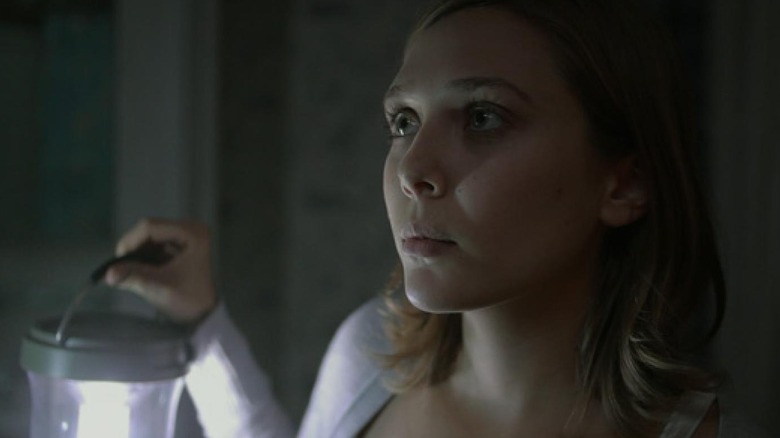
Critics and audiences appear to really, really dislike "Silent House." The 2011 independent horror film, which stars Elizabeth Olsen as a young woman who encounters strange supernatural phenomena in her crumbling family home, unfolds in what seems to be a single, unbroken take (it isn't) and almost entirely in darkness. Response to the film was mostly negative — it's rated just 42% on Rotten Tomatoes — which is curious, because it's a fairly close remake of a 2010 Uruguayan film, "La Casa Muda," which features the same single-take aesthetic and a very similar plot but scored a much higher 68% on the review aggregator.
The different responses seem due to the execution of the films and their respective payoffs. "Casa Muda" director Gustavo Hernandez uses a single, handheld camera to follow his lead (Florencia Colucci) through the house, while Chris Kentis and Laura Lau ("Open Water") rely on a more polished look for "Silent House."
As Roger Ebert noted in one of his last reviews before passing away in 2013, "It became clear that the house, and the movie containing it, were devices to manufacture methodical thrills." The American ending, too, seemed to upset audiences by making explicit the reason behind the ghostly goings-on, while Hernandez keeps it cloaked in ambiguity. "The premise and clues we're presented with [in 'Silent House'] promise something far more interesting than what we get," wrote Dan Kaufman from Paste.
Speak No Evil (2024)
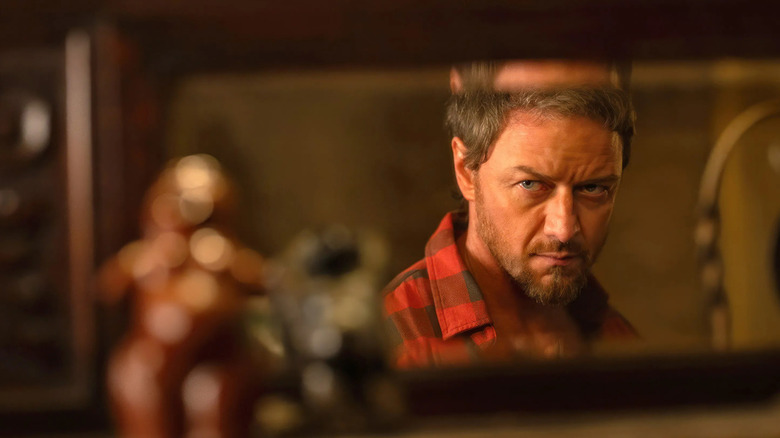
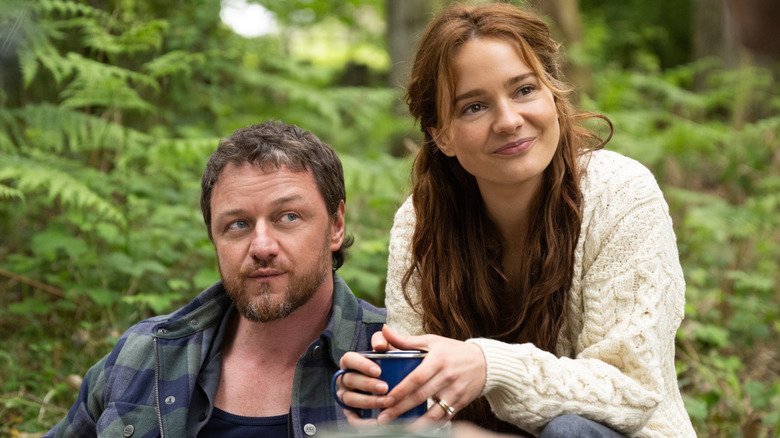
The derision that seems to meet horror remakes that alter the story or intensity of the source material didn't materialize for 2024's "Speak No Evil." The Blumhouse production, directed by James Watkins ("The Woman in Black"), follows a nearly-identical plot to that of the 2022 Danish film of the same name in which a tourist family discovers, far too late, that their hosts' effusiveness and eccentricities hide something terrible.
The key difference comes in the conclusions: In the Danish film, the family meets a horrible end, while in Watkins' remake, Scoot McNairy and Mackenzie Davis barely escape the same fate that befell other travelers who met the homicidally amped-up James McAvoy and Aisling Franciosi.
Audiences and critics didn't seem to mind the change (you can read Looper's review here, where we largely praise the film). "Speak No Evil" has an impressive 83% rating on Rotten Tomatoes, fueled largely by reviews like that by Joe Friar from the Fort Worth Report, who stated, "The final act is diluted for mass appeal; however, the film's pacing is better, the characters are more robust, and the performances by James McAvoy and Mackenzie Davis make this a much better film."
The Crazies (2010)
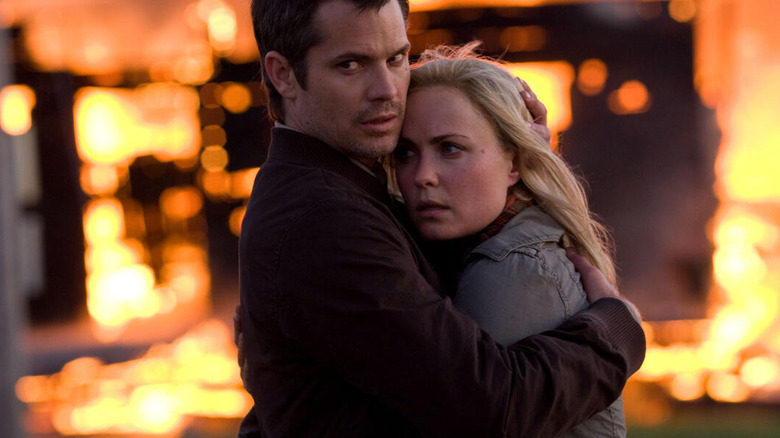
Lost in the torrent of zombie/contagion movies in the 2000s was "The Crazies," Breck Eisner's 2010 thriller about a bioweapon that turns its victims into killers. Similarities to "28 Days Later" and a downbeat ending may have kept it off the favorites lists for many modern horror fans, some of whom may not have known that its grim premise was conceived by genre legend George A. Romero, who wrote and directed the original "Crazies" in 1973.
The differences boil down to budget and focus. Romero's film is set in his home state of Pennsylvania and looks at attempts by the military and scientists to rein in a dangerous virus, while Eisner moves the action to a small town in Iowa and follows its sheriff (Timothy Olyphant) as he tries to save his family. In both cases, things end badly for locals and observers alike.
The 2010 "Crazies" benefits from a larger budget, which allows for makeup effects that depict the physical ravages of the virus; Romero's "crazies" look no different than non-infected people, which is more unnerving. At the original's conclusion, the authorities admit defeat, accepting casualties and moving on to another outbreak. Eisner also ends on a bleak but more ambiguous, and ultimately less impactful, note.
Martyrs (2015)
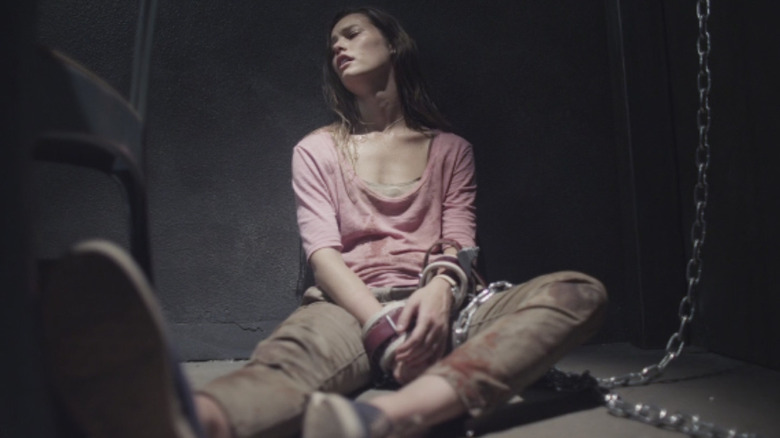
When horror fans take remakes to task for watering down the impact of an original film, they point to 2015's "Martyrs" as a perfect example. This American adaptation follows a plotline that is, in many ways, identical to that of Pascal Laugier's 2008 French feature of the same name: A pair of women learn that the sinister forces they believe have united them through systematic abuse are not only real but far worse than they feared. Where the films deviate is in the depiction of that discovery.
Laugier's "Martyrs" is an assault on the senses, a relentless catalog of madness and torture that offers no respite from the horrific visuals and no relief in its conclusion. It's one of the hardest horror movies to watch more than once, if you can even get through the initial screening.
The American "Martyrs" — directed by Kevin and Michael Goetz and co-produced by Blumhouse Productions — walks up to the line drawn by Laugier and balks, preferring to only suggest the tortures inflicted on its heroines. It shies away from the awful plot twists and nihilistic ending that take the greatest toll on viewers in the 2008 version. Hardcore horror fans knew a swing and a miss when they saw one: "The remake rarely summons the scarring and unsettling experience of Laugier's darker and grimier original," noted Kenji Fujishima in Slant.
Quarantine (2008)
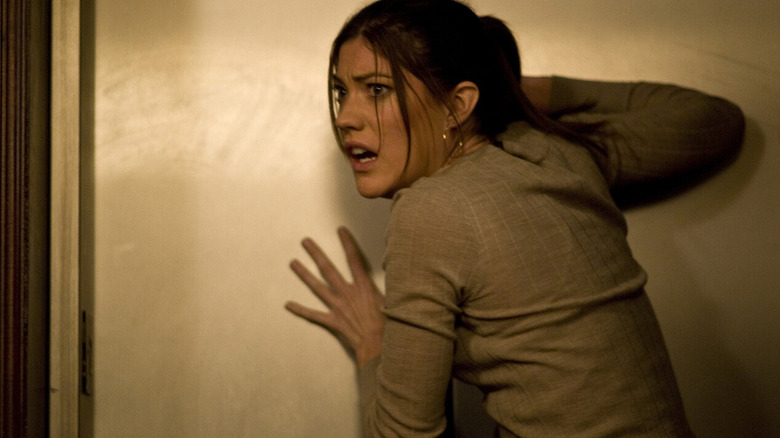
The 2008 found-footage horror film "Quarantine" drew modest praise from critics and fans for its grisly effects and real-time terrors, which are shown through the camera lens of a TV news crew that stumbles upon a virus outbreak that turns its victims into bloodthirsty monsters. Praise was tempered, however, by anyone who knew that "Quarantine" was a faithful remake of the 2007 Spanish production "[REC]," although with a more conventional ending that muted the original's supernatural elements.
Both "Quarantine" and "[REC]" have their merits: The found-footage elements lend an urgency to the rapidly unfolding situation, and the apartment building settings for both films transform well into a combination of maze and haunted house. Both films also benefit from their leads — Jennifer Carpenter in "Quarantine" and Manuela Velasco in "[REC]" — who are believably determined (not to mention world-class screamers).
Where the American film falters is in the source of the virus, which is explained away as a stolen biological weapon; in "[REC]," the virus was spawned from a highly contagious enzyme produced by a possessed girl. That detail lends an extra-shivery layer that "Quarantine" lacks; "'[it] adopts the same basic recipe, but removes any hint of flavor or texture, reducing cutting-edge Catalan cuisine to bland, bite-sized McNuggets," wrote Nigel Floyd for Time Out.
Maniac (2012)
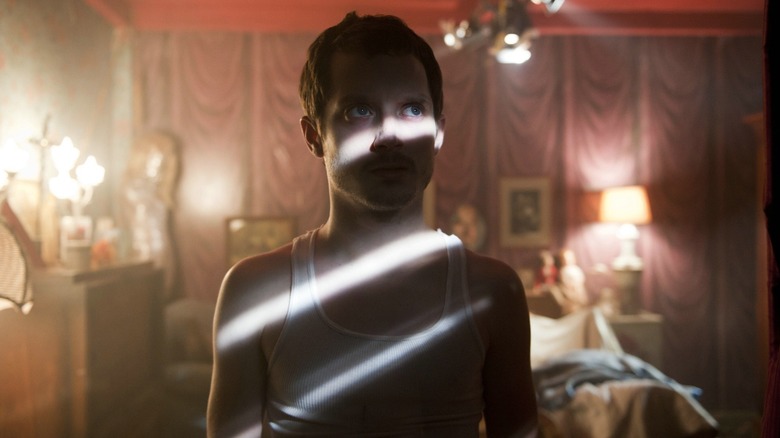
One of the nastiest grindhouse titles of the 1980s, William Lustig's "Maniac" ditched most of the traditional trappings of psycho-thrillers to train its focus on its titular monster (character actor and co-writer Joe Spinell from "The Godfather"), a sweaty, mother-fixated degenerate with a penchant for scalping his victims.
The 2012 remake, directed by Franck Khalfoun and co-written by "Crawl" director Alexandre Aja, with Lustig on board as co-producer, follows a virtually identical plot, but with one unsettling difference: Here, the film is seen almost entirely from the perspective of its murderous subject, who is played by a largely off-screen Elijah Wood. Where Lustig's film allowed the audience some distance from its killer's rampages in lingering detail, Khalfoun ups the ante by forcing them to witness the brutality through its psychopath's eyes, including what is arguably one of the most terrifying opening scenes in a recent horror film.
"You really have the opportunity to maybe feel the [nausea] of committing crime rather than glorifying it just for the aspect of fun and thrill," explained Khalfoun in a 2013 interview. "The audience gets to experience for the first time how sick [it is to commit murder] — we're certainly not condoning it, but making a real statement about serial killers." Genre critics responded positively to this horrifyingly personal approach: "'Maniac' is one of those rare genre remakes that stands as its own movie while recapturing the original's spirit," wrote Michael Gingold in Fangoria.
Fright Night 2: New Blood (2013)
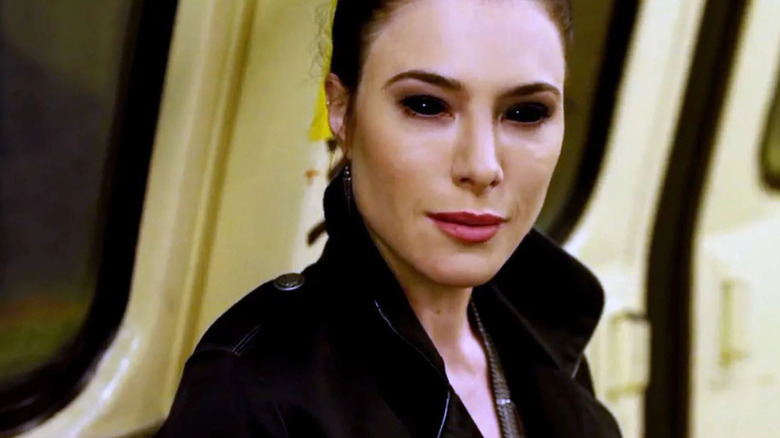
Q: When is a horror remake not a horror remake? A: When it's a horror remake of a horror remake. Such is the case with "Fright Night 2: New Blood," a 2013 feature which, by its title, purports to be a sequel to Craig Gillespie's 2011 remake of Tom Holland's well-loved 1985 vampire comedy-horror. However, it actually follows the plot of those films closely enough to be considered a direct remake of both pictures. Here, as with the '85 and '11 "Fright Night," a trio of high schoolers discover that a respected adult is a vampire and band together with another grown-up to stop the creature.
Director Eduardo Rodriguez and writer Matt Venne salt their version with a few wrinkles — the action takes place in Romania, where the students are on a field trip, their vampire is a woman (a nod, perhaps, to 1988's "Fright Night 2," a little-seen sequel to Holland's film), and its vampire hunter is the host of a ghost-hunting show — but any flashes of ingenuity are undone by a threadbare production. "Rodriguez makes 'Fright Night 2' into one of the most badly directed horror films that one has seen in some time — all cheap cliche horror effects, inane red herring jumps, and a posturing vampire that is an empty cardboard menace that holds no threat," noted Moria.
Sssshhh... (2003)
While Hollywood has remade numerous international horror films, the inverse is also true. There are countless international knockoffs of American horror films, including a Turkish "Exorcist" ("Seytan"), a Filipino "Final Destination" ("Sundo"), and Hindi carbon copies of everything from "A Nightmare on Elm Street" ("Mahakaal") to "The Evil Dead" ("Bach ke Zara"). Some only take select elements from their sources, while others offer more direct translations.
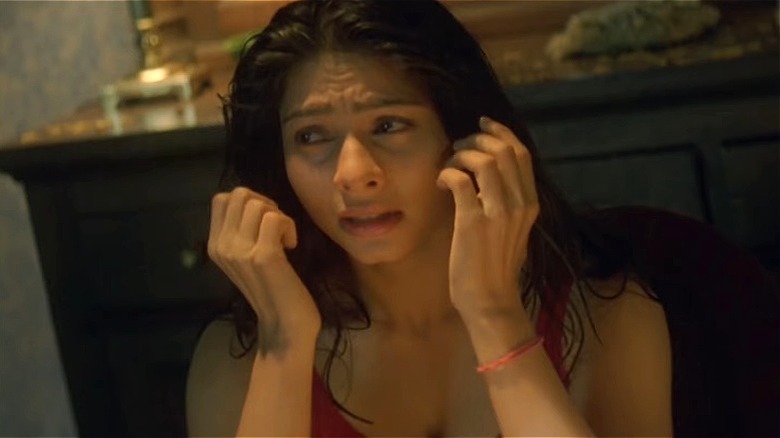
The 2003 Indian feature "Sssshhh..." falls into the latter category, offering a straightforward take on Wes Craven's "Scream" laced with a dose of "I Know What You Did Last Summer" for good measure. The first half of "Sssshhh..." follows the "Scream" template, with Sidney Prescott analog Mehak (Tanishaa Mukerji) and her friends stalked by the Joker, the clown-faced psychopath that murdered her sister, who roughly correlates to Drew Barrymore's character. The identity of the killer, the use of phones as a means of terrorizing victims, a few meta-references to other horror films, and even some of the murder setpieces (one of which references "Scream 2") — all are capably reproduced.
Where "Sssshhh..." deviates is in its second half, which sends Mehak to Thailand for vacation with the killer in pursuit; there's also the Bollywood traditions of musical numbers and lengthy (2 hours 43 minutes) running times. But for "Scream" completists and curious horror fans, it's worth the time investment. As Paul Lê from Bloody Disgusting stated, "'Sssshhh...' is a loud remake rich in regional charm and bold choices."