

5 Star Wars Characters Who Were Nerfed Over Time
A character isn't always what they appear to be at first. That's especially true in "Star Wars," where so many iconic characters have debuted as simple background players with few or no lines, only to be built out far more fully in extraneous comics, novels, and video games. There's a whole cottage industry constructed around the practice of turning that cool alien in one shot of a "Star Wars" movie into someone's favorite, deeply fleshed out character. The Glup Shitto Industrial Complex. But of course, that's half the fun.
Sometimes, though, the things we learn about a character later don't raise them in our esteem. "Star Wars" has nerfed quite a few, either by demystifying certain figures who were far cooler as enigmas, or by directly stripping them of powers they formerly appeared to have. And then, there's the most egregious nerf of all — taking someone with immense narrative potential and squandering them, relegating them to a much smaller role than the one they at first seemed destined for.
There are more hits than misses in this regard. Consider Darth Maul, who was the highlight of "The Phantom Menace" in 1999 and has only become a more fascinating character through his repeat appearances in the "Star Wars" animated series, now culminating in his own show, "Maul: Shadow Lord." Today, though, we're focusing on the negative side — those bounty hunters and Jedi slayers who appeared so cool at first, only to fall.
Let's take a look at five "Star Wars" characters who were nerfed over time.
General Grievous
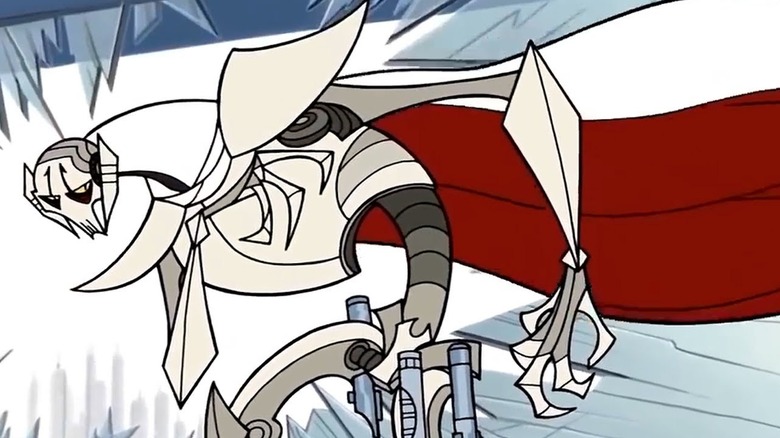
When it comes to nerfed "Star Wars" characters, General Grievous might as well wear the crown. The cyborg warrior and Jedi hunter first appeared in Genndy Tartakovsky's stylish "Star Wars: Clone Wars" animated shorts, which filled the gap between the release dates of "Attack of the Clones" and "Revenge of the Sith." That version of Grievous was nimble, incredibly strong, and capable of taking on multiple Jedi Masters at once — and winning. He was a terrifying force to be reckoned with, making fans excited to see him in action in "Episode III."
Then the movie came out, and Grievous was...less than expected. More of a sniveling coward than the fearsome warrior portrayed in the animated series, he also failed to be much of a match in the head-to-head against Obi-Wan Kenobi. The second animated "Clone Wars" series showed a version of Grievous much more in-line with the film, solidifying him as more of a strategist and bogeyman than the next Darth Maul.
Much of the disconnect is due to the elevated style of the Tartakovsky series, which also has some wild power displays for characters like Mace Windu, Anakin Skywalker, and even the clones. Grievous also gets some great character development in the later "Clone Wars" series that builds out his backstory and hatred of the Jedi. Still, many hold the original version of the character as the greatest, and one severely nerfed in all subsequent appearances.
Boba Fett
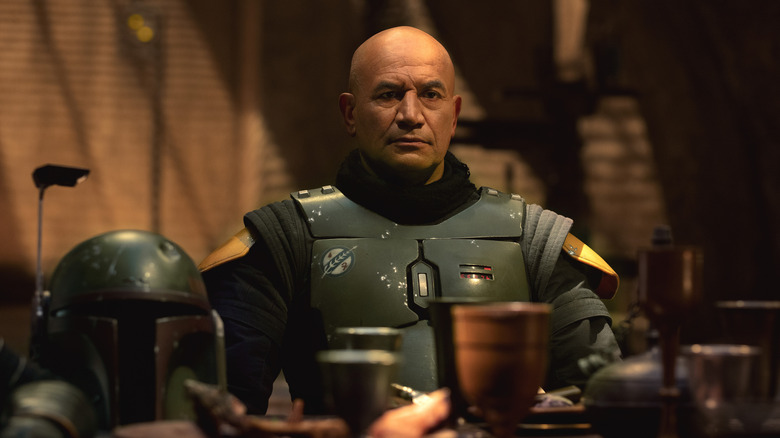
There's a rich legacy of "Star Wars" characters who show up briefly, look incredibly cool, and garner massive fan adoration without any real details being known. Boba Fett is the original model for that trend, and unfortunately, the years have not been the kindest to him. Back in "The Empire Strikes Back," Boba Fett was nothing more than the coolest bounty hunter around, with a helmet and suit of armor so iconic it would launch an entire subsect of "Star Wars" fandom. He was the original Mandalorian — the man who captured Han Solo — and then he died like a punk in the first act of "Return of the Jedi."
Of course, the fan fervor around Boba was too great for him to stay dead long. In the old expanded universe, Boba escapes from the Sarlacc Pit and has a ton of adventures in the years following the original trilogy, though his characterization there is questionable. The many Legends books featuring Fett paint a bizarre portrait, anchored by a moral code that looks down on drug use and pre-marital sex. Yes, that's right. The bounty hunter.
The Disney canon is similarly odd in its portrayal of post-OT Boba. Though Temuera Morrison does an outstanding job in his various appearances on Disney+, the writing around Boba in his self-titled live-action series is strange, as he seems to confuse the role of regional mobster with that of a kindly mayor who' just gotta get those delinquent teens off the streets. Has Boba Fett been ruined by "Star Wars"? Absolutely not, but the years have only made him weirder and weirder. At least George Lucas didn't follow through on his original plan to make the bounty hunter Darth Vader's secret brother.
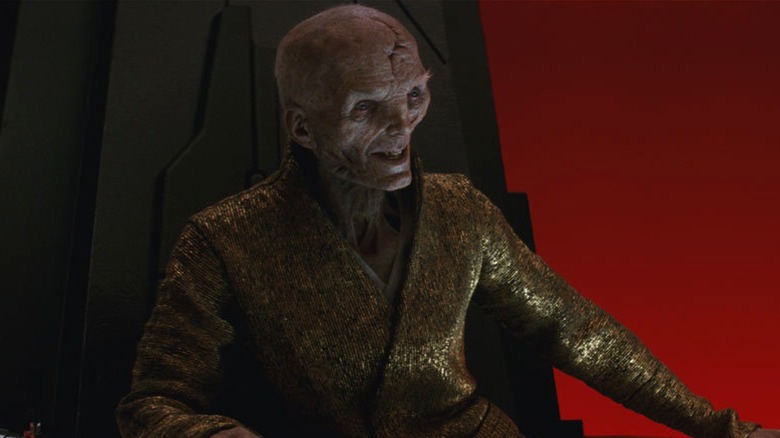
Supreme Leader Snoke
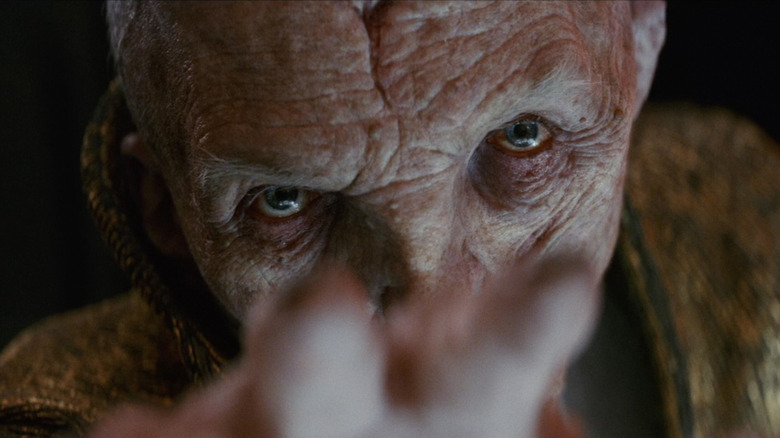
Sometimes, a character is set up to be nerfed from the start. That may not have been the intention from the jump with Supreme Leader Snoke, Palpatine stand-in for the first two sequel films and Andy Serkis' second-best "Star Wars" character. But with the way things went, Snoke's entire legacy is essentially that of a stooge — a strandcast puppet doing Palpatine's bidding without even realizing it himself. A unique character design and imposing countenance, coupled with an incredible level of Force power, made Snoke appear to quite the intimidating villain early on. But then he's cut down in a (spectacular) moment of hubris by Kylo Ren (Adam Driver), bringing his story to an abrupt end.
While Snoke gets precious little development in the sequels, there's a good amount of backstory in some of the Disney-era novels and comics. Taken together, these snippets paint a fascinating image of a being who never knew his true origin or identity, but who became obsessed with the Force after discovering his own natural attunement to it. Snoke was something of a scholar, according to these extraneous texts — someone who spent a great deal of time collecting knowledge about the dark side, the light side, ancient prophecies and Force sects, and chasing down lore.
It's a pretty tragic picture, all told. We still don't know exactly how much of Snoke's work with the First Order was of his own accord, and how much of it was directly influenced by Darth Sidious from afar. Yes, he's clearly a brutally evil guy in his own right, but it's also hard not to feel at least a tiny bit bad for him.
Finn
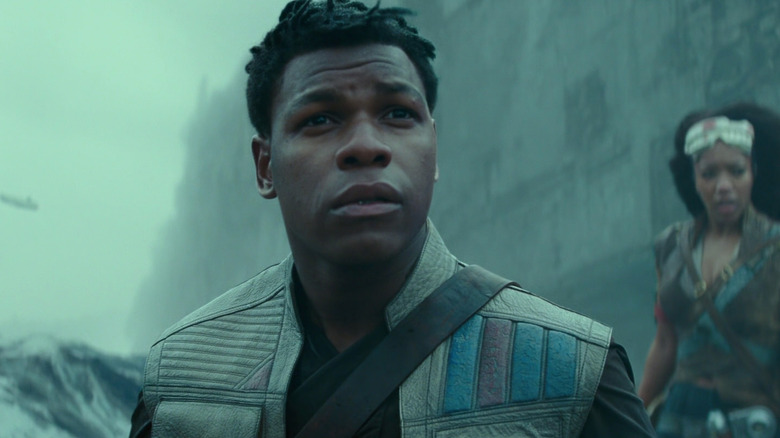
No, Finn (John Boyega) doesn't get explicitly nerfed in terms of his power level in the sequels. And yet, he arguably suffers more in the long-term than any of the previous characters listed here. If the sequel trilogy's various missteps have a single primary victim, it's Finn, and Boyega by extension, who had to sit and watch his character go from a co-protagonist with Daisy Ridley's Rey, to a supporting character expelled from the story for baffling side quests, to someone in "The Rise of Skywalker" who doesn't even get an arc.
Yes, technically, canonically, Finn is Force sensitive — something he tries to tell Rey in that third film. But he doesn't even get the chance to do it onscreen. Fans had to look to interviews and supplementary texts to get a shred of advancement for his character, despite Boyega consistently turning in one of the best performances in the trilogy.
It's a shame, an insult, and a disgrace. Centering Finn more may not have fixed every problem with the sequel trilogy, but it certainly would have helped. Maybe Disney was just terrified of all that gay fanfiction.
Padmé Amidala
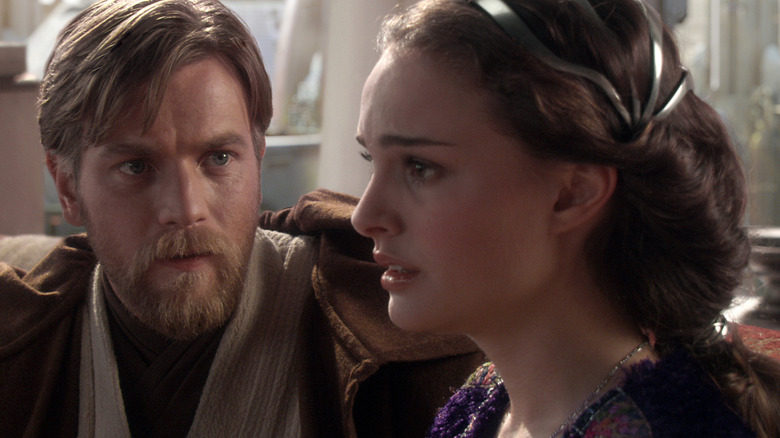
Even if you love the prequels, you probably have a bone to pick with George Lucas when it comes to Padmé Amidala. In "The Phantom Menace," she's the 14-year-old ruler of one of the galaxy's most important planets, fighting political opposition in the Senate at the same time that she's mowing down battle droids and fighting for the freedom of her people.
Then we start to drop off. Unlike most things in the prequel trilogy, Padmé arguably gets worse over the course of it. She's still a major political figure in "Attack of the Clones," leading the opposition movement in the Senate against the creation of a formalized Republic military force. But the film never shows her actually doing her work. Instead, it throws her into one of the most infamous romance arcs in cinematic history.
At least she still gets to fight at the end of that movie, which is much more than you can say of her in "Revenge of the Sith." In a classic example of Male Writer Writing Pregnant Woman Syndrome, Lucas strips Padmé of her resolve, determination, and agency for the duration of the film, nerfing her into the kind of movie woman who always looks confused, dismayed, and unsure of what to do. The damage is even harder to swallow when you learn about the arc Lucas filmed and then deleted from "RotS," where Padmé helps organize a political resistance movement that essentially becomes the Rebel Alliance after her death.
The finished version of the film makes Padmé into little more than a plot device by which Anakin falls to the dark side. The suggestion that she dies of a broken heart at the end of the movie (and not from the very clear internal damage Anakin inflicts upon her on Mustafar) is not only insulting, but it blatantly ignores the fierce determination she shows elsewhere throughout the trilogy. Even the sight of her newly born children isn't enough, seemingly, to conquer her sorrow. It's a pill that's nearly impossible to swallow.