

All 10 Oscars 2026 Best Picture Nominees, Ranked
On Thursday January 22, 2026, the 98th Academy Award nominations were announced. Recognizing what Academy voters thought of as the best of 2025's cinema scene, these nominations have, per usual, drawn all kinds of praise, backlash, befuddlement, and every other emotion in between. Everything from the snubs to the unexpected dark horse nominees has got film geeks talking. As the chatter over the 12 biggest Oscar snubs of the 2020s or the biggest best picture Oscar snubs of all time demonstrates, award season arguments are as reliable as the sun going down at the end of the day.
The freshest discourse focuses on the biggest category at any Academy Awards ceremony: the best picture race. This year, 10 films were selected to represent 2025's filmmaking landscape. The choices are widely eclectic. Hailing from different genres, filmmaking sensibilities, and countries, the 98th crop of best picture nominees is bound to generate endless discussion.
For now, though, let's focus on one question: what are the creative highs and lows of the best picture crop? Ranking the nominees at the 98th Academy Awards from worst to best illustrates that, like any year, some less-than-perfect movies got in instead of superior titles (R.I.P. to snubbed 2025 masterpieces "It Was Just An Accident," "No Other Choice" and "The Voice of Hind Rajab"). This year's best picture nominees, though, reflect how exciting 2025 was for cinema. Let's dive right into the 10 features currently dominating film geek discourse.
10. F1
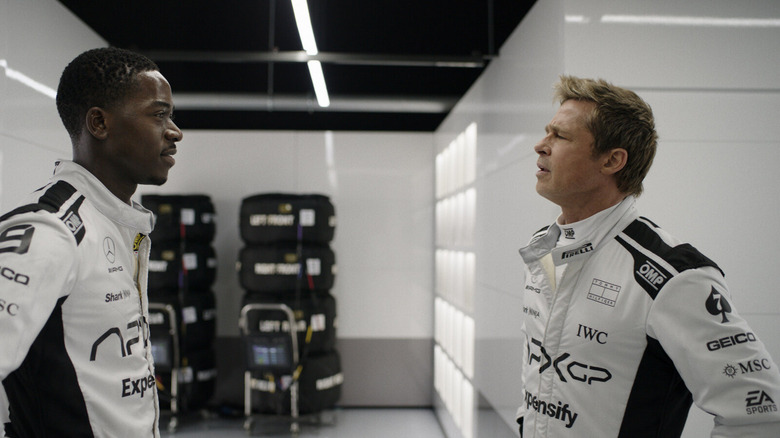
"F1's" groundbreaking camerawork has been the subject of endless discussion since its June 2025 release. Less discussed, though, is how director Joseph Kosinski opts for weak framing and blocking whenever people aren't zooming around in cars. Awkward cuts and cramped staging abound in this big budget title, which follows veteran Formula One racer Sonny Hayes (Brad Pitt) and rookie Joshua Pearce (Damon Idris) working together to snatch a victory for the distraught APXGP F1 team. In previous works like "Only the Brave," director Joseph Kosinski could realize simple images like an aspiring firefighter limping to the end of a run or Tom Cruise walking a derelict baseball field as visually distinctive. It's bizarre to see those talents squandered in these crowdpleaser, high-octane confines.
Faltering imagery speaks to how "F1" has minimal innovation going on under the hood beyond some fun flashy camera tricks. The plot, for one thing, isn't nearly unique or fun enough to justify either its 155-minute runtime or the lackadaisical camerawork. Sonny Hayes is more irritating than lovable, while the supporting APXGP players (like an ultra-feminine lady member of the pit crew team) never get any depth or personality. Even the score (usually a place where Kosinski films like "Tron: Legacy" shine) isn't anything special, as Hans Zimmer phones in a generic American blockbuster score.
A paean to product placement and old white men always being right in bait dramas, "F1" is both a drastic step down from prior Kosinski blockbusters and other 2026 best picture Oscar nominees.
9. Frankenstein
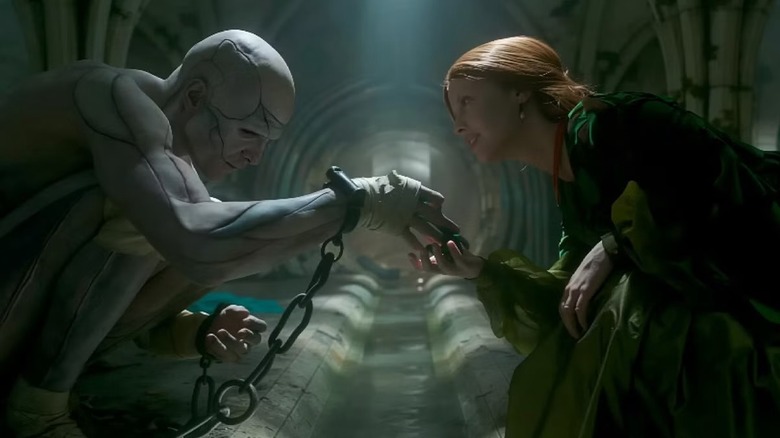
Ranking every Guillermo del Toro movie from worst to best makes it obvious that his works always exude handsome craftsmanship. It's impossible to deny that reality when absorbing the luscious costumes and setpieces populating his long-gestating vision of Mary Shelley's "Frankenstein." Alas, the freakier and more unpredictable elements that once populated his works are frustratingly absent here. In the past, del Toro movies featured babies that were actually tumors or surprise incest-based plot twists. "Frankenstein," meanwhile, is a more "respectable" feature functioning as a relatively straightforward retelling of the "Frankenstein" myth.
There's some fun to be had even in those buttoned-up, familiar confines. In particular, a stretch of the story where Frankenstein's Monster (Jacob Elordi) befriends an elderly blind man is terrific. Elordi's performance is, honestly, tremendous throughout. However, other "Frankenstein" elements frustrate, including the weird under-utilization of Mia Goth as a radically reimagined version of Lady Elizabeth Harlander. Meanwhile, this motion picture's simplistic moral shadings robs the "Frankenstein" story of its most powerful dramatic punches. The Monster, especially, is too pure and faultless in this narrative; a strange decision which deprives the character of dimensionality.
Even the digital camerawork frustrates, with "Frankenstein" often looking way too clean and devoid of atmosphere for a gothic horror drama. There's still the trademark del Toro craftsmanship scattered throughout, at least. However, "Frankenstein" needed to be more beastly and less of a conventional rehash of prior del Toro works.
8. Sentimental Value
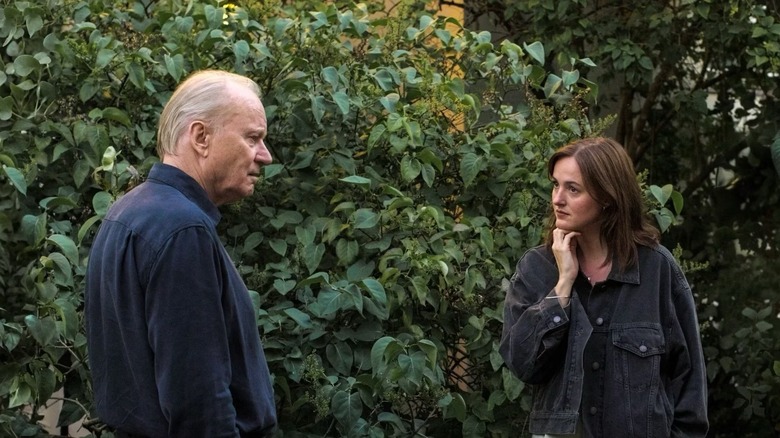
Sometimes, an artist's great triumphs cast an unfairly long shadow. A painter, singer, or filmmaker might have created a previous work so magnificent that subsequent endeavors inevitably can't measure up. In this case, Joachim Trier was always going to struggle making an equal to his 2022 masterpiece, "The Worst Person in the World." That tremendous accomplishment is the kind of movie that doesn't come around every day, so naturally, his next directorial effort, "Sentimental Value," was a step down in quality.
Of course, that doesn't erase the film's own shortcomings. This go-around, Trier's script about messy people occasionally descends into too-familiar bad dad apologia, while its ending is too tidy for its jagged narrative. Even while recognizing those flaws, though, there's still so much to recommend in "Sentimental Value." For starters, Trier's gift for wrangling outstanding performances out of his actors continues once again with another dazzling Renate Reinsve lead turn. What a magnetic artist she is, fully throwing herself into every richly detailed corner of these multi-faceted human beings. Cinema legend Stellan Skarsgård is also a triumph as the film's central troubled father. It's impressive how effortlessly he dances between exuding charm and an ambiance that makes it clear why his character wasn't a great parent.
"The Worst Person in the World'" casts a looming shadow over "Sentimental Value," but it doesn't erase all that Joachim Trier accomplishes here. Once more, Trier lays bare flawed people and reminds audiences they're not alone when navigating everyday turmoil.
7. Train Dreams
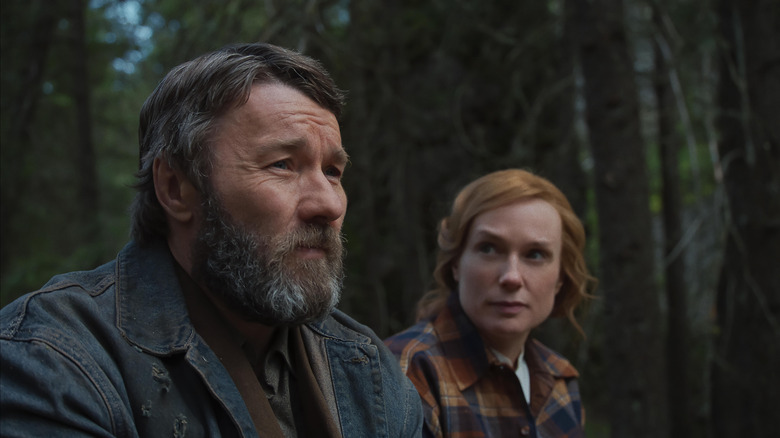
It's a travesty that "Train Dreams" was largely left to streaming, since this gorgeous film from director Clint Bentley is stunning on a big screen. The precise and poetic imagery realized by Bentley and cinematographer Adolpho Veloso is extraordinary. They make the natural early 20th-century world of Bonners Ferry, Idaho an absorbing domain in which to spend two hours. Inhabiting those luscious locales is lead character Robert Grainier (Joel Edgerton), whose life is marked by constant turmoil. Jobs take him far away from his family for extended periods of time, while a raging wildfire eventually brings unspeakable tragedy to his life.
The tininess of one life in the grand scope of existence is a core element of "Train Dreams." That notion is conveyed beautifully throughout its runtime, as Bentley reinforces how Grainier is dwarfed by both the passage of time and the larger natural world. Edgerton is also a transfixing anchor, conveying believable reality as a quiet, aching man beset by pervasive horrors. The melancholy ambiance he and the visuals whip up is hard to resist.
Granted, "Train Dreams" does stumble sometimes on a screenwriting level. Will Patton's narration occasionally reinforces ideas better communicated through grand tableaus, and the mid-movie tragedy sending Grainier's world into chaos is a little predictable. Though not quite as sublime narratively as it is visually, "Train Dreams" is still a remarkable feat that imbues immense tremendous emotional power into objects as simple as boots nailed to a tree.
6. Bugonia
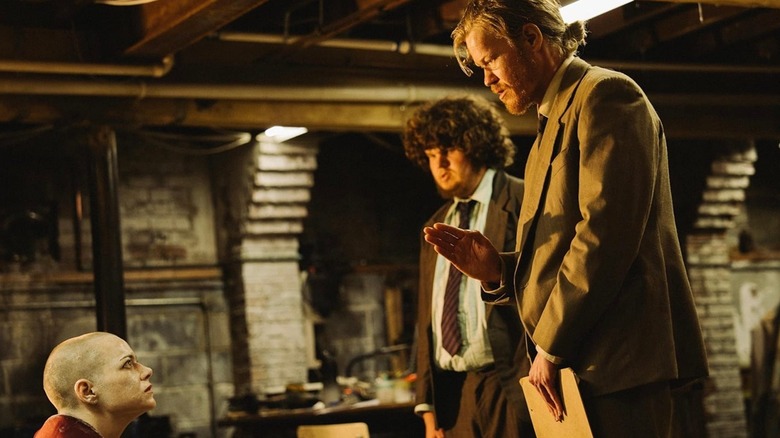
With the wider world descending into non-stop chaos, it's up to the freakiest filmmakers alive to properly reflect the madness of existence. Director Yorgos Lanthimos certainly fits the bill in that department. Every Emma Stone and Yorgos Lanthimos movie is a bizarre treat, cranking up the weirdness to speak to something very true about humanity. That trend continues with their latest work, "Bugonia," a remake of Jang Joon-hwan's 2003 film "Save the Green Planet!" Here, Jesse Plemons and Aidan Delbis play a pair of conspiracy theorists who kidnap pharmaceutical CEO Michelle Fuller (Stone), whom they believe is an alien bent on destroying the world.
"Bugonia" has plenty of the fascinatingly uncomfortable dark comedy of classic Lanthimos fare, including Don's (Delbis) incredulous reactions to Teddy's (Plemons) most outlandish claims. Bleak chuckles also emerge from Fuller retaining her clinical, press-release-ready speaking style even as she's chained to a basement and tortured. There is genuine tension here, though, much of it stemming from these characters (including Fuller) carrying a disinterest in human suffering. Across all economic classes, the anguish of others is immaterial. "Bugonia" forces viewers to contend with a tragically prominent mindset in the modern world.
All the while, Lanthimos and cinematographer Robbie Ryan deliver tons of striking blocking, making use of the film's 1.50:1 aspect ratio. Similarly consistent in excellence are the trio of lead performances from Stone, Plemons, and Delbis. They bring both grim laughter and recognizable human qualities to a freaky, paranoia-driven mirror of modern madness.
5. Marty Supreme
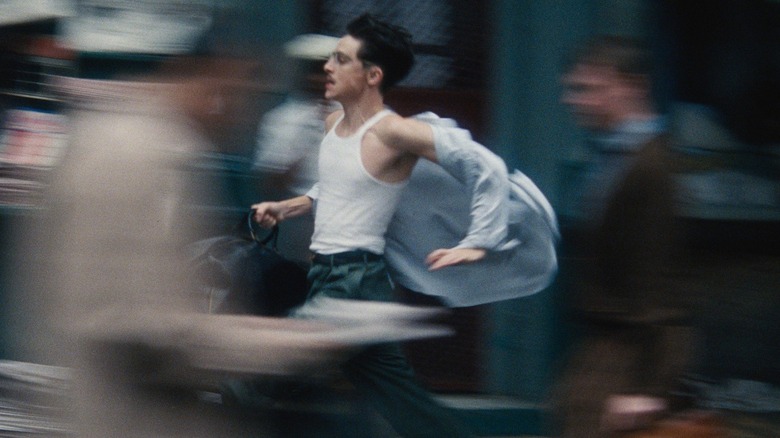
"Marty Supreme" takes off like a shot from its very first frame and never lets up. Writer/director Josh Safdie isn't just moving a mile-a-minute here, he's practically a road runner darting from one hysterical set piece to the next. The most propulsive ping-pong movie ever made, the saga of Marty Mauser (Timothee Chalamet) concerns the ultimate underdog in a world stacked with obstacles. No wonder Mauser has to exude so much confidence. Around every corner is a cop or an irate ping-pong hall player ready to derail his ambitions. In a world of potholes, Mauser just keeps on driving.
This man's saga makes for endlessly gripping cinema, especially with Safdie coming up with freshly creative madcap scenarios for Mauser to get stuck in (a hotel bathtub fiasco, for instance, is a riot). Shot with deeply tactile 35mm film on immensely detailed sets, and featuring a cavalcade of discernibly authentic performers, "Marty Supreme" offers a transfixing world, one that seems easy to fall into. The visuals are as impressive as Daniel Lopatin's transportive score; an eclectic, dreamlike mix of electronic sounds and momentous chants. They're a perfect idiosyncratic sonic accompaniment to the film's protagonist.
Marty Mauser, himself (somehow now topping all 12 of Chalamet's previous best performances), is the glue holding "Marty Supreme" together. Chalamet gives 110% to every inch of this ping-pong player, informing a performance you can't turn away from. Just try not getting swept up in "Marty Supreme's" energy — it's too brisk to resist.
4. Hamnet
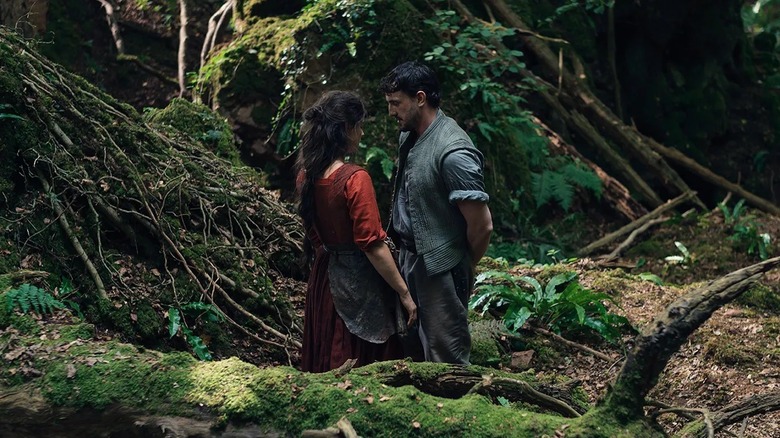
The people who populate our history books were not always destined to receive statues or college classes waxing poetic on their triumphs. Many of them were also ordinary human beings who got scared, excited, or overwhelmed by the world's chaos. That includes William Shakespeare (Paul Mescal) and his wife Agnes (Jessie Buckley), the latter of whom is the centerpiece of Chloe Zhao's deeply moving triumph, "Hamnet." Viewed through Agnes, William is a normal man. In these intimate confines, the couple's tragedies (involving a deceased son) hit all the harder.
Zhao's vision of "Hamnet" is a dreamlike tableau, often full of esoteric imagery concerning gaping holes in the forest. These visuals, beyond just being surface level striking, are sharp reflections on the inexplicable nature of loss. We don't get tidy answers regarding the most harrowing aches upending our lives. "Hamnet" reflects that reality in so many ways. The complexities of grappling with tragedy are also vividly realized through Buckley's central performance as Agnes. Her bravura turn masterfully shows how skilled she is at delivering both the most outsized flourishes and more intimate displays of Agnes' interiority.
Łukasz Żal's impressively precise "Hamnet" cinematography complements Zhao and Buckley's artistic chops. From top to bottom, this film is a triumph in craftsmanship and pathos. We cannot avoid suffering great, unspeakable turmoil in this life, whether we're William Shakespeare or just a modern individual. Works like "Hamnet," though, tenderly and beautifully remind us we're not alone in our aching.
3. One Battle After Another
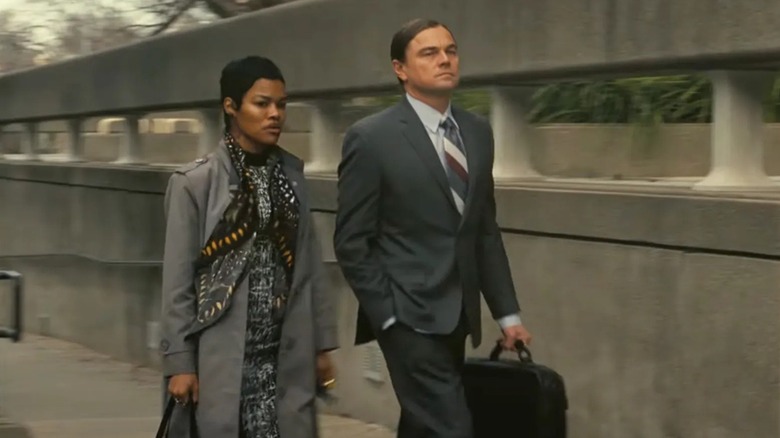
"The revolution will not be televised," as Gil Scott-Heron once sang, but it will appear on movie theater screens thanks to the excellent "One Battle After Another." "There Will Be Blood" mastermind Paul Thomas Anderson got a bigger-than-ever canvas to work with on his loose adaptation of Thomas Pynchon's "Vineland," and the result was nothing short of astonishing. A larger scope did not suddenly mean that Anderson forgot the artistry that made him a legend. On the contrary, working with VistaVision cameras and massive chase scenes just amplified his talents.
Anderson's gift for working with actors was also on full display in this feature's unforgettable ensemble cast. Leonardo DiCaprio, always at his best when he's sweaty and frantic, channeled big Tim Robinson energy in his performance as Bob Ferguson. Then there was Chase Infiniti instantly solidifying herself as a movie star with her work as Willa Ferguson. As if those two weren't enough, Benicio del Toro, Teyana Taylor, and Regina Hall lit up the screen with richly detailed performances. These outstanding turns inhabited a motion picture rife with enthralling set pieces, including a climactic chase scene set on a series of hills that's a sensational nail-biter, and a note-perfect callback to the serenity of Sensei's ocean waves.
Best of all, there's a potent rage against the status quo in "One Battle After Another" and a delightful willingness to make fools out of corrupt authority figures. This rebellious spirit comes through loud and clear in a sublime achievement.
2. The Secret Agent
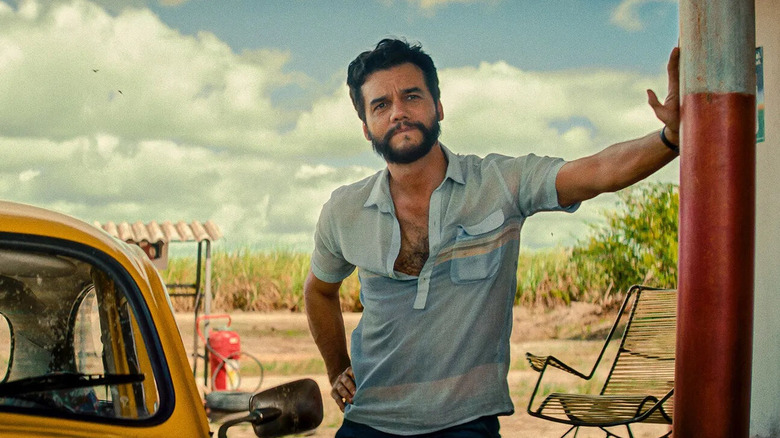
Many great chase scenes exist in cinema, including a '70s movie with the best car chase scene ever. But how many iconic chase scenes are set to propulsive flute music? Writer/director Kleber Mendonça Filho executes such a set piece with effortless flair in "The Secret Agent," a political thriller following former professor Armando (Wagner Moura) in 1977 during the Brazilian military dictatorship. While trying to fly under the radar, he attempts to uncover information about his late mother while avoiding detection from corrupt authority figures like Euclides (Robério Diógenes). The horrors of existing in this era of Brazil's history are palpable throughout "The Secret Agent," but Filho doesn't reduce these characters to nonstop misery.
Instead, this filmmaker emphasizes intimate scenes of Armando and other marginalized souls living under the cover of Dona Sebastiana (Tânia Maria), chatting at night, listening to music, or bonding with their children. The nuance and humanity that the dictatorship sought to erase from teachers, immigrants, and other oppressed individuals is deftly restored here. The colorful production design (which imbues every automobile or dingy wall with bright pigments) similarly emphasizes the vibrancy and individualism that authoritarianism seeks to eliminate.
Every ounce of "The Secret Agent" is a remarkable triumph, including Wagner Moura's unforgettable lead performance, Evgenia Alexandrova's cinematography, or Alice Carvalho's transfixing big scene as Armando's widow, Fátima. Just as fascism's horrors reverberate well into the present, a film as excellent as "The Secret Agent" is impossible to forget.
1. Sinners
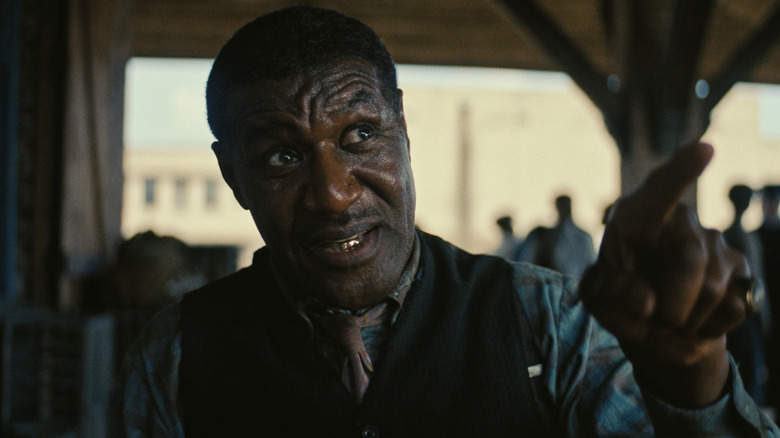
Oh, what a pleasure to see a film like "Sinners" become an Oscar darling. In every respect, this movie shouldn't be at the Academy Awards. It was released before autumn (where most award season heavyweights debut). It's unabashedly a horror film. Its tone is complicated, oscillating between comedy and blood-soaked terror. Ryan Coogler's latest achievement is also a completely original work, rather than something preying on nostalgia for yesteryear. Yet here it is: "Sinners," unquestionably one of this year's greatest best picture Oscar nominees.
All the qualities that would, on paper, make "Sinners" a no-go as an Oscar heavyweight also ensure that it is an outstanding piece of art. This film delivers entertainment in every single scene, whether it's depicting people chatting at a train station or gnarly fights with vampires. Much of that entertainment comes from Coogler's gusto creative sensibilities, which include delivering the unforgettable "I Lied to You" musical number that blurs the lines between the past, present, and future to mesmerizing effect. Anyone who saw this spectacle in IMAX 70mm knew right away that this setpiece was going down in cinema history.
And then there's the flawless "Sinners" cast, anchored by Michael B. Jordan pulling double duty as twin gangsters Smoke and Stack. Jordan's impressively subtle display of their individual personalities is remarkable. Supporting players Wunmi Mosaku and especially Delroy Lindo also astonish. "Sinners" is a movie of fervent creativity that feels truly unprecedented in cinema. The Oscars are lucky to feature it in so many categories this year. We're lucky to have been here to see it.