

28 Years Later's Breakout Star Is Even Better In The Bone Temple
Contains spoilers for "28 Years Later: The Bone Temple"
When it comes to legacy sequels, Danny Boyle's "28 Years Later" is an impressive example of taking the core foundation of the previous films and going in a bold, new direction. Getting a new director to take over the sequel to one of the best films in the "28 Days Later" series seemed like a risky gambit, but Nia DaCosta pulled it off with "28 Years Later: The Bone Temple."
The sequel builds on the foundation of where the last film ended with what Looper's review called an exhilarating, surprisingly touching horror film about our response to cruelty in a broken world. DaCosta and returning screenwriter Alex Garland ported over a lot of the same settings, themes and actors from "28 Years Later," with one of the more surprising developments being the storyline of Samson, played by Chi Lewis-Parry.
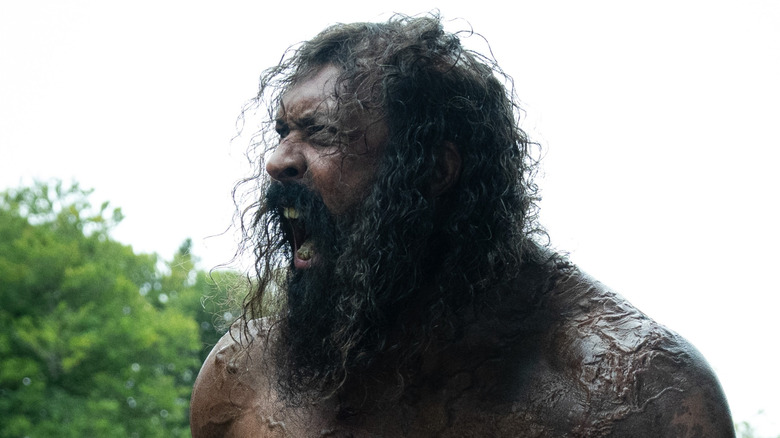
It's difficult to forget the huge impact Lewis-Parry made as Samson, the naked Rage-infected Alpha sporting a multitude of scars and one of the most impressively large male appendages in recent years. But Lewis-Parry brings so much more to the role than that. After all, Samson serves in "28 Years Later" as the face of the Rage virus and its effects in the 28 years since it ravaged the U.K. It's an incredibly terrifying physical performance that Lewis-Parry builds upon tenfold in "The Bone Temple."
Chi Lewis-Parry gives a quietly compelling performance as Samson
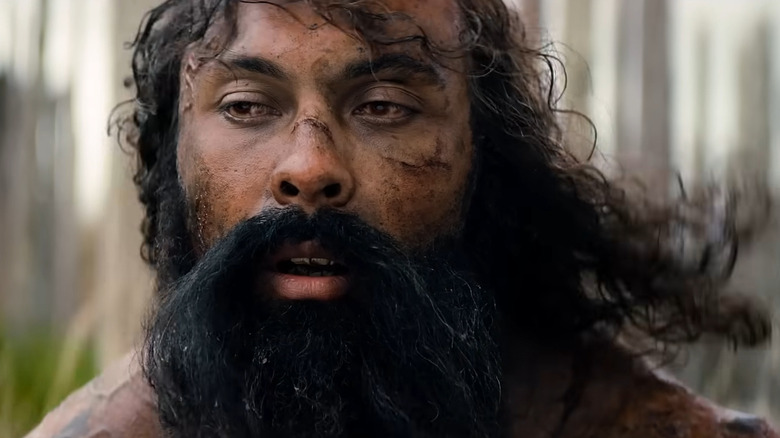
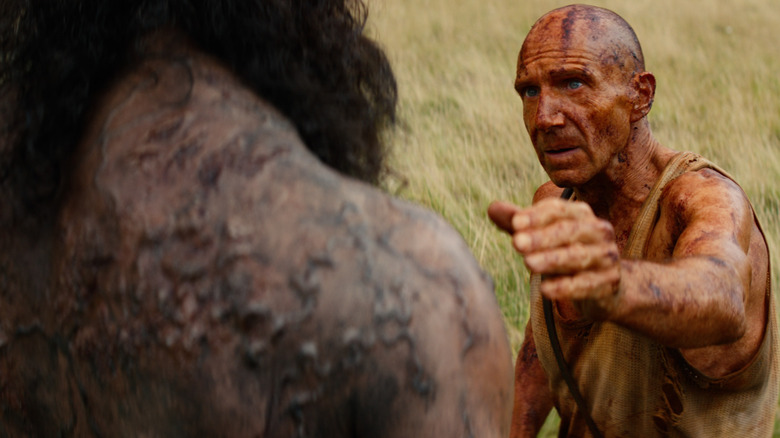
When we catch up with Samson in "The Bone Temple," it serves as a reintroduction between him and the curious-minded Dr. Ian Kelson (Ralph Fiennes) after the ending of "28 Years Later." They've known of each other for about three years, and the good doctor momentarily subdues him with a morphine-laced tranquilizer dart whenever he gets too close for comfort.
Something changes, however, when Dr. Kelson recognizes a glimmer of human understanding within the hulking Alpha. He takes an enormous shot in the dark by quelling Samson long enough to treat his wounds. For someone as isolated as Dr. Kelson, it's a tremendous stride toward making a friend in this apocalyptic wasteland. Every time the film cuts away from Spike's (Alfie Williams) induction into the vicious Jimmy gang, "The Bone Temple" develops into a surprisingly tender buddy movie.
The unlikely pair end up spending a lot of their screen time together taking morphine and dancing within the titular structure. It not only gives Fiennes more room to develop the gentle Kelson, but allows Chi Lewis-Parry to mine Samson's inner humanity as well. Lewis-Parry proves to be a very expressive actor who really makes you believe that there's still a person in there who can break free of the virus. His performance opens up a whole other dimension to Samson's aimless rampages. Lewis-Parry demonstrates some great chemistry with Fiennes in spite of not even saying a word to each other — that is, until he finally does.
Samson is one of the 28 Years Later saga's most important characters
The shocking moment when Samson utters the word "moon" is a painful reminder of the day his life took a turn for the worse. We learn through fractured flashbacks that Samson was only a child when an infected transformed him aboard the same train we see in "28 Years Later." Chi Lewis-Parry does excellent work with the dichotomy between the ferocious feral beast he is and the more grounded person he once was. It's not often you see a zombie figure sit down and reflect. Dr. Kelson sees these signs of introspection and believes that a cure for the Rage psychosis is possible, making Samson one of the most important characters in the "28 Days Later" saga.
Samson conjures enough consciousness that a horde of infected smell his humanistic stench and attack their Alpha in response. In one of the film's most striking images, an entirely nude Lewis-Parry emerges from the train car bathed in their blood against the pale moonlight. It's baptismal in nature, not to mention that it also helps a hallucinating Jimmy Crystal (Jack O'Connell) envision the former Alpha as Satan himself.
Dr. Kelson's unfortunate death at the end of "The Bone Temple" paves a path for Samson to shed his Rage without the aid of his mentor. The "28 Days Later" films have always flirted with that thin line between the infected and the uninfected — think of the barbarous military faction or Jimmy's deadly cult mentality. Lewis-Parry brings a compelling inner turmoil to Samson in "The Bone Temple," with the next film likely to develop the character's inner odyssey even further.