

Every 28 Days Later Movie, Ranked
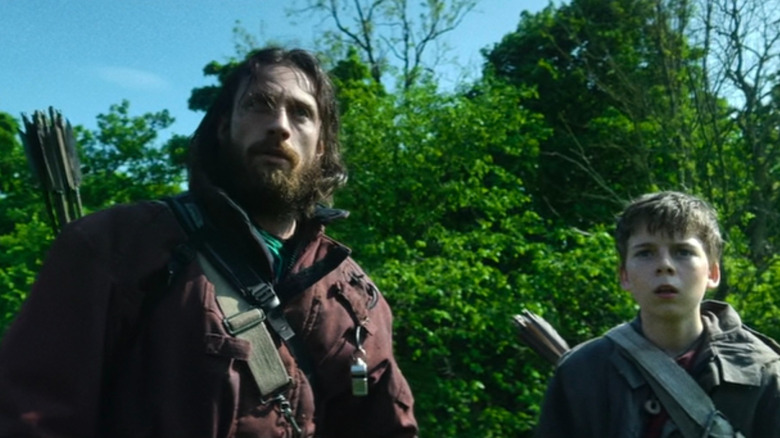
Contains spoilers for the "28 Days Later" series
The zombie movie has endured as an extremely popular subgenre within the horror sphere ever since 1932's "White Zombie." Its evolution is often in response to the previous generation's interpretation of the flesh-eaters, and what their instinctual bloodlust represents.
Where George A. Romero set the template with the seminal "Night of the Living Dead," it was director Danny Boyle and writer Alex Garland who redefined the zombie movie for the 2000s onwards with "28 Days Later," creating a desire for terrific zombie movies in its particular style. Some folks have contested that the 2002 survival horror-thriller isn't a zombie picture because the infected aren't technically dead, but this misses the point: The horror of transforming into a zombie comes from your body becoming a vessel for a violent, primal force outside of your control.
At the center of this metamorphosis is the Rage virus, an extremely contagious man-made pathogen that can be transmitted through contact with blood or saliva. Once it's in your system, pure rage courses through your body like a fast forward button.
The infected in "28 Days Later" are undoubtedly the scariest cinematic zombies on account of their exceptionally fast pace, in contrast to the classic "slow" zombie. Boyle's reanimated monsters terrorize the United Kingdom with a vengeance, rarely letting up. "28 Days Later" is a unique beast that it doesn't seem like it would offer material for sequels, yet the three films that followed proves this couldn't be farther from the truth. It's kind of a miracle that there isn't a single bad movie in the series. Each entry carries its own distinct identity that expands upon the nature of the Rage virus in new and interesting ways. These rankings are based on personal preference alone.
4. 28 Weeks Later
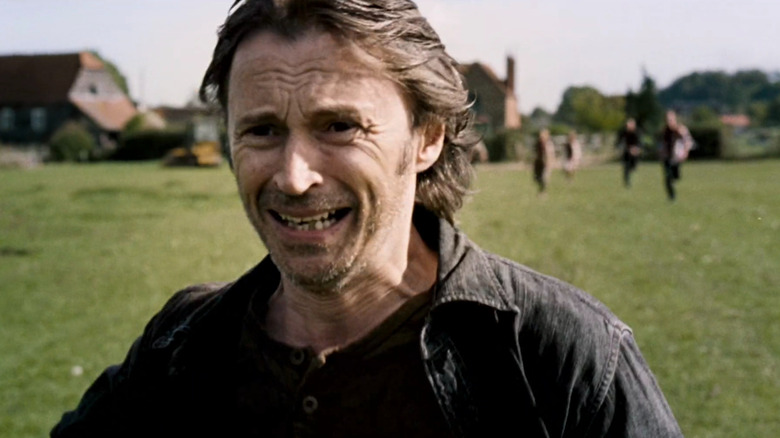
Five years after the first film, 2007's "28 Weeks Later" envisions the dawn of the United Kingdom's rebirth, with NATO and the U.S. military taking charge after the outbreak. A designated safe zone in East London named District One houses the first wave of refugees with all of the amenities they would need to return to some semblance of normalcy.
It doesn't take very long before a series of critically dumb decisions reawakens the rage virus with a gory fury. The most glaring issue with "28 Weeks Later" is that it trades the contemplative dread of "28 Days Later" with generic zombie mayhem. Director Juan Carlos Fresnadillo doesn't possess the same controlled chaos of Danny Boyle, but he still manages to deliver a pretty decent horror film about violent cycles beginning anew. The first sequel also boasts a stacked cast with the likes of Robert Carlyle, Rose Byrne, Idris Elba, Jeremy Renner and Imogen Poots.
The standout sequence in "28 Weeks Later" is the opening attack on a fortified cottage full of survivors. It serves as a precursor for what's to come with District One's collapse. It also complements another terrifying set piece later in the film; in which a bunch of people are confined in a darkened space that's invaded by chaos, rapid infection and gunfire.
It's a shame that the film not only struggles to maintain a consistent pace, but is also marred by two young characters that consistently make decisions that put everyone in danger. There's a great sequel in Carlyle's Don, who is carrying a festering guilt for leaving his wife behind, but this traditional survival horror never quite lives up to it. "28 Weeks Later" is good enough, yet pales in comparison to the visual and thematic ingenuity of the '02 film.
3. 28 Years Later: The Bone Temple
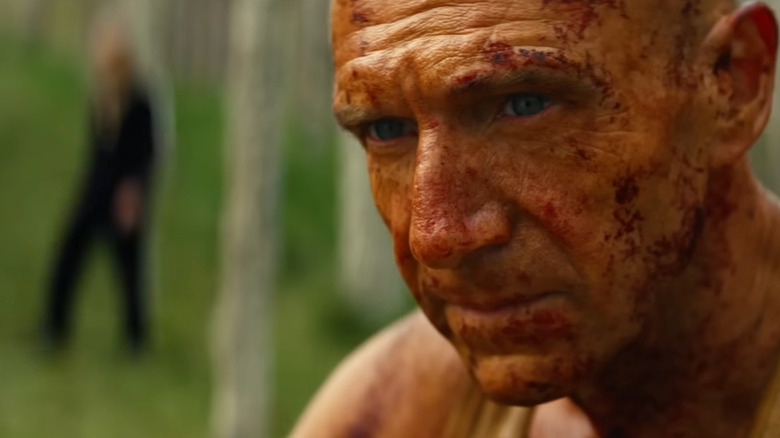
Learning that Danny Boyle wouldn't be directing the follow-up to "28 Years Later" was cause for worry, but it didn't take long for Nia DaCosta to prove that she was the right person to hand the reins to. To put it plainly, "The Bone Temple" is a heavy metal meditation on cult mentality and finding inner peace.
Picking up not too long after the events of the 2025 film, we're reintroduced to the Jimmy gang and their deliciously evil leader played by "Sinners" star Jack O'Connell. The quarantined island is at the behest of an emotionally stunted despot who weaponizes his brand of sadistic groupthink to keep everyone in line. Alex Garland's screenplay illustrates how isolation breeds a medieval way of thinking for those who can't remember what the world was like before Rage took over. Looper's Matthew Jackson calls "The Bone Temple" an exhilarating sequel in his review, which is a pretty fair assessment.
Where "28 Years Later" belonged to Spike's (Alfie Williams) journey, "The Bone Temple" expands upon Dr. Ian Kelson (Ralph Fiennes) and his relationship with Samson (Chi Lewis-Parry). Together, they make considerable strides when it comes to understanding the Rage virus and whether there's still any humanity left within the Infected.
DaCosta excellently builds off of the first "28 Years Later" with a smaller scale sequel that's so much stranger and meaner than one would expect from a studio horror film. While there's a slew of memorable images throughout, cinematographer Sean Bobbitt lacks the gripping aesthetic choices of Anthony Dod Mantle. Otherwise, "The Bone Temple" takes "28 Years Later" in exciting new directions while prepping the stage for a third film that has the potential to be something truly special.
2. 28 Years Later
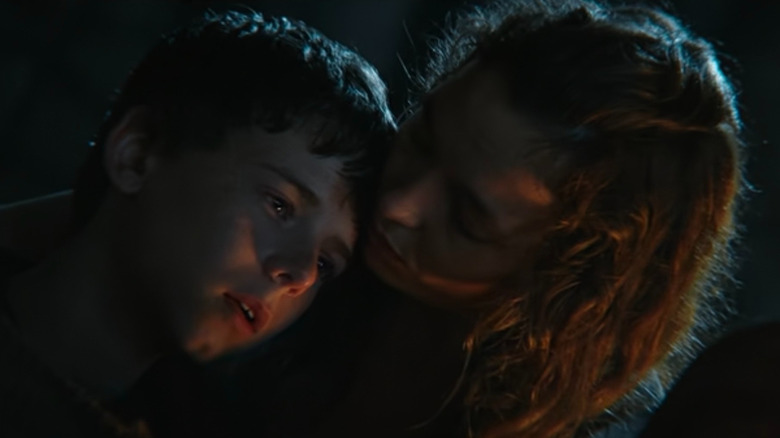
Reviving "28 Days Later" for a new generation made so much sense in the broader cultural context of ignorance and isolation that had been brewing over the past two decades. It's genuinely impressive that Danny Boyle doesn't attempt to recreate the frenetic terror of "28 Days Later," nor make a traditional sequel to "28 Weeks Later;" instead seeking to reckon with them.
The second outbreak of Rage leads to a nationwide quarantine that essentially cuts the U.K. off from the rest of the world for nearly three decades. At the center of the long-awaited legacy sequel is Spike (Alfie Williams), a 12 year-old kid who's about to take up his first hunt outside his fortified community. What he sees out there not only flips his world upside down, but emboldens him to take up his own quest to find a doctor for his ailing mother, Isla (Jodie Comer).
Looper's Cynthia Finney is right when she refers to "28 Years Later" as a brilliant follow-up to a seminal horror film in her review. It's an excellent coming of age story told through two very different yet compelling halves.
It's in the second half, however, that champions stillness and dignity for the dead in a seemingly impossible place. Ralph Fiennes is a standout as the enigmatic Dr. Ian Kelson, who brings a surprising amount of heart to the film. In many ways, "28 Years Later" reveals itself as a healing response to the tragic deaths of the COVID-19 pandemic, in addition to the isolation that came with Brexit. It's a gorgeous-looking movie, too, with Anthony Dod Mantle's cinematography expanding upon the experimental aesthetic of the first film.
1. 28 Days Later
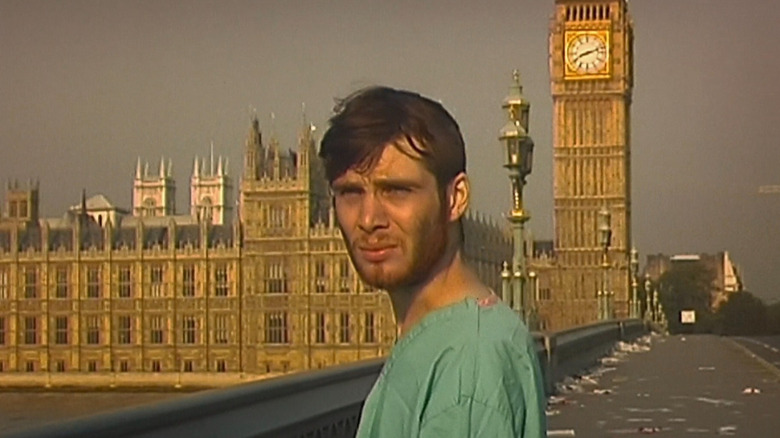
Placing "28 Days Later" anywhere but the number one spot would be grandly foolish, considering it's not only the best in the series, it's one of the best horror movies of the 21st century, period. Danny Boyle and Alex Garland craft an upsetting survival horror odyssey in which a horde of Rage infected zombies have forever altered the United Kingdom.
After that terrifying opening sequence, we're thrust into the aftermath of the outbreak. Anthony Dod Mantle's digital lo-fi cinematography makes everything feel like you're watching CCTV footage from Hell. For all of the ways in which "28 Days Later" is frenetic and startling, the film's most unsettling moments exist in the silence of Cillian Murphy's Jim wandering through a never-ending parade of empty streets and strewn bodies. The scene in which he discovers his parents in their bed illustrates how dire the world has become in his comatose absence.
"28 Days Later" tells its story through a series of vignettes that test Jim's resolve to survive. The nature of rescues, found family and a deceptive military group masterfully show how the Rage has become a fixture of British culture. A common thread in zombie media concerns the thin line between the infected and the survivors. "28 Days Later" proves itself to be one of the most compelling depictions of this dichotomy, with Christopher Eccleston's Major Henry West and his men offering a fate worse than becoming a Rage victim.
In the 24 years since its initial release, Boyle's apocalyptic horror masterpiece still strikes a nerve concerning cruelty and how easily it can transform us into what we fear most. Everything from Zack Snyder's "Dawn of the Dead" to "REC" owes a great deal to this film's unimpeachable legacy.