

5 Box Office Flops That Killed Planned Cinematic Universes
For better or worse, the record-breaking success of the Marvel Cinematic Universe changed Hollywood. It wasn't long before other studios and IP holders wanted a piece of the action by launching their own ongoing meta franchises consisting of sequels, spin offs, origin stories, and other offshoots, ideally building to a team up movie and, eventually, a massive climax of "Infinity War"/"Endgame" proportions.
Of course, none have come close to achieving that goal. Even the DC Extended Universe, which had the most potential to be the next MCU, struggled across its run and eventually crumbled under the weight of creative missteps and box office disappointments. But at least the DCEU managed to last for awhile and spawn over a dozen movies. Most cinematic universes either never get off the ground, or have a promising start but quickly hit a dead end. And in almost every instance, it's the result of the movie meant to spawn said cinematic universe falling on its face at the box office.
Robin Hood (2018)
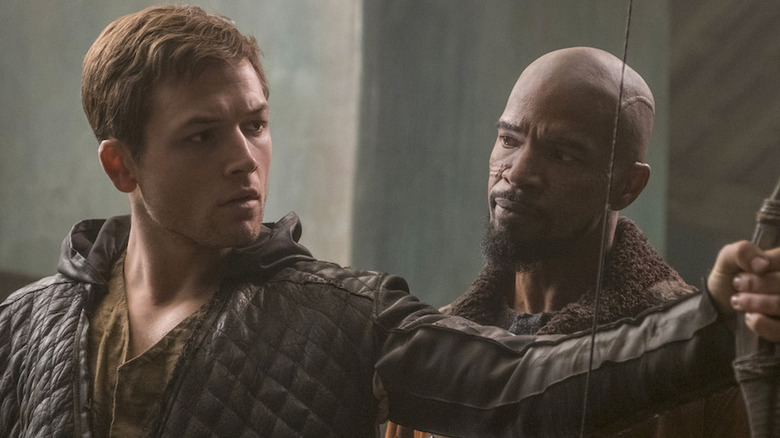
Hollywood really, really wants Robin Hood to be a thing. But so far, Hollywood's modern efforts have been as successful as Gretchen Wieners (Lacey Chabert) making fetch happen. But it's a dragon that continues to be chased — and in fact, the most recent attempt had so much optimism behind it that it was set to launch an entire cinematic universe. But while 2018's "Robin Hood" was supposed to be the one to break the curse, it only exemplified how hard it is to make a Robin Hood movie work.
The film was set to be the first in a series of solo movies starring the noble thief's cohort — Little John, Friar Tuck, et al — all leading to an eventual "Avengers"-style Merry Men crossover movie event. But after "Robin Hood" completely bombed at the box office, it became pretty obvious that people weren't going to show up for a Friar Tuck movie either. And thus marked the beginning and end of not only the Merry Men cinematic universe, but yet another feeble attempt at making Robin Hood the lead of even a single successful film.
The Amazing Spider-Man 2

If Iron Man can launch a multi-billion dollar franchise, then Spider-Man, one of the most popular comic book characters whose already led several successful movies, could anchor a Marvel cinematic universe to rival the Marvel Cinematic Universe. But no, we aren't talking about Sony's more-recent lineup of movies like "Venom," "Morbius," and "Madame Web" that has already spun itself out. The studio actually attempted that same thing before, trying to build it on the back of "The Amazing Spider-Man" and its sequel.
By most reasonable measures, "The Amazing Spider-Man 2" actually made an impressive amount of money. But it wasn't as much as Sony wanted — and not enough to inspire confidence to branch it off into solo Venom and Black Cat movies that would build to a Sinister Six event film. Those plans were abandoned, alongside future installments of "The Amazing Spider-Man." But for what it's worth, star Andrew Garfield is convinced he wore the best Spider-Man suit.
The Mummy (2017)

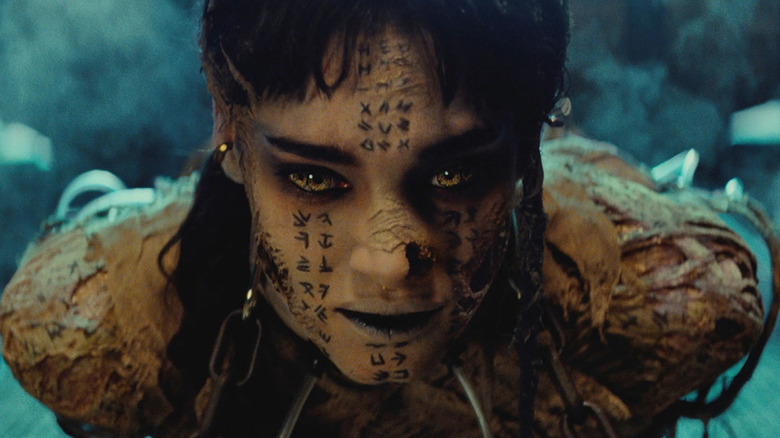
As tempting as it might have been to roll our collective eyes at the plan to not only do another new version of "The Mummy" in 2017 but have it spawn a new cinematic universe, there was an established precedent. The original 1932 "The Mummy" was part of one of Hollywood's first shared universes. The Universal Monsters franchise consisted of not only that, but also films like "The Wolfman," "Dracula," and "Frankenstein," eventually spawning crossovers between the various horror icons.
Dubbed the Dark Universe, this series was to be horror-focused like the classics, rather than the more Indiana Jones-esque action adventure of the 1999-2008 "Mummy" series. It sounded promising enough, with the new "Mummy" fittingly led by Tom Cruise, often seen as one of the last movie stars in the classic sense. But critics hated it and audiences didn't show up, immediately putting all future plans for the Dark Universe on ice. Universal hasn't gotten out of the business of reviving its staple of classic monsters, but has since opted for standalone titles, such as 2020's "The Invisible Man" and 2025's "Wolf Man."
King Arthur: Legend of the Sword
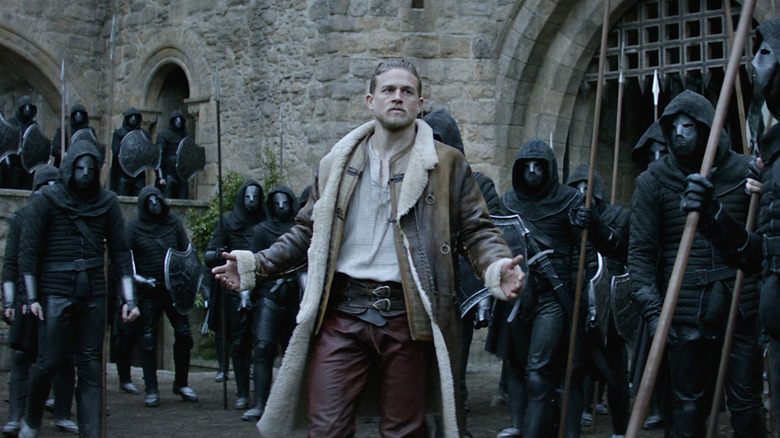
Another public domain character that seems to inspire a new blockbuster movie every 10-15 years is King Arthur. And while his track record has been marginally better than Robin Hood's, there are still a lot more misses than hits, especially in recent decades. But 2017 was apparently the year of the cinematic universe attempt, so "King Arthur: Legend of the Sword" took a swing at it as well.
Director Guy Ritchie successfully reinvented the iconic titular detective in 2009's "Sherlock Holmes" with his signature style, but couldn't replicate that box office success with his "The Man from U.N.C.L.E" six years later. So Ritchie sometimes succeeds and sometimes fails at this type of thing — and "King Arthur: Legend of the Sword" fell squarely into the latter pile. So all the work that it did in setting up future movies intended to introduce all the Knights of the Round Table, plus a Lady Guinevere solo film, before an eventual crossover that would've brought them all together was for naught.
The Dark Tower

To some degree, there is something of a Stephen King shared universe loosely connecting most adaptations of his work. His books contain various connective elements running through them, from sharing locations to having characters go from one series to another. But for the most part, those on-screen connections have been little more than Easter eggs, with the Hulu series "Castle Rock" perhaps coming closest to realizing a Stephen King multiverse. As far as the books go, the how and the why of Stephen King's creations centers around his "The Dark Tower" series.
Making a "Dark Tower" movie had been something Hollywood had wanted to do for some time, but it was one of those books deemed unadaptable as one attempt after another fell apart. Finally, in 2017 — again with that year — a film version of "The Dark Tower" actually made its way to the screen. And with it, plans to finally go all out on a Stephen King cinematic universe which would've included movies and TV shows. But a 16% on Rotten Tomatoes and poor showing at the box office put the light out on yet another planned cinematic universe.