

5 Directors Who Secretly Reshot Other People's Movies
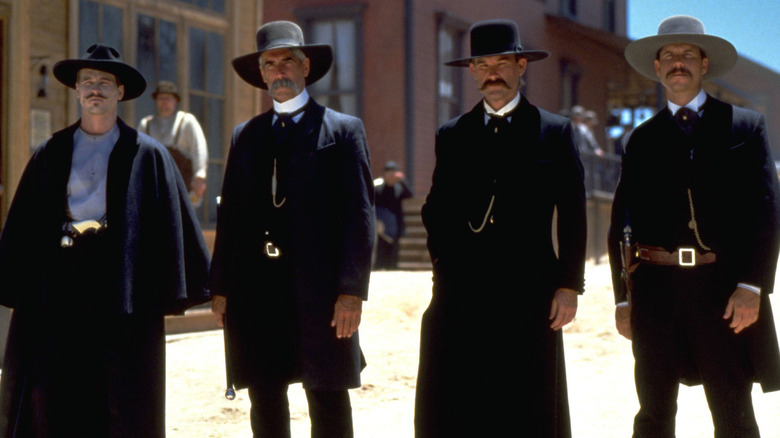
Hollywood is the place where magic happens, but it also knows how to rip someone's heart out, stomp it into the hot tar, then tell you that you'll never work again in Tinsel Town. With the moviemaking business costing millions upon millions of dollars, it isn't unusual to see the moneymen and studios scrutinizing every creative choice made in a film. Resultantly, this makes a director's life stressful. In the most extreme cases, the captain of the ship departs by choice — or by plank — and someone needs to steer the ship back home.
There are examples where the shake-up becomes noticeable in the final cut, but there are times when the transition appears to be so fluid that viewers only find out about the tumultuous behind-the-scenes events after the fact. Whichever way, the show must go on in Hollywood — whether fans and filmmakers like it or not — so let's take a look back at five directors who secretly reshot other people's movies.
Alex Garland is widely considered as the writer-director of Dredd
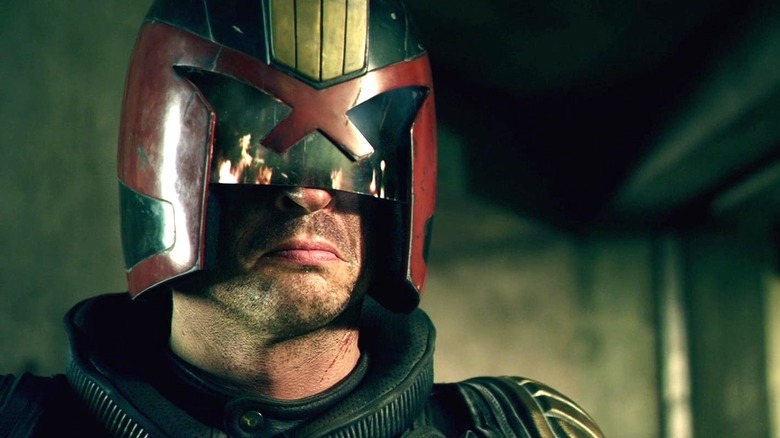
As a filmmaker, Alex Garland needs no introduction. He cut his teeth in the business by writing scripts for 2002's "28 Days Later" and 2007's "Sunshine," before evolving into the total package as writer-director and creating mind-blowing films like 2014's "Ex Machina" and 2018's "Annihilation."
Garland was also a producer and writer on 2012's "Dredd," one of the best R-rated superhero movies. Officially, the film's director is listed as Pete Travis, but there were rumors that Travis lost control of "Dredd," with Garland taking over as director and handling post-production duties. While a statement was issued (via the Los Angeles Times) that the set applied "an unorthodox collaboration," this seemed to be a politically correct way to say this wasn't Travis' movie without saying so.
Years later, Karl Urban, who plays Judge Dredd in the film, said the quiet part aloud. "A huge part of the success of 'Dredd' is in fact due to Alex Garland," Urban told JoBlo, "and what a lot of people don't realize is that Alex Garland actually directed that movie." Garland stopped short of admitting to ghost-directing "Dredd"; however, he acknowledged it was an unfair situation for Travis. "Within this is a disservice to Pete Travis, who is the credited director, who did some fundamental/crucial things, and he deserves that title," Garland told GQ. "He was put in an absolutely impossible situation, and retrospectively, the longer I've worked, the more ridiculous I think it was."
Kurt Russell admitted that he directed Tombstone
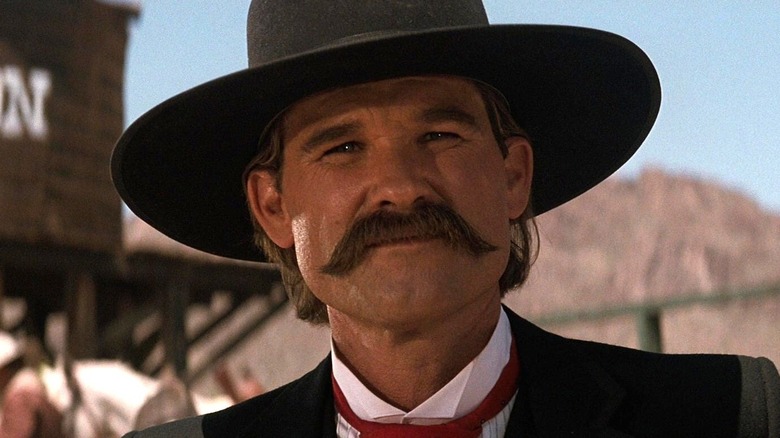
"Tombstone" remains revered as a sensational Western you need to see before you die, as well as one of the best films about the legendary lawman Wyatt Earp. In the 1993 film, Kurt Russell plays Wyatt, while Val Kilmer stars as his pal Doc Holliday.
The original director for "Tombstone" was also the film's writer, Kevin Jarre, but he was fired after tensions on set and uneasiness among the studio brass. Jarre's replacement was George P. Cosmatos, who had directed 1985's "Rambo: First Blood Part II." Ironically, there were whispers that star Sylvester Stallone had actually ghost-directed the "Rambo" movie, while Cosmatos only occupied the director's chair for posterity's sake.
As it turns out, Russell was approached to direct "Tombstone" after Jarre's firing, but he didn't want to attach his name to it as a director, so he approached Stallone, who put him in touch with Cosmatos. "I said to George, 'I'm going to give you a shot list every night, and that's what's going to be,'" Russell told True West. "I'd go to George's room, give him the shot list for the next day, that was the deal. 'George, I don't want any arguments. This is what it is. This is what the job is.'" Kilmer also corroborated Russell's version of events, revealing that it was Russell who made "Tombstone" happen.
Tony Gilroy stepped in for Rogue One
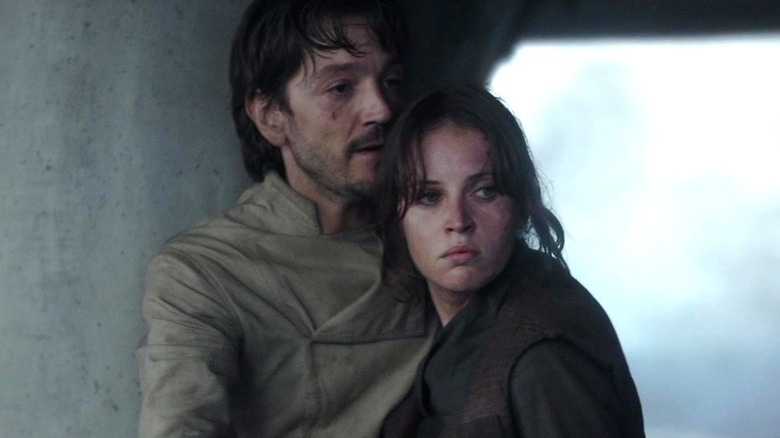
Everybody knows Tony Gilroy as the showrunner who revolutionized "Star Wars" with "Andor." It should come as no surprise, since he worked on 2016's "Rogue One," which features Cassian Andor (Diego Luna) as a main character, but just how much did Gilroy contribute to the film? On paper, he's credited as a co-writer, while Gareth Edwards is listed as the director. Having said that, Gilroy also stepped in to handle the reshoots and final edit of the film — with Edwards still involved in providing input, according to the PR spin.
It's always suspicious when someone else boards a project to handle what a director should be doing even in post-production. Appearing on "The Moment with Brian Koppelman" podcast, Gilroy spoke about his involvement with "Rogue One," stating how he saw exactly what was missing in the movie when he was approached. He joked that he needed to be careful of "the statute of limitations" and hinted that he may have ventured into the realm of receiving a co-director credit. "I came in after the director's cut [and] I have a screenplay credit in the arbitration that was easily won," he said.
According to Edwards, he maintained it was a collaboration until the end. However, he added that Gilroy brought good ideas to the table.
Joss Whedon reshot Justice League
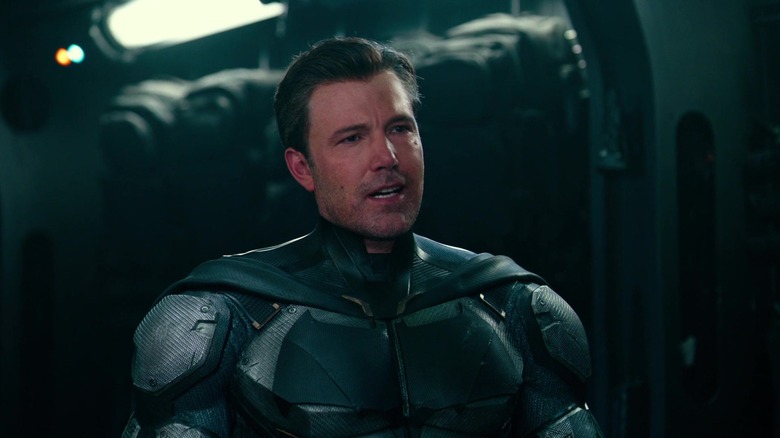
The story of the behind-the-scenes mess of 2017's "Justice League" is so old now that it's growing fur. Long story short: Warner Bros. wasn't happy with filmmaker Zack Snyder's darker vision for the DC Universe. Snyder experienced a family tragedy and stepped away from the film, so the studio hired Whedon (reportedly handpicked by Snyder) to finalize the movie. Then-Warner Bros. President Toby Emmerich claimed that Whedon would only be providing finishing touches.
Upon release, everyone could see this was a Frankenstein's monster, pieced together from conflicting visions and rush jobs, including the horrendous CGI that was meant to remove Henry Cavill's mustache in the reshoots but turned him into Shrek. These weren't minimal changes; this was the "Josstice League." Snyder's cinematographer Fabian Wagner claimed in a Q&A (via Comic Book Movie) that Whedon reshot practically the whole movie. "It was a completely different team," he said. "They reshot 55 days, I think. The movie that was in cinemas was 10 percent of what we shot. Everything else is a reshoot."
The fallout from the film is the stuff of legend, resulting in the fan-driven campaign "Release the Snyder Cut." After years of calling for it, Warner Bros. gave in and Snyder's original vision (with a few updated shots) was released as "Zack Snyder's Justice League" in 2021. Overall, Warner Bros. spent $370 million on the entire "Justice League" project, but the fandom still fights about whether the Snyderverse should be restored to this day.
George Lucas is reported to have handled Star Wars: Return of the Jedi
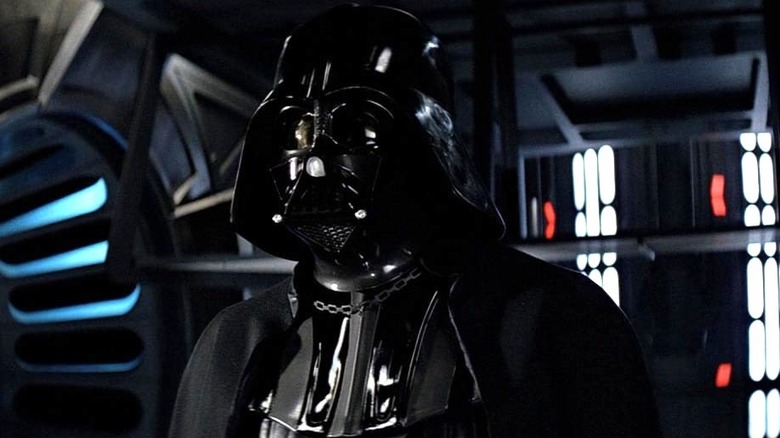
George Lucas is the architect of "Star Wars," but he only directed the first movie in the original trilogy. Irvin Kershner directed 1980's "The Empire Strikes Back" and Richard Marquand directed 1983's "Return of the Jedi." Officially, that is, since there are rumors that Lucas may have had a larger role in both films than what's believed.
As per Uproxx, Lucas wasn't present on the set of "The Empire Strikes Back" as he handled Lucasfilm business. Once the film went past its schedule, Lucas decided he wouldn't allow it to happen again on "Return of the Jedi." Marquand followed Lucas' direct orders of what to do, while he also didn't provide much input into the actors' performances. Essentially, you can say Marquand acted as a hired gun here.
Director Joe Johnston, who worked on the visual effects of "Return of the Jedi," provided his thoughts on the situation. "George's attitude has always been that the film is made in the cutting room, and production is a process of assembling the raw material," Johnston said. "My guess is that George saw Marquand as a guy who could go out and amass the great-looking footage that George would mold into the film in post."