

Easter Eggs You Missed In Joker
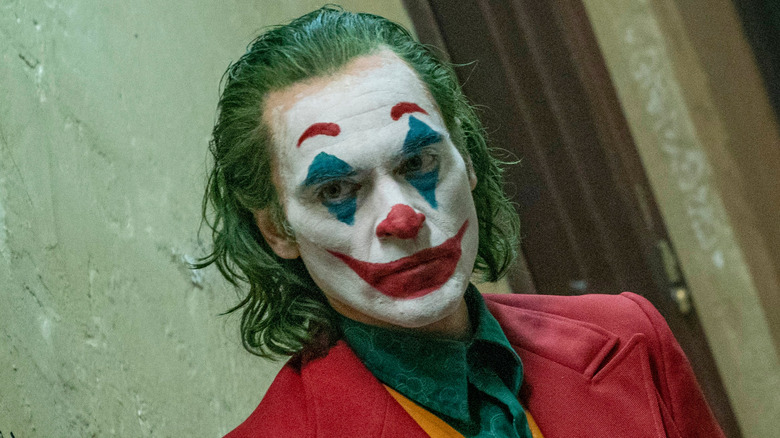
From subtle references to past storylines to obscure characters filling up supporting roles, all the way to world-shattering artifacts looming ominously in the background, superhero movies are full of Easter eggs, just waiting for obsessive fans to find them. 2019's "Joker," however, is different. As you may have heard, it's not your typical comic book movie, and as a result, it doesn't have your typical comic book references littering the scene.
But that doesn't mean that there aren't a handful of subtle and not-so-subtle references to films, real-world events, and even the silent art of mime lurking in its grim and gritty Gotham City streets. If you're still reeling from the violence and drama of Arthur Fleck's (Joaquin Phoenix) tragic journey, read on to find out about the little things you might have missed.
The Joker is still the Man Who Laughs
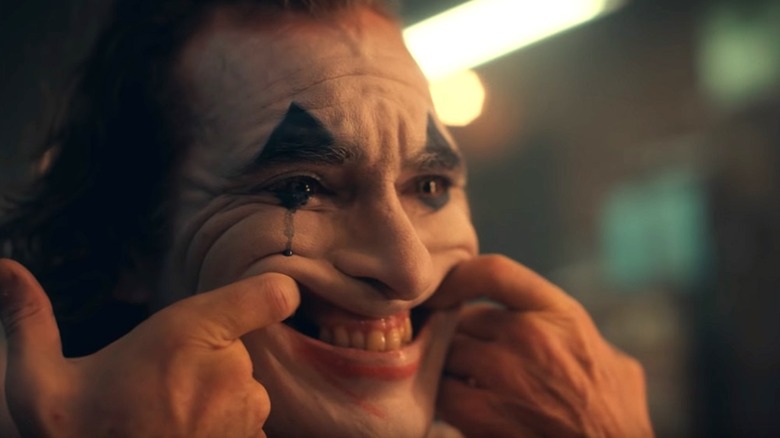
The Joker was originally inspired not by the playing card from which he took his name, but by Gwynplaine, the main character of the 1928 silent film "The Man Who Laughs." In the movie, Gwynplaine, played by German actor Conrad Veidt, is a child in the 17th century whose father is killed by rival noblemen. They also disfigure Gwynplaine's face into a permanent smile, leaving him unable to ever truly match his face to his emotions. Also, Gwynplaine's father was betrayed by — wait for it — his jester, whose "jests were cruel and his smiles were false." Sound like anyone you know?
Fittingly, this cinematic inspiration made its way back to the movies in "Joker." The parallels to Arthur Fleck's medical condition, which causes him to compulsively laugh whenever he's under stress, are obvious, as is the reveal that his mother ignored his severe childhood abuse because he was "happily" laughing through the horrific ordeal. It's more than just the subtext, though — one Easter egg is a visual nod to a specific shot from "The Man Who Laughs" that recurs several times in "Joker."
Throughout the film, Fleck forces a "smile" onto his face by hooking his fingers into his mouth and pulling upwards. This is exactly the same thing that Dr. Hardquannone does to show Gwynplaine's father how his son has suffered. Perhaps more important is that Fleck does this same thing to a young Bruce Wayne when he's trying to get access to Thomas Wayne. Given the dynamic in play between Fleck and the Waynes, there's actually way more to it than just the supremely creepy act of putting your hands in a child's mouth.
The Joker's Modern Times
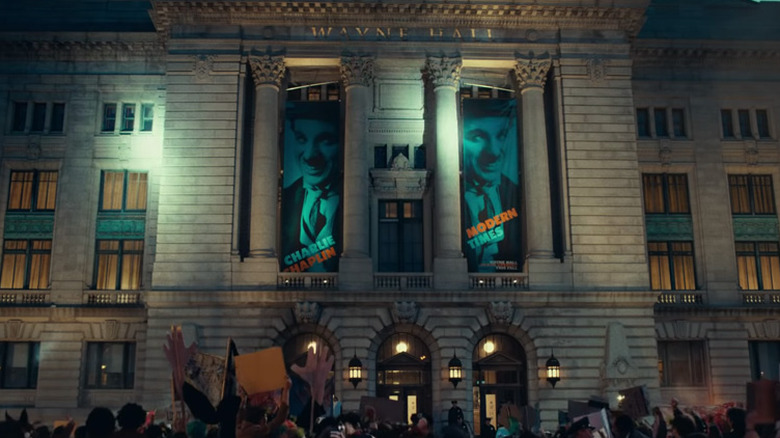
"The Man Who Laughs" isn't the only silent movie to have its influence felt on "Joker." It's difficult to imagine a Gotham City where putting on a well-publicized showing of a famous Charlie Chaplin comedy, that seems to be attended solely by billionaires, wouldn't immediately be recognized as a truly terrible idea. "Joker," however, takes place before Gotham was overrun with super-criminals, so it probably seemed like a good idea at the time.
Still, it raises the question of why "Modern Times" was chosen for a sequence in the film, and is featured so prominently that we stop to watch Arthur Fleck as he watches one of its most famous gags. On one hand, the scene in question involves Chaplin's character roller-skating blindfolded, nearly falling over a ledge into a precipitous fall, a pretty on-the-nose reinforcement of Fleck as a man teetering on the edge of sanity.
If you're familiar with the rest of "Modern Times," though, you'll realize that some of its themes are mirroring the ones we're seeing play out for Gotham City. This is, after all, a film where Chaplin, as the Tramp, is dealing with a desperate economic situation, finding himself literally chewed up and spat out by the machinery of heavy industry. Even more telling is the scene where he's arrested and sent to jail before being pardoned, only to argue that he'd rather stay in jail than go back out and face the alternative. That's echoed in "Joker" by the file clerk at Arkham State Hospital played by Brian Tyree Henry, who tells Arthur that some people are better off locked up there than out on the increasingly dangerous streets of Gotham City.
The Joker's Scorsese connection
Saying that director Todd Phillips was inspired by Martin Scorsese in "Joker" is sort of like saying that life on Earth is "inspired by" the sun. There's a very significant amount of "Taxi Driver" in the DNA of the broader plot points in "Joker," from the grimy feel of Gotham, to Arthur getting the handgun from his coworker, to Thomas Wayne's political ambitions. It's not the only Scorsese picture in play, though.
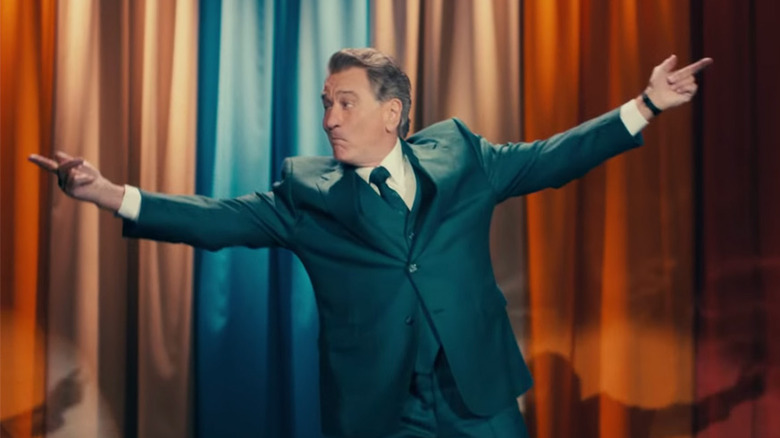
Not surprisingly, 1983's "The King of Comedy" had a huge influence on "Joker," to the point where it's worth watching just to catch everything that's going on. In the former, Robert De Niro stars as Rupert Pupkin, an aspiring stand-up comedian obsessed with talk show host Jerry Langford. Pupkin often has vivid fantasies, which are never clearly delineated for the audience, of being on Langford's show and even being friends with Langford himself. Eventually, his obsession leads him to kidnap Langford, holding him for ransom until he's allowed to be a guest on the show, where he tells a few jokes about his crime, confessing to the audience in the guise of a stand-up routine.
If you've seen "Joker," you should be experiencing a powerful feeling of déjà vu right now, but the exclamation point on the Easter egg comes in De Niro himself being cast as Murray Franklin, the talk show host with whom Fleck is obsessed. Naturally, he winds up being caught up in Fleck's madness, even accidentally giving him the name "Joker." The parallels are strong, even if Joker turns out to be significantly more homicidal than Pupkin was.
The Maskmaker
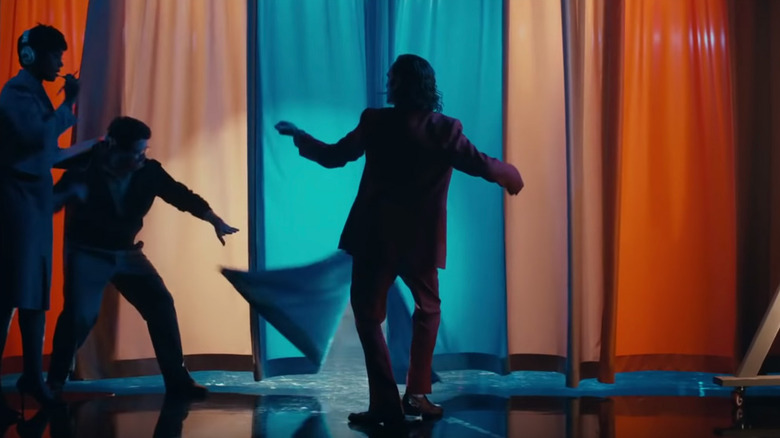
The motif of Arthur Fleck dancing recurs throughout "Joker," from his halting, Oedipal waltz with his mother all the way to the final moments of the film, when he celebrates another successful murder by busting a move in Arkham. But there's one moment where it seems different. After his first trio of kills, when he's collecting himself in a dimly lit bathroom, Fleck's feet sweep across the floor, leading his whole body into a long routine. The thing is, it doesn't look like the dancing we see elsewhere in the film. It's more fluid, and seems more theatrically performative.
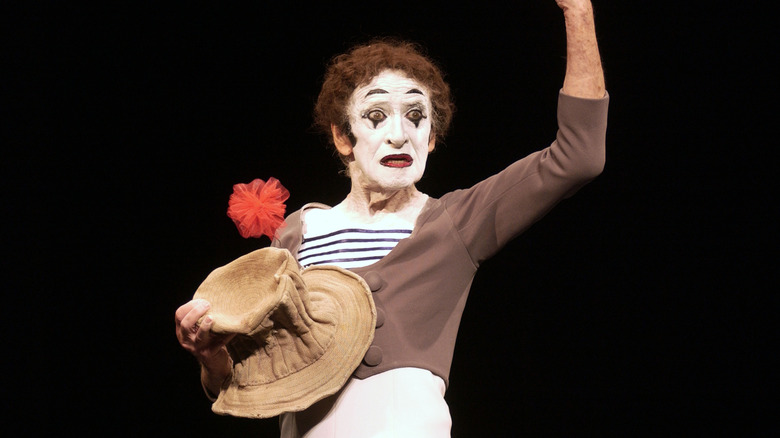
Is he turning to interpretive dance to express his joy at gun violence? Is he testing out his other potential criminal identity, the Pop-n-Locker? Is he re-centering himself with some post-murder Tai chi? It's possibly all three, but there's another possibility that might seem just as far-fetched: the filmmakers could be evoking the fluid movements of legendary French mime Marcel Marceau.
Consider this potential Easter egg: one of Marceau's most famous performances was "The Maskmaker," in which he pantomimed putting on a series of masks, changing his expression to match. The climax of the piece comes when Marceau finds that a "mask" depicting pure, wide-eyed joy has become stuck on his face. He struggles to remove it, trying to peel off what seems like his own skin as his body contorts with pain and depression, all while his face remains locked in the painted smile of a clown. If that doesn't sound like what's going on in "Joker," then we don't know what does.
Cosmetics and drugs
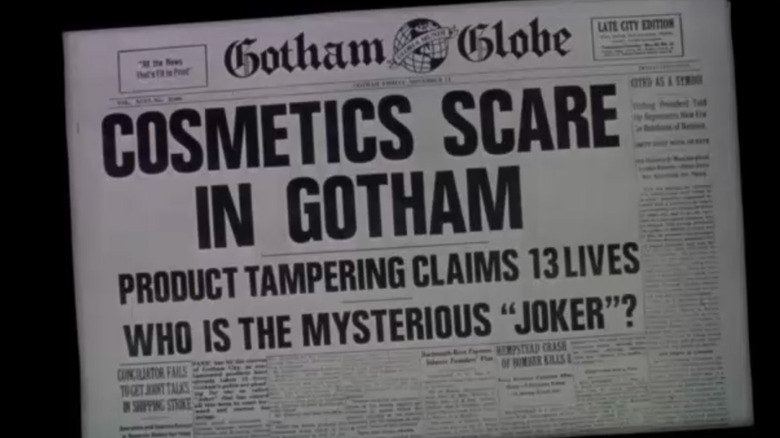
Sometimes, a sign is just a sign, but there's something in the early moments of "Joker" that may have a little extra Easter egg-type significance. Shortly after we're first introduced to Arthur Fleck, he goes to get his medication from a drugstore, and walks past a window with two words written in neon: Cosmetics and Drugs.
On the surface, those are pretty common things to find in a drugstore. However, for Arthur, the drugs he's taking are a form of cosmetics. It's mental makeup. His medication is clearly ineffective; it's only covering up something much uglier underneath, and when he stops taking it, he says that he's his real self. Maybe not the best message to float towards anyone in the audience with mental health issues themselves, but definitely the viewpoint that Arthur himself has. It's also quite in line with how much time the film devotes to showing Fleck actually putting on makeup, and how literally painting his face (and tongue, gross) is the sign that he's become Joker rather than simply Arthur Fleck.
Beneath that interpretation, we have another: that this is actually one of the movie's only references to a previous cinematic Joker. In Tim Burton's 1989 "Batman," the Joker's biggest criminal act — before he tries to poison the entire city with parade floats of death — comes when he terrorizes the city with Smylex. The poison, which leaves his victims smiling and very dead, is hidden in everyday products: hairspray, lipstick, perfume. In other words: drugged cosmetics.
The film's third act references a key Batman comic
This might be surprising considering that it's a movie about the Joker, but the film doesn't really have a lot of specific references to the comics. There's one major exception, though. It's easy to argue that the entire climax of the film is an Easter egg referencing one of the most influential Batman comics of all time: "The Dark Knight Returns."
In the third issue of Frank Miller's '80s classic — itself a product of the same era that "Joker" is constantly evoking, with its own set of "Taxi Driver" references — the Joker appears as a guest on a talk show. It's definitely not a direct homage to the comic and it doesn't line up exactly right; the Joker's at the end of his criminal career rather than the beginning, and instead of the movie's Murray Franklin, the host in the comic is "David Endochrine," an analogue for David Letterman.
There is, however, one clear reference, and it's one that you might have missed if you're not up on your '80s pop culture: Dr. Sally (Sondra James), whose few lines indicate that she's a sex therapist, along the lines of the real-life Ruth Westheimer, better known pop culturally as Dr. Ruth. Like Letterman, there's an analogue for her in "The Dark Knight Returns." It's not just her presence that makes the reference clear, though, it's the theatrical and incredibly creepy kiss that Joker plants on her as he enters the scene. He does the same in the comic, except there, his lipstick is laced with poison that leaves her as one of his signature smiling corpses.
The Joker's hidden figure
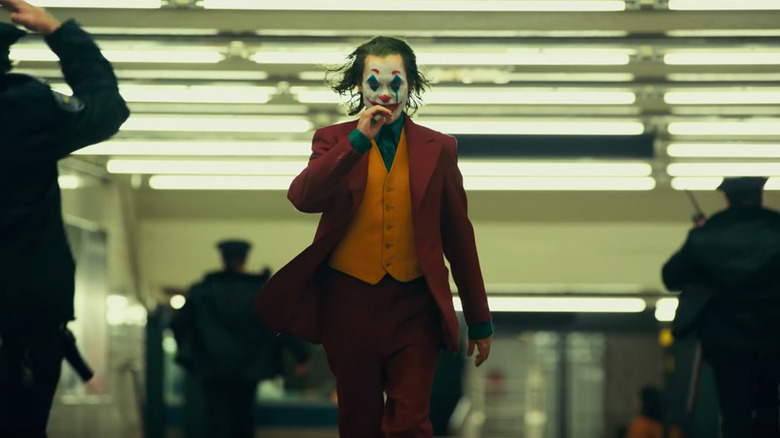
"Joker" marks the sixth time that a live-action Joker has been featured on the big screen. The first five times — from the 1966 TV show to the 2016 movie "Suicide Squad" — all featured very different designs, but that all drew from the same source. You'd never confuse Cesar Romero's Joker with Heath Ledger's, but they've both got green hair and purple suits, and even Jared Leto's purple snakeskin coat keeps the color scheme going.
"Joker," on the other hand, breaks with tradition. Rather than the traditional purple, Arthur Fleck's emergence as the Joker comes with a slightly different look. The green hair is there, and the traditional three-piece suit, but rather than purple and green, it's more of a burgundy. The most likely explanation is that Todd Phillips, Joaquin Phoenix, and costume designer Mark Bridges wanted their take on the character to be visually distinct from the others, which was probably a good idea given a few strong similarities to Heath Ledger's look.
But there is one place where you can find this color scheme on the Joker, and it probably isn't where you expect. Back in 1990, the Kenner toy company released a tie-in toy to 1989's "Batman" called "Sky Escape Joker." It's not quite the same costume — the vest and shirt colors are switched — but the color of the jacket is shockingly similar to what wound up in theaters 29 years later. Does this mean that there was a draft of "Joker" in which Phoenix flew around on Sky Escape Joker's backpack helicopter? Probably not, but hey, you never know. Release the Sky Escape cut, Warner Bros.
Arkham State Hospital
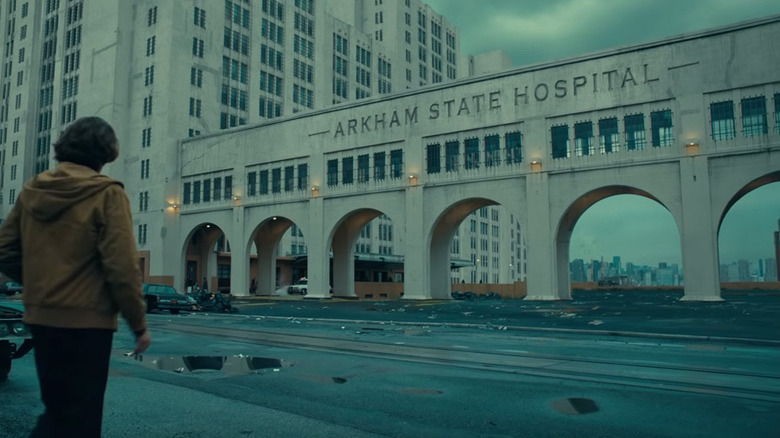
The fact that Arkham Asylum shows up in a movie about the Joker isn't exactly an "Easter egg" in itself. But there is something about this particular Arkham appearance that's worth noting, though: it's not Arkham Asylum, it's Arkham State Hospital. That might seem like a relatively minor change that was made in order to seem more realistic — "Asylum" as a term for a mental hospital would have fallen out of favor decades earlier — but there might be something more going on.
Before it was the gothic mansion with a hundred gargoyles and a revolving door for costumed criminals, the Arkham of the comics was simply "Arkham Hospital," which was itself a reference to H.P. Lovecraft. That's what it's called in its first appearance in "Batman" #258, complete with a building that appears to be a slightly more realistic facility than the spooky house it would become.
What makes it even more notable is Arkham Hospital's first two residents. The only pair of super-villains we see confined there in that issue are Two-Face and, of course, the Joker. The only snag is that Two-Face actually appears first, and it's not until he's making his escape that he runs past the Joker's cell. That said, if you really want to get granular, "Batman" #251 — the first new Joker story in "Batman" or "Detective Comics" in four years — mentions that the Clown Prince of Crime had recently "escaped from the state hospital for the criminally insane." If we assume that's Arkham, and that seems like a safe assumption, then Joker is in fact the first character to be locked up there, and Two-Face is the second. And that's just as Harvey Dent would want it to be.
The Joker's Bernie Goetz
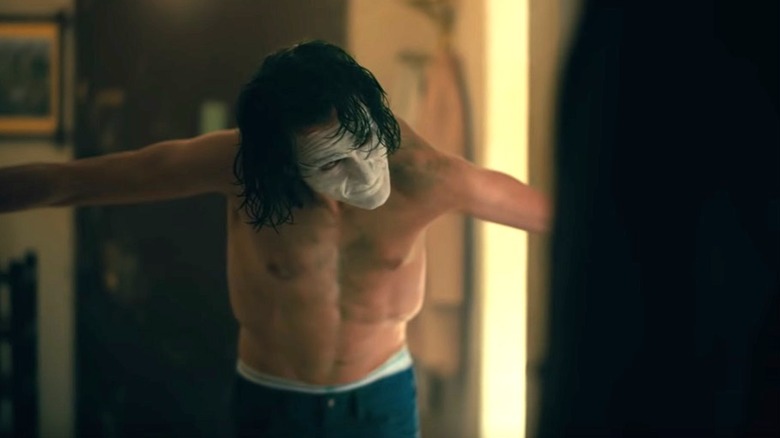
"Joker" pulls a big portion of its aesthetic from New York City in the mid-'80s. There are real-life incidents forming the background for the events playing out on the screen, including the massive spike in crime that accompanied the crack epidemic, and a "garbage strike" that's based on similar sanitation worker strikes in New York, like one that lasted 17 days in 1981.
The one incident most heavily referenced in the plot of "Joker" is the 1984 shooting of four men in a subway car by Bernie Goetz. Goetz claimed that he was defending himself from a robbery, and was initially dubbed the "Subway Vigilante" by media before he turned himself in. Many New Yorkers, as well as people following the story from elsewhere, were supportive of Goetz's actions, viewing them as a justified response to the seemingly unchecked rise of violent crime.
Eventually, though, public opinion turned against him, largely because of the view that Goetz had been racially motivated — all four men shot by Goetz were Black, while Goetz himself was not — which was supported by racist statements Goetz had made in the past. Also, Goetz was later quoted as saying that he only stopped shooting because "I ran out of bullets." It's no accident, then, that Arthur's transformation into Joker begins with shooting his assailants on a subway train, that he only stops shooting because he runs out of bullets, and that his actions are sensationalized by the media and approved of by others in Gotham City.
Arthur Fleck experiences a bad day
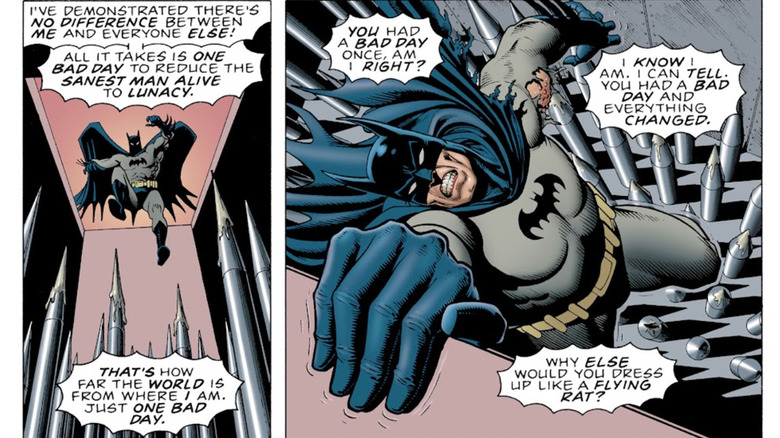
After Penny Fleck (Frances Conroy) lands in the hospital, Arthur learns the shocking and disturbing truth about himself and his mother's past. Devastated and distraught, he goes to Sophie Dumond's (Zazie Beetz) apartment where he reveals that he "had a bad day." What happens after he says this matters, as the audience realizes his relationship with Sophie is entirely imaginary. Even more important, this is the pivotal turning point in his character arc, as he finally embraces becoming the Joker.
The "bad day" comment references Alan Moore and Brian Bolland's 1988 graphic novel "Batman: The Killing Joke," a controversial comic book in Batman history that also acts as an origin story (or at least one of them) for the Joker. In the comic, the Clown Prince of Crime explains how all it takes to push a person over the edge is a terrible day in which everything goes wrong. "All it takes is one bad day to reduce the sanest man alive to lunacy," he says to Batman, explaining how it's possible for anyone to become like him at any given moment.
Yet, like Mr. J in "The Killing Joke," Arthur proves to be an unreliable narrator. You're never sure if all the events that led to the "bad day" actually happened, or he imagined them. Whichever it is, the "bad day" remark seems to be the moment in which he accepts that there's no turning back for who he is about to become.
Dr. Stoner is a deep cut character from the comics
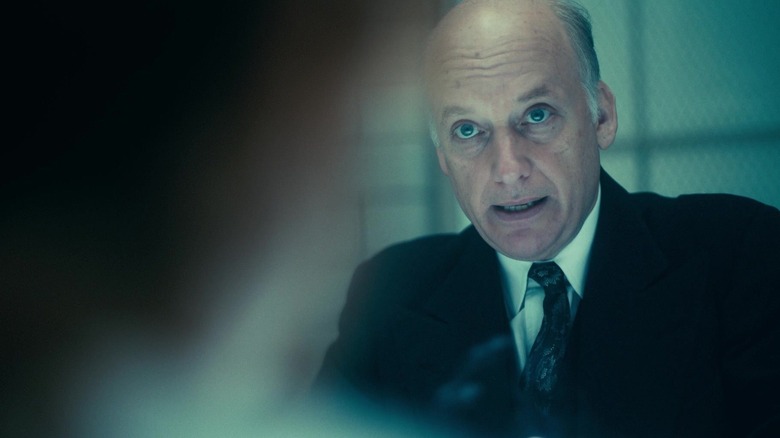
When Arthur Fleck discovers that he was adopted, he also finds out about Penny's history at Arkham Asylum. In a flashback sequence, she speaks to a therapist named Dr. Stoner (Frank Wood). It's a brief and exposition-heavy scene before the action cuts back to the present, where Arthur deals with everything he's uncovered and learned about his mother and himself.
Dr. Benjamin Stoner isn't a major character in the DC Universe at all, but he features in a memorable late '80s "Doctor Fate" storyline in which he's used by the Lords of Chaos. He becomes Anti-Fate and battles Eric Strauss, who had replaced Kent Nelson as Doctor Fate in canon. Much like in the film, though, Dr. Stoner is originally a medical practitioner at Arkham Asylum, who tries to help others.
In "Joker," Dr. Stoner is nothing more than an auxiliary character used to fill in the blanks of Penny's past. It's a role that didn't need any further elaboration, or bigger ties to the wider universe, but even so, it's a nice tip of the hat to include an actual character from the comic books here.
The Murray Franklin show's logo is inspired by Batman: The Animated Series
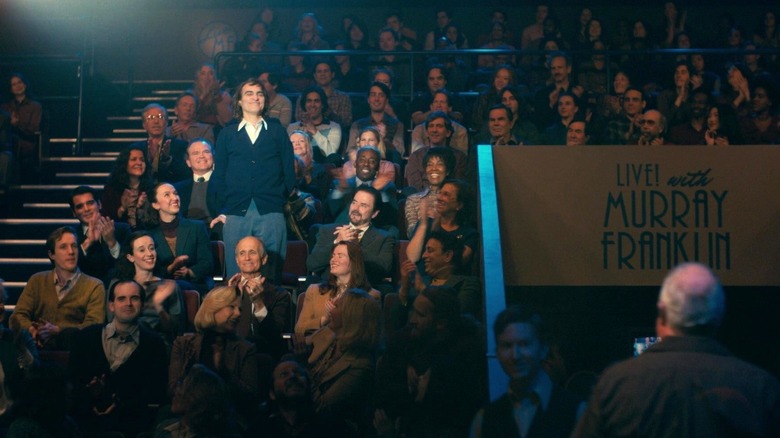
"Batman: The Animated Series" remains the pinnacle of the Dark Knight's adventures on TV — and any medium, really. While the animated show doesn't strictly feature in "Joker," there's a tribute to it in the form of "Live! with Murray Franklin." The talk show's in-studio logo uses the exact font as "Batman: The Animated Series," which is something eagle-eyed Dark Knight fans may notice and appreciate.
That isn't all, though. In "Batman: The Animated Series," Mark Hamill's Joker debuts in the second episode, titled "Christmas with the Joker." In this story, the Joker takes over a television broadcast and forces the citizens of Gotham City to watch his non-stop shenanigans and villainy. It's up to Batman (Kevin Conroy) and Robin (Loren Lester) to stop the Joker and save Christmas Eve.
The most memorable scene in "Joker" occurs on "Live! with Murray Franklin," when Arthur Fleck in his clown makeup and regalia commits murder on a live television program. Yes, Arthur's actions are far more violent and less playful than the Joker's crimes in "Batman: The Animated Series," but it does evoke memories of the time in which Mr. J took over the airwaves in the cartoon. What can you say? Joker really loves to be on camera.
Arthur's social worker is a nod to Batman and Joker's co-creator
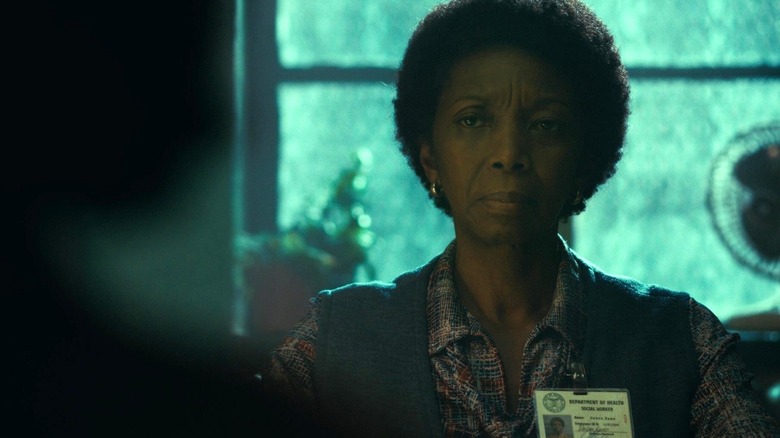
Early in "Joker," Arthur Fleck meets up with his social worker (Sharon Washington), with whom he discusses the state of the city as well as his ambition to be a comedian and desire for more medication. The social worker isn't listed by name in the credits of the film, but her name tag identifies her as Debra Kane.
Debra isn't a character from the comics, but the surname is an important one for Batman and Joker fans, since Bob Kane is recognized as the co-creator of both DC characters. In the case of the Joker, the villain was created by Kane, Bill Finger, and Jerry Robinson. He made his debut in 1940's "Batman" #1 and has been a mainstay in the Dark Knight's stories ever since then, establishing himself as the greatest thorn in the Caped Crusader's side.
It's interesting that filmmaker Todd Phillips chose the name Debra Kane for the social worker in "Joker." While it's an obvious homage to Joker's co-creator, it also holds a symbolic meaning in this specific story, because Debra — like several others — plays a role in the "creation" of the Joker in this movie.
The comedy club's name refers to a disturbing serial killer
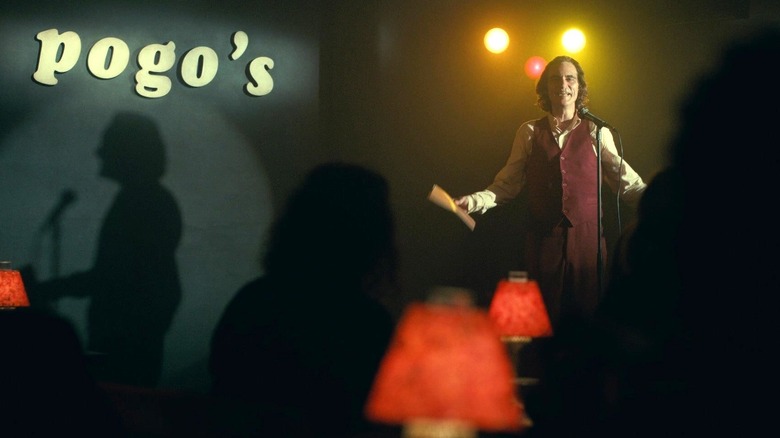
Arthur Fleck dreams of becoming a beloved comedian — although his material isn't up to scratch — and in "Joker," the comedy club that he performs at is called Pogo's. Why is this name particularly pertinent? Well, notorious serial killer John Wayne Gacy used to perform as Pogo the Clown for children's birthday parties, so this seems like a direct reference to the infamous criminal, who went down in history for a record 33 murder convictions.
Due to his shocking crimes and the publicized images of him dressed as a clown, Gacy is often associated with the killer clown archetype. Then Stephen King's villain from "It," Pennywise, terrified a generation with its frightening antics as well, making everyone fear the very idea of a jester. DC also leaned into the rising coulrophobia — fear of clowns — by tweaking the Joker's modus operandi, making the character far more homicidal and maniacal than previous iterations in which he was just a silly prankster. As a result, it isn't too difficult to draw comparisons between the fictional Clown Prince and the real-life John Wayne Gacy.
Ethan Chase is an Easter egg related to Todd Phillips' Due Date
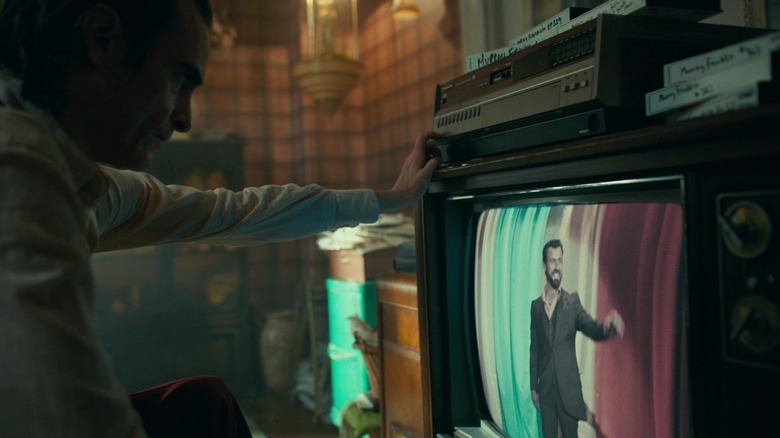
Before Todd Phillips co-wrote and directed "Joker," he was better known for his work in comedy. After all, he's the man behind "The Hangover" trilogy and "Old School" (which deserves to be considered among the best comedy movies of the 2000s). One of his lesser-celebrated — but equally hilarious — films is 2010's "Due Date," which stars Robert Downey Jr. and Zach Galifianakis in a wild road trip buddy comedy. In the film, Galifianakis plays actor Ethan Tremblay, whose real name is revealed to be Ethan Chase.
In one "Joker" scene, Arthur Fleck watches an episode of "Live! with Murray Franklin." Justin Theroux makes an uncredited cameo as an actor promoting his brand new movie, titled "American Playboy," on the show. What's the name of the actor whom Theroux plays? Ethan Chase, of course.
Unless you know Phillips' filmography, it's not an easy link to make upon first viewing of "Joker." This Easter egg might have been a bit more obvious and impactful had it been Galifianakis appearing onscreen instead of Theroux.
Arthur Fleck's dressing room is a reference to a famous comic book
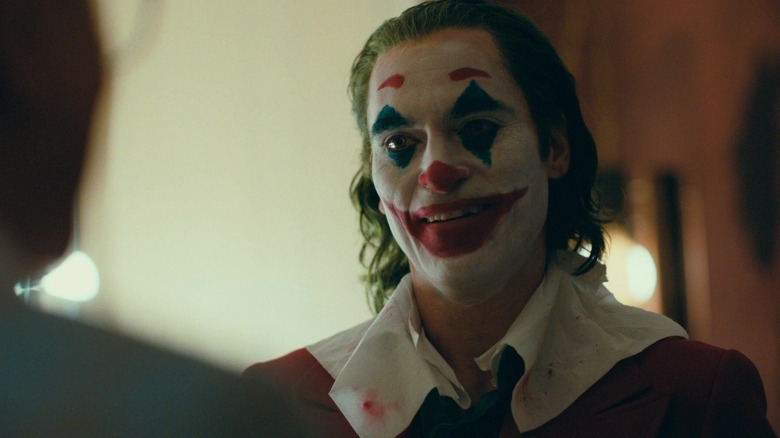
Before Arthur Fleck appears on "Live! with Murray Franklin," he receives his own dressing room in which to wait and relax until it's his time to go on the show. This is where he puffs on his cigarette and speaks to Murray Franklin (Robert De Niro) and Gene Ufland (Marc Maron), asking to be called Joker when he comes out on stage. In certain shots, you see the number of Arthur's dressing room on the door: 404.
This specific number holds two possible meanings: One, it's a tribute to 1987's "Batman" #404 — by Frank Miller and David Mazzucchelli — which is the first issue of the seminal "Year One" arc. It's not the first telling of Batman's origin story — where Bruce Wayne witnesses his parents, Thomas and Martha, being gunned down in an alley — but it's one of the more iconic versions of the tale. Considering how the Wayne murders happen on the same night that Arthur throws Gotham City into chaos, this could be a direct reference to the story.
Two, and this is more hypothetical, it relates to the "404" computer error message that appears when a webpage can't be found. If you think about it, Arthur is gone by this point — his humanity has escaped him, as he's fully embraced the Joker persona. Maybe the 404 refers to Arthur and his soul, which can't be found any longer.
A painting from Tim Burton's Batman appears in Joker
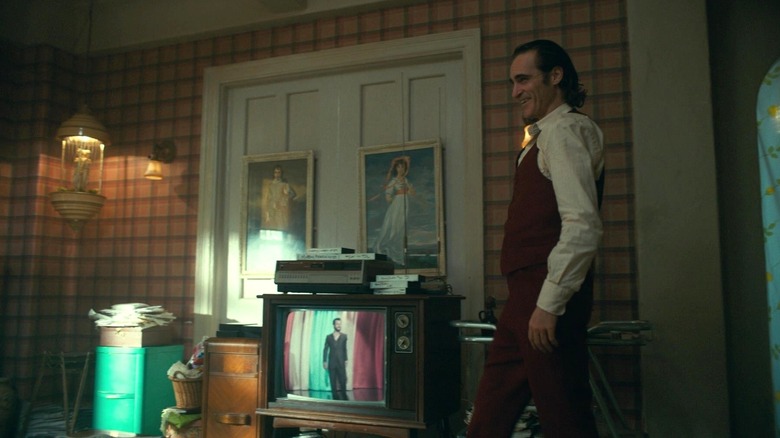
Tim Burton's "Batman" paved the way for the MCU and comic book movies in general. It isn't too difficult to spot the influences of the 1989 film across the genre in the decades since its release. As it turns out, Todd Phillips borrowed a little something special from "Batman," but not anything too obvious unless you know where to look.
In "Batman," Joker (Jack Nicholson) and his goons desecrate the Flugelheim Museum, all while dancing to Prince's "Partyman," because who wouldn't feel that groove take over their body while vandalizing art? One of the paintings that hangs in the gallery is "Blue Boy" from painter Thomas Gainsborough. Unfortunately, the artwork isn't spared from the massacre, as one of Joker's henchmen spray paints it.
"Blue Boy" makes yet another cameo in "Joker." This time, it hangs in Arthur Fleck's living room. Fortunately for art lovers around the world, it doesn't appear like the painting experiences any kind of defacement in this film.
The subtle tip of the hat to Heath Ledger's Joker
One of the Joker's most sinister moments in Christopher Nolan's "The Dark Knight" is when Heath Ledger's Clown Prince holds a knife to Gambol's (Michael Jai White) mouth and tells him how his father carved a smile into his own face (though the legitimacy of this story can be disputed since he tells a different version of events later). The Joker says, "Let's put a smile on that face," a line which has become synonymous with that 2008 movie.
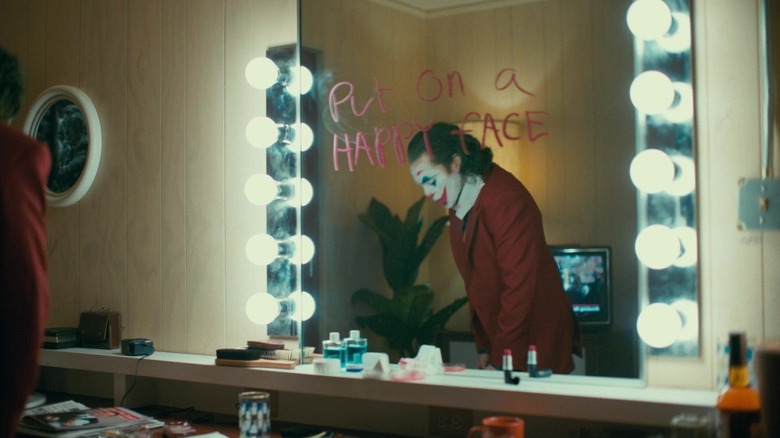
A derivative of that famous quote is used in "Joker," as Arthur Fleck uses lipstick to scribble "put on a happy face" on his dressing room's mirror. Considering the nefarious events that are about to unfold in the film, this feels more like a threat than a reminder. It's creepy and unsettling, even just visually in the context of the overall scene and lighting.
While Arthur's Joker doesn't carve out a Glasgow smile on his own face to look like Ledger's villain, he does use his own blood as makeup after his car crash. This demonstrates how both his and Ledger's Jokers are willing to go beyond the traditional makeup to get their unique aesthetic.
The Amusement Mile poster hints at Joker's future lair
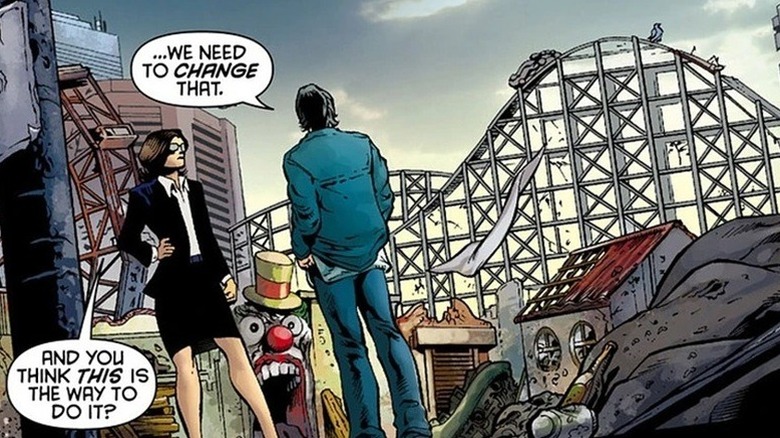
The Joker's whole shtick is that he's a clown, so naturally you associate him with circuses and amusement parks. In the comics, the Ace of Knaves' favorite hideout is almost always an abandoned amusement park — notably, Amusement Mile, which is a derelict carnival next to Gotham City's waterfront. Here, he sets up his base and creates traps for Batman and any other heroes who dare to visit his home without an invitation.
While Amusement Mile isn't showcased in "Joker," it is referenced through a poster that hangs on the wall of the Ha-Ha Talent Agency's changing room. It's uncertain if the location is in the same condition as it is in the comics, but judging by the state of Gotham City in this movie, don't expect it to be in pristine condition — or even standing at all. Originally, there was a scene shot in which Arthur speaks to fellow clown Randall (Glenn Fleshler) in front of a giant Amusement Mile mural, but it was cut from the final film.