

The Casino Royale Scene That Aged Poorly
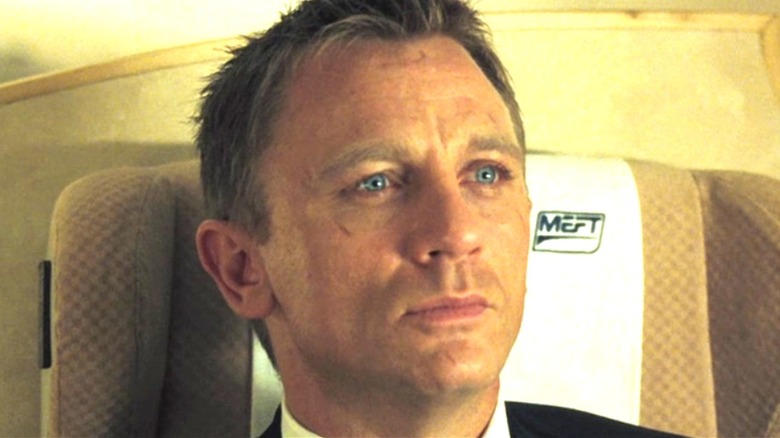
When director Martin Campbell took on the task of adapting the first James Bond novel, "Casino Royale," as an origin story fit for 2006 audiences, he reset the clock on author Ian Fleming's notoriously, uh, "mid-century-minded" MI6 agent. While it's easy for die-hard fans of the franchise to chalk up its most controversial moments (which range from cringe-worthy to downright racist or misogynistic) to being a reflection of the era in which they were created, it's important to keep in mind that "even as late as 'GoldenEye' in 1995 (Bond) was punching ladies to get what he needed" (Digital Spy).
Suffice to say, Campbell had his work cut out for him. Thankfully, screenwriters Neal Purvis, Robert Wade, and Paul Haggis did manage to drag the anachronistic agent into the 21st century. The film (the first to star Daniel Craig as Bond) gave audiences a more complex and emotionally nuanced version of the character — one who didn't, for instance, punch women or refuse to take no for an answer and call it "seduction."
And yet, as with most projects that are 20 years old or more, even the widely-lauded "Casino Royale" contains a scene that — both in and out of context — plays quite a bit differently now than it did in 2006. In the early moments of the film, immediately following his promotion to 00 rank, Bond "parkour chases" a known terrorist and bomber named Mollaka (Sébastien Foucan) into the fictive Nambutu Embassy, whereupon he not only shoots and kills the then-unarmed perp, but proceeds to blow up the entire embassy.
While shooting an unarmed Black man and injuring (and possibly killing) a dozen or so more is problematic in and of itself, it's the agency's response to Bond's actions that feel most out-of-touch.
Casino Royale misses an opportunity to condemn Bond's actions
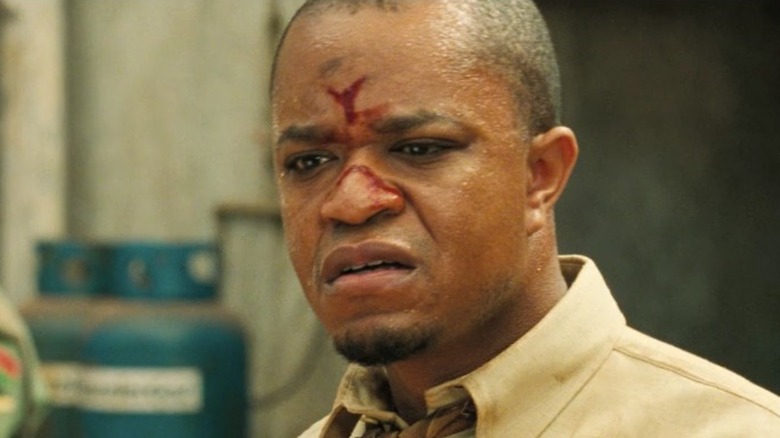
That's because — despite receiving a scolding from M (Dame Judi Dench) — it's clear that Bond's actions are mostly seen as a "rookie mistake" rather than an unlawful and unnecessary use of force. Although the scene is meant to illustrate the newly-promoted agent's impulsivity and lack of foresight, it's clear the audience is meant to empathize with Bond's actions. Mollaka, after all, has quite a bit of blood on his hands. He's a bomb-maker and a terrorist who tried to evade capture, so it's "okay" that Bond acts as judge, jury, and executioner, and blows up an embassy in the process.
When the press reports on Bond's botched and bloody attempt to take the criminal in, the newspaper headline reads, "MI6 Kills Unarmed Prisoner." M's indignant reaction to the press' necessary condemnation of Bond is almost as troubling as the agent's actions. "These [expletive] want your head," M tells him, after referring to the incident as a result of his "overdeveloped trigger finger."
The film's superficial attempt to paint Bond's actions as "wrong" is immediately undermined by its vilification of the press and ultimate justification of those actions. Secret agents, after all, kill bad guys. It's what they do. But that cowboy mentality coupled with Bond's lack of experience — in the wake of audiences' heightened awareness of how such a combination frequently leads to the murder of innocent civilians in the U.S. — is a cringe-worthy moment in a film that otherwise does its best to modernize Fleming's protagonist.