

Ebenezer Review: Even Worse Than A Lump Of Coal For Christmas
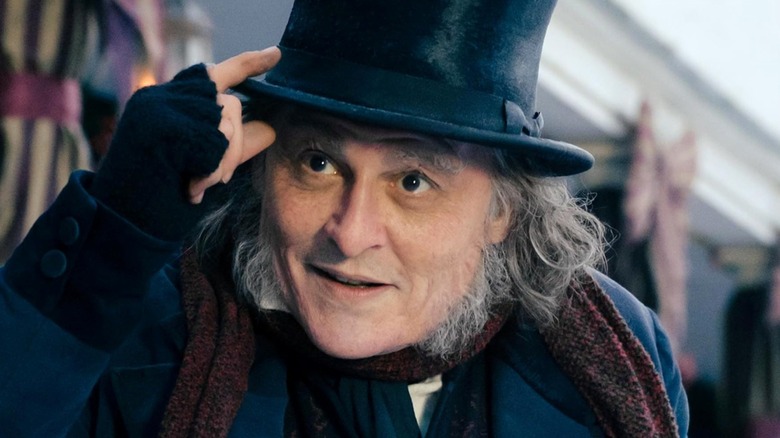
- Ti West commits to the gothic sensibility of Charles Dickens' novel that often gets lost in translation
- Johnny Depp is absolutely insufferable and out-of-step with the movie's tone
- The screenplay has an odd angle that misunderstands what A Christmas Carol is actually about
Becoming a "canceled" public figure was arguably the best thing that could have happened to Johnny Depp's career. Regarded as a nightmare to work with by many in Hollywood, with his A-list status flagging after leading a string of the costliest box office flops of the 2010s, it was clear audiences had tired of his oddball schtick and weren't warming to any attempts (such as "Black Mass" or "Transcendence") to re-establish himself as a serious dramatic actor. In one of the most cynical periods in a cynical industry, multiple high-profile cases about his private conduct could offer him a lifeline, to save face and claim there were other reasons why we'd stopped seeing him onscreen that had nothing to do with him not learning lines and needing them fed through an earpiece.
This is what has led to the story of Ebenezer Scrooge's redemption being cynically retooled to both mirror and act as the final stage of Depp's own redemptive arc. My personal assumption is that, while "Ebenezer" will be a modest hit, it will remind audiences of why they soured on a once-electric actor in the first place, and seeing the actor's incessant mugging through a movie that doesn't operate as a comedy will be enough to stop any more leading vehicles getting off the ground. Despite the wacky tone of the marketing, this is director Ti West's sincere attempt to make a "Christmas Carol" adaptation faithful to the undercurrents of Gothic horror in Charles Dickens' novel, which Depp repeatedly and insufferably stomps all over with each irritating outburst.
This reminds us why we got sick of Johnny Depp
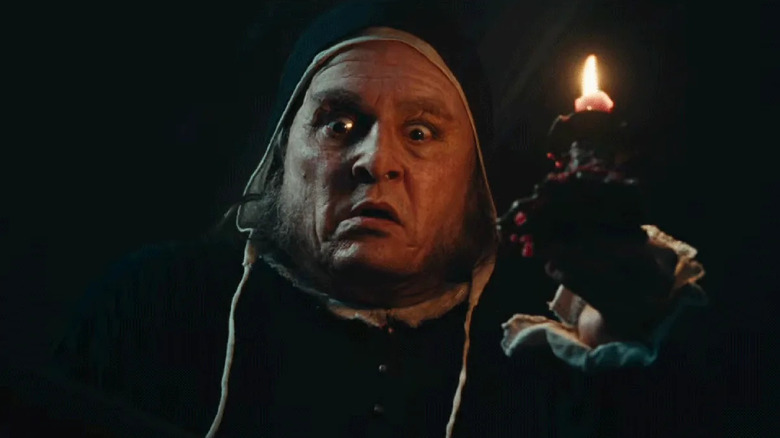
There are no jokes or pauses for laughter — only gaps for family-friendly, PG-13 jump scares — but the actor plays every line with a broadness that seems to treat the material as a long gag. When the Ghost of Christmas Present (Tramell Tillman) tells Scrooge to shut up instead of continuing with his running commentary, you feel he's speaking for the audience. Thanks to the amiable attempts of Tillman and the other overqualified members of the ensemble, it often feels like the inverse of "The Muppet Christmas Carol;" this time, only the lead actor is a Muppet, and everybody else is trying to act like his performance fits well with the brooding, macabre tone they're going for. But to compare Johnny Depp's performance to the Muppets would be an insult to them, as Kermit and company show more signs of life behind the eyes despite being made of fabric.
If it weren't for that lead performance, Ti West's attempts to build upon the inherently Gothic elements of a much-adapted story that usually loses those undertones when translated to the big screen would be easier to commend. Hot off his trilogy of "X"-ploitation films with Mia Goth, he's now being given a broader canvas to show his love for a more respectable horror sub-genre, and his realization of mid-19th century London is admirably oppressive. Snow lines the streets yet never falls, and the absence of warmth is felt in every conversation; it doesn't offer a romanticized view of Dickensian England that so many adaptations fall into the trap of depicting, with even the more luxurious houses rendered as bleak and colorless as Scrooge's memories.
West shows more faith and reverence toward Dickens' novel than his screenwriter, Nathaniel Halpern, who puts a fresh spin on the material by fatally misunderstanding it. Ebenezer Scrooge is still someone whose views need to be challenged and transformed, but there's a political perspective to "Ebenezer" that reads more conservative, occasionally agreeing with the same sentiments Dickens wrote the novel to satirize and scrutinize. We know from that text that Scrooge said the homeless should be sent to workhouses or prisons, echoing the Victorian sentiment that couldn't care less if these "drains on society" died in the process. Halpern's script makes the bizarre move of offering an origin story to Scrooge's hatred of the unhoused, showing him traumatized when his old boss Mr. Fezziwig was brutally stabbed to death by a homeless man years earlier.
A Christmas Carol movie only Scrooge could make
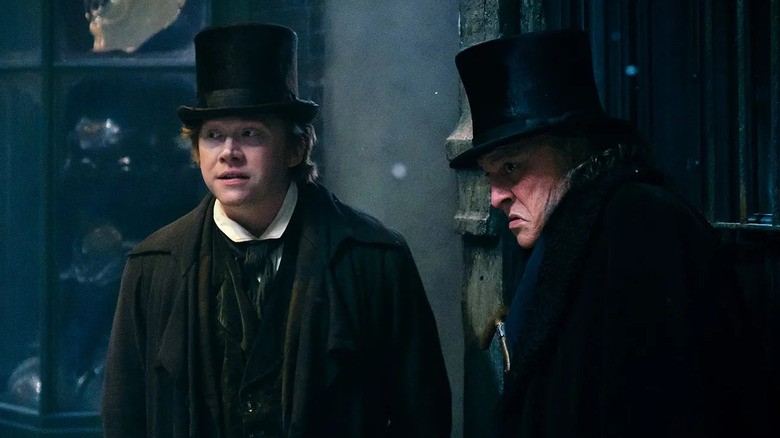
It reinforces the stereotypes that Charles Dickens criticized and doesn't entirely walk them back — this might be the only "Christmas Carol" adaptation you could play at the Trump White House this festive season, as there's no message of empathy to the poor that would make the screening feel awkward. This gets even more pronounced by the way the movie builds on Scrooge's anti-charity views, giving them credence when the Ghost of Christmas Yet to Come (Robert Strange) shows him his will being doctored by the two charity representatives he rejected earlier, who are really just keeping the money to buy luxury items for themselves. Nothing seems as effective in making Scrooge become a good man quite like the worry that his money might be handed to charitable causes, with the movie refusing to rehabilitate one of his most selfish beliefs.
The entire movie possesses a pro-business attitude that counters the humanity of Dickens' novel, and the vile attitudes in Victorian society he wanted to challenge. If Nathaniel Halpern's attempt to tackle a novel we see multiple new variations of every Christmas was to transform it into something that would have Dickens turning in his grave, then he's succeeded. The boldness in that approach at least makes it one of the more memorable recent takes on the story, even if it is an utterly ghastly proposition. Not since the right-wing satire "American Carol" — where a Michael Moore-style leftist documentary filmmaker is visited by three Republican ghosts showing him the error of his beliefs — has a take on such a famous story failed to grasp what it's actually about.
This is a shame, as Ti West clearly has a distinct vision for a horror-inflected "A Christmas Carol" that's underserved by the right-wing script and the buffoonish lead performance. We didn't need another new adaptation of this material, but his appropriation of a Gothic sensibility at least brings something fresh to the table that would make the story worth revisiting. It's a shame that, in the end, his artistic decisions equate to intricately wrapping a lump of coal and trying to convince us this is the best present we'll get this year.
"Ebenezer" is in theaters now.